
News
Just in: Trump launches first US sovereign wealth fund

- /home/naijuinz/public_html/wp-content/plugins/mvp-social-buttons/mvp-social-buttons.php on line 27
https://naijablitznews.com/wp-content/uploads/2025/01/Donald-Trump-1000x600.jpg&description=Just in: Trump launches first US sovereign wealth fund', 'pinterestShare', 'width=750,height=350'); return false;" title="Pin This Post">
- Share
- Tweet /home/naijuinz/public_html/wp-content/plugins/mvp-social-buttons/mvp-social-buttons.php on line 72
https://naijablitznews.com/wp-content/uploads/2025/01/Donald-Trump-1000x600.jpg&description=Just in: Trump launches first US sovereign wealth fund', 'pinterestShare', 'width=750,height=350'); return false;" title="Pin This Post">


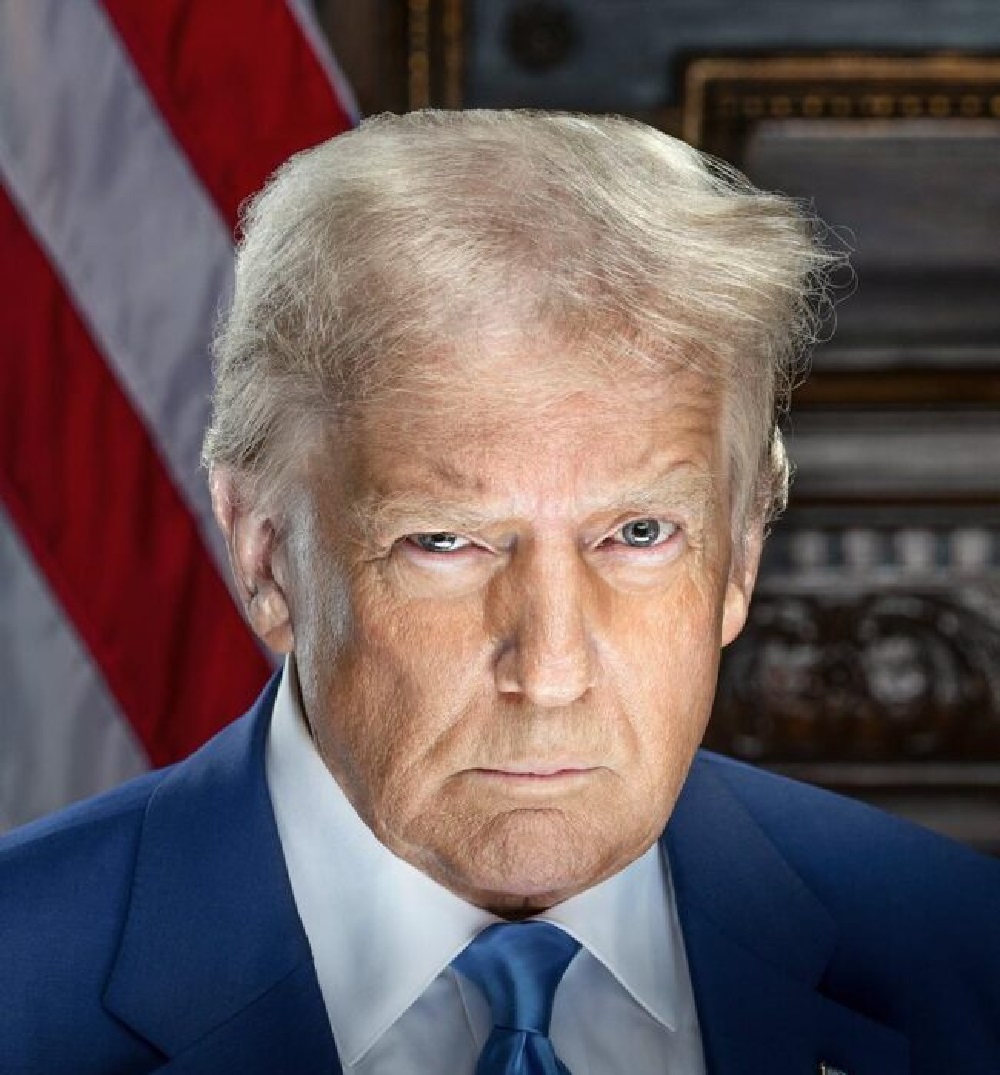
U.S. President Donald Trump signed an executive order ordering the creation of a sovereign wealth fund within the next year, saying it could potentially buy the short video app TikTok.
If created, the sovereign wealth fund could place the U.S. alongside numerous other countries, particularly in the Middle East and Asia, that have launched similar funds as a way to make direct investments with government dollars.
The text of the executive order was sparse on details, and simply directed the Treasury and Commerce Departments to submit a plan for such a fund within 90 days, including recommendations on “funding mechanisms, investment strategies, fund structure, and a governance model.”
Typically such funds rely on a country’s budget surplus to make investments, but the U.S. operates at a deficit. Its creation also would likely require approval from Congress.
“We’re going to create a lot of wealth for the fund,” Trump told reporters. “And I think it’s about time that this country had a sovereign wealth fund.”
Trump had previously floated such a government investment vehicle as a presidential candidate, saying it could fund “great national endeavors” like infrastructure projects such as highways and airports, manufacturing, and medical research.
Administration officials did not say how the fund would operate or be financed, but Trump has previously said it could be funded by “tariffs and other intelligent things.”
Treasury Secretary Scott Bessent told reporters the fund would be set up within the next 12 months.
“We’re going to monetize the asset side of the U.S. balance sheet for the American people,” Bessent said. “There’ll be a combination of liquid assets, assets that we have in this country as we work to bring them out for the American people.”
One approach would be to convert the U.S. International Development Finance Corp (DFC) to function similar to a sovereign wealth fund, which the Trump administration reportedly considered in recent months, Bloomberg News reported. The DFC is a government agency that currently partners with private parties to finance projects in the developing world.
Trump announced Friday he was nominating Benjamin Black to head that development agency. Black, a managing partner at investment firm Fortinbras Enterprises, is the son of Leon Black, the co-founder of asset management firm Apollo Global Management.
The Biden administration also was considering establishing such a fund prior to Trump’s election in November, according to The New York Times and Financial Times.
But precisely how such a fund would be structured, and funded, remained unclear. Several experts said Congress would likely need to authorize new funding given the lack of an existing surplus to tap. The order directed officials to review any need for legislation.
Clemence Landers, a former Treasury official who is now with the Center for Global Development, said there has been talk of repurposing the DFC but setting up such a fund would require Congress.
“Obviously you can’t establish an institution by executive order and more to the point is you can’t fund an institution by executive order,” she said.
Investors said the news came as a surprise.
“Creating a sovereign wealth fund suggests that a country has savings that will go up and can be allocated to this,” said Colin Graham, head of multi-asset strategies at Robeco in London. “The economic rules of thumb don’t add up.”
There are over 90 such funds across the world managing over $8 trillion in assets, according to the International Forum of Sovereign Wealth Funds.
Numerous U.S. states, including Alaska, Texas and New Mexico also have their own wealth funds, which help fund various priorities, including education and tax relief. They frequently rely on revenue raised by natural resources, like oil or land.
In another surprise twist, Trump suggested the wealth fund could buy TikTok, whose fate has been up in the air since a law requiring its Chinese owner ByteDance to either sell it on national security grounds or face a ban took effect on Jan. 19.
Trump, after taking office on Jan. 20, signed an executive order seeking to delay by 75 days the enforcement of the law.
Trump has said that he was in talks with multiple people over TikTok’s purchase and would likely have a decision on the app’s future in February. The popular app has about 170 million American users.
“We’re going to be doing something, perhaps with TikTok, and perhaps not,” Trump said. “If we make the right deal, we’ll do it. Otherwise, we won’t…we might put that in the sovereign wealth fund.”






Federal Capital Territory (FCT) Minister Nyesom Wike has challenged the impartiality of Cardinal John Onaiyekan, accusing the Archbishop Emeritus of Abuja of taking sides during the 2023 general election.
Speaking during a media parley on Tuesday, Wike addressed the recent clash between the Presidency and Onaiyekan following the Catholic Bishops’ Conference of Nigeria’s (CBCN) closed-door meeting with President Bola Tinubu.
After the meeting, Onaiyekan publicly suggested that aides were painting a “rosy picture” for the President while he remained focused on 2027—a statement the Presidency criticized as an abuse of privilege.
Wike argued that religious leaders undermine their credibility when their commentary is purely negative.
While acknowledging that constructive criticism is valid, the minister insisted that leaders must also recognize government achievements to remain objective.
He said while it was appropriate to criticise the government where necessary, leaders should also recognise areas where progress had been made.
“If a religious leader is seen taking a side, it becomes difficult for people to see their comments as helpful. Onaiyekan’s political leanings in 2023 were not hidden.
“I am aware of the position of Cardinal Onaiyekan; all of us know, it’s not hidden, whom he supports; everybody knows that”.
“It’s not every time you say things are bad; nobody has heard you say the government has done this well.
“The point I am trying to make is that, as a leader, commend the government when it has done well in certain areas; criticise but acknowledge areas of progress ‘but you should improve in these other areas.”
He concluded that consistent, one-sided criticism naturally leads the government to view such remarks as politically motivated rather than objective advice.
“It’s not every time you say things are bad; nobody has heard you say the government has done this well”, Wike said.
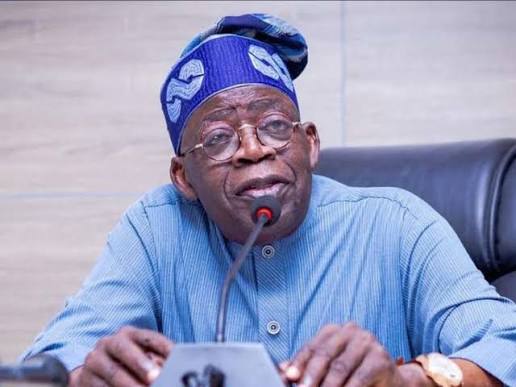
African Democratic Congress (ADC) chieftain Kalu Kalu has challenged President Bola Ahmed Tinubu to publicly provide details of the primary and secondary schools he attended following the release of presidential candidates’ personal particulars and credentials by the Independent National Electoral Commission (INEC) ahead of the 2027 general election.
Speaking on Channels Television’s Politics Today on Monday, August 3, 2026, Kalu queried the educational information submitted by the President, arguing that Nigerians deserve a clearer account of his academic background.
The ADC chieftain said his concerns were based on details contained in the nomination documents submitted to INEC, which he claimed raised fresh questions about Tinubu’s educational history.
President Tinubu’s failure to include details of his primary and secondary school education in the educational qualifications section of his INEC documents has sparked renewed public discussion over his academic records.
Kalu also referred to documents allegedly submitted by Tinubu during the 2022 election cycle, claiming that the President listed a National Youth Service Corps (NYSC) certificate among his credentials. He questioned the name and details contained in the document, alleging that they required further clarification.
According to him, the issues surrounding the President’s academic records should be addressed publicly to ensure transparency.
“Even in 2022, in the INEC document he submitted, he claimed he had a National Youth Service Corps (NYSC) certificate. And the name on that certificate was Bola Adekunle Tinubu. So where did he get ‘Adekunle’ from? He claimed he graduated, but the certificate was forged,” Kalu said.
The claims have added to ongoing public debate over the educational qualifications and eligibility of political candidates ahead of the 2027 presidential election.

Minister of the Federal Capital Territory (FCT), Barr. Nyesom Wike, has declared that President Bola Tinubu remains the only credible leadership option for Nigeria, insisting that no other potential presidential contender has demonstrated the courage or capacity to confront the country’s long-standing economic challenges.
Speaking at his monthly media briefing on Tuesday in Abuja, Wike defended Tinubu’s economic reforms, particularly the removal of petrol subsidy, describing the decision as the boldest taken by any Nigerian president in decades.
According to him, while the reforms have imposed temporary hardship on Nigerians, they have strengthened the finances of state governments, improved infrastructure funding and ended the era when states depended on bank loans to pay workers’ salaries.
“Asiwaju is the only person we have now. He has not done everything, and nobody says he has, but he has shown the courage to take decisions others refused to take. Give him credit for that,” Wike said.
The minister argued that Nigerians should not expect an economy weakened over many years to recover within a short period.
“When problems have accumulated for over 15 years, people expect them to be solved in one year. It doesn’t work that way. Healing takes time, but it will happen,” he said.
Wike described the fuel subsidy regime as “a cancer,” recalling that as governor, he had to rely on bank borrowing to meet salary obligations because of declining allocations to states.
“The fuel subsidy consumed over ₦3 trillion at a time. Today, states receive more money. Pensioners are being paid, governors no longer queue before bank managers to borrow money just to pay salaries, and there are more resources for infrastructure,” he said.
He maintained that leadership is defined by the willingness to make difficult decisions rather than by popular sentiment.
“Everybody agreed that subsidy was a scam, but no president had the political will to remove it. President Tinubu took that decision. No decision is 100 per cent perfect, but leadership is about taking responsibility,” he added.

Wike Slams Cardinal Onaiyekan over Alleged Political Bias in 2023 Elections

President Tinubu should provide primary and secondary school details–ADC chieftain, Kalu

Wike: Tinubu Only Leader With Courage to Fix Nigeria Now



-

 News10 hours ago
Adeleke kicks as IG returns CP Gotan to Osun ahead of governorship poll
-

 Metro10 hours ago
21-Year-Old Nigerian Basketball Player Arrested in U.S. Over First-Degree Rape Charge
-
 News10 hours ago
Rep OK Chinda’s political network sparks across Rivers
-
 News24 hours ago
Wike directs upgrade of Life Camp Recreation Park After City Gate Success(Photos)
-
 News23 hours ago
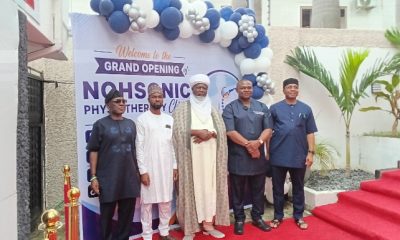
Healing at Home: NOHSONIC Brings World-Class Physiotherapy Within Nigerians’ Reach
-

 News11 hours ago
Oyo 2027: Busari Drags Accord, Hamzat to Court Over Governorship Ticket
-
 Foreign10 hours ago
Man Jailed for Keeping His Mom’s Dead Body in a Freezer for Nearly 3 Years While Receiving Her Financial Benefits
-
 News22 hours ago
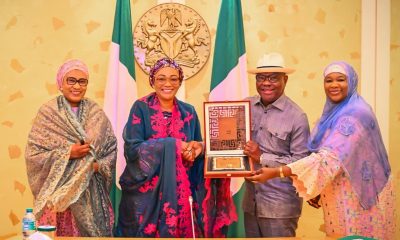
First Lady hails Wike’s green transformation of Abuja, urges states to engage youth in environmental protection(Photos)
Warning: Undefined variable $user_ID in /home/naijuinz/public_html/wp-content/themes/zox-news/comments.php on line 49
You must be logged in to post a comment Login