Connect with us

Economy

CBN targets single-digit inflation in three years

Published

on

ADVERTISEMENT
Zoom Ad
ADVERTISEMENT
Zoom Ad

The Central Bank of Nigeria (CBN) has set its sights on reducing inflation to a single digit in the medium to long term, following the recent rebasing of the Consumer Price Index (CPI) and subsequent decline in inflation to 24.48 per cent.


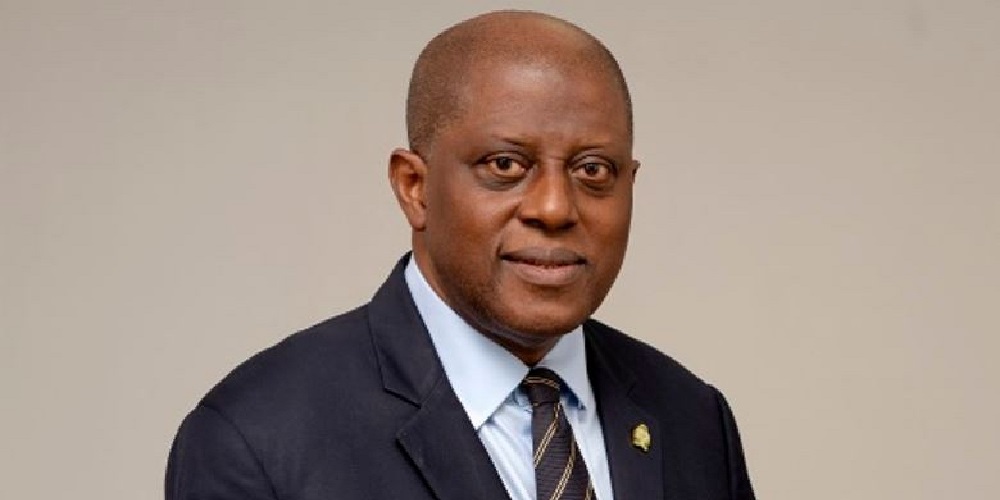
CBN Governor, Dr Olayemi Cardoso, who spoke yesterday at a press briefing after the first Monetary Policy Committee (MPC) meeting of 2025, reiterated the apex bank’s commitment to orthodox monetary policies, noting that the positive outcomes so far indicate that inflation is trending downward.

He said that after two days of deliberation, the MPC decided to maintain all key monetary policy parameters, including the Monetary Policy Rate (MPR) at 27.50 per cent, the asymmetric corridor around the MPR at +500/-100 basis points, the Cash Reserve Ratio (CRR) at 50.00 per cent for Deposit Money Banks and 16.00 per cent for Merchant Banks, and the Liquidity Ratio at 30.00 per cent.

Clarifying the impact of the rebased CPI, Cardoso explained that the lower inflation figure should not be misinterpreted.

Advertisement

He underlined the need to analyse more data before drawing comparisons, noting that the CBN is currently assessing the figures and will provide further guidance in due course.

Despite the complexities, he pointed out that inflation is gradually declining, supported by the recent stability and appreciation of the foreign exchange rate, with the differential between the official and parallel markets now less than one percent.

He stressed the critical importance of collaboration between monetary and fiscal authorities in sustaining recent economic improvements.

He cited the recent Monetary Policy Forum as an example, where stakeholders from the organised private sector, Bureau de Change operators, and government representatives, including the Minister of Finance, participated.

Advertisement

Cardoso noted that both sides are committed to deepening their dialogue and holding regular meetings to address key economic issues proactively.

Addressing concerns about the impact of elevated borrowing costs on economic growth, the CBN Governor assured that the apex bank’s primary objective is to stabilize the foreign exchange and financial markets.

He expressed confidence that such stability would attract increased foreign investments, stimulating the much-needed economic growth.

He also highlighted the competitiveness of the Nigerian currency, which has spurred growing interest from international investors.

Advertisement

Cardoso said that improved oil production, reaching 1.54 million barrels per day by the end of January 2025, would strengthen Nigeria’s current account position and positively impact external reserves. Despite prevailing macroeconomic challenges, the MPC observed that the banking sector remains resilient. However, the Committee urged the CBN to maintain vigilant oversight, particularly in light of ongoing banking system recapitalisation, ensuring that only quality capital is injected.

The MPC noted several factors expected to positively influence price dynamics in the near to medium term, including the stabilisation of the foreign exchange market, the moderation of Premium Motor Spirit (PMS) prices, and the federal government’s efforts to improve security in food-producing areas.

The Committee emphasised the need for continued collaboration between monetary and fiscal authorities to maintain and build upon these gains.

Additionally, the MPC acknowledged improvements in the external sector, with the convergence of exchange rates between the Nigeria Foreign Exchange Market (NFEM) and Bureau de Change (BDC) operators.

Advertisement

The Committee commended CBN’s recent measures, such as the Electronic Foreign Exchange Matching System and the Nigeria Foreign Exchange Code, aimed at enhancing transparency and credibility in the forex market.

The MPC expressed confidence that recent monetary and fiscal policy measures would attract increased foreign direct investment, portfolio inflows, and diaspora remittances as investor confidence grows.

The Committee also assured of its commitment to sustaining these measures to anchor inflation expectations, ease exchange rate pressures, deepen financial inclusion, and enhance the effectiveness of monetary policy transmission mechanisms.
Advertisement

Economy

CBN targets 95% financial inclusion in new payment system goal

Published

on

By

ADVERTISEMENT
Zoom Ad
ADVERTISEMENT
Zoom Ad

The Central Bank of Nigeria (CBN) has unveiled an ambitious blueprint to transform the country’s payment ecosystem with the launch of ‘Nigeria Payments System Vision (PSV) 2028’.

The bank, in the document unveiled in Abuja yesterday, has set the target of raising financial inclusion to 95 per cent, drastically reducing fraud and accelerating Nigeria’s transition to a cash-lite economy as part of efforts to support the $1 trillion economy target.

A similar initiative was launched in 2022, but the promoters fell short of the targets.

The governor, Yemi Cardoso, said the roadmap would ensure faster, safer and more inclusive financial transactions while positioning Nigeria as Africa’s leading digital payments hub.

Advertisement

Cardoso outlined an expansive vision that will see millions of previously excluded Nigerians, particularly market women, farmers, artisans, and young people, brought into the formal financial system through accessible digital payment channels and stronger consumer protection mechanisms.

He said the apex bank aimed to increase financial inclusion from current levels to 95 per cent in 2028, effectively bringing an additional 50 million Nigerians into the banking system.

“That means 50 million more market women, farmers and young people will have bank accounts with their names and Bank Verification Number (BVN) protecting them,” he said.

The governor also signalled an aggressive push to reduce cash transactions across the economy, expressing concern that many Nigerians still prefer cash despite rapid advancement in digital payments.

Advertisement

He expressed disappointment that sellers refused cash transfers during the recent Sallah celebration, insisting on cash as a mode of payment.

This, to him, buttressed the need for greater trust in digital payment systems.

Under the vision, the CBN hopes to reduce cash circulating outside the formal banking system to below 40 per cent of total circulation while promoting widespread adoption of digital payment channels through technologies such as QR codes and tap-to-phone solutions.

As of April, cash outside the financial system stood at N5.08 trillion or 90 per cent of the total currency in circulation (N5.65 trillion).

Advertisement

Cardoso said the objective is to deploy up to 10 million QR-enabled payment points across markets, transport hubs and rural communities, allowing Nigerians to make secure and affordable digital payments regardless of location.

To reinforce confidence, Cardoso disclosed that the apex bank intended to cut fraud losses to less than 0.001 per cent of total transaction volume, leveraging artificial intelligence, enhanced BVN integration and advanced fraud-detection systems.

Beyond payments, Cardoso said PSV 2028 was designed to position Nigeria as a leading centre for financial innovation, with open banking, application programming interfaces (APIs), artificial intelligence and other emerging technologies expected to drive the next phase of growth.

He expressed confidence that Nigerian innovators could build globally competitive fintech firms in major cities, leveraging local talent and technology to develop products that serve both domestic and international markets.

Advertisement

Cardoso noted that the ultimate test of PSV 2028 would not be its targets, but the ability of government, financial institutions, fintech firms and technology providers to deliver a payment ecosystem that is trusted, inclusive, and capable of supporting economic transformation.

The Deputy Governor for Economic Policy, Dr Muhammad Sani Abdullahi, described the vision as a strategic framework to strengthen the foundations of Nigeria’s digital economy and enhance the country’s competitiveness in regional and global commerce.

According to him, modern payment systems have evolved beyond simple transaction platforms to become critical economic infrastructure supporting trade, investment, financial inclusion, productivity and innovation.

The PSV 2028, he said, was anchored on five strategic pillars: infrastructure development, digital financial inclusion and consumer protection, innovation and emerging technologies, cross-border payments and digital assets and regulation, risk management and cybersecurity.

Advertisement

According to him, efficient infrastructure would reduce transaction costs, improve business productivity and create the digital rails needed to support a rapidly expanding economy.

Abdullahi said the initiative is expected to reduce exclusion across gender, geography and income groups while integrating more individuals and small businesses into the formal economy.

Abdullahi stressed that trust remains the most valuable asset in any financial ecosystem and that securing payment infrastructure would be essential to attracting investment and sustaining economic growth.

He described PSV 2028 as more than a policy document, calling it a national economic architecture designed to accelerate trade, improve productivity, support entrepreneurship and expand prosperity.

Advertisement

The launch comes amid growing efforts by both the fiscal and monetary authorities to leverage digital technology as a driver of economic diversification, financial inclusion and regional integration.

Also speaking at the unveiling event, Executive Vice Chairman of the Nigerian Communications Commission (NCC), Dr Aminu Maida, described the initiative as a major pillar supporting President Bola Tinubu’s ambition of building a $1 trillion economy.

Maida said recent reforms in the foreign exchange market and broader macroeconomic environment have helped to stabilise key sectors, including telecommunications, thereby creating a stronger foundation for digital financial services.

However, he warned that rising cyber fraud and cross-border financial crimes pose significant threats to the growth of the digital economy.

Advertisement
Continue Reading

Economy

Middle East Tensions: Oil Prices Jump as Iran Suspends Peace Talks with US

Published

on

By

ADVERTISEMENT
Zoom Ad
ADVERTISEMENT
Zoom Ad

Global oil prices recorded significant gains on Monday after Iran announced the suspension of ongoing peace talks, heightening concerns over regional stability and the security of global energy supplies.

The development sent shockwaves through international markets, with investors reacting to fears that escalating tensions in the Middle East could disrupt crude oil exports and further strain global supply chains.

Brent crude futures climbed sharply, approaching the $100-per-barrel threshold, while U.S. West Texas Intermediate (WTI) crude also posted strong gains during trading. Analysts attributed the rally to growing uncertainty surrounding diplomatic efforts aimed at easing tensions in the region.

Reports indicated that Tehran halted negotiations amid increasing hostilities involving Iran, Israel, and allied forces across the Middle East. The suspension of talks has raised concerns that prospects for a diplomatic resolution may be diminishing, potentially increasing the risk of broader regional instability.

Advertisement

Energy traders are particularly focused on the Strait of Hormuz, one of the world’s most critical oil transit routes. The narrow waterway handles approximately 20 percent of global oil shipments, making it a strategic chokepoint for international energy markets.

Market analysts warned that any threat to shipping activities through the Strait of Hormuz could trigger further price increases and intensify inflationary pressures across major economies.

“The market is reacting to geopolitical risk premiums,” energy analysts noted, explaining that uncertainty over future supply remains a key factor driving oil prices higher.

The spike in crude prices also weighed on global equity markets, with investors expressing concerns that sustained increases in energy costs could impact economic growth, corporate earnings, and consumer spending.

Advertisement

Financial markets in Europe, Asia, and North America recorded mixed performances as traders assessed the potential implications of a prolonged diplomatic standoff and its impact on global energy security.

Experts say developments in the coming days will be closely monitored by governments, energy companies, and investors worldwide. Should tensions continue to escalate without renewed diplomatic engagement, oil prices could breach the $100-per-barrel mark and remain elevated for an extended period.

The latest surge underscores the sensitivity of global energy markets to geopolitical developments in the Middle East, a region that remains central to worldwide oil production and supply.This version follows a standard NewsMediang news-report format with a stronger lead, broader market context, and balanced analysis.

Iran says it suspended peace talks with the United States mainly because it believes Washington has failed to restrain Israel’s military actions and has not honored broader ceasefire understandings linked to the negotiations.

Advertisement

According to Iranian officials and state-affiliated media, Tehran is angry over continued Israeli strikes in Lebanon and Gaza while diplomatic efforts were ongoing. Iran argues that any ceasefire or peace arrangement should apply across all fronts in the region, not only between Iran and the U.S.

Key reasons Iran has given include:

Israeli military operations in Lebanon and Gaza: Iran says the attacks undermine the atmosphere needed for negotiations and violate understandings reached through mediators.

Lack of trust in the U.S.: Iranian officials have repeatedly said they do not believe Washington can guarantee that agreements will be respected, pointing to previous disputes and failed negotiations.

Advertisement

Disagreements over Iran’s nuclear and missile programs: The U.S. has pushed for stricter limits on uranium enrichment, missile development, and support for allied armed groups, while Iran insists on protecting what it calls its sovereign rights.

Regional security demands: Iran wants broader guarantees, including an end to attacks by Israel, withdrawal from contested areas, and security assurances against future military action.

Iranian Foreign Minister Abbas Araqchi has warned that if hostilities continue in Lebanon and elsewhere, Tehran sees little value in continuing negotiations.

The United States, however, has given mixed signals. President Donald Trump said he had not been formally informed that talks were over and later insisted discussions were still continuing, despite Iran’s announcement.

Advertisement

The suspension has heightened fears of a wider Middle East conflict, which is why oil prices rose sharply as traders worried about potential disruptions to supplies moving through the strategic Strait of Hormuz.

Continue Reading

Economy

See Exchange Rate Naira To The Dollar, Today June 1

Published

on

ADVERTISEMENT
Zoom Ad
ADVERTISEMENT
Zoom Ad

On the first day of the new month, June 2026, the exchange rate Naira to the Dollar is one of relative stability at both the official window and the parallel market.

This submission flows from the data published by the apex monetary policy regulatory agency, the Central Bank of Nigeria (CBN).

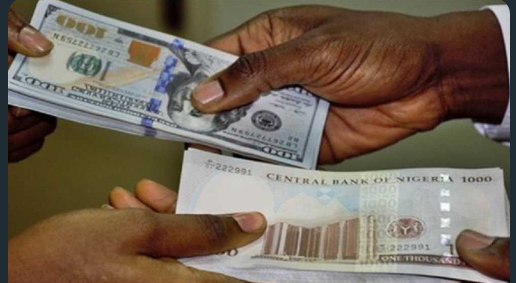
The Naira traded at ₦1,373.25 to the dollar at the official window, the Nigerian Foreign Exchange Market (NFEM) on May 29, being the latest available official rate at the start of trading on June 1.

The rate was relatively stable, at a high of ₦1,375 and a low of ₦1,372 during the trading session, a stability attributed to improved interbank transactions and sustained liquidity in the foreign exchange market.

Advertisement

In the parallel market, commonly referred to as the black market, the dollar exchanged at about ₦1,375 for buying and between ₦1,385 and ₦1,405 for selling on June 1, depending on location and dealer quotations.

Currency tracking platforms showed the average black market selling rate hovering around ₦1,385 per dollar, while the official NFEM rate remained near ₦1,373.25, leaving a narrow gap between both market segments.

The exchange rate Naira to the Dollar today has remained relatively stable in recent weeks, making projections by forex users reliable as against, high volatility of previous times.

This is kudos to the Central Bank of Nigeria which continues to dole out and supervise necessary market reforms and liquidity management efforts.

Advertisement
Continue Reading

Trending

Copyright © 2024 Naija Blitz News