Connect with us

Foreign

U.S. prohibits personnel in China from romantic, sexual relationships with Chinese citizens

Published

on

ADVERTISEMENT
Zoom Ad
ADVERTISEMENT
Zoom Ad

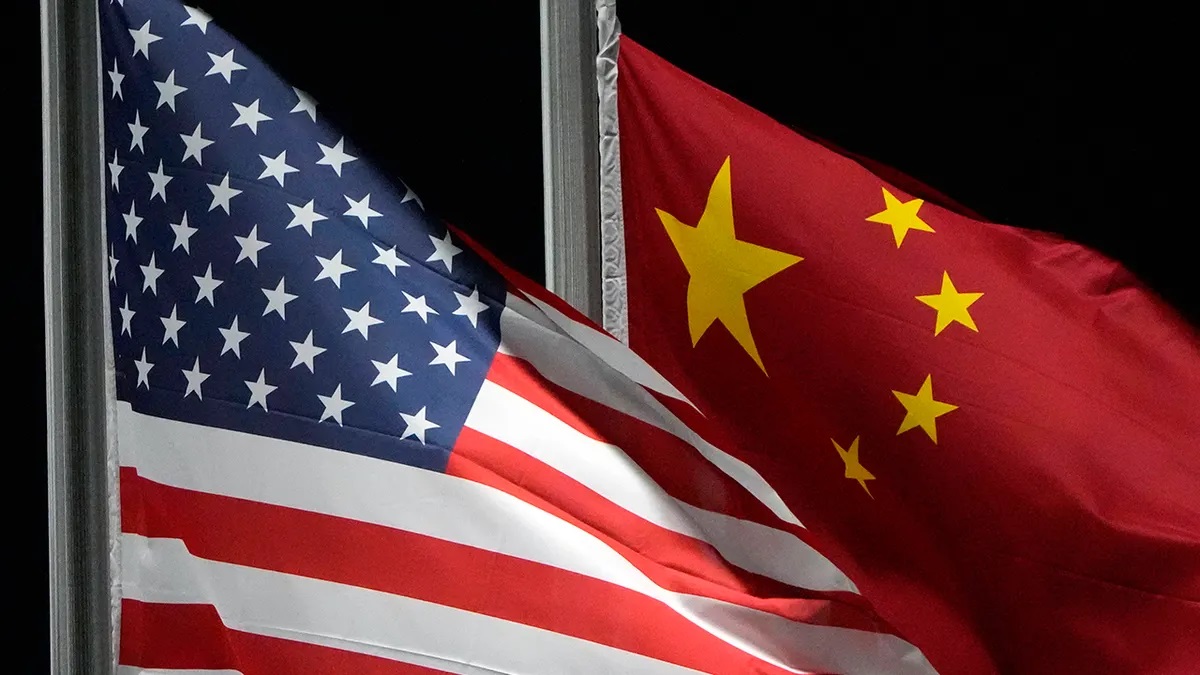
The U.S. government has banned American government personnel in China, as well as family members and contractors with security clearances, from any romantic or sexual relationships with Chinese citizens, The Associated Press has learned.


Four people with direct knowledge of the matter told the AP about the policy, which was put into effect by departing U.S. Ambassador Nicholas Burns in January shortly before he left China. The people would speak only on condition of anonymity to discuss details of a confidential new directive.

Though some U.S. agencies already had strict rules on such relationships, a blanket “non-fraternization” policy, as it is known, has been unheard of publicly since the Cold War. It’s not uncommon for American diplomats in other countries to date locals and even marry them.

A more limited version of the policy was enacted last summer prohibiting U.S. personnel from “romantic and sexual relations” with Chinese citizens working as guards and other support staff at the U.S. Embassy and five consulates in China. But Burns, the departing ambassador, broadened it to a blanket ban on such relations with any Chinese citizen in China in January, days before President Donald Trump took office. The AP was unable to determine exactly how the policy defined the phrase “romantic or sexual relationship.”

Advertisement

Two of the people with knowledge of the ban told the AP the new policy was first discussed last summer after members of Congress contacted Burns to express concern that restrictions on such relationships were not stringent enough. The House Select Committee on the Chinese Communist Party did not respond to a request for comment.

The new policy covers U.S. missions in mainland China, including the embassy in Beijing and consulates in Guangzhou, Shanghai, Shenyang and Wuhan, as well as the American consulate in the semi-autonomous territory of Hong Kong. It does not apply to U.S. personnel stationed outside China.

The only exception to the policy is U.S. personnel with pre-existing relations with Chinese citizens; they can apply for exemptions. If the exemption is denied, they must end the relationship or leave their position, the people said. Anyone who violates the policy will be ordered to leave China immediately.

The policy was communicated verbally and electronically to American personnel in China in January, but has not been publicly announced.

Advertisement

The State Department said it does not comment on internal matters. The National Security Council referred questions to the State Department. Burns, the former ambassador, did not reply to an AP request sent to his email address at The Cohen Group, a consultancy that he rejoined as vice chair in February.

Intelligence services across the world have long used attractive men and women to obtain sensitive information, famously during the Cold War. The State Department and other agencies with offices in China have long had stringent reporting requirements on personal relationships for American personnel stationed there, as well as rivals considered high intelligence threats such as Russia or Cuba.

Declassified State Department documents show that in 1987, the U.S. government barred personnel stationed in the Soviet bloc and China from befriending, dating or having sex with locals after a U.S. Marine in Moscow was seduced by a Soviet spy. Such restrictions were relaxed after the collapse of the Soviet Union in 1991, according to news reports at the time.

In China, a blanket ban on such relations has not been in effect for many years. Until the new ban in January, U.S. personnel in China were required to report any intimate contact with Chinese citizens to their supervisors, but were not explicitly forbidden from sexual or romantic relationships.

Advertisement

U.S. diplomats and intelligence experts say that Beijing continues to aggressively use so-called honeypots to access American secrets. In presentations before being stationed in China, U.S. personnel are briefed on case studies where Chinese intelligence services sent attractive women to seduce American diplomats, and warned that dozens of Chinese state security agents can be assigned to monitor any individual diplomat of interest.

Little is known about the U.S. government’s non-fraternization policies elsewhere, as they are considered classified. It is unknown how restrictive such policies are in other countries.

In recent years, tensions between Washington and Beijing have escalated over trade, technology and geopolitical competition.

Peter Mattis, a former CIA analyst and president of The Jamestown Foundation, a Washington-based think tank, said there were at least two publicized cases in which Chinese agents seduced American diplomats stationed in China, though he hasn’t heard of such a case in recent years.

Advertisement

Mattis added that another issue is that Chinese state security doesn’t gather intelligence just through spies, but also by pressing ordinary Chinese people for information, often through threats or intimidation. That, Mattis said, means any Chinese citizen who dates an American diplomat could be vulnerable to coercion.

“The MSS is willing to leverage any human connection that a target has to collect intelligence,” Mattis said, using an acronym referring to China’s Ministry of State Security. “This rule change suggests the MSS has gotten a lot more aggressive at trying to access the embassy and U.S. government.”

The Chinese foreign ministry did not comment on the ban, saying in a faxed statement that it was “more appropriate to ask the U.S. about this question.”

China also has been tightening already strict controls on its personnel overseas, according to Chinese regulations, news reports and four people familiar with China’s bureaucracy who spoke on condition of anonymity so they could discuss a sensitive topic. In recent years, Beijing began strictly enforcing regulations that bar promotions for Chinese civil servants with spouses who acquired foreign citizenship and restrict diplomats from spending an extended period of time in one country, forcing some to return to China.

Advertisement

China’s foreign ministry and many other government bodies bar their officials and staff from sexual or romantic relations with foreign citizens, while members of the Chinese military or police are generally barred from leaving China altogether without express approval from their supervisors.
Continue Reading
Advertisement
Click to comment

Warning: Undefined variable $user_ID in /home/naijuinz/public_html/wp-content/themes/zox-news/comments.php on line 49

You must be logged in to post a comment Login

Leave a Reply

Foreign

Elon Musk becomes world’s first trillionaire 

Published

on

ADVERTISEMENT
Zoom Ad
ADVERTISEMENT
Zoom Ad

SpaceX founder Elon Musk has become the first person in the world to get the “trillionaire” tag. Investor confidence in Musk’s businesses was on full display on Thursday when SpaceX, which deals in reusable rockets, satellites and artificial intelligence, secured a record USD 75 billion through its initial public offering, reported news agency Reuters.

Alongside electric-vehicle manufacturer Tesla, SpaceX sits at the heart of Musk’s business empire.

Before the share offering, Forbes estimated Musk’s net worth at around USD 780 billion, placing him comfortably ahead of the second-richest individual, Alphabet co-founder Larry Page.

Matt Durot, deputy editor at Forbes Wealth was quoted as saying by Reuters: “The second richest person has been hovering around $300 billion, so about less than one-third of what Musk can potentially be worth tomorrow.” “And only one other person, Oracle founder Larry Ellison, has ever been worth USD 400 billion.”

Advertisement

Elon Musk’s major holdings

A major part of Musk’s wealth is now tied to SpaceX, where his stake is valued at roughly USD 866 billion. Combined with his holdings in Tesla and other ventures, Forbes estimates his net worth at USD 1.1 trillion once SpaceX shares began trading on Friday, according to Reuters calculations based on company filings.

Musk first rose to global prominence through Tesla and SpaceX before extending his influence further with the USD 44 billion purchase of Twitter (now X) in 2022, which gave him access to a massive online community and the chance to regulate the platform. In addition to Tesla and SpaceX, Musk has helped launch several other companies, including tunnel-construction venture The Boring Company and brain-implant developer Neuralink.

His growing involvement in politics has also generated controversy. Among the most debated episodes was his participation in US President Donald Trump’s Department of Government Efficiency last year. The political backlash coincided with low Tesla sales in several overseas markets during 2025, as the company faced protests and consumer boycotts.

Advertisement
Continue Reading

Foreign

US and Iran exchange fire after American patrol helicopter downed in Hormuz

Published

on

By

ADVERTISEMENT
Zoom Ad
ADVERTISEMENT
Zoom Ad

The US and Iran have exchanged fire after President Donald Trump blamed Tehran for the downing of an American military helicopter over the Strait of Hormuz on Monday.

The US Central Command (Centcom) said it launched airstrikes at Iranian targets at 17:00 ET (21:00 GMT) on Tuesday and later said the operation was complete.

In response, Iran’s Islamic Revolutionary Guard Corps (IRGC) said it launched strikes on two US bases in the region, one in Bahrain and the other in Jordan, while Kuwait’s army said it was also intercepting an attack.

The US has described its strikes as “a proportional response” for the Apache helicopter downing, while the IRGC described the attacks as “vicious”.

Advertisement

The exchange of fire comes after two crew members of the downed helicopter were rescued by an American sea drone on Monday, Centcom said. It was the first time the US military publicly confirmed that type of vessel was used in such an operation.

According to US officials, Iran used a drone to launch the attack on the helicopter. But it’s not clear whether the Iranian drone had deliberately attacked, an unnamed US official told CBS News, the BBC’s US partner. The semi-official Mehr News Agency reported that Iran had not claimed responsibility for the downed aircraft.

In response, Centcom said US fighter jets “struck Iranian air defense, ground control stations, and surveillance radar sites near the Strait of Hormuz”.

The IRGC said US strikes had damaged a telecommunications tower and two water tanks.

Advertisement

Iran said the US had targeted the cities of Jask and Sirik, and Qeshem – an island in the Gulf.

Centcom released the statement saying the mission was “completed” just over three hours after it announced an initial wave of strikes triggered by the downing of the US helicopter on Monday.

US officials are yet to comment on reports of attacks on its bases and it is unclear if there has been any damage. However, an air raid alert was issued in Bahrain, according to local authorities who said Iranian attacks had been repelled.

US President Donald Trump said earlier on Tuesday the downed helicopter had been patrolling the Strait of Hormuz, a critical shipping channel that was effectively closed days after the US launched its first strikes on Iran in late February.

Advertisement

“There were two pilots involved, both are safe and uninjured,” Trump wrote on Truth Social. “Nevertheless, the United States must, of necessity, respond to this attack.”

In Washington, US House Speaker Mike Johnson said he was in the room with Trump when he decided that US attacks on Iran should resume.

“We lament that it became necessary,” said the top Republican in Congress, adding that “we’re gonna have to take care of this business”.

Iran’s foreign minister issued a threat to the US in the aftermath of the renewed US attacks, saying the country “will leave no attack or threat unanswered”.

Advertisement

“Despite its defeats on the battlefield, the US opted to test our determination,” Iran’s Foreign Minister Abbas Araghchi wrote on X.

He added: “Leave our region if you want to be safe.”

Araghchi said on Tuesday that foreign forces near Iran’s territory were at “constant risk on account of their own human errors, plain accidents or potentially being caught in crossfire”.

“To reduce risk, best solution is for them [foreign forces] to leave,” the Iranian leader said in a post on X.

Advertisement

Minutes before Trump’s comments on the downed American Apache helicopte on Tuesday, Iran’s top negotiator in peace talks with Washington, Mohammad Baqer Qalibaf, took to social media to signal retaliation.

“We prefer the language of diplomacy, but we speak other languages far more fluently. Break your commitments, and we’ll switch to what we speak best.”

“You ride the horse you saddled!,” he wrote.

The flare-up between the US and Iran comes after Israeli forces carried out strikes across southern Lebanon on Tuesday.

Advertisement

Tehran had warned that Israeli attacks on southern Lebanon would trigger another wave of retaliatory strikes.

Israel and Iran halted attacks on each other after exchanging fire over the weekend for the first time since April’s truce.

Trump publicly told both countries to “immediately stop ‘shooting’” because they were jeopardising negotiations between Washington and Tehran on a deal to end the regional war.

He said on Truth Social that Israel and Iran are looking to do “an immediate ceasefire” but peace is “subject to ignorance or stupidity getting in its way”.

Advertisement

On Tuesday he also told journalists: “We’re in the final throes of what will be a very, very good deal,” adding that it could take “two or three days” and the Strait of Hormuz would open immediately after.

Continue Reading

Foreign

Trump ends NBC interview after clashes over election claims

Published

on

By

ADVERTISEMENT
Zoom Ad
ADVERTISEMENT
Zoom Ad

US President Donald Trump abruptly walked out of an interview with NBC after being repeatedly challenged on several claims by the show’s presenter Kristen Welker.

During the interview, which aired on Sunday’s Meet The Press, the president claimed both the current primary elections in California and the 2020 presidential election were “rigged”.

When pressed for evidence on California’s vote by Welker, he said: “All I have to do is look, and I listen.”

After the presenter replied “that’s not evidence”, Trump accused the media of being “crooked”, before ending the interview: “Sorry, let’s call it quits because I’ve had enough.”

Advertisement

The president has had a fraught relationship with traditional media outlets, often accusing them of bias against him.

The interview, set in a barn as Trump appeared at an event with farmers in Wisconsin, was delayed repeatedly due to technical difficulties and rain hitting the metal roof. NBC reported that he walked out 50 minutes after sitting down for it on Friday.

Much of the interview involved Welker questioning Trump over the conflict with Iran, with him insisting the US needed to act to stop Iran from getting a nuclear weapon and that it would not be “an endless war”.

“We’re there for a few months and the threat is largely over,” he said.

Advertisement

Around six minutes before he left the set, the pair discussed the “anti-weaponisation” fund, a now-dropped plan to create a $1.8bn (£1.3bn) fund to compensate individuals who claim they were unfairly targeted or investigated by the government.

The plan drew strong criticism from Democrats and some Republicans, who argued it could result in payments to people prosecuted over the US Capitol riot on 6 January 2021.

The pair then moved onto discussing that riot, and Trump was challenged after he repeated his unsubstantiated claim that the 2020 election was rigged.

Trump turned to the California primary elections, where votes are still being counted to determine which two candidates in a series of races – including governor of the state – will be on the ballot in November’s midterm elections.

Advertisement

He said the results had not been called after four days, adding: “They’re cheating on the election.”

“Do you have evidence to support that?” Welker responded.

“All I have to do is look, and I listen,” the president replied.

“But that’s not evidence,” she interjected.

Advertisement

Full results have not yet been called in the state where delays are common due to a particularly meticulous vote-counting process and broad use of mail-in ballots. Mail-in voting has long irked the president.

“They’re crooked,” he continued, “just like you’re crooked.”

Welker said: “To be fair, I’m not crooked. But let’s continue.”

Trump then told Welker “you’re either crooked or you’re stupid”, and after a further exchange said: “Let’s call it quits because I’ve had enough. Thank you darling, have a good time.”

Advertisement

Welker attempted to continue the interview, but Trump interrupted: “I’ve sat in the rain with you for an hour, on and off in the rain, and I’ve given you enough time.

“You ought to straighten out your press, because you know what? A country can never be great with a dishonest press.”

He then gestured to people behind the camera, saying “come on, let’s go”, before standing up and walking off the set.

After the interview was broadcast, Welker said: “I spoke with President Trump on Saturday and we both acknowledged the complications during the interview posed by the rain. He agreed to sit down with me for another Meet the Press interview.”

Advertisement
Continue Reading

Trending

Copyright © 2024 Naija Blitz News