News
After 10 years, oil investments flow again – FG

- /home/naijuinz/public_html/wp-content/plugins/mvp-social-buttons/mvp-social-buttons.php on line 27
https://naijablitznews.com/wp-content/uploads/2025/09/Heineken-Lokpobiri.jpg&description=After 10 years, oil investments flow again – FG', 'pinterestShare', 'width=750,height=350'); return false;" title="Pin This Post">
- Share
- Tweet /home/naijuinz/public_html/wp-content/plugins/mvp-social-buttons/mvp-social-buttons.php on line 72
https://naijablitznews.com/wp-content/uploads/2025/09/Heineken-Lokpobiri.jpg&description=After 10 years, oil investments flow again – FG', 'pinterestShare', 'width=750,height=350'); return false;" title="Pin This Post">


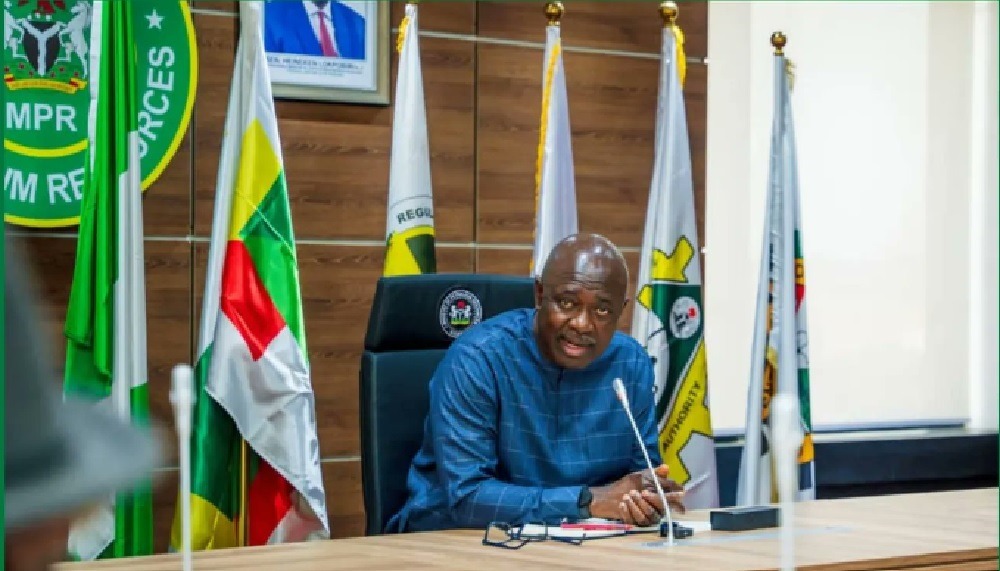
The Minister of State for Petroleum Resources (Oil), Senator Heineken Lokpobiri, has announced that the country has broken a 10-year drought in oil sector investments, thanks to reforms introduced under President Bola Tinubu’s administration.
Lokpobiri disclosed this in a statement issued by his Special Adviser on Media and Communication, Nneamaka Okafor, on Thursday. The remarks followed his keynote address at the United States–Nigeria Council’s session on oil sector collaboration, held on the sidelines of the ongoing United Nations General Assembly in New York.
According to the minister, the period of stagnation crippled growth, eroded investor confidence, and left several oil blocks inactive. However, he stressed that recent policy changes have repositioned Nigeria as an attractive destination for global energy investments.
“At the heart of Nigeria’s renewed energy agenda is a clear and deliberate policy direction: to open our oil sector to deeper, smarter, and more strategic partnerships,” Lokpobiri stated. “The time to invest is not just now—it is ripe.”
Lokpobiri explained that for over ten years, prior to President Tinubu’s leadership, Nigeria did not record any new investments in its oil sector.
He noted that this trend has reversed, with fresh commitments now running into billions of dollars.
“All inactive blocks during the period of no investments are now in the basket and up for grabs,” he said. “We have a longstanding relationship with the United States and US companies, but beyond these, there are new opportunities for investors in both upstream and other oil industry segments.”
He highlighted that Nigeria’s oil production has already recorded significant progress in the last two years, owing to bold reforms and globally competitive fiscal regimes.
Central to this transformation, the minister noted, is the successful implementation of the Petroleum Industry Act, which he described as a robust, investor-friendly legal framework.
“The PIA has helped us to create an environment where investors can operate with clarity, confidence, and security,” Lokpobiri said. He added that the legislation has provided a stable platform for driving growth, encouraging partnerships, and restoring long-term investor trust.
The minister also reassured the international community of Nigeria’s commitment to a balanced energy transition. While fossil fuels will continue to play a vital role in financing the country’s energy mix, Nigeria remains committed to global climate agreements.
“We are fully aligned with the Paris Agreement and remain committed to cleaner, more sustainable exploration,” Lokpobiri said. “Our doors are open, our laws are clear, and our environment is conducive. Now is the time for US and global investors to become part of Nigeria’s energy success story.”
Recent government actions—including the removal of fuel subsidies, deregulation of the downstream sector, and renewed emphasis on gas monetisation—have also been flagged as proof of Nigeria’s seriousness in reforming its energy industry.
These reforms, Lokpobiri noted, are already restoring confidence among international partners and are expected to drive Nigeria closer to its investment targets. The federal government aims to attract $30bn in sectoral investments by 2027 and at least $60bn by 2030.
The minister further stressed that Nigeria’s reforms are not only enhancing domestic production but also positioning the country as a dependable energy hub across West Africa and the continent at large.
“Thanks to bold reforms and globally competitive fiscals, Nigeria has significantly ramped up production and repositioned itself as a dependable energy hub,” Lokpobiri declared.
He urged global investors to seize the opportunities emerging from Nigeria’s rapidly transforming oil and gas industry, stressing that the sector’s success would also contribute to regional stability and global energy security.
Lokpobiri’s call to investors comes at a critical moment, as Nigeria seeks to consolidate its oil sector recovery while balancing its energy transition agenda. By leveraging both fossil fuels and renewable resources, the government hopes to sustain growth, expand job opportunities, and strengthen the nation’s economic base.
With reforms now underway and billions already committed, stakeholders believe Nigeria’s oil industry may be entering a new era—one defined by transparency, competitiveness, and stronger global partnerships.
The Nigeria Union of Journalists (NUJ) has described the victory of Jide Oyekunle, a journalist with Independent Newspaper, at the ECOWAS Community Court of Justice as a major victory for journalism and press freedom in Nigeria.
The union, in its reaction to the judgment awarding N10 million in damages against the Nigerian government over the violation of Oyekunle’s rights, said the ruling represents an important step towards protecting journalists and defending media freedom.
The NUJ in a statement signed by the National Secretary, Achike Chude on Wednesday commended the efforts of Avocats Sans Frontières France (ASF France) for providing legal support and standing with the journalist throughout the legal process.
It said the judgment serves as a reminder of the need for the protection of journalists who perform their constitutional duty of informing the public, adding that attacks and harassment against media practitioners must not go unchecked.
The union urged the Nigerian government to comply with the ECOWAS Court judgment by paying the N10 million damages awarded to Oyekunle without delay.
According to the NUJ, prompt compliance with the ruling would demonstrate respect for the rule of law and reinforce Nigeria’s commitment to upholding human rights and press freedom.
The union further called for stronger measures to guarantee the safety and independence of journalists across the country.
Signed
Comrade Achike Chude
National Secretary
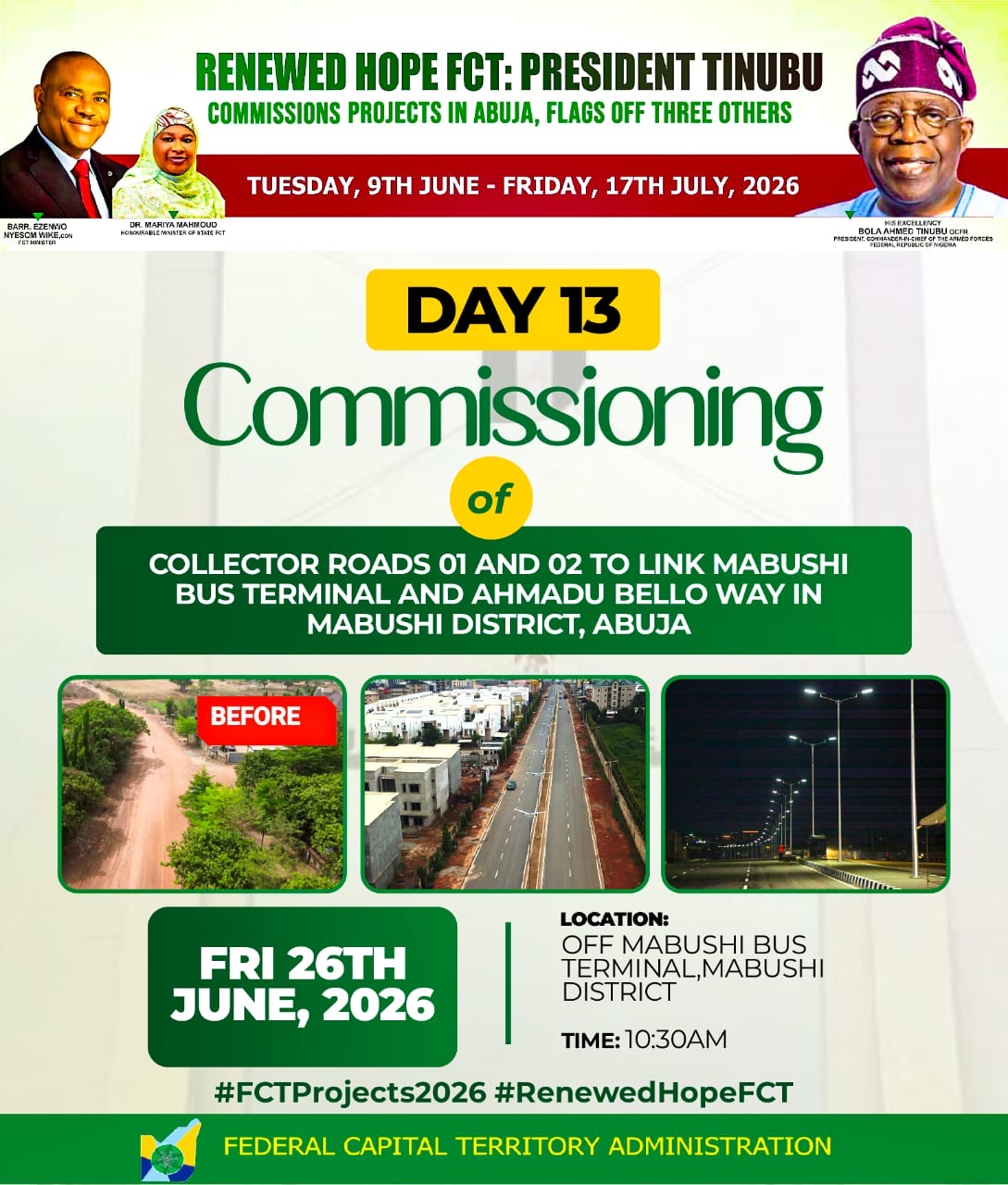
President Tinubu Will Commission Roads 01 and 02 Linking Mabushi Bus Terminal and Ahmadu Bello Way Today
#FCTRenewedHope
#FCTProjectsCommissioning
News
BEWARE: FG warns 26 States of flood, places, Bayelsa, Delta, Lagos, Adamawa, Benue, others as critical risk areas

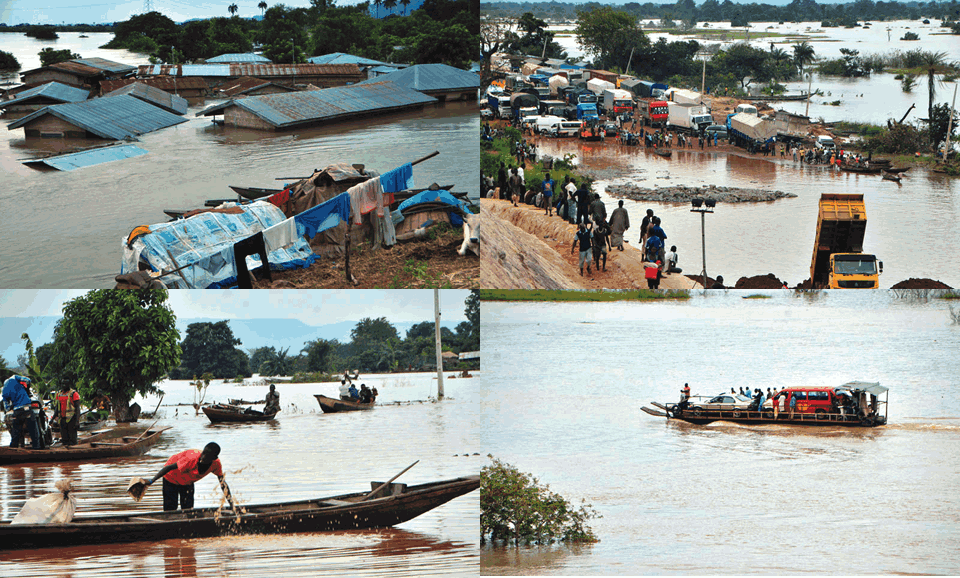
The Federal Government has alerted residents of 26 states and the Federal Capital Territory (FCT) to the possibility of flooding between June 22 and July 5, 2026, following forecasts of heavy rainfall in different parts of the country.
The warning was issued by the Federal Ministry of Environment through the National Flood Early Warning Centre under its Erosion, Flood and Coastal Zone Management Department.
The ministry said several communities across the country have been identified as areas that could face serious flood threats during the period.
According to the forecast released on June 22, heavy rainfall is expected in many locations, raising concerns about possible flooding in vulnerable communities.
States placed under the critical-risk category include Abia, Adamawa, Akwa Ibom, Anambra, Bayelsa, Benue, Cross River, Delta, Ebonyi, Edo, Ekiti, Enugu, Imo, Kogi, Kwara, Lagos, Niger, Ogun, Ondo, Osun, Oyo and Rivers.
In Abia State, the affected communities include Aba, Arochukwu and Umuahia. In Adamawa, the ministry listed Jimeta and Numan, while Eket, Oron and Uyo were named in Akwa Ibom. In Anambra, Onitsha Inland Town and Awka Urban Drainage Corridors were identified as vulnerable locations.
Bayelsa communities such as Yenagoa, Brass and Nembe Town were also listed among areas that could be affected by flooding.
Other locations mentioned include Makurdi, Gboko and Katsina-Ala in Benue State; Calabar Metropolis and Creek Town in Cross River State; Asaba, Warri and Sapele in Delta State; and Abakaliki, Afikpo and Onueke in Ebonyi State.
The ministry also identified Benin City Urban Core and Auchi in Edo State, Ado-Ekiti and Ikere-Ekiti in Ekiti State, as well as Enugu, Nsukka and Oji River Town in Enugu State.
In Imo State, Owerri, Orlu and Okigwe were listed, while Lokoja and Ajaokuta were named in Kogi State. Communities such as Ilorin, Jebba and Pategi in Kwara State were also included in the warning.
Several parts of Lagos State were equally listed among the areas at risk.
These include Agege, Alimosho, Apapa, Badagry, Ikeja, Ikorodu, Lagos Island, Lekki and Surulere.
In Niger State, Bida, Minna, Mokwa, Suleja and Kontagora were identified, while Abeokuta, Ota and Sagamu were listed in Ogun State.
The flood alert further covered Akure, Owo and Okitipupa in Ondo State; Oshogbo, Ile-Ife and Ilesa in Osun State; Ibadan, Ogbomoso and Oyo in Oyo State; as well as Port Harcourt Urban Core, Bonny, Ahoada and Omoku in Rivers State.
Apart from the states under the critical-risk category, the ministry also placed parts of Adamawa, the FCT, Kebbi, Kogi, Nasarawa, Plateau and Taraba states under a high-risk category.
Communities listed in this group include Yola North, Yola South, Mubi and Gurin in Adamawa State; Abuja Municipal, Gwagwalada, Kubwa, Nyanya and Wuse in the FCT; Birnin Kebbi and Argungu in Kebbi State; Bako in Kogi State; and Keffi, Lafia, Karu and Toto in Nasarawa State.
The warning also covered Jos and Jos North in Plateau State, as well as Jalingo, Wukari, Takum, Serti and Karim Lamido in Taraba State.

NUJ Hails Oyekunle’s ECOWAS Court Victory, Says It Is a Win for Journalism, Press Freedom

DAY 13 of Projects Commissioning in the FCT

Two men to die by hanging over abduction of NYSC staff




-
 News24 hours ago
Xenophobic attacks: FG evacuates another 66 citizens from South Africa
-
 News21 hours ago
DAY 12 of Projects Commissioning in the FCT: Watch Arterial Road N16 – Ring Road Il Intersection linking Jahi to Gwarimpa District
-
 News20 hours ago
Soldiers Reject Fresh Move To Deploy ‘Repentant’ Terrorists In Military Operations, Fear Sabotage, Intelligence Leaks
-
 News24 hours ago
ICPC arraigns El-Rufai, six others over alleged N8.68bn CCTV contract fraud
-

 News21 hours ago
FG freezes bank accounts of confirmed terrorism financiers(See list)
-
 News20 hours ago
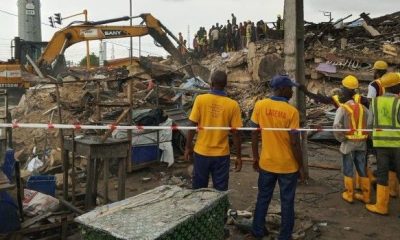
10 survived as building collapses in Lagos
-

 News19 hours ago
Finally, oil prices crash to $72 pre-war level
-
 Sports24 hours ago
South Africa Coach Broos Boasts After Defeating South Korea In World Cup, Says We silenced critics