
Connect with us

Economy

CBN lists benefits of Nigeria exiting FATF grey list

Published

on

ADVERTISEMENT
Zoom Ad
ADVERTISEMENT
Zoom Ad

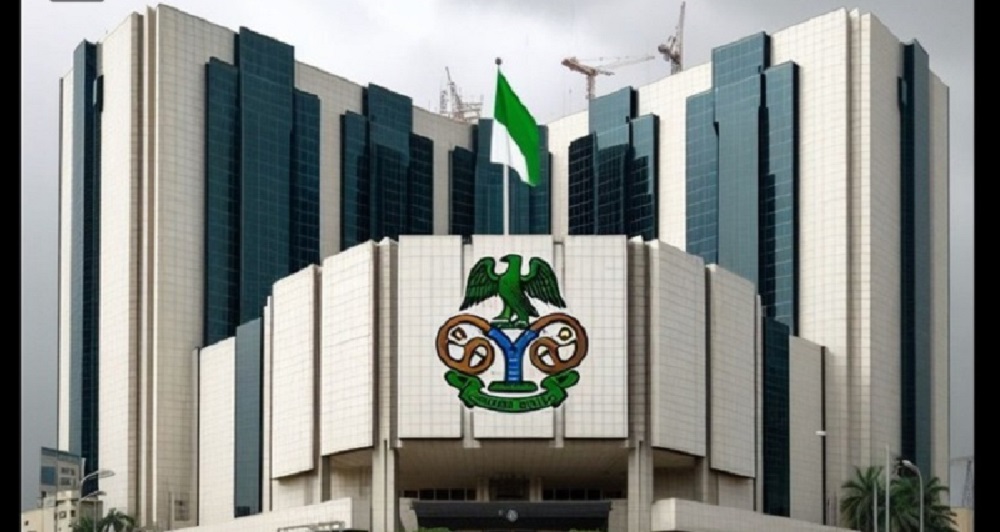
The Central Bank of Nigeria (CBN) said Nigeria’s removal from the Financial Action Task Force (FATF) grey list will strengthen investor confidence, ease cross-border transactions and restore the country’s reputation as a credible financial jurisdiction.


In its statement by Mrs. Hakama Sidi Ali, Acting Director, Corporate Communications Department, CBN on Saturday, the Bank said the delisting will lower the cost of correspondent banking and international transactions, facilitate smoother trade and investment flows, and make Nigeria more attractive to foreign investors and development partners.

The CBN described the development as a significant milestone that will reduce perceived financial risk and support the nation’s broader efforts to deepen financial inclusion and economic growth.

The Bank added that Nigeria’s removal from the grey list will yield tangible benefits for businesses and households alike — lowering compliance costs, improving access to international finance, and making cross-border transactions faster and more affordable.

Advertisement

Over time, the CBN said, these gains should translate into smoother trade settlements, quicker remittance inflows and more predictable access to foreign exchange — measures that will enhance livelihoods, support enterprise growth and deepen financial inclusion.

The CBN said it played a central role in the process, noting that its contribution centred on enhancing supervision, governance and transparency across the financial system.

It explained that oversight of financial institutions was strengthened through updated anti-money laundering and counter-terrorism financing (AML/CFT) regulations, risk-based supervision and fit-and-proper assessments.

In addition, compliance reporting and monitoring were also expanded across remittance channels, bureaux de change and fintech platforms to improve traceability and transparency.

Advertisement

The Bank enhanced inter-agency data-sharing and enforcement coordination between itself, the Nigerian Financial Intelligence Unit (NFIU), the Economic and Financial Crimes Commission (EFCC) and other law enforcement bodies. The CBN also implemented market governance tools, including the Foreign Exchange Code (FX Code) and the Electronic Foreign Exchange Matching System (EFEMS), which further improved the integrity and transparency of the financial markets.

The Bank said these measures were implemented alongside legal and operational reforms undertaken by other competent authorities and were crucial in addressing the strategic deficiencies identified by FATF and its regional body, the Inter-Governmental Action Group Against Money Laundering in West Africa (GIABA).

CBN Governor Olayemi Cardoso was quoted in the statement as praising the collective effort.

“This is an important achievement for Nigeria’s financial system. Our strengthened AML/CFT framework and closer supervisory engagement with financial institutions have helped restore confidence internationally,” the Governor said.

Advertisement

He added: “We remain committed to sustaining these reforms, deepening transparency, and working with domestic and international partners to prevent illicit financial flows and protect the integrity of our financial system.”

The CBN credited coordinated action across government institutions for the successful outcome, commending the NFIU for leading technical engagement with FATF, law enforcement agencies for enforcement work, and the Office of the Attorney-General and the National Assembly for the legislative amendments that enabled compliance with FATF requirements.

The Bank said it would not relent after the delisting. “Sustaining compliance with global AML/CFT standards is a continuous process,” the statement said, adding that the CBN will continue to work closely with AML/CFT competent authorities to ensure that the gains are consolidated and that Nigeria avoids any future reclassification.

The CBN also argued that the FATF decision reinforces a broader restoration of global confidence in Nigeria’s economic management. It pointed to recent international assessments that reflect improving external balances and credibility in policy execution — developments the Bank said are consistent with the momentum from the delisting.

Advertisement

The statement identified the constructive credit outlook from major rating agencies and the International Monetary Fund’s 2025 Article IV findings, which noted improved reserve adequacy, greater transparency and a reform agenda increasingly aligned with global standards.

The Bank urged all financial institutions to remain diligent and to sustain high standards of compliance, corporate governance and internal controls so the country can fully reap the benefits of delisting.

It stressed that improvements in correspondent banking relationships and reduced transaction frictions should translate into easier international trade payments and more predictable access to foreign financial services for exporters, importers and remitters.

Advertisement
Continue Reading
Advertisement

Economy

SEE Black Market Dollar To Naira Exchange Rate Today 24th June 2026

Published

on

ADVERTISEMENT
Zoom Ad
ADVERTISEMENT
Zoom Ad

See Exchange Rate As Naira Gains 0.07%

The Black Market Dollar-to-Naira Exchange Rate for 24th June 2026 Can Be Accessed Below.

NOTE: The exchange rate changes hourly. It depends on the volume of dollars available and the Demand. This means…you can buy or sell 1 dollar at a certain rate, and the price can change (high or low) within hours.

The official naira black market exchange rate in Nigeria today, including the Black Market rates, Bureau De Change (BDC), and CBN rates.

Advertisement

Note that the exchange rate is subject to hourly fluctuations influenced by the supply and demand of dollars in the market.

What’s the dollar to naira black market today, 24th June 2026?

The exchange rate for a dollar to naira at Lagos Parallel Market (Black Market) players sell a dollar for ₦1395 and buy at ₦1385 on Wednesday, 24th June, 2026, according to sources at Bureau De Change (BDC).
Please note that the Central Bank of Nigeria (CBN) does not recognize the parallel market (black market), as it has directed individuals who want to engage in Forex to approach their respective banks.

Dollar to Naira Black Market Rate Today
Dollar to Naira (USD to NGN) Black Market Exchange Rate Today
Selling Rate ₦1395
Buying Rate ₦1385
Dollar to Naira CBN Rate Today
Dollar to Naira (USD to NGN) CBN Rate Today
Highest Rate ₦1375
Lowest Rate ₦1365

Advertisement
Continue Reading

Economy

SEE Dollar to Naira exchange rate today, June 23, 2026

Published

on

ADVERTISEMENT
Zoom Ad
ADVERTISEMENT
Zoom Ad

The Nigerian naira traded at relatively stable levels against the United States dollar on Tuesday, June 23, 2026, across both the official and parallel foreign exchange markets, as market participants continued to monitor liquidity conditions and foreign exchange demand.

Latest data from the Nigerian Foreign Exchange Market (NFEM) showed that the naira exchanged at approximately ₦1,366.41 per dollar at the official market. The NFEM rate, which is published by the Central Bank of Nigeria, represents the volume-weighted average exchange rate for the day.

The official exchange rate has remained within the ₦1,350-₦1,370 range in recent weeks, supported by improved liquidity and sustained foreign portfolio inflows into local assets.

In the parallel market, also known as the black market, the dollar traded at around ₦1,400 for buying and between ₦1,410 and ₦1,420 for selling, depending on location and dealer quotations.

Advertisement

The spread between the official and parallel market rates remained relatively narrow compared with previous years, reflecting ongoing reforms aimed at improving transparency and efficiency in Nigeria’s foreign exchange market.

Currency traders said demand for dollars from importers, travellers and businesses remained steady, although the naira has benefited from increased confidence in the foreign exchange market and improved dollar supply.

Analysts noted that exchange rates could continue to fluctuate in response to changes in foreign exchange inflows, global oil prices and domestic economic conditions.

As of the prevailing rates, $100 would exchange for about ₦136,641 at the official NFEM window, while the same amount could fetch between ₦141,000 and ₦142,000 in the parallel market.

Advertisement

Foreign exchange rates remain subject to intraday movements and may vary across banks, bureaux de change operators and other market participants.

Continue Reading

Economy

FAAC: FG, States, LGCs share N2.3tn as May revenue

Published

on

By

ADVERTISEMENT
Zoom Ad
ADVERTISEMENT
Zoom Ad

A total sum of N2.300 trillion, being the May 2026 Federation Account Revenue, has been shared between the federal government, states, and the local government councils.

In a statement on Wednesday by the spokesperson of the Office of the Accountant General of the Federation, Bawa Mokwa, the revenue was shared at the June 2026 Federation Account Allocation Committee FAAC meeting held in Abuja.

The N2.300 trillion total distributable revenue comprised distributable statutory revenue of N1.611 trillion and distributable Value Added Tax (VAT) revenue of N688.785 billion.

A communiqué issued by the Federation Account Allocation Committee (FAAC) indicated that the total gross revenue of N3.395 trillion was available in the month of May 2026. Total deduction for cost of collection was N123.546 billion, while total transfers and refunds were N971.610 billion.

Advertisement

According to the communiqué, gross statutory revenue of N2.651 trillion was received for the month of May 2026. This was higher than the sum of N2.378 trillion received in the preceding month by N273.623 billion.

Gross revenue of N743.668 billion was available from the Value Added Tax (VAT) in May 2026. This was lower than the N806.617 billion available in the month of April 2026 by N62.949 billion.

The communiqué stated that from the N2.300 trillion total distributable revenue, the federal government received a total sum of N818.680 billion, and the state governments received a total sum of N759.141 billion.

The local government council received N534.277 billion, while the sum of N188.132 billion (13% of mineral revenue) was shared with the benefiting state as derivation revenue.

Advertisement

On the N1.611 trillion distributable statutory revenue, the communiqué stated that the federal government received N749.801 billion and the state governments received N380.309 billion.

The local government councils received N293.202 billion, and the sum of N188.132 billion (13% of mineral revenue) was shared with the benefiting states as derivation revenue.

From the N688.785 billion distributable Value Added Tax (VAT) revenue, the federal government received N68.879 billion, the state governments received N378.832 billion, and the local government councils received N241.075 billion.

In May 2026, Companies Income Tax (CIT), CGT, SDT, Petroleum Profit Tax (PPT), Hydrocarbon Tax (HT), and Oil and Gas Royalty increased significantly, while Import Duty, Value Added Tax (VAT), Excise Duty, and CET Levies decreased considerably.

Advertisement
Continue Reading

Trending

Copyright © 2024 Naija Blitz News