Connect with us

News

Abuja gridlock: ADSC research, alerts authorities, says there’s urgent need for investment, administrative decentralization

Published

on

ADVERTISEMENT
Zoom Ad
ADVERTISEMENT
Zoom Ad

…says Abuja must not wait to become permanently gridlocked before structural reform is undertaken


The Africa Development Studies Centre (ADSC), in its research findings on Abuja gridlock has said there’s urgent need for investment and administrative decentralization to curb the menace in the Federal Capital Territory FCT.

This was contained in a statement issued by ADSC’s President, Sir, Victor Oluwafemi on Wednesday where he noted that he issued this statement on the strength of ADSC’s policy research and urban systems analysis on the worsening traffic gridlock within the Federal Capital Territory.

Oluwafemi explained that: “Our findings are clear. Abuja’s morning and evening congestion has moved beyond inconvenience.

Advertisement

” It is now a structural governance challenge with direct implications for national productivity, public service performance, staff wellbeing, investor confidence, and the long term liveability of the capital.

” Every workday, the same pattern repeats itself. In the mornings, a large majority of vehicles flow toward the same central corridors because government offices, public service points, and high activity institutions remain excessively clustered in the city core.

“In the evenings, the same traffic reverses in a single wave, creating daily paralysis that drains time, energy, and morale.

“ADSC’s research indicates that this problem is driven primarily by institutional concentration, not simply by limited road space.

Advertisement

” The more Abuja continues to concentrate government activity into the same tight centre, the more congestion becomes inevitable, regardless of how many interchanges are built.

“While road expansions and corridor upgrades remain important, they are insufficient as a standalone solution. Global urban planning evidence shows that where traffic demand is generated by concentrated destinations, increasing road capacity often produces temporary relief before congestion returns as demand rises to match the new capacity.

” Abuja must therefore shift from a road led response to a governance led, spatial planning strategy that reduces the daily need for mass commuting into the city centre.

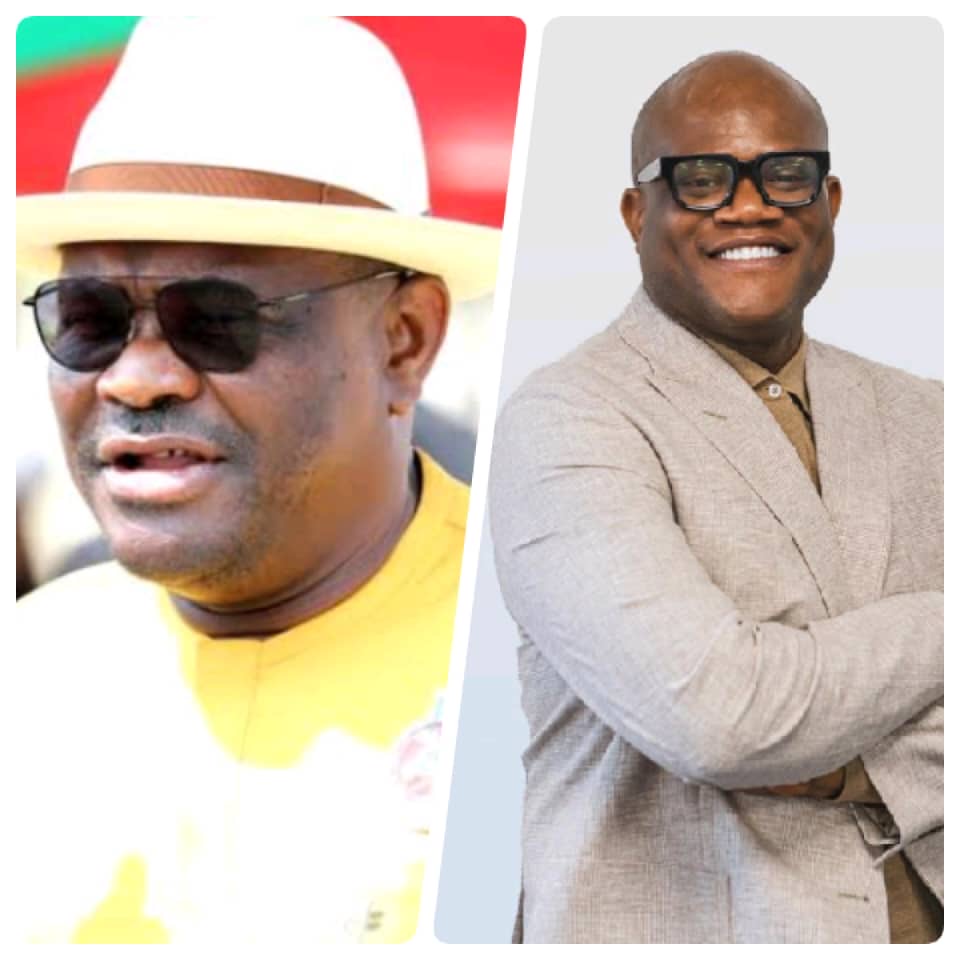
“On the basis of these findings, I respectfully call on Mr President and the Honourable Minister of the Federal Capital Territory, Barrister Nyesom Wike, to adopt an evidence led decongestion programme anchored on accelerated satellite town development and administrative decentralisation.

Advertisement

” The Federal Capital Territory has substantial land and expansion potential across Kwali, Gwagwalada, Kuje, Bwari, and Abaji.

” These municipalities should no longer remain peripheral settlements while the city centre carries an unsustainable load. When satellite towns are treated only as residential spillover, they create commuter pressure rather than economic balance.

“The solution is to build them as functional municipal centres where people can work, access services, invest, and live without being compelled to enter central Abuja daily.

Oluwafemi who is also Founder, Douglas Development Institute (DDI) said: “ADSC recommends the phased relocation of selected non sensitive and high traffic government functions to these satellite municipalities.

Advertisement

“Priority should be given to back office directorates and support units, training institutions and conference facilities, records and archives, stores and logistics centres, procurement processing and compliance units, and high footfall service points that can operate efficiently as one stop municipal hubs.

“This will reduce peak hour traffic demand, improve punctuality, lift staff motivation, and spread economic activity across the wider FCT.

“In addition, we recommend accelerated digitisation of government workflows so that approvals, memos, reporting, file routing, and inter agency coordination occur securely through digital systems rather than requiring constant physical movement.

“When governance processes become digitally enabled, congestion reduces organically, service delivery becomes faster, transparency improves, and the entire administration becomes more efficient.

Advertisement

“Finally, ADSC supports a broader national approach where suitable federal institutions, where feasible, are relocated to other states of the federation.

” This will reduce Abuja’s long term administrative burden, strengthen national belonging through a more visible and balanced federal presence, and stimulate development and job creation beyond the capital.

“Abuja must not wait to become permanently gridlocked before structural reform is undertaken. A capital that cannot move will eventually struggle to lead. The time to act is now, while reforms can be implemented in a phased, orderly, and dignified manner that protects productivity, public health, and the identity of Abuja as a planned and functional capital.
Advertisement
Continue Reading
Advertisement

News

Senate Orders Kyari’s Arrest Over Alleged ₦210 Trn NNPCL Financial Infractions

Published

on

ADVERTISEMENT
Zoom Ad
ADVERTISEMENT
Zoom Ad

… As Former CFO Dismisses Missing Funds Claim, Defends Company’s Accounts

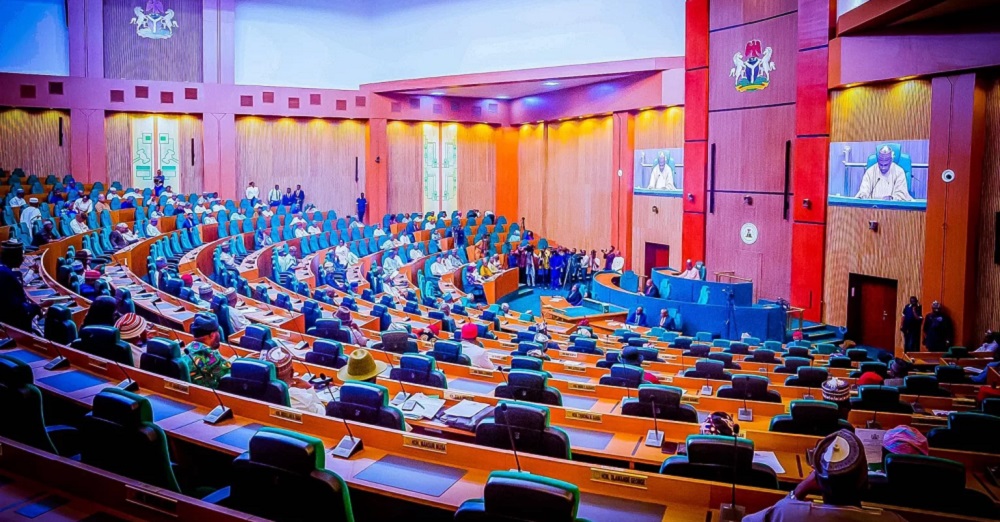
A dramatic session unfolded at the Senate on Wednesday as the Senate Committee on Public Accounts ordered the arrest of former Group Chief Executive Officer of the Nigerian National Petroleum Company Limited (NNPCL), Mele Kyari, over his failure to appear before lawmakers investigating alleged unaccounted funds amounting to ₦210 trillion between 2017 and 2023.
The committee’s directive followed Kyari’s absence from an investigative hearing examining 19 audit queries raised against the national oil company by the Office of the Auditor-General of the Federation.

Lawmakers insisted that the former NNPCL chief had repeatedly failed to honour invitations despite several opportunities granted to him.

The hearing took another twist when former Chief Financial Officer of the NNPCL, Umar Ajiya Isa, strongly rejected claims that ₦210 trillion was missing from the company’s accounts. He argued that the figure being cited as unaccounted for exceeded the total revenue generated by the corporation during the period under review.
During deliberations, some committee members urged restraint. Senator Saliu Mustapha and Senator Tony Nwoye informed the committee that Kyari was reportedly receiving medical treatment in Germany and should be granted another opportunity to appear before lawmakers.

Advertisement

Their plea, however, met stiff resistance from other members of the panel who insisted that verbal explanations were insufficient. Senator Abdul Ningi argued that any claim of illness should be backed by documentary evidence rather than mere verbal assurances.

The strongest push for enforcement came from Senator Victor Umeh, who formally moved a motion calling for the issuance of a warrant of arrest against the former NNPCL chief. The motion received immediate support from the committee’s Deputy Chairman, Senator Peter Nwaebonyi.

Nwaebonyi told the committee that granting Kyari another opportunity to appear voluntarily would amount to chasing shadows. He noted that the committee had already convened nine separate meetings on the matter, with three of them presided over by him, without securing the former NNPCL chief’s appearance.

“This is the ninth time this committee is meeting on the 19 audit queries raised against NNPCL. The time to issue a warrant of arrest is now because the committee must conclude its assignment and report back to the Senate,” he declared.

Advertisement

Following a voice vote, Committee Chairman Senator Ibrahim Dankwambo announced the panel’s decision, directing security agencies to ensure Kyari’s appearance before the committee.
“Anywhere Mele Kyari is, he should be arrested and brought before this committee,” Dankwambo ruled.
While the committee intensified pressure on the former NNPCL boss, Isa mounted a vigorous defence of the company’s financial records. He described the allegation of ₦210 trillion in missing funds as impossible, insisting that the figures did not align with NNPCL’s audited financial statements.

According to him, the company generated approximately ₦54.5 trillion in revenue during the period under review, even before accounting for production costs. He argued that it would be mathematically impossible for ₦210 trillion to be missing when the total earnings were significantly lower than the amount being alleged.

“To be clear, if money had gone missing during our tenure, we would not have had the confidence to publish audited accounts. For over four decades, NNPC accounts were either not prepared, not published, or not submitted to the Auditor-General. The fact that audited accounts were released demonstrates transparency,” he said.

Isa also dismissed allegations that ₦5.8 billion was spent on the registration of NNPC Limited, describing the claim as false and harmful. He challenged the committee to verify the matter independently with the Corporate Affairs Commission and the Nigeria Revenue Service.
Warning against the consequences of inaccurate financial allegations, the former CFO said unsubstantiated claims could damage Nigeria’s international reputation and affect investor confidence. He recalled how a previous petition allegedly disrupted efforts to secure about $2.5 billion in Chinese financing for the Ajaokuta-Kaduna-Kano Gas Pipeline project, despite sovereign guarantees backing the deal.
He further urged anti-corruption and intelligence agencies, including the Economic and Financial Crimes Commission and the Nigerian Financial Intelligence Unit, to investigate the allegations thoroughly and establish the facts. “When people claim ₦210 trillion is missing, they should be asked where exactly it went,” he stated.
At the conclusion of the hearing, the committee directed Isa and former Chief Upstream Investment Officer, Bala Wunti, to return in two weeks as lawmakers continue their probe into the audit queries and the financial operations of the NNPCL during the period under review.

Advertisement
Continue Reading

News

Court orders unconditional release of Okuama leaders

Published

on

By

ADVERTISEMENT
Zoom Ad
ADVERTISEMENT
Zoom Ad

The Federal High Court sitting in Warri, Delta State, on Wednesday ordered the unconditional release of Prof. Arthur Ekpekpo and other detained leaders of Okuama community in Ughelli South Local Government Area.

Delivering judgment in a fundamental rights enforcement application, Justice Hyeladzira Nganjiwa granted the order while ruling on a motion filed on May 4, 2026.

The case, Suit No. FHC/WR/CS/42/2024: Prof. Arthur Ekpekpo & Ors v. Federal Government of Nigeria & Ors, also has July 13, 2026, fixed for continuation of hearing on the substantive matter.

The court had earlier ordered that the detained persons be produced before it, a directive which was reportedly not complied with by the military authorities.

Advertisement

Counsel to the applicants, Dr. Jonathan Ekperusi, appeared alongside Andrew Ubido, Esq., while Magdalene Irorere held brief for the 3rd and 5th respondents during the proceedings.

Following the ruling, members of the Okuama community expressed relief and joy over the court’s decision.

Victor Akemor, speaking on behalf of some community members, described the ruling as a welcome development.

“This is great news. Finally, we have reason to celebrate. The court is indeed the hope of the common man,” he said.

Advertisement

He also called on the Delta State Government to assist in facilitating the implementation of the court order and commended community leaders and legal representatives for their efforts.

The detained individuals, including Prof. Arthur Ekpekpo, President General of Ewu Kingdom; Chief Belvis Adogbo; Dennis Malaka; and Mabel Owhemu, have been in custody for nearly two years.

One of the detainees, Pa James Oghoroko, reportedly died while in detention.

The Okuama leaders were arrested by military personnel between August 18 and 19, 2024, following the killing of 17 soldiers near the community.

Advertisement
Continue Reading

News

FG, Ethiopia Finalise Deal To Transfer Over 100 Nigerian Prisoners

Published

on

By

ADVERTISEMENT
Zoom Ad
ADVERTISEMENT
Zoom Ad

More than 100 Nigerians serving jail terms in Ethiopia may soon be transferred to Nigeria as both countries conclude arrangements for a prisoner transfer agreement.

Minister of Foreign Affairs, Bianca Odumegwu-Ojukwu, arrived in Addis Ababa for the signing of the pact alongside the Attorney-General of the Federation and Minister of Justice, Lateef Fagbemi.

The Nigerian delegation was received by Ethiopia’s Minister of State for Foreign Affairs and the country’s Chief of Protocol.

According to Odumegwu-Ojukwu, the agreement is scheduled to be signed on Wednesday.

Advertisement

She disclosed that four Nigerian inmates died during the lengthy process of negotiations, judicial reviews and ratification of the agreement.

“We cannot afford to lose any more precious lives. We are determined to bring home the living,” she stated in a post on her X handle.

The minister identified Kaliti Prison and Aba Samuel Prison as the facilities where the affected Nigerians are being held.

Odumegwu-Ojukwu described the agreement as a product of the longstanding relationship between Nigeria and Ethiopia, anchored on humanitarian considerations, justice and bilateral cooperation.

Advertisement

She said that while the Nigerian government continues to urge its citizens abroad to obey the laws of their host countries and protect the nation’s image, it remains committed to ensuring that Nigerians facing legal challenges overseas are treated fairly and in accordance with established legal frameworks.

The minister added that the welfare and protection of Nigerians abroad remain a key priority of President Bola Tinubu’s administration.

She also expressed appreciation to the Ethiopian government for its cooperation in bringing the agreement to fruition.

Advertisement
Continue Reading

Trending

Copyright © 2024 Naija Blitz News