By Gloria Ikibah


Nigeria has recorded a dramatic rebound in foreign investment, with capital importation climbing to roughly $21 billion in the first ten months of 2025, a sharp rise from about $12 billion in 2024 and less than $4 billion in 2023.
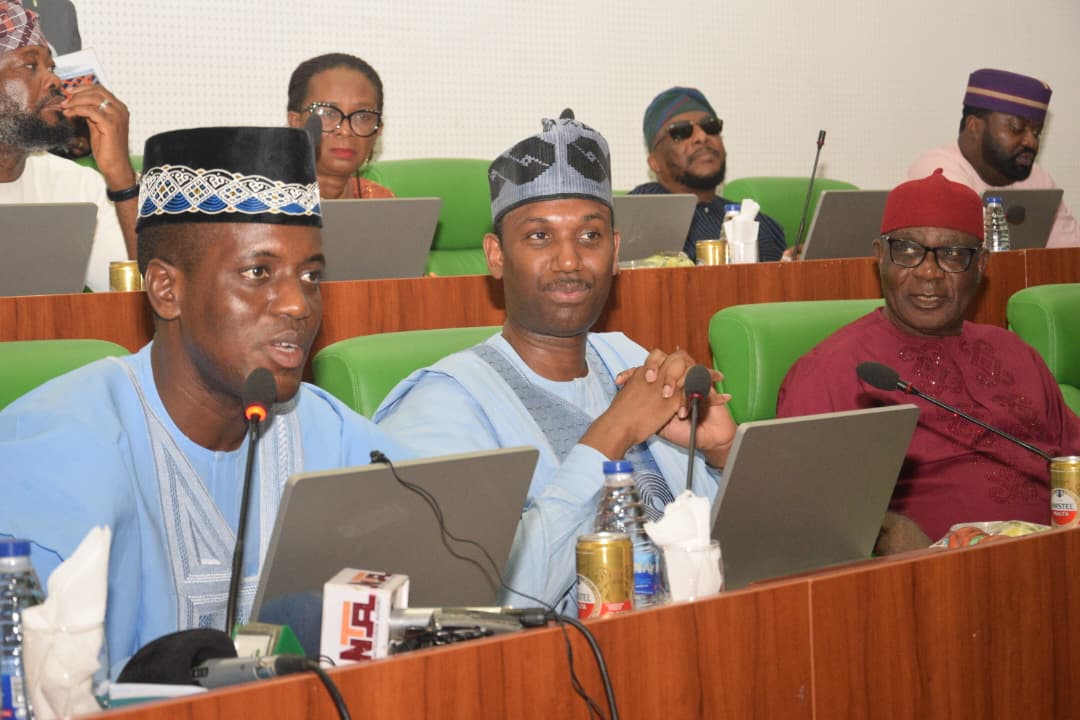
The Minister of Industry, Trade and Investment, Dr Jumoke Oduwole, presented the figures during her ministry’s 2026 budget defence before the Joint House of Representatives Committee on Commerce in Abuja, describing the surge as a sign of renewed investor confidence and the payoff from ongoing economic reforms. 
She linked the upswing to a series of targeted interventions, including the packaging of more than $5 billion in investment-ready projects, the creation of sector-focused deal rooms and the hosting of Nigeria’s first Domestic Investors’ Summit. Those efforts, she said, helped unlock stalled financing channels, resolve around 50 long-standing investor bottlenecks and fast-track projects from concept to execution.
The ministry also stepped up its international engagement, holding more than 100 bilateral investment meetings across major markets such as the United Arab Emirates, Brazil, Japan, the United States and the United Kingdom.
Sustained collaboration under the Nigeria–UK Economic and Trade Partnership, which began in the second quarter of 2024, has yielded significant dividends. UK investors accounted for roughly 65 per cent of Nigeria’s foreign capital inflows in 2025, underscoring the strength of the relationship.
On the trade front, Nigeria posted a surplus in 2025, with total trade valued at approximately ₦113 trillion in the first three quarters of the year. Exports rose by about 11 per cent year-on-year to $6.1 billion — the highest level ever recorded in both value and volume.
The minister highlighted intensified efforts to boost non-oil exports, widen market access for Nigerian goods and strengthen quality infrastructure to meet global standards. Special Economic Zones were singled out as a major driver of diversification, generating more than $500 million in export earnings and creating upwards of 20,000 direct jobs.
Beyond the headline numbers, the ministry’s strategy has focused on reinforcing Nigeria’s productive capacity and linking domestic industries to regional and international demand. Priority sectors include agro-processing, solid minerals beneficiation, light manufacturing and digital services.
Despite the progress, Oduwole warned that sustaining the momentum would require stronger financial backing. She appealed for an upward review of the ministry’s proposed N2.72 billion capital allocation for 2026, arguing that the sum would be insufficient to execute key programmes at the scale required.
She pointed to the ministry’s recent financial track record to support the request. In 2024, of the N14.39 billion appropriated, personnel and overhead allocations were fully utilised, while 93.2 per cent of the N8.36 billion capital vote was released and entirely spent. Revenue collection exceeded its target by about N154 million, with full remittance to the Consolidated Revenue Fund.
In 2025, the ministry’s total budget stood at N11.80 billion. Although personnel and overhead allocations were again fully utilised, none of the N3.89 billion capital allocation had been released at the time of reporting. Even so, revenue performance surpassed projections by around ₦100 million, all of which was duly remitted.
Looking ahead, the 2026 budget framework is centred on implementation — deepening industrial policy through value chain development, expanding industrial clusters and Special Economic Zones, and strengthening trade facilitation and investment promotion to keep Nigeria firmly on the investment map.
“The emphasis remains ‘Nigeria First’, prioritising local production, supporting non-oil exports, and deepening domestic investment.
“Domestic investors will remain the anchor and strongest signal of confidence in the economy, while global investors will continue to be engaged through reverse trade missions and in-country investment visits”, she said.
Earlier, Chairman of the Committee, Rep. Ahmed Munir assured the ministry of legislative backing but emphasised that the National Assembly would prioritise value-for-money and measurable economic impact over mere budget utilisation.
He said 2025 was a year of “surviving the storm,” adding that the focus must now shift to “commanding the sea” by transforming Nigeria from a consumption-driven economy into a production powerhouse.
Munir stressed that the committee would scrutinise how the 2026 budget strengthens local content, supports “Made-in-Nigeria” initiatives, and empowers Small and Medium Enterprises through accessible credit, reduced regulatory bottlenecks, and improved ease of doing business.
“With the African Continental Free Trade Area fully operational, Nigeria cannot afford to be a spectator. We must invest strategically in standardisation, certification, digital trade infrastructure, and export readiness,” he said.