News
Atiku And Other Northern Muslims Reject INEC 2027 Elections Dates
The announcement by the Independent National Electoral Commission (INEC) fixing dates for the 2027 general elections has sparked widespread criticism, particularly among northern Muslim leaders and political figures who argue that the schedule coincides with the Islamic holy month of Ramadan.

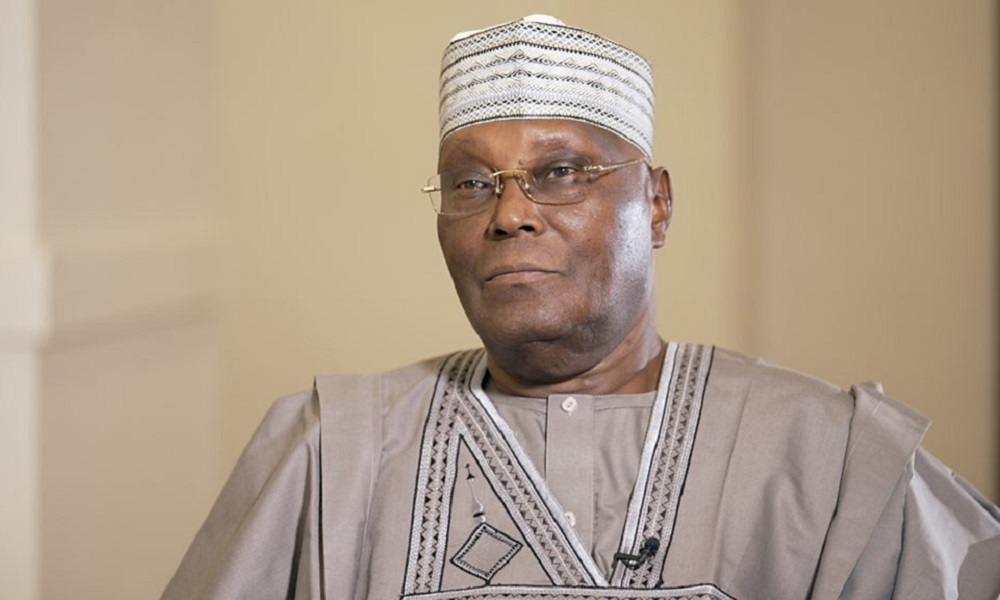
Former Vice President Atiku Abubakar has demanded an immediate change of the date released by the Independent National Electoral Commission for the 2027 general elections, stating it falls within the Ramadan period.
“The Independent National Electoral Commission (INEC) must urgently reconsider the February 20, 2027 date it has announced for the general elections,” Mr Abubakar said in a statement on Friday. “That date falls squarely within the Ramadan period (February 7 – March 8, 2027), a sacred season of fasting, reflection, and spiritual devotion for millions of Nigerian Muslims.”

INEC had earlier released the official elections timetable, outlining dates for campaigns, voters’ registration, political parties’ primary elections and general elections.
However, Mr Abubakar blasted INEC for fixing the elections within the holy month of Ramadan, accusing the electoral umpire of poor judgement and insensitivity to the country’s socio-religious realities.
“Elections are not mere administrative rituals; they are national exercises that demand maximum participation, physical endurance, and collective focus. Fixing such a critical civic exercise in the middle of a major religious observance reflects poor judgment and a troubling lack of sensitivity to the nation’s socio-religious realities,” the ADC chieftain said.
While noting that inclusive planning was fundamental, the former vice president said INEC’s poor handling of election timing casts doubt on the capacity of the body to deliver free and fair elections to Nigerians.
“In a diverse country like Nigeria, inclusive planning is not optional, it is fundamental. Something as basic as choosing a broadly acceptable date should not be mishandled. It speaks to competence, foresight, and respect for citizens.
“If INEC struggles with getting a simple matter of timing right, Nigerians are justified in asking: what assurance do we have that it will competently deliver free, fair, and credible elections in 2027?” Mr Abubakar stated.
We have recently deactivated our website’s comment provider in favour of other channels of distribution and commentary. We encourage you to join the conversation on our stories via our Facebook, Twitter and other social media pages.
Ramadan is a sacred period in Islam marked by fasting from dawn to sunset, increased prayers, and spiritual reflection. For many Muslims, the month involves physical restraint, heightened devotion, and communal religious activities that can be physically demanding.
Critics argue that conducting national elections during this period could suppress voter turnout, especially in predominantly Muslim regions of northern Nigeria. They maintain that elections require physical endurance, long hours at polling units, and active participation in vote protection and monitoring — activities that may prove challenging while fasting.
A statement circulating online described the move as “a troubling lack of sensitivity to Nigeria’s socio-religious realities,” emphasizing that election planning in a diverse country must take religious observances into account.
In Nigeria, where religion plays a significant role in public life, stakeholders insist that inclusive planning is not optional but fundamental to democratic credibility.
Atiku and Other Northern Voices React
Another northern commentator, Hamma Hayatu, declared confidently on social media that “the date for elections 2027 just released shall be changed,” reflecting a growing sentiment among critics that public pressure may force a review.
Several social media users echoed similar concerns, with one post reading: “There’s no way the Muslim majority will participate in the casting and protection of votes during Ramadan.”
Questions About Consultation and Planning
Observers say the controversy raises broader questions about the consultative process that preceded the announcement.
In past election cycles, INEC has often engaged political parties, civil society organizations, and security agencies in discussions around logistics and scheduling. However, critics argue that the Ramadan overlap suggests either insufficient consultation with religious and community leaders or an oversight in evaluating the socio-cultural implications of the dates.
Some commentators have framed the issue as a test of INEC’s foresight and administrative competence.
“If INEC struggles with getting a simple matter of timing right, Nigerians are justified in asking what assurance we have that it will competently deliver free, fair, and credible elections in 2027,” one political analyst wrote.
The concern is not merely symbolic. Analysts warn that even a marginal decline in voter turnout in key regions could influence electoral outcomes and fuel post-election disputes.
Risks to Voter Participation and Credibility
The primary fear expressed by critics is the potential suppression of voter turnout among Muslims observing the fast. During Ramadan, many adherents limit strenuous activities, especially under the hot sun, which characterizes much of Nigeria’s dry season in February and March.
Long queues at polling units, delays in accreditation, and potential security challenges could further discourage participation.
Election observers also note that reduced turnout in certain demographics may affect perceptions of legitimacy. In a country already grappling with concerns about voter apathy and trust in electoral institutions, any factor that appears to limit participation could undermine public confidence.
Moreover, Ramadan evenings are often dedicated to special prayers known as Taraweeh, meaning extended polling delays could clash with religious commitments.
Broader Political Implications
Beyond religious considerations, the controversy comes at a politically sensitive time as parties begin early maneuvering ahead of the 2027 race.
The northern region remains a crucial voting bloc in presidential elections. Any perception that its predominantly Muslim population is disadvantaged could become a major campaign issue.
Political strategists suggest that opposition parties may seize on the controversy to question INEC’s neutrality or competence, potentially escalating tensions.
At the same time, some voices have urged calm, noting that Ramadan does not automatically preclude civic participation and that Muslims in other countries have voted during the holy month. However, they acknowledge that Nigeria’s logistical and climatic realities differ significantly.
Pressure Mounts on INEC
As criticism intensifies, pressure is mounting on INEC to review the announced dates. Civil society groups and commentators argue that adjusting the calendar now would demonstrate responsiveness and strengthen public trust.
So far, INEC has not issued a formal statement addressing the Ramadan concerns. The Commission’s leadership may face increasing calls to clarify whether alternative dates were considered and what consultations informed the decision.
Election experts emphasize that revising the schedule at this early stage would not pose significant logistical challenges, given that 2027 is still over a year away.
A Test of Inclusivity
Ultimately, the debate over the 2027 election dates underscores Nigeria’s delicate balance of religion, politics, and democracy.
In a multi-ethnic, multi-religious society, national institutions are expected to demonstrate sensitivity to diverse realities. Critics insist that something as fundamental as election timing should reflect inclusive planning.
Whether INEC will reconsider its decision remains to be seen. However, the immediate public outcry signals that the issue resonates deeply, particularly among northern Muslim communities.
As the 2027 elections approach, the controversy serves as an early reminder that beyond logistics and ballots, the credibility of Nigeria’s democracy rests heavily on public trust — and that trust often begins with decisions that show respect for the nation’s diversity.
News
NELFUND extends loan application portal for some institutions
The Nigerian Education Loan Fund (NELFUND) has approved an extension of its student loan application portal for institutions that formally requested additional time for the 2025/2026 academic session.
The Fund disclosed this in a statement issued in Abuja, on Thursday by its Director of Strategic Communications, Mrs Oseyemi Oluwatuyi.
According to the fund, the extension applies strictly to institutions that submitted official requests to enable their eligible students to complete applications on the NELFUND student loan portal.
Oluwatuyi quoted the Managing Director and Chief Executive Officer of NELFUND, Akintunde Sawyerr, to have said that the extension was part of the fund’s efforts to ensure wider access to the student loan scheme.
Sawyerr reaffirmed the organisation’s commitment to ensuring that eligible students across participating institutions benefit from the programme.
“NELFUND remains committed to ensuring that eligible students across participating institutions have the opportunity to access the student loan programme,” he said.
He urged eligible students in the affected institutions to take advantage of the extension and complete their applications through the official portal.
Sawyerr also reiterated the Fund’s commitment to transparency, accountability and the provision of sustainable student financing solutions aimed at removing financial barriers to higher education in the country.
(NAN)
News
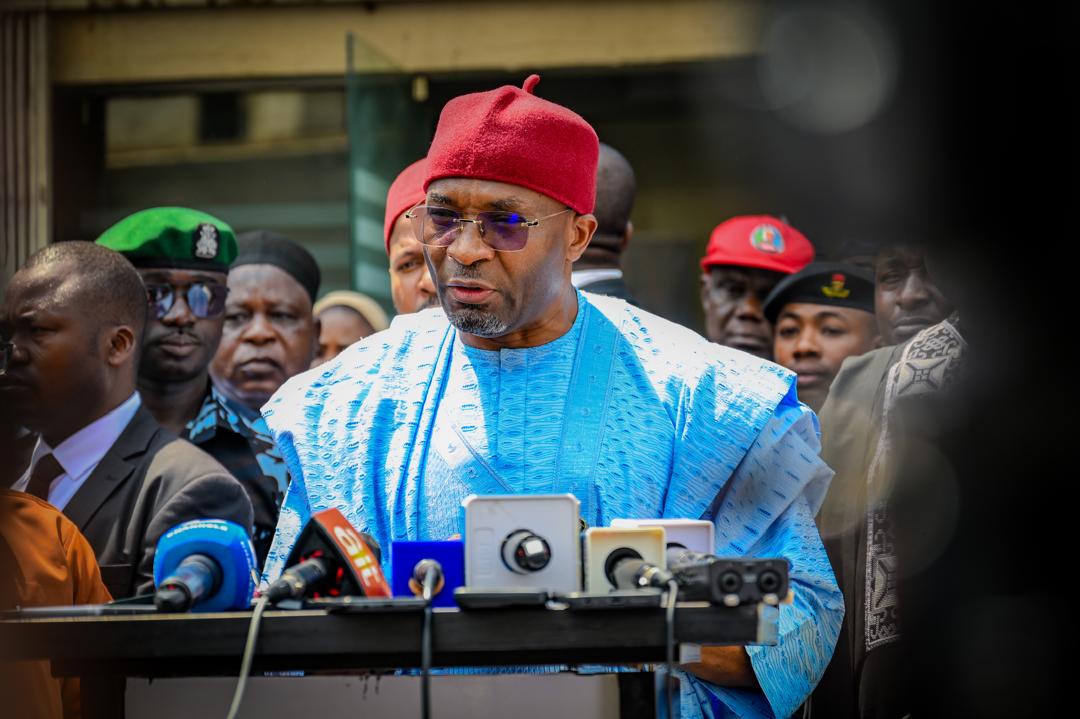
Gov Mbah rejects claims of high taxation in Enugu
Governor of Enugu State, Dr. Peter Mbah, has rejected the claims of high taxation in the state, describing them as ‘a pathetic misconception promoted by the opposition and beneficiaries of the old order, who manipulated revenue collection to fatten their private pockets.’
Mbah insisted that his administration has grown the state’s Internally Generated Revenue (IGR), by widening the tax net to bring in more taxable persons, blocked revenue leakages, and tackled sharp practices that drained public revenues by introducing Consolidated Demand Notice, e-ticketing, recovery, optimisation, and monetisation of the state’s assets.
He stressed that the Enugu State Government doesn’t have the power to increase or reduce taxes under the 1999 Constitution, as it is the exclusive preserve of the federal government.
The governor provided the clarifications in an interview aired by Afia Television this week.
“First, as a state, we are not able to legislate on taxation. It is in the exclusive legislative list, which can only be legislated on by the National Assembly. Whether it is your Personal Income Tax, your Company Income Tax, your Value Added Tax or your Withholding Tax, those taxes can only be legislated on by the National Assembly,” he clarified.
Mbah said that those framing the false narratives could not come to terms that his administration could scale up the state’s IGR from N26.8bn the state recorded in 2022 to N37.4bn by the end of 2023, N180.5bn in 2024, and N406.7bn in 2025.
“I think for those framing this false narrative, it is beyond their imagination that we could optimise our dormant assets and grow our revenue exponentially.
“They fail or refuse to take note of the fact that in 2025, for instance, tax revenue accounted for only N51.5bn or 12.6 per cent of the N406.7bn IGR, while non-tax revenue was N355.2bn or 87.4 per cent,” the governor added.
As for the areas within the states’ competence, such as rates and levies, Mbah explained that his administration has already taken steps to crash the payable amounts for certain services provided by Enugu State Government.
“For those rates and fees, we constituted a committee that also included market leaders, organised labour, Chamber of Commerce and Industry, among others, which went around to get what the other states within the South East were charging. It turned out that Enugu is the lowest in the South East. But that notwithstanding, we crashed that rates even further by 70 per cent especiallyin land sectors,” he stated.
He, however, acknowledged the activities of illegal revenue collectors, saying the recently passed Enugu State Harmornised Taxes and Levies (Approved List for Collection) Law, 2026, would finally eliminate road blocks and unauthorised collections that have burdened residents of the State. He added that the government will up enforcement and public enlightenment to checkmate the activities of extortionists.
“Under our laws, we have consolidated all these services and you only just have one payment that you make and you are done with all the services that the government provides.
“Some people still go about extorting money from helpless citizens because this is a practice that has gone on over the years. But we have constituted a standing task force to track and bring them to book. We also want the citizens to report them. We now have several toll-free lines where citizens can call freely. They do not have to have airtime to place such calls,” he concluded.
News
FG to sanction six airlines over alleged airfare hikes, FCCPC says
The Federal Competition and Consumer Protection Commission (FCCPC) has disclosed that six domestic airlines may face sanctions over alleged arbitrary increases in airfares during the Christmas travel period.
Executive Vice Chairman of the commission, Tunji Bello, made the disclosure during the “Meet the Press” briefing organised by the Presidential Communications Team at the State House in Abuja.
Bello said investigations by the commission found indications of coordinated fare increases during the festive period and that the affected airlines could be required to refund excess charges to passengers once the final report is released.
According to him, ticket prices that previously ranged between ₦145,000 and ₦150,000 reportedly rose sharply to between ₦450,000 and ₦670,000 during the period under review.
“We have completed investigations into complaints that airlines fixed prices during the Christmas period. The final report will detail the penalties, and we are considering requiring refunds to affected passengers,” he said.
The FCCPC boss also revealed that the commission has recovered more than ₦10 billion for consumers through complaints resolved between March and August 2025.
He noted that over 9,000 consumer complaints were handled within the period and urged Nigerians to make use of the commission’s formal complaint channels rather than expressing dissatisfaction informally.
“Our work is evidence-based. Consumers must lodge complaints so we can investigate and ensure justice,” Bello said, adding that the commission’s digital platform allows consumers to submit complaints and track their progress.
He also disclosed that the commission is monitoring commodity prices nationwide amid tensions in the Middle East to ensure businesses do not exploit global developments to justify arbitrary price increases.
According to him, the FCCPC has activated a monitoring mechanism across critical sectors of the economy to track pricing trends and discourage anti-competitive practices.
Bello said the commission is working with agencies including the Nigerian Upstream Petroleum Regulatory Commission to monitor developments in the petroleum sector.
On rising cement prices, the FCCPC boss confirmed that the Federal Government has set up an investigative committee to examine the situation following public concerns.
He explained that while the commission does not directly control prices, it is empowered under the Federal Competition and Consumer Protection Act 2018 to investigate and prosecute anti-competitive practices such as price fixing.
Bello added that the commission has already prosecuted more than 55 cases under the law, with additional cases currently pending.
-
Economy19 hours agoDollar, Pound, Euro Rates in Nigeria Today – See Full Exchange for March 12, 2026
-
News17 hours agoFormer House Of Reps Speaker Dumps Party, Joins ADC
-
News17 hours agoWoman Writes Billionaire Femi Otedola, Wants Permission to Marry His Son Fewa
-
News16 hours agoCeding oil wells: FG losing 780 hectares of maritime water to corruption -CSOs(Video/Photos)
-
News15 hours agoJust in: Nine senators dump their parties for ADC
-
News17 hours agoPakistan Sends Naval warships to protect commercial ships in Strait of Hormuz
-
News16 hours agoGroup Defends Pipeline Surveillance Contracts
-
News14 hours agoJust in: ADC Wuse Ward suspends FCT Senator, Kingibe