News
FAAN Moves to Seal Revenue Gaps with Total Cashless System at Airports
By Gloria Ikibah
The Federal Airports Authority of Nigeria (FAAN) has stepped up efforts to curb revenue leakages by enforcing a fully cashless payment system across airports nationwide, signalling a major overhaul of its financial operations.
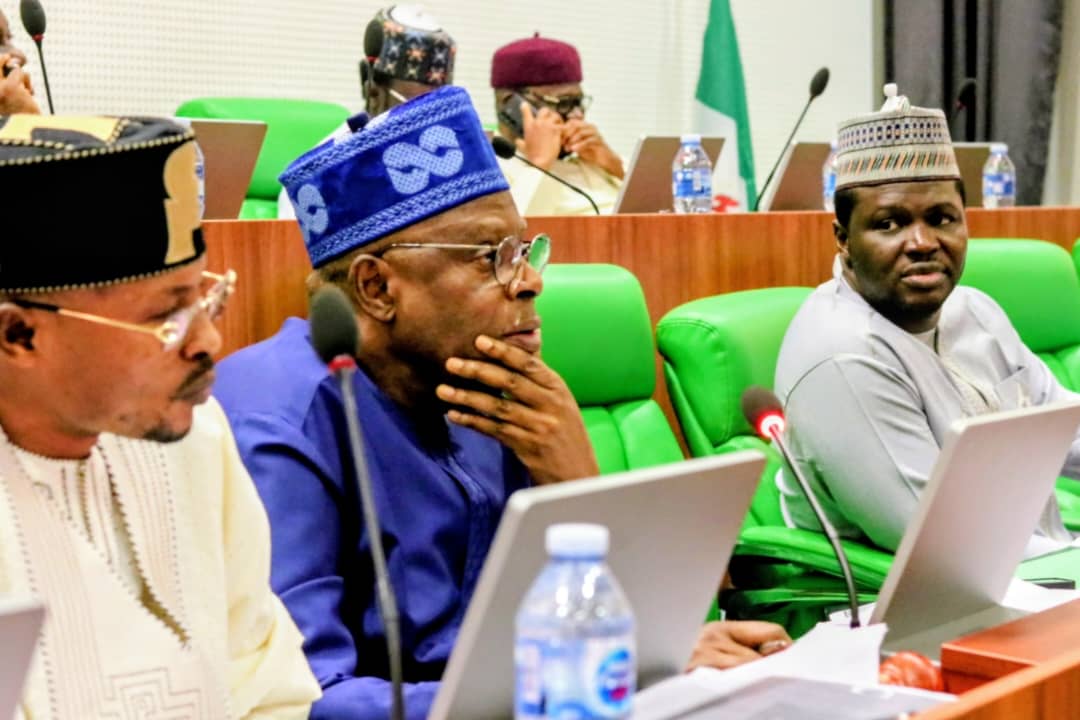
Managing Director and Chief Executive Officer, Olubunmi Oluwaseun Kuku, outlined the development after appearing before the House of Representatives Committee on Finance on Tuesday.

The committee, led by James Abiodun Faleke, is currently conducting a revenue monitoring review spanning the 2023 to 2025 fiscal period. The exercise is designed to tighten oversight and ensure government agencies properly account for funds collected.
Kuku explained that new systems have been introduced to capture every payment made within airport premises, particularly at toll gates and other revenue points. The intention is to ensure that income is recorded accurately, processed transparently and remitted in full to the Federal Government.
The authority’s renewed drive forms part of wider fiscal reforms aimed at strengthening accountability and boosting internally generated revenue across ministries, departments and agencies.
While acknowledging that the transition has created short-term inconvenience for some travellers and airport users, FAAN maintains that the shift to an entirely electronic framework is both necessary and overdue, positioning the agency for greater financial discipline and operational efficiency.
She said: “This initiative is about accountability and sustainability.
“We are ensuring that every kobo due to the Federal Government is collected without leakages, while also improving operational efficiency.”
Kuku explained that the changeover was not introduced suddenly. The groundwork had been laid well in advance, with public awareness drives, advertisements, and consultations with key stakeholders beginning in mid-2025 to ensure airport users were fully prepared for the move from cash payments to electronic transactions.
“The enforcement itself only commenced on Sunday,” she explained, adding that the renewed momentum followed directives to strengthen collection mechanisms and eliminate systemic leakages.
She admitted the traffic congestion witnessed at some airport toll gates in the early days of implementation, but said the situation was a temporary adjustment phase.
Kuku therefore appealed to Nigerians for patience and cooperation, assuring that the system would stabilize as more users adopt the various electronic payment channels available.
“We understand the initial discomfort, but this is a transition that will ultimately benefit everyone,” she said.
Kuku also moved to clear up misunderstandings surrounding FAAN’s newly introduced cashless cards. She emphasised that the new arrangement does not confine travellers to a single payment platform, but simply brings an end to the acceptance of physical cash.
At present, four main payment options are available at airport toll gates:
Annual E-Tags, created for frequent users to allow smooth drive-through access without the need to stop for manual processing.
VIP Stickers, which grant fast-tracked passage to approved users.
Personal bank ATM cards, including contactless or NFC-enabled cards that support quick tap-and-go payments.
FAAN-issued Cashless Cards, which can be obtained within airport premises and through designated partner banks.
She particularly urged Nigerians to confirm with their banks whether their ATM cards are contactless or NFC-enabled, explaining that such cards considerably shorten transaction times compared with traditional PIN-based alternativePIN-base.
She further confirmed that widely used domestic payment cards, including Verve cards, are fully compatible with the system.
“The fact that FAAN is introducing cashless cards does not mean that it is the only mode of payment. It simply means we are no longer collecting cash,” she clarified.
Kuku stressed that improved revenue collection would have a direct effect on service delivery, infrastructure upkeep, and long-term airport modernisation projects nationwide.
Restating her appeal to the public, she said, “This process will run its course. We plead with Nigerians to be proactive — obtain the necessary payment tools before arriving at the airport and support this initiative. The ultimate goal is better service delivery, improved infrastructure, and a more transparent system that works for everyone.”
The FAAN chief expressed confidence that, once fully embedded, the cashless system would not only curb revenue leakages but also bring Nigeria’s airport operations into line with global best practice in digital revenue management and accountability.
News
NELFUND extends loan application portal for some institutions
The Nigerian Education Loan Fund (NELFUND) has approved an extension of its student loan application portal for institutions that formally requested additional time for the 2025/2026 academic session.
The Fund disclosed this in a statement issued in Abuja, on Thursday by its Director of Strategic Communications, Mrs Oseyemi Oluwatuyi.
According to the fund, the extension applies strictly to institutions that submitted official requests to enable their eligible students to complete applications on the NELFUND student loan portal.
Oluwatuyi quoted the Managing Director and Chief Executive Officer of NELFUND, Akintunde Sawyerr, to have said that the extension was part of the fund’s efforts to ensure wider access to the student loan scheme.
Sawyerr reaffirmed the organisation’s commitment to ensuring that eligible students across participating institutions benefit from the programme.
“NELFUND remains committed to ensuring that eligible students across participating institutions have the opportunity to access the student loan programme,” he said.
He urged eligible students in the affected institutions to take advantage of the extension and complete their applications through the official portal.
Sawyerr also reiterated the Fund’s commitment to transparency, accountability and the provision of sustainable student financing solutions aimed at removing financial barriers to higher education in the country.
(NAN)
News
Gov Mbah rejects claims of high taxation in Enugu
Governor of Enugu State, Dr. Peter Mbah, has rejected the claims of high taxation in the state, describing them as ‘a pathetic misconception promoted by the opposition and beneficiaries of the old order, who manipulated revenue collection to fatten their private pockets.’
Mbah insisted that his administration has grown the state’s Internally Generated Revenue (IGR), by widening the tax net to bring in more taxable persons, blocked revenue leakages, and tackled sharp practices that drained public revenues by introducing Consolidated Demand Notice, e-ticketing, recovery, optimisation, and monetisation of the state’s assets.
He stressed that the Enugu State Government doesn’t have the power to increase or reduce taxes under the 1999 Constitution, as it is the exclusive preserve of the federal government.
The governor provided the clarifications in an interview aired by Afia Television this week.
“First, as a state, we are not able to legislate on taxation. It is in the exclusive legislative list, which can only be legislated on by the National Assembly. Whether it is your Personal Income Tax, your Company Income Tax, your Value Added Tax or your Withholding Tax, those taxes can only be legislated on by the National Assembly,” he clarified.
Mbah said that those framing the false narratives could not come to terms that his administration could scale up the state’s IGR from N26.8bn the state recorded in 2022 to N37.4bn by the end of 2023, N180.5bn in 2024, and N406.7bn in 2025.
“I think for those framing this false narrative, it is beyond their imagination that we could optimise our dormant assets and grow our revenue exponentially.
“They fail or refuse to take note of the fact that in 2025, for instance, tax revenue accounted for only N51.5bn or 12.6 per cent of the N406.7bn IGR, while non-tax revenue was N355.2bn or 87.4 per cent,” the governor added.
As for the areas within the states’ competence, such as rates and levies, Mbah explained that his administration has already taken steps to crash the payable amounts for certain services provided by Enugu State Government.
“For those rates and fees, we constituted a committee that also included market leaders, organised labour, Chamber of Commerce and Industry, among others, which went around to get what the other states within the South East were charging. It turned out that Enugu is the lowest in the South East. But that notwithstanding, we crashed that rates even further by 70 per cent especiallyin land sectors,” he stated.
He, however, acknowledged the activities of illegal revenue collectors, saying the recently passed Enugu State Harmornised Taxes and Levies (Approved List for Collection) Law, 2026, would finally eliminate road blocks and unauthorised collections that have burdened residents of the State. He added that the government will up enforcement and public enlightenment to checkmate the activities of extortionists.
“Under our laws, we have consolidated all these services and you only just have one payment that you make and you are done with all the services that the government provides.
“Some people still go about extorting money from helpless citizens because this is a practice that has gone on over the years. But we have constituted a standing task force to track and bring them to book. We also want the citizens to report them. We now have several toll-free lines where citizens can call freely. They do not have to have airtime to place such calls,” he concluded.
News
FG to sanction six airlines over alleged airfare hikes, FCCPC says
The Federal Competition and Consumer Protection Commission (FCCPC) has disclosed that six domestic airlines may face sanctions over alleged arbitrary increases in airfares during the Christmas travel period.
Executive Vice Chairman of the commission, Tunji Bello, made the disclosure during the “Meet the Press” briefing organised by the Presidential Communications Team at the State House in Abuja.
Bello said investigations by the commission found indications of coordinated fare increases during the festive period and that the affected airlines could be required to refund excess charges to passengers once the final report is released.
According to him, ticket prices that previously ranged between ₦145,000 and ₦150,000 reportedly rose sharply to between ₦450,000 and ₦670,000 during the period under review.
“We have completed investigations into complaints that airlines fixed prices during the Christmas period. The final report will detail the penalties, and we are considering requiring refunds to affected passengers,” he said.
The FCCPC boss also revealed that the commission has recovered more than ₦10 billion for consumers through complaints resolved between March and August 2025.
He noted that over 9,000 consumer complaints were handled within the period and urged Nigerians to make use of the commission’s formal complaint channels rather than expressing dissatisfaction informally.
“Our work is evidence-based. Consumers must lodge complaints so we can investigate and ensure justice,” Bello said, adding that the commission’s digital platform allows consumers to submit complaints and track their progress.
He also disclosed that the commission is monitoring commodity prices nationwide amid tensions in the Middle East to ensure businesses do not exploit global developments to justify arbitrary price increases.
According to him, the FCCPC has activated a monitoring mechanism across critical sectors of the economy to track pricing trends and discourage anti-competitive practices.
Bello said the commission is working with agencies including the Nigerian Upstream Petroleum Regulatory Commission to monitor developments in the petroleum sector.
On rising cement prices, the FCCPC boss confirmed that the Federal Government has set up an investigative committee to examine the situation following public concerns.
He explained that while the commission does not directly control prices, it is empowered under the Federal Competition and Consumer Protection Act 2018 to investigate and prosecute anti-competitive practices such as price fixing.
Bello added that the commission has already prosecuted more than 55 cases under the law, with additional cases currently pending.
-
Economy19 hours agoDollar, Pound, Euro Rates in Nigeria Today – See Full Exchange for March 12, 2026
-
News17 hours agoFormer House Of Reps Speaker Dumps Party, Joins ADC
-
News17 hours agoWoman Writes Billionaire Femi Otedola, Wants Permission to Marry His Son Fewa
-
News15 hours agoJust in: Nine senators dump their parties for ADC
-
News16 hours agoCeding oil wells: FG losing 780 hectares of maritime water to corruption -CSOs(Video/Photos)
-
News17 hours agoPakistan Sends Naval warships to protect commercial ships in Strait of Hormuz
-
News16 hours agoGroup Defends Pipeline Surveillance Contracts
-
News14 hours agoJust in: ADC Wuse Ward suspends FCT Senator, Kingibe