Connect with us

News

How Ojukwu smuggled arms into Nigeria in build-up to civil war – Gowon

Published

on

ADVERTISEMENT
Zoom Ad
ADVERTISEMENT
Zoom Ad

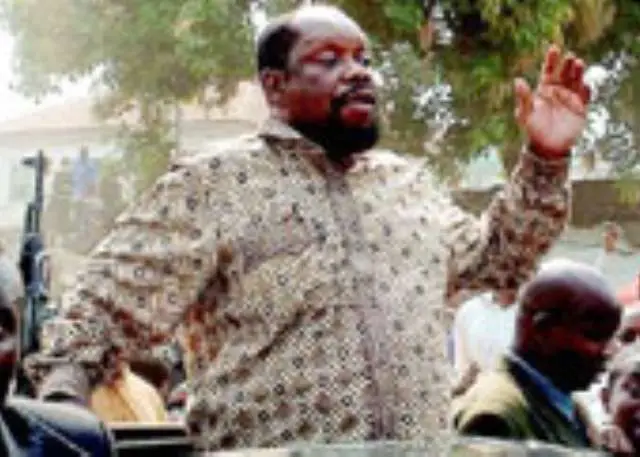
Nigeria’s former military Head of State, Yakubu Gowon, has revealed how arms and ammunition were allegedly smuggled from some foreign countries into the Eastern Region in preparation for the civil war fought for 30 months.


Gowon, who ruled Nigeria between 1966 and 1975, said the war, in which millions of people reportedly died, could have been avoided if the then leader of the Eastern Region, Chukwuemeka Odumegwu Ojukwu, had adhered to agreements reached during the Aburi meeting held in Ghana on 4 and 5 January 1967.

The former Nigerian leader gave the account in his autobiography, “My Life of Duty and Allegiance,” launched in Abuja on Tuesday.

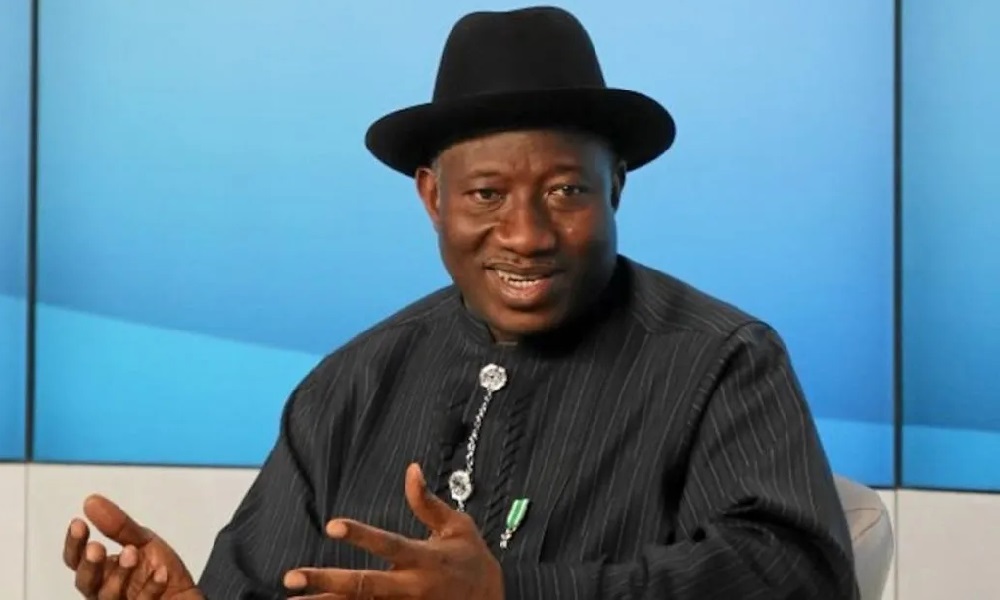
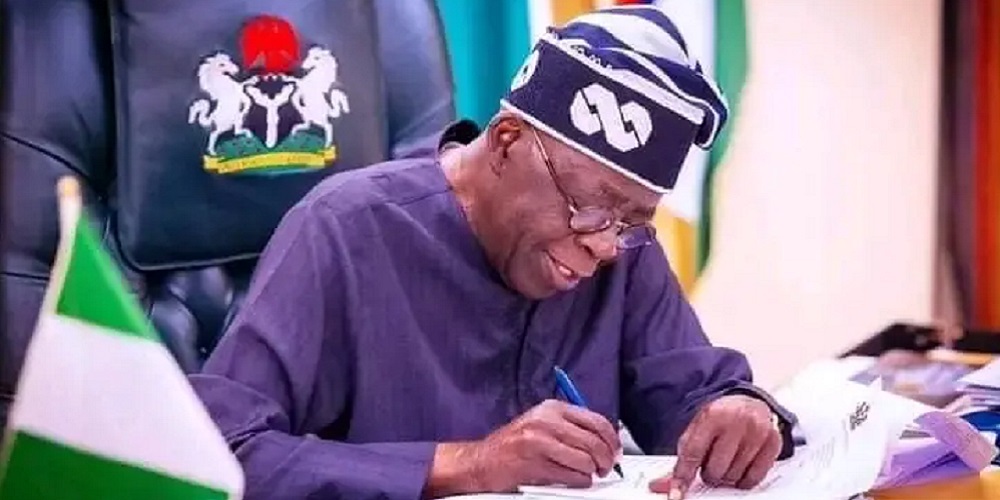
The event, chaired by former President Goodluck Jonathan, was attended by prominent Nigerians, including President Bola Tinubu, who was represented by his deputy, Kashim Shettima.

Advertisement

Gowon was the Nigerian leader during the civil war, fought between 6 July 1967 and 15 January 1970.

The war broke out following deep ethnic, economic, and political issues that emerged after the country gained independence from Britain barely six years earlier in 1960.
At the time, Nigeria was divided into four regions: the Northern Region, dominated largely by the Hausa-Fulani; the Eastern Region, dominated by the Igbo; and the Western Region, dominated by the Yoruba. The Mid-Western Region was created in 1963 from the Western Region to accommodate minority groups.
The Eastern Region, led by Ojukwu, then a colonel in the Nigerian Army, fought for independence and survival under the banner of the self-declared Republic of Biafra.

The declaration of secession eventually triggered the civil war, which claimed between one and three million lives, many through starvation and disease.
Ojukwu died on 26 November 2011, in London at the age of 78.

He was reportedly ill for some time before his death. His body was later returned to Nigeria, where he received a state funeral and was buried in his hometown of Nnewi in Anambra State in March 2012.

Advertisement

In his memoir, Gowon narrated efforts he made to avert the war by proposing several alternatives to the Eastern Region leader, whom he accused of preferring confrontation to dialogue.

Nigeria’s former military Head of State, Yakubu Gowon
The former head of state said he repeatedly sought dialogue with Mr Ojukwu in the build-up to the war, but the Eastern region leader declined due to concerns about his safety outside the region.

He explained that the deadlock prompted Ghana’s then Head of State, Joseph Ankrah, to facilitate a peace meeting between both sides at Peduase Lodge in Aburi, Ghana.
He noted that Ojukwu eventually agreed to attend the meeting, which coincided with both the Christian Passion Week and the Muslim Ramadan period.

He said that during the meeting, the Eastern Region leader proposed conditions that largely favoured the East’s demands, including a commitment by all parties to renounce the use of force to resolve the crisis.

Advertisement

“Ojukwu’s motion that all parties renounced the use of force in the settlement of the brewing crisis certainly sat well with me and the rest of the SMC (Supreme Military Council) members. Indeed, it was the most pragmatic thing to do if we were to set on an honest path to peace,” he said.
Gowon, however, claimed that Ojukwu’s proposals were also aimed at buying time to complete the stockpiling of arms and ammunition for the impending war.
The former head of state further alleged that the Eastern Region’s arms build-up suffered a setback in October 1966 after a DC-4 aircraft carrying weapons crashed in the hills of Northern Cameroon.

“It did not matter that his plan was to buy some more time to enable him to stockpile arms and ammunition. We were also mindful that he had cleverly planned to apply the brakes on our ability to deploy the numerical advantage of the existing firepower of the Nigerian Army in the event of an immediate outbreak of hostilities.

“We knew he was compelled to buy time because his surreptitious arms build-up had suffered a serious setback in October 1966 with the crash in the hills of Northern Cameroons of the DC-4 aircraft with which he had hoped to smuggle in a cache of arms,” he claimed.
Gowon said Ojukwu later appeared to confirm the arms stockpiling during a meeting in Enugu in May 1967 with a delegation of the National Conciliation Committee comprising Obafemi Awolowo, Samuel Aluko, Jereton Mariere and J.I.C. Onyia.

He further said Ojukwu declared during the meeting that the Eastern Region had attained “equality of arms,” which would allow it to negotiate Nigeria’s future from a position of strength.

Advertisement

“Several months after the Aburi meeting, Ojukwu confirmed our belief that he had been biding his time to enable him to stock his armoury. In May 1967, at a meeting in Enugu with a delegation of the National Conciliation Committee that comprised Chief Obafemi Awolowo, Prof. Samuel Aluko, Chief Jereton Marierie, and Chief J.I.C. Onyia, who represented the West and Mid-West regions, respectively.

“Ojukwu confidently declared he had attained ‘equality of arms’ that would make it possible for the East to discuss to discuss the future of Nigeria based on equality,” he added.
Gowon quoted Ojukwu on that day as having said that “Quietly I built up. If you do not know it, I am proud, and my officers are proud, that here in the East we possess the biggest army in Black Africa.

” I am no longer speaking as an underdog; I am speaking from a position of power.”
He, however, dismissed the Biafra’s leader’s claim of acquiring equal arms with the government as exaggeration, insisting that federal forces still maintained a clear military advantage over the Eastern Region.

“I did not believe Ojukwu’s play to the gallery; I only said to myself that we would see about that. This was because we knew better.

Advertisement

Regardless of his posturing, the reality was that a rough count on military installations and troops in station placed the Eastern region at an obvious disadvantage compared to the rest of the nation.

“This was a plan for all to see, except the governor of the Eastern region, who believed that he could silence machine guns from the federal side with the 120 rifles he claimed to have had and sheer bravado,” he stated.
Continue Reading
Advertisement

News

Just in: FRSC Starts 2026 Nationwide Recruitment

Published

on

ADVERTISEMENT
Zoom Ad
ADVERTISEMENT
Zoom Ad

The Federal Road Safety Corps (FRSC) has officially commenced its 2026 nationwide recruitment exercise, beckoning on qualified Nigerians to apply for various positions across its Officer, Marshal Inspectorate and Road Marshal Assistant cadres.

According to the Corps, the online application portal opened on Friday, July 3, 2026, and will remain accessible for four weeks. The recruitment exercise is completely free, with the agency warning applicants not to pay any individual or organization claiming to facilitate employment.

Interested applicants are required to submit their applications through the official FRSC recruitment portal at HERE

Available Cadres
The recruitment covers three major categories:

Advertisement

Officer Cadre – Open to holders of B.Sc., BA, HND and other relevant professional qualifications.

Marshal Inspectorate Cadre – Available for candidates with qualifications such as ND, NCE and other approved credentials.
Road Marshal Assistant Cadre – Includes opportunities for eligible SSCE holders, artisans and drivers, depending on the position.
Required Documents
Applicants are advised to prepare the following before beginning their application:

National Identification Number (NIN)
Educational certificates
Birth certificate or age declaration
Recent passport photograph
NYSC discharge, exemption or exclusion certificate (where applicable)
The FRSC also advises applicants to use their personal email address and phone number during registration and to ensure all information provided is accurate. Shortlisted candidates will be required to present printed copies of their completed application forms during the screening process.

The Corps urged interested Nigerians seeking a career in the Federal Government to apply early in order to avoid heavy traffic on the recruitment portal before the application window closes.

Advertisement
Continue Reading

News

Finally, US Confirms Withdrawal Of Troops From Nigeria

Published

on

ADVERTISEMENT
Zoom Ad
ADVERTISEMENT
Zoom Ad

The United States has withdrawn the majority of its military personnel deployed to Nigeria for a joint counterterrorism mission in the Lake Chad Basin, while maintaining intelligence sharing and other security cooperation with Nigerian authorities.

Commander of US Air Forces in Africa, General Dagvin R.M. Anderson, announced the development during a virtual press briefing on the outcome of the African Chiefs of Defence Conference 2026.

He said the partnership between Washington and Abuja remained active, particularly in intelligence operations targeting the Islamic State (ISIS/Daesh).

According to Anderson, the specific mission that required the deployment of US troops has been completed, prompting the withdrawal of most personnel.

Advertisement

However, he noted that the United States would continue providing intelligence assistance at the request of the Nigerian government.

“And so that operation in the Lake Chad Basin of Nigeria not only helped the countries in that immediate region; it also helps countries globally as that disrupts the ISIS network,” Anderson said.

“And so — and then we have withdrawn much of our forces that were just there for that operation, but are continuing the partnership that Nigeria has asked for to help continue with the intelligence sharing and the understanding that’s necessary to be able to prosecute these difficult tasks,” he added.

The US Air Force commander described Nigeria as a key regional partner with a capable military, saying the collaboration between both nations had produced notable gains in the fight against ISIS.

Advertisement

He credited intelligence cooperation between the two countries for enabling an operation that eliminated the second-highest-ranking figure in the global ISIS network.

“I think there partnership that we’ve shown recently with Nigeria, where Nigeria’s a very capable and large country — it’s got a strong economy; it’s got a large, educated population; it’s got a very capable military.

“But there are things that we have learned in the counterterrorist fight over several years that we were able to assist and integrate with them to help them with their intelligence and help with the intelligence sharing that eventually led to a cooperative effort to where we were able to bring some unique capabilities that the U.S. brings and be able to prosecute together the number two leader within the ISIS or Daesh organization who is responsible for much of their global operations, their global media, and their recruiting”, he said.

Anderson said the operation underscored the effectiveness of intelligence collaboration over prolonged foreign troop deployments.

Advertisement

“So I think as we go forward, that is an example of how we’re looking at engaging with partners to help them be more effective by only bringing unique U.S. capabilities that allow the partner to be effective in these fights,” he said.

He also called for deeper intelligence cooperation among African countries to tackle terrorism, drug trafficking and other cross-border crimes.

The US commander cited a recent multinational operation that intercepted a record 31-ton shipment of cocaine originating from South America and passing through the West African coastline, saying effective intelligence sharing made the seizure possible.

“I was able to coordinate through our interagency in the United States, through AFRICOM, and then notify some of the partners. And eventually it was a Spanish ship that interdicted the ship that had 31 tons of cocaine on it, and it turns out is the largest interdiction of drugs at sea that we’ve ever seen,” Anderson said.

Advertisement

He added that sustained collaboration among African governments, international allies and private-sector stakeholders would be vital to confronting security challenges while fostering economic growth and attracting investment across the continent.

The United States deployed about 200 military personnel to Nigeria in February 2026 to assist with intelligence, surveillance and counterterrorism operations in the Lake Chad Basin as both countries expanded cooperation against ISIS and other extremist groups operating in the region.

The deployment came after US President Donald Trump redesignated Nigeria as a Country of Particular Concern and pledged increased American support for counterterrorism efforts.

On December 25, 2025, US forces carried out air strikes on two terrorist camps in the Bauni Forest, located in Tangaza Local Government Area of Sokoto State.

Advertisement

The security partnership reached a major milestone in May 2026 when a joint US-Nigerian operation killed Abu-Bilal Al-Minuki, the second-in-command of ISIS, during a raid on his hideout in Borno State.

Continue Reading

News

Ogoni family demands justice for son arrested at age 14, jailed 18 years without trial

Published

on

ADVERTISEMENT
Zoom Ad
ADVERTISEMENT
Zoom Ad

An Ogoni family in Rivers State has instituted legal proceedings against the Federal Government, the Rivers State Government and the Federal Ministry of Interior over the alleged unlawful detention of their son, Gospel Kinanee, who spent 18 years in prison without trial after he was reportedly arrested as a 14-year-old boy.

The lawsuit follows Gospel’s recent release from custody after nearly two decades behind bars, a period during which he was allegedly denied his constitutional right to a fair hearing and access to legal representation.

Speaking during an interview with Arise News, Gospel’s elder brother, Paul Kinanee, narrated the family’s painful ordeal, describing the years of uncertainty as one marked by relentless searches, emotional trauma and devastating loss.News

According to him, Gospel disappeared one night in 2007, prompting family members to launch an extensive search across Rivers State. They visited several police stations, detention centres and correctional facilities in a desperate attempt to locate him, but every effort proved unsuccessful.

Advertisement

Paul disclosed that the family even searched the Port Harcourt Maximum Security Custodial Centre, where Gospel was unknowingly being held, but officials reportedly informed them that no inmate bearing his name was in custody.

He said the prolonged uncertainty over Gospel’s whereabouts had a profound emotional impact on the family, adding that both their mother and father died without ever knowing what had happened to their son.

The family’s search came to an unexpected end when a lawyer conducting a routine visit to the prison noticed an inmate whose appearance matched descriptions of the missing teenager. Suspecting he could be the long-lost Gospel, the lawyer later returned to the facility with Paul Kinanee, who immediately recognised his younger brother.

By the time of the reunion, Gospel was 32 years old, having spent more than half of his life in detention.

Advertisement

According to his family, the years of incarceration without trial, combined with prolonged isolation and harsh prison conditions, have left him with serious psychological and mental health challenges, making his rehabilitation a major concern.

Reports indicate that throughout his detention, Gospel was never formally tried before a court of law and was allegedly denied access to legal counsel, raising significant concerns over due process and the protection of fundamental human rights within Nigeria’s criminal justice system.Demographics

His freedom eventually came during a jail delivery exercise conducted by the Chief Judge of Rivers State, Justice Simeon Amadi, who reviewed the cases of inmates awaiting trial. Gospel was among 21 inmates ordered to be released during the exercise after it was discovered that they had been unlawfully or excessively detained.

The Kinanee family is now seeking substantial financial compensation and judicial accountability, arguing that the prolonged detention robbed Gospel of his childhood, education, opportunities and good health.

Advertisement

They contend that the actions and alleged negligence of the relevant authorities caused irreversible damage to both Gospel and the entire family, which endured years of anguish while desperately searching for him.

The case has sparked renewed public concern over prolonged detention without trial in Nigeria and has intensified calls for comprehensive reforms aimed at preventing similar miscarriages of justice within the country’s criminal justice and correctional systems.

Continue Reading

Trending

Copyright © 2024 Naija Blitz News