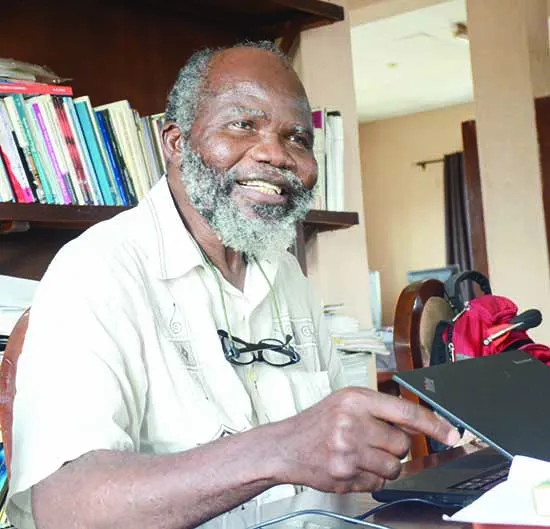
A Retired Nigerian Army Major General, General Ishola Williams, has declared that Nigeria’s debate over state policing is largely misplaced, insisting that what the country requires urgently is not further argument but a constitutional amendment to properly formalise existing security structures already functioning across states.


Speaking on Friday during an interview on Frontline, a current affairs Programme on Eagle 102.5 Fm, Ilese Ijebu, Ogun State, Williams maintained that Nigeria has, in practice, already implemented a form of state policing through regional security outfits, especially the Southwest security network, Amotekun, which he described as an operational reality lacking constitutional backing.
According to him, the continued call for the creation of state police ignores the fact that sub-national security structures are already active, though poorly coordinated and legally constrained by the current constitution. 
“We’ve already got a state police in practice, what we actually need now is a constitutional amendment to recognise and properly structure what already exists on the ground,” he said, stressing that endless debate was slowing down meaningful reform.
Williams argued that the country’s worsening insecurity reflects not just operational failure but a deeper crisis of policy confusion and institutional overlap, which he said has left security agencies working at cross purposes.
He said Nigeria is currently facing what he described as a “dual national emergency,” where citizens are trapped between insecurity and economic hardship, making survival increasingly difficult.
“The reality is that Nigerians are now living in fear and deprivation at the same time. People cannot afford basic living, and at the same time, they cannot move safely. When both fear of hunger and fear of violence exist together, then the nation is in danger,” he stated.
He criticised the Federal Government’s handling of recent security crises, particularly in the South-West, saying official responses often lack urgency and operational seriousness.
Williams also questioned the visibility of the Office of the Special Adviser to the President on Homeland Security, noting that the role appeared inactive despite rising insecurity across multiple regions.
“We have an office that was created for homeland security, but there is no public engagement, no briefing, no visible strategy. It raises serious concerns about whether the system is even coordinated,” he said.
The retired general also criticised proposals to recruit large numbers of untrained operatives, describing them as ineffective in confronting organised criminal networks.
“So they felt the best thing is recruiting 1,000 foreign guards, Those 1,000 people, have they been trained already to be able to rescue those who are kidnapped in the forest? Does it make sense?” he said, dismissing such strategies as symbolic rather than practical.
He questioned Nigeria’s intelligence capacity, arguing that external observers often express disbelief at the country’s security coordination.
“My colleagues outside the country ask me whether we have people who are thinking at all in our Homeland security system.” he revealed, underscoring what he described as systemic failure.
The retired officer also noted that he had repeatedly submitted policy proposals over the years, particularly on school protection, but they were ignored.
“Do you know that nobody has taken up that proposal?” he said, lamenting what he sees as institutional neglect of expert recommendations.
Williams stressed the need to clearly separate public safety from national security responsibilities, saying confusion between both concepts is weakening the system.
“Secondly too, I keep telling people, including you journalists, stop confusing public safety with security. That is a confusion and government is confused. Government is confused.” he stated emphatically.
He argued that the absence of clear operational boundaries between agencies has created overlap and inefficiency in responding to threats.
Williams questioned the visibility and effectiveness of the newly appointed Special Adviser on Homeland Security, Adeyinka Famadewa.
“The office has been appointed, nobody has heard anything from him, nobody has interviewed him, and he too have been keeping quiet.” he said.
He further criticised the delegation that visited Oriire Local government area of Oyo state, describing them as lacking urgency and seriousness.
“All of them were well-dressed, they were not going like people who are going to an area with lack of safety.” he said.
Williams argued that such symbolic gestures fail to reflect the gravity of insecurity on the ground.
He further warned that Nigeria’s security response structure appears disorganised and driven by ad hoc decisions rather than long-term planning.
“And they are acting like confused people. As if there are people there who do not think about what to do.” he said.
The retired general criticised the idea that recruitment alone could solve kidnapping and banditry challenges.
He lamented the continued abduction of schoolchildren and rural dwellers, describing it as a tragic indication of state failure to respond decisively to early warnings further expressing frustration over repeated failures to implement existing security proposals and frameworks.
Williams also condemned what he described as lack of rapid response to kidnapping incidents involving children.
He referenced the abduction case involving sister of former minister of power, Bayo Adelabu and her twin sons noting the rapid response of the police to the incident.
“Within 6 hours, police said they were doing something about it.” he said.
He argued that this was not in the case of the kidnapping that happened in Oriire Lcal Government of Oyo State insisting that a properly structured special forces response would have changed the outcome of such incident.
“As soon as they announced that they had been kidnapped, special forces with drones and helicopters should have gone after these people.” he said.
Williams maintained that failure to act decisively within critical hours emboldens criminal groups.
Political commentary blog
He reiterated that Nigeria already possesses multiple layers of security institutions but lacks coordination.
“We’ve already got a state police, what is Amotekun? Tell me. What is Amotekun?” he repeated, stressing his earlier position.
He insisted that the real issue is not creating new structures, but reforming and legally empowering existing ones.
Williams criticised the slow pace of governance on the issue of state policing, alleging deliberate delays in decision-making processes.
“They continue to deceive people. And if you look at it, President Bola Ahmed Tinubu is not interested in state police. He is not interested in the restructuring.
And they are playing tricks now to keep the whole thing going until December. Even Senate President, Akpabio said so openly that they will not do anything until December”
The retired general also questioned the role of the Inspector General of Police in shaping security restructuring proposals.
“The IGP wants to protect his interests. But we want independent state police. But he too wants to have control.” he said.
Williams argued that institutional self-interest is slowing down meaningful reform of policing structures.
He further criticised the continued centralisation of elite police units, arguing for structural independence while maintaining that Nigeria requires specialised paramilitary units capable of rapid response to internal threats.
Williams warned that insurgent groups are becoming increasingly entrenched in specific regions, particularly the North-East.
He said prolonged conflict has allowed extremist groups to consolidate territorial influence in parts of the region.
The retired general also criticised regional security coordination across West Africa.
“So the whole security system along the West Coast is in a mess.” he said, blaming weak regional cooperation and poor funding structures.
He concluded that Nigeria’s security crisis is rooted in structural confusion, lack of constitutional clarity, and weak accountability systems.
Source: Eagle FM