Connect with us

News

Alleged N2bn scam: EFCC tells Court how Sirika hired Ethiopian Airlines aircraft for three-day exhibition

Published

on

ADVERTISEMENT
Zoom Ad
ADVERTISEMENT
Zoom Ad

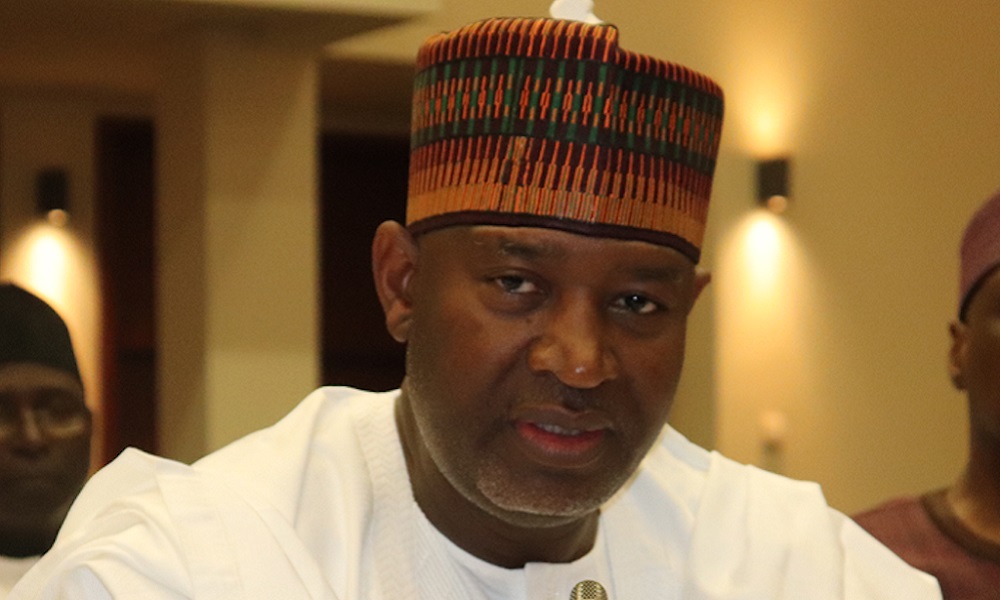
The Economic and Financial Crimes Commission (EFCC) on Wednesday told the Federal Capital Territory High Court in Abuja how former Minister of Aviation, Hadi Abubakar Sirika, allegedly presented an aircraft belonging to Ethiopian Airlines as the long-promised Nigeria Air aircraft shortly before the end of the administration of late former President Muhammadu Buhari.


The disclosure came from the 12th prosecution witness, Christopher Odofin, an EFCC investigator, during proceedings before Justice S.C. Oriji in the ongoing trial of Sirika and three other defendants over alleged abuse of office and misappropriation of public funds exceeding N2billion.

Sirika is standing trial alongside his daughter, Fatima Hadi Sirika, his son-in-law, Hamma Jalal Sule, and Al Buraq Global Investment Limited on an amended six-count charge brought by the anti-graft agency.

Testifying before the court, Odofin said investigations uncovered a charter arrangement involving Ethiopian Airlines under which an aircraft was temporarily painted in Nigeria Air colours and flown into Abuja for what prosecutors described as a staged unveiling.

Advertisement

Reading from a contract agreement between Ethiopian Airlines and parties involved in the Nigeria Air project, the witness told the court that the aircraft departed Addis Ababa on the evening of May 26, 2023, arriving at the Nnamdi Azikiwe International Airport in Abuja early on May 27.

According to the agreement cited in court, the aircraft was scheduled to remain in Abuja solely for the display of the Nigeria Air livery until May 28 before departing for Addis Ababa on the morning of May 29, 2023, the day power was transferred to a new administration.

The document further stated that the chartered flight would be operated by Ethiopian Airlines personnel wearing the airline’s uniforms, while local models dressed in Nigeria Air uniforms could be used for ceremonial photographs.

Odofin told the court that investigators concluded the display was deliberately timed to coincide with the final days of Sirika’s tenure as aviation minister and to create the impression that the Nigeria Air project had become operational.

Advertisement

“The aircraft stayed for less than 72 hours and, after the display, the Nigeria Air logo was removed before it was flown back to Ethiopian Airlines in Addis Ababa,” Odofin said.

He further disclosed that EFCC investigators obtained documents from Ethiopian Airlines following a June 12, 2023, response to the commission’s request for information regarding Nigeria Air.

According to him, the documents confirmed that the charter arrangement was strictly for a three-day static display of the Nigeria Air branding.

Odofin noted that although the Nigeria Air project was officially intended to establish a national carrier, the charter agreement with Ethiopian Airlines was only executed on May 24, 2023, just five days before Sirika left office.

Advertisement

He also testified about the award of contracts linked to the Nigeria Air project. He told the court that a contract valued at over N299 million was awarded to Tianaero Nigeria Limited on April 4, 2022, for the airline’s start-up operations.

According to him, the same contract was later extended on October 17, 2022, increasing its value to more than N599 million, allegedly on the directives of Sirika.

The witness alleged that investigators reached that conclusion after analysing the mobile phone of Enitan Muyiwa Abel, a former permanent secretary in the ministry.

According to Odofin, investigators recovered a voice note allegedly sent by Sirika while he was in Spain, directing the permanent secretary to ensure that the contract was awarded to Tianaero Nigeria Limited, a company linked to Gabriel Tilmann, whom prosecutors described as a close associate of the former minister.

Advertisement

The prosecution also tendered several documents, all of which were admitted without objection from defence counsel representing the four defendants.

Among the exhibits admitted was a compact disc containing an alleged voice note from Sirika, marked as Exhibit 37. The prosecution requested that the recording be played in open court during the next hearing.

Justice Oriji subsequently adjourned the case until June 17, 2026, for continuation of the trial.

Advertisement
Continue Reading
Advertisement

News

Citizen Patience and Collaborative Efforts: A Pathway to Greatness for Tinubu’s Government, By Hajia Hansatu Zannah*

Published

on

ADVERTISEMENT
Zoom Ad
ADVERTISEMENT
Zoom Ad

Nation-building is never the sole responsibility of government; it is a shared endeavor that requires the active participation, patience, and collaboration of citizens. In Nigeria today, President Bola Ahmed Tinubu’s administration faces the daunting task of steering the country toward economic stability, social cohesion, and sustainable development. While policies and reforms are critical, their success ultimately depends on the willingness of citizens to remain patient and supportive during the often difficult process of implementation.

Transformational leadership demands bold decisions—structural reforms, economic adjustments, and institutional restructuring—that may not yield immediate results. In such circumstances, patience becomes a vital national asset. By resisting the urge for instant gratification and allowing time for reforms to mature, Nigerians can help create an environment where government initiatives are given the opportunity to succeed.

Every nation, regardless of its stage of development, grapples with challenges—economic struggles, political transitions, social tensions, and infrastructural gaps. These realities test the resilience of both leaders and citizens. In moments of strain, the attitude of the people toward their country becomes a powerful determinant of progress. Constructive criticism is healthy and necessary for accountability, but outright condemnation and vitriolic attacks against one’s nation can be deeply counterproductive.

Words shape perception, and perception influences reality. When citizens consistently speak negatively about their country, they reinforce hopelessness and despair. This weakens national morale and discourages foreign investors, partners, and allies who rely on the confidence of citizens as a measure of stability. By contrast, balanced and solution-oriented dialogue strengthens Nigeria’s image and inspires collective action.

Advertisement

Collaboration, however, goes beyond compliance—it requires active engagement. Citizens can contribute meaningfully to nation-building by supporting reforms through constructive dialogue rather than resistance, participating in civic duties such as voting, community service, and public consultations. These actions serve as catalysts for greater national progress. At the same time, holding leaders accountable in a respectful and lawful manner is essential. While harsh and divisive criticism may be insidious, patriotism calls for promoting unity across ethnic, religious, and political divides to strengthen national cohesion.

If citizens embrace patience and collaboration, Tinubu’s government stands a better chance of achieving greatness. Economic reforms can stabilize markets, infrastructural projects can transform communities, and social policies can uplift vulnerable populations. Greatness, in this context, is not merely about political success but about building a Nigeria where prosperity, justice, and peace are attainable for all.

Citizens are not passive observers; they are active participants in governance. By engaging in respectful dialogue, supporting reforms, and holding leaders accountable through lawful means, they contribute to the nation’s growth. Patriotism does not mean blind loyalty—it means believing in the possibility of progress and working toward it.

A nation is like a family; disagreements are inevitable, but condemnation destroys trust. Citizens must rise above destructive criticism and embrace constructive engagement. By doing so, they preserve the dignity of their country and create an atmosphere where greatness can flourish. The path to national transformation lies not in tearing down but in building up—through patience, collaboration, and unwavering belief in Nigeria’s future.

Advertisement

The greatness of any government is measured not only by the vision of its leaders but also by the resilience and cooperation of its people. For Tinubu’s administration, citizen patience and collaborative effort are indispensable. Together, government and citizens can write a new chapter in Nigeria’s history—one defined by progress, unity, and enduring impact.

*Hajia Hansatu Zannah is a distinguished member of the Governing Council of the African Union Agenda 2063 and Ambassador Plenipotentiary. She is also the widow of the late Zannah Umar Mustapha, former Deputy Governor of Borno State.*

Continue Reading

News

BREAKING: CBN revokes licences of 46 Microfinance Banks over failure to satisfy regulatory requirements

Published

on

ADVERTISEMENT
Zoom Ad
ADVERTISEMENT
Zoom Ad

The Central Bank of Nigeria (CBN) has revoked the operating licences of 46 microfinance banks across the country, citing their failure to meet key regulatory requirements for continued operation.

The decision takes effect from Wednesday, July 1, 2026, according to a statement issued by the Acting Director of the CBN’s Corporate Communications Department, Hakama Sidi-Ali. The apex bank said the action was taken in line with its powers under Sections 12 and 13 of the Banks and Other Financial Institutions Act (BOFIA), 2020, and was approved by the CBN Governor, Olayemi Cardoso.

According to the CBN, the affected institutions lost their licences after failing to satisfy the conditions required to remain licensed financial institutions.

The bank explained that the revocation was based on one or more regulatory infractions, including insufficient assets to meet liabilities, shutting down operations without obtaining CBN approval, prolonged inactivity and cessation of financial intermediation, failure to commence business within 12 months after receiving a licence, and failure to maintain the minimum capital requirements without impairment from accumulated losses.

Advertisement

The CBN described the move as part of its ongoing efforts to strengthen the nation’s financial system and ensure that all licensed financial institutions operate in compliance with existing laws and prudential regulations.

“The revocation of the licences is part of the Bank’s ongoing efforts to safeguard the stability of the financial sector, protect depositors, and ensure that licensed institutions comply with current laws and regulatory requirements,” the statement said.

The apex bank reiterated its commitment to maintaining a safe, sound and resilient financial system, stressing that it would continue to take appropriate supervisory and regulatory measures where necessary to sustain public confidence in Nigeria’s banking sector.

Advertisement
Continue Reading

News

Tinubu Hails Wike’s Performance, Says All FCT Districts Now Feeling Impact of Governance(Photos)

Published

on

ADVERTISEMENT
Zoom Ad
ADVERTISEMENT
Zoom Ad

President Bola Ahmed Tinubu on Wednesday hailed the performance of the Federal Capital Territory (FCT) Minister, Nyesom Wike, declaring that it has become very evidently clear that all districts in the FCT are now feeling the impact of governance through completed projects that improve the quality of life of residents.

The President, represented by Senate President Godswill Akpabio, spoke while commissioning the Full Scope Development of Akinwumi Ajibola Street, comprising Important Local Streets (ILS) 16, 18 and 19, in Gaduwa District, Abuja.

Describing the project as a practical demonstration of the Renewed Hope Agenda, Tinubu said his administration was focused on delivering projects that address the everyday needs of Nigerians.

“We are here to open a road, but more importantly, we are here to restore access. The Full Scope Development of Akinwumi Ajibola Street is now complete and open for use. In this government, we measure ourselves by finished work. This street is finished work,” he said.

According to the President, residents of Gaduwa endured years of hardship despite owning homes in the district because there was no motorable road linking them to their properties.

“For years, families in Gaduwa built homes here in good faith, yet they had no motorable road to reach those homes. When the rains came, the place became impassable. That is not how a capital city treats its citizens. Under the Renewed Hope Agenda, we came to work, and today that promise is visible on these streets,” he added.

Tinubu commended the Minister of the Federal Capital Territory, Barr. Nyesom Wike, for changing what he described as the culture of project delivery in Abuja through effective supervision, prompt funding and timely completion of projects.

“When the Honourable Minister reviewed the files and saw the neglect, he did not issue another memo. He brought contractors back to site, gave clear targets and backed those targets with funding.

Advertisement

“You have changed the culture of delivery in the FCT. You ended the era of mobilisation without movement and abandoned inner roads. You are taking development from the city centre into the districts and satellite towns so that no resident is left behind. You have my confidence and my commendation,” the President said.

He noted that the completed road would improve mobility, reduce travel time, enhance property values and provide safer access for residents through the provision of drainage and streetlights.

Tinubu also urged residents to protect the infrastructure by preventing vandalism and ensuring drainage channels remain free of refuse.

“We will not stop here. Across the FCT, from the city centre to the area councils, our task is to finish what matters, connect what was separated and ensure that public funds translate into public value,” he said.

Advertisement

Earlier, FCT Minister Barr. Nyesom Wike said the commissioning formed part of the 16th project in the administration’s ongoing 31-day project inauguration programme marking President Tinubu’s third year in office.

According to him, the President had directed upon assumption of office that every district in the FCT must benefit from government projects, irrespective of whether they are located in the city centre or satellite communities.

“You instructed us that every district in the FCT must feel the impact of this administration. Today, I can confidently say that no district can claim it has been neglected. We have taken development to Jahi, Gwarimpa, Katampe, Guzape, Kwali and now Gaduwa,” Wike said.

The minister attributed the rapid execution of projects to the cordial working relationship between the Executive and the National Assembly, which ensured timely budget approvals and releases.

Advertisement

He also cautioned the Abuja Municipal Area Council (AMAC) against naming roads constructed by the Federal Government without due approval.

“If the Federal Government constructs the roads, permission must be obtained before naming them. Do not wait for us to build roads before putting names on them or using them to generate revenue,” he warned.

In her remarks, the Minister of State for the FCT, Dr. Mariya Mahmoud, described the commissioning as another milestone in the implementation of the Renewed Hope Agenda.

She said the project reflected the administration’s commitment to people-oriented infrastructure that improves mobility, enhances economic activities and raises the living standards of residents.

Advertisement

Mahmoud commended President Tinubu, Wike, the National Assembly, contractors, consultants, traditional rulers, security agencies and residents of Gaduwa for their contributions to the successful completion of the project, assuring that the FCT Administration would sustain the pace of infrastructure development across the territory.

Continue Reading

Trending

Copyright © 2024 Naija Blitz News