

Economy
Cardoso formally receives Central Bank of the Year Award in London
- /home/naijuinz/public_html/wp-content/plugins/mvp-social-buttons/mvp-social-buttons.php on line 27
https://naijablitznews.com/wp-content/uploads/2024/02/Olayemi-Cardoso.jpg&description=Cardoso formally receives Central Bank of the Year Award in London ', 'pinterestShare', 'width=750,height=350'); return false;" title="Pin This Post">
- Share
- Tweet /home/naijuinz/public_html/wp-content/plugins/mvp-social-buttons/mvp-social-buttons.php on line 72
https://naijablitznews.com/wp-content/uploads/2024/02/Olayemi-Cardoso.jpg&description=Cardoso formally receives Central Bank of the Year Award in London ', 'pinterestShare', 'width=750,height=350'); return false;" title="Pin This Post">
Akpo Ojo
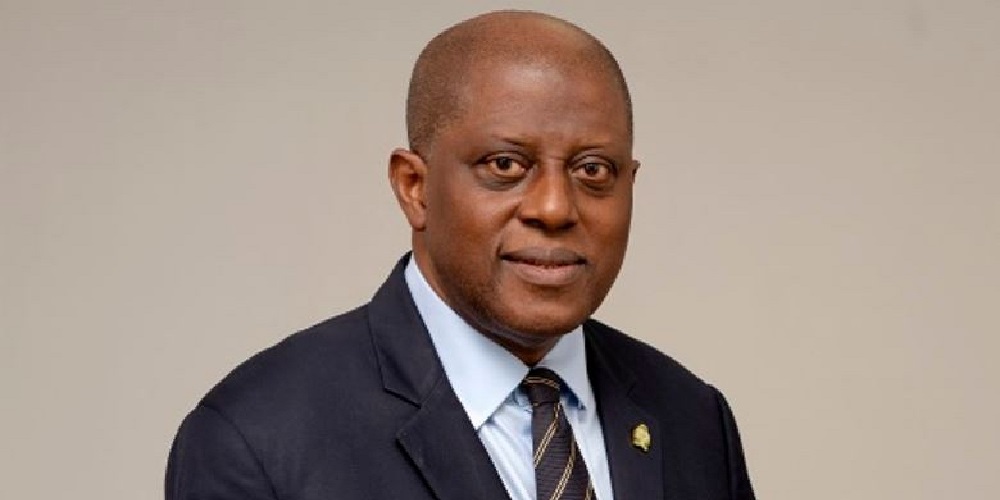
The Governor of the Central Bank of Nigeria (CBN), Mr. Olayemi Cardoso, formally received the Central Bank of the Year Award at the Central Banking Awards ceremony held in London on Wednesday, June 10, 2026.
He dedicated the honour to the board, management, and staff of the CBN for their steadfast commitment to institutional reform and economic stability.

Also, Cardoso expressed appreciation to the Central Banking Publications and the award judges for the recognition, while congratulating fellow institutions and individuals honoured during the event.
The CBN governor stressed that the award is not a personal achievement but a testament to the collective efforts of the entire CBN, particularly the professionals whose dedication, integrity, and expertise – often exercised away from public attention – have strengthened the apex bank and reinforced confidence in Nigeria’s economy.
“I accept this award on behalf of the board, management and staff of the Central Bank of Nigeria,” Cardoso said.
“Above all, it belongs to the many dedicated professionals who serve our institution with integrity, expertise, and an unwavering commitment to the public good.”
Reflecting on the global economic landscape, Cardoso noted that recent years had presented significant challenges for central banks worldwide, with Nigeria facing its own share of economic pressures and policy tests.
He highlighted several difficult but necessary measures undertaken by the CBN, including efforts to address elevated inflation, implement major reforms in the foreign exchange market, and invest in critical digital and financial infrastructure to support the country’s long-term economic development.
Cardoso also pointed to key milestones achieved during the period, including Nigeria’s removal from the Financial Action Task Force (FATF) grey list and the successful completion of the banking sector recapitalisation exercise.
He noted that these accomplishments reflect the collaborative efforts of multiple institutions and stakeholders.
According to the CBN governor, the apex bank’s reform agenda has been guided by a clear objective: restoring confidence, strengthening institutional resilience and policy credibility, and laying a solid foundation for sustainable economic growth.
While acknowledging that significant work remains ahead, Cardoso expressed optimism about the progress made so far and the renewed confidence emerging across the economy.
He attributed these gains to the support of the federal government, market participants, development partners, and, most importantly, the resilience and confidence of the Nigerian people.
“We receive this recognition with humility,” he said. “We see it not as a destination, but as encouragement to continue the important work ahead.”
Cardoso reaffirmed the CBN’s commitment to preserving public confidence, safeguarding financial and monetary stability, and fulfilling its mandate with integrity, professionalism, and accountability.
The award represents significant international recognition for the Central Bank of Nigeria at a time when monetary and financial sector reforms remain central to the country’s economic recovery and long-term growth agenda.
Economy
Nigeria exceeds OPEC quota as crude production hits 11-month high
Nigeria’s crude oil production surged to an 11-month high in May 2026, with the country exceeding its Organisation of the Petroleum Exporting Countries (OPEC) production quota.
The average crude oil production recorded during May represents 102 per cent of Nigeria’s 1.5mbpd of production quota allocated by OPEC.
The production report released by the Nigerian Upstream Petroleum Regulatory Commission (NUPRC) on Thursday disclosed that Nigeria’s oil production averages 1,530,354 barrels of crude oil and 170,446 barrels of condensates per day (bpd).
According to the report, this brings the total combined production to 1,700,800 barrels per day and consolidates Nigeria’s position as Africa’s largest oil producer.
The report said the production performance during the review period remained robust, with combined crude oil and condensate output ranging from a low of 1.51 million bpd to a peak of 1.86 million bpd.
It said the May 2026 production figures represented the highest recorded by Nigeria since July 2025, when output surged to 1,712,282.
“In strict crude oil terms (excluding condensates), the 1.53 million barrels recorded in May 2026 represents the highest Nigeria has witnessed since January 2025, when crude oil production hit 1.538mbpd.
“The latest crude oil production statistics thus represent a 15-month high on a month-on-month basis, production rose by 2.77 per cent in May 2026 as against 1.48mbpd in April,” it said.
The report said the broader production trend over the last five months had also remained positive.
It said combined crude oil and condensate output increased from 1.48 million bpd in February to 1.54 million bpd in March, 1.66 million bpd in April, and 1.7 million bpd in May, underscoring sustained growth in Nigeria’s hydrocarbon production.
According to the report, among production streams, Bonny Terminal led the pack with a total blend of 293,870 bpd, closely followed by Forcados Terminal at 289,900 bpd, Qua Iboe ranked third with 173,360 bpd, while Escravos Oil Terminal contributed 135,470 bpd.
It said the Odudu (Amenam Blend) accounted for 63,250 bpd across the top five production streams during the month under review.
The NUPRC attributed the rise in production to sustained positive momentum, as operations remained stable throughout the reporting period, with no significant pipeline or facility outages recorded.
It added that all previously scheduled turnaround maintenance activities had been completed, thereby improving operational reliability and production efficiency.
(NAN)
Economy
CBN proposes stricter regulation of banks, affiliated companies’ business dealings
The Central Bank of Nigeria (CBN) has issued draft guidelines that would impose stricter controls on transactions between banks, financial institutions and their affiliated entities as part of efforts to protect depositors’ funds, strengthen consumer protection and reduce risks within the financial system.
The proposed ‘Guidelines on Ring-Fencing Operations of Closely Linked Entities in the Nigerian Financial System’ seek to establish clear operational and functional boundaries among entities under the same corporate group and prevent the commingling of activities across different licence categories.
In a circular signed by the Director of the Financial Policy and Regulation Department, Dr Rita Sike, the apex bank said the framework was developed to promote a safe, sound and stable financial system, safeguard consumer interests and strengthen regulatory oversight.
According to the CBN, the guidelines prescribe requirements relating to governance, intra-group transactions, segregation of customer funds and data, operational independence, recovery and resolution planning, and consolidated supervision.
“The guidelines are intended to strengthen consumer protection, enhance transparency and accountability, mitigate contagion risks among closely linked entities, and preserve financial stability while supporting innovation and fair competition within the financial services sector,” the bank stated.
Under the proposed framework, boards of closely linked entities would be required to ensure that such entities operate independently and maintain separate governance, risk management and control structures. Each entity would also be expected to have a dedicated board and establish policies that ring-fence its operations from those of affiliated companies.
The CBN also proposed limits on overlapping leadership roles within financial groups, stating that the number of directors serving simultaneously on the boards of closely linked entities should not exceed 20 per cent of the total board membership.
To strengthen oversight, the draft guidelines require external auditors to certify annually the effectiveness of board-approved policies and processes designed to ensure operational independence.
The apex bank further proposed that all intra-group transactions must be conducted on arm’s-length terms and reported to the regulator on a quarterly basis.
It also stated that no closely linked entity should extend a loan to, or guarantee the obligations of, another affiliated entity without prior written approval from the CBN.
“The boards of closely linked entities shall ensure that transactions between such entities are conducted at arm’s length and are properly documented,” the draft stated.
The guidelines place significant emphasis on customer onboarding and consumer protection. Where customers choose services offered by an affiliated company, the receiving entity would be required to establish a direct business relationship with the customer, conduct its own KYC verification and provide account or wallet details where necessary.
The draft also requires affiliated entities to remain adequately capitalised at all times and ensure that critical functions are managed independently.
To reduce operational risks, the CBN proposed restrictions on the use of shared technology infrastructure , as entities would not be allowed to use their information technology platforms to offer services outside the scope of their licences or process transactions on behalf of affiliated entities.
The regulator said it could require the separation of data centres where necessary to reduce contagion risks and ensure that each entity can operate independently.
The framework further seeks to protect customer funds by requiring strict separation of accounts belonging to affiliated entities and daily reconciliation of balances, with discrepancies corrected within 24 hours.
Customer funds would not be permitted for intra-group lending, servicing debts, proprietary trading activities, external borrowings or operational expenses of related entities.
The CBN also proposed tighter controls on customer data, requiring data to be stored independently and prohibiting its sharing among affiliated entities without the explicit consent of customers, except as permitted under the Nigeria Data Protection Act.
“Sharing of customer data between closely linked entities without explicit consent of the customer is prohibited,” the draft guidelines stated.
The proposed framework further requires promoters of closely linked entities to establish a non-operating holding company structure. Such holding companies would be required to maintain regulatory capital at least 20 per cent above the combined minimum capital requirements of their subsidiaries.
However, shareholders unwilling to establish a holding company may choose to merge affiliated entities into a single business, subject to regulatory conditions, including the surrender of excess licences.
The CBN has exposed the draft guidelines for public review and invited stakeholders to submit comments before July 9, 2026.
Economy
IMF questions Nigeria’s $5bn borrowing structure
The International Monetary Fund (IMF) has raised concerns over Nigeria’s plan to secure up to $5 billion in external financing through a derivatives-based arrangement with the First Abu Dhabi Bank in the United Arab Emirates.
The warning was issued by Christian Ebeke, the IMF’s resident representative in Nigeria, who told journalists that such financial structures are often complex and lack transparency in their terms.
According to him, similar transactions in other countries have raised red flags due to limited disclosure and difficulty in fully assessing the obligations involved.
“Our view is that the transaction in these types of structures carry risks. Usually they are opaque, so the terms are not always very transparent when we reviewed these instruments across countries,” Ebeke said.
He advised that Nigeria consider more conventional funding options, including Eurobonds or concessional loans, which he said tend to offer clearer terms and lower risk exposure for sovereign borrowers.
The development comes as Nigeria continues to ramp up external borrowing to finance its fiscal needs and infrastructure plans. On March 31, the National Assembly approved President Bola Tinubu’s request for $6 billion in external loans.
As part of the approval process, the president specifically sought backing for a structured Total Return Swap (TRS) arrangement of up to $5 billion with First Abu Dhabi Bank.
The federal government has argued that the funds would support budget implementation, infrastructure development, and the refinancing of more expensive domestic and external debts.
However, the IMF’s comments add to ongoing global scrutiny of complex sovereign financing arrangements, particularly those involving derivatives-based instruments that can obscure the true cost of borrowing.
Nigeria’s public debt stock currently stands at about $110.3 billion (approximately N159.2 trillion as of December 2025), underscoring concerns about debt sustainability as new borrowing plans expand.
-
News23 hours agoInsecurity has so engulfed Nigeria that bandits collect taxes, Govt offers excuses — Donald Duke
-
News11 hours agoAkpodiete Hails Rt. Hon. Fred Agbedi on Appointment as House Minority Leader
-
News19 hours agoBREAKING: Reps Names New Minority Principal Officers as Fred Agbedi Emerges Minority Leader
-
Entertainment19 hours agoPopular Singer, Davido draws world attention to kidnapped Oyo schoolchildren at World Cup Concert
-
News14 hours agoFG declares Friday June 12 public holiday for Democracy Day
-
News23 hours agoU.S. Cancels Over 600 Visas in Crackdown on Birth Tourism Networks
-
Sports23 hours agoRonaldo React After 2–1 Victory Over Super Eagles in Friendly
-
News12 hours agoRepatriated Lady Narrates Husband’s Killing in South Africa, Vows Never to Return