Economy
Oil prices settle 2% lower as economic worries outweigh supply risks

- /home/naijuinz/public_html/wp-content/plugins/mvp-social-buttons/mvp-social-buttons.php on line 27
https://naijablitznews.com/wp-content/uploads/2024/03/crude-oil-production.jpg&description=Oil prices settle 2% lower as economic worries outweigh supply risks', 'pinterestShare', 'width=750,height=350'); return false;" title="Pin This Post">
- Share
- Tweet /home/naijuinz/public_html/wp-content/plugins/mvp-social-buttons/mvp-social-buttons.php on line 72
https://naijablitznews.com/wp-content/uploads/2024/03/crude-oil-production.jpg&description=Oil prices settle 2% lower as economic worries outweigh supply risks', 'pinterestShare', 'width=750,height=350'); return false;" title="Pin This Post">


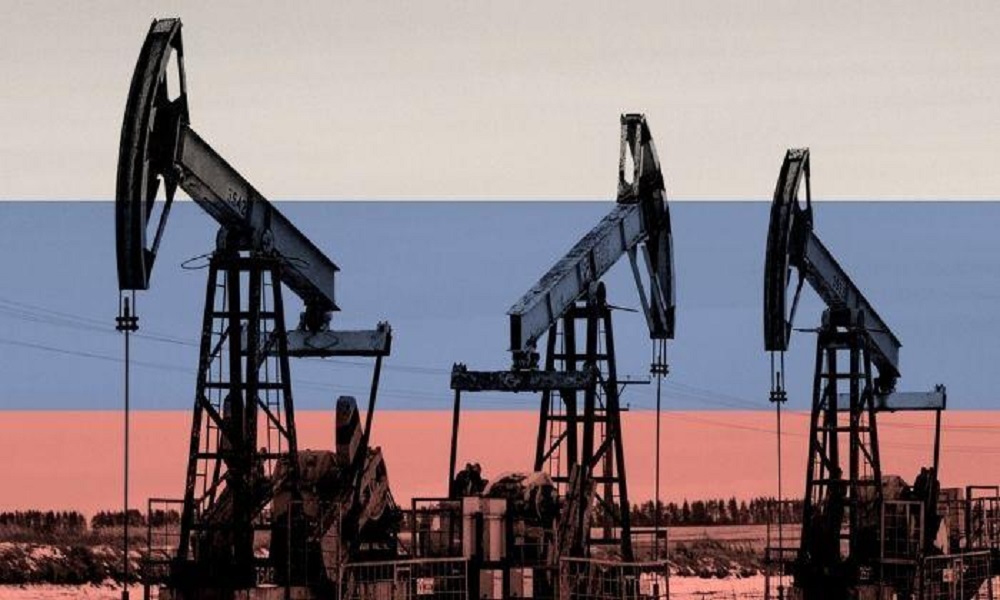
Oil prices slid about 2% on Thursday on worries that rising inflation and other economic concerns could weigh on global oil demand despite continuing supply constraints as the the U.S.-Iran conflict has delayed full reopening of Strait of Hormuz.
About 20% of global oil supplies passed through the strait before the war.
Brent futures fell $1.72, or 2.2%, to settle at $76.30 a barrel. U.S. West Texas Intermediate (WTI) crude fell $1.44, or 2.0%, to settle at $72.08.
On Wednesday, Brent closed at its highest since June 19 and WTI closed at its highest since June 22.
Iranian armed forces launched attacks on U.S. military infrastructure in Gulf states on Thursday following U.S. strikes on Iran’s southern coastal and eastern provinces, further straining a three-week-old ceasefire agreement.
The attacks came on the day that Iran buried its slain Supreme Leader Ayatollah Ali Khamenei at the shrine of Mashhad, the culmination of a week of mass funeral processions and rallies. Khamenei was killed on the first day of the war on February 28. Separately, several explosions were heard in Iran including in Bushehr, where one of Iran’s nuclear plants is located.
“We expect the renewed tension in the Middle East between the U.S. and Iran to be relatively short-lived because both countries are constrained by practical economic and political realities,” Vikas Dwivedi, global energy strategist at Macquarie Group, said in a note.
Qatar, which has often mediated between Washington and its adversaries including Tehran, condemned attacks on commercial shipping and called for a return to diplomacy. Foreign ministers of Turkey and Oman also stressed the need to avoid further military escalation in calls with their Iranian counterpart, Abbas Araqchi.
“After two days of attacks, Iran appears to be on the phone looking to scale back hostilities and possibly return to the negotiating table,” Bob Yawger, director of energy futures at Mizuho, said in a note.
Iran’s Revolutionary Guards Navy said the U.S. attacks and intervention in redirecting shipping through the Strait of Hormuz were disrupting the waterway’s gradual reopening.
“Our estimated oil flows from the Persian Gulf recovered to above 80% of pre-war flows within the first 10 days after Hormuz reopening as trapped tankers rushed to leave the Persian Gulf, but retreated to the low-70s% of normal following recent attacks on tankers,” analysts at U.S. bank Goldman Sachs said in a report.
U.S. JOBS AND INFLATION
In the U.S., the number of Americans filing claims for unemployment benefits fell last week, supporting economists’ views that the labor market remained in a “slow-hire, slow-fire” mode.
Minutes of the Federal Reserve’s June 16 to 17 meeting showed policymakers’ concerns about inflation mounted last month and they “generally expected labor market conditions to remain stable in the near term, with the unemployment rate staying close to current levels.”
New York Federal Reserve President John Williams said on Thursday he did not expect a sustained rise in energy prices for the rest of the year despite the of hostilities in the Middle East, and declined to say what decision he would make on interest rates at a policy meeting later this month.
When the Fed boosts interest rates to keep inflation in check, it can reduce economic growth and cut demand for oil.
In China, the world’s second-biggest economy behind the U.S., producer price inflation surged in June to its highest level in four years, piling pressure on manufacturers’ profit margins as weak domestic demand limited pricing power.
UKRAINIAN DRONES HIT RUSSIAN TANKERS
In Europe, Ukrainian drones hit a dozen more Russian tankers in the Sea of Azov overnight, Ukraine’s military said, the latest in a campaign aimed at disrupting fuel supplies to Russian forces and isolating Moscow-occupied Crimea.
On Wednesday, U.S. diesel futures posted their biggest daily percentage gain in four years after Russia announced a ban on exports of the industrial fuel, supercharging supply concerns in a market grappling with uncertainty about Middle Eastern oil flows.
Russia said the U.S. was wrong to believe deep Ukrainian strikes into Russian territory could help end more than four years of war, and could instead prolong it.
A settlement in the Ukraine war could result in the lifting of some sanctions on Russia, which could allow Moscow to export more oil. Russia was the world’s third-biggest crude oil producer behind the U.S. and Saudi Arabia in 2025, according to U.S. energy data.


The Black Market Dollar-to-Naira Exchange Rate for 1st September 2026 Can Be Accessed Below.
NOTE: The exchange rate changes hourly. It depends on the volume of dollars available and the Demand. This means…you can buy or sell 1 dollar at a certain rate, and the price can change (high or low) within hours.
The official naira black market exchange rate in Nigeria today, including the Black Market rates, Bureau De Change (BDC), and CBN rates.
The exchange rate fluctuates hourly based on the supply and demand of dollars in the market.
What’s the dollar to naira black market today, 1st September 2026?
The exchange rate for a dollar to naira at Lagos Parallel Market (Black Market) players sell a dollar for ₦1405 and buy at ₦1390 on Monday, 1st September, 2026, according to sources at Bureau De Change (BDC).
Please note that the Central Bank of Nigeria (CBN) does not recognize the parallel market (black market), as it has directed individuals who want to engage in Forex to approach their respective banks.
Dollar to Naira Black Market Rate Today
Dollar to Naira (USD to NGN) Black Market Exchange Rate Today
Selling Rate ₦1405
Buying Rate ₦1390
Dollar to Naira CBN Rate Today
Dollar to Naira (USD to NGN) CBN Rate Today
Highest Rate ₦1343
Lowest Rate ₦1320
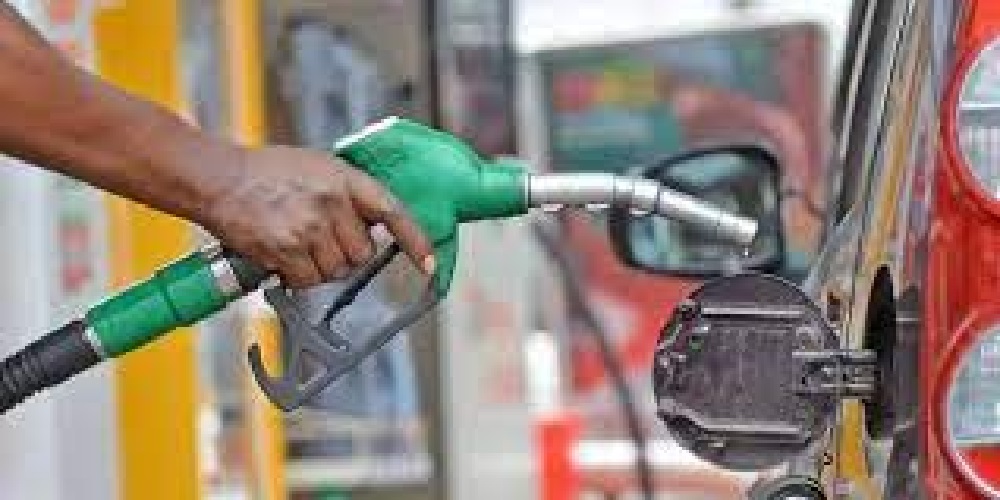
The Nigerian National Petroleum Company Limited (NNPCL) has increased the pump price of Premium Motor Spirit (PMS), commonly known as petrol, at some of its retail outlets in Abuja.
The latest adjustment has pushed the price of petrol at affected NNPCL filling stations to ₦1,345 per litre, representing a ₦75 increase from the previous price of ₦1,270 per litre.
Checks conducted on Monday showed that NNPCL stations in parts of the Federal Capital Territory, including outlets around Gwarinpa and Wuse Zones 4 and 6, were dispensing petrol at the new price.
The increase comes amid a fresh wave of upward adjustments in petrol prices by several marketers across the country.
NNPCL Stations Adjust Pump Price
A staff member of an NNPCL retail outlet, who spoke on condition of anonymity, confirmed that the company had adjusted its pump price on Monday.
“Our petrol pump price was raised to ₦1,345 per litre today (Monday),” the attendant said.
The latest development means motorists who purchase 50 litres of petrol at the affected NNPCL stations will now spend approximately ₦67,250, compared with ₦63,500 under the previous ₦1,270-per-litre price.
The increase is expected to put additional pressure on motorists and other consumers who rely heavily on petrol for transportation and business activities.
Other Marketers Also Increase Prices
The NNPCL adjustment follows similar price reviews by several independent petroleum marketers over the weekend.
Filling stations operated by MRS, Ranoil, Empire Energy and other downstream operators reportedly increased their petrol prices by between ₦20 and ₦80 per litre in different locations.
The varying adjustments highlight the increasingly market-driven nature of petrol pricing in Nigeria, with retail prices differing depending on the marketer, location, supply costs and prevailing market conditions.
Motorists in Abuja and other parts of the country are therefore expected to continue seeing different pump prices from one filling station to another.
Dangote Refinery Raises Ex-Depot Price
The latest pump price increases came after Dangote Refinery reportedly adjusted its ex-depot price for petrol.
The refinery increased its gantry price by ₦65, taking it from the previous level to ₦1,265 per litre.
The ex-depot price is a major component of the cost structure faced by petroleum marketers before transportation, logistics, storage, operational expenses and other charges are added before the product reaches retail filling stations.
An increase at the depot level can consequently result in higher pump prices if marketers pass the additional cost on to consumers.
Rising Petrol Imports Raise Concerns
The latest petrol price adjustments have also emerged amid renewed concerns over the increasing volume of imported petrol entering the Nigerian market.
The development has attracted attention because Nigeria’s domestic refining capacity, particularly following the commencement of operations at the Dangote Refinery, has been expected to reduce the country’s dependence on imported refined petroleum products.
However, petrol imports have continued to account for a significant portion of the country’s total supply.
Data from the Nigerian Midstream and Downstream Petroleum Regulatory Authority (NMDPRA) reportedly showed that imported petrol accounted for 43.3 per cent of total PMS supply in July.
The figure has raised concerns within the domestic refining and downstream petroleum sector.
Dangote Refinery Raises Concern Over Imports
The Dangote Refinery had previously expressed concerns about the increasing volume of imported petrol into Nigeria.
The refinery reportedly threatened to restrict petrol sales to importers and marketers amid what it described as a surge in imported products.
The development has contributed to an ongoing debate over competition, supply sources and pricing within Nigeria’s downstream petroleum industry.
While domestic refiners are seeking to expand their share of the local market, petroleum marketers continue to source products from different suppliers based on prevailing commercial conditions.
What the Latest Increase Means for Nigerians
The latest increase in Abuja is likely to generate concern among motorists and businesses, particularly those already dealing with high operating and transportation costs.
Petrol price movements often have a wider impact on the economy because the product is heavily relied upon for transportation, power generation and the distribution of goods and services.
An increase in pump prices can therefore raise transportation fares and increase the cost of moving food, agricultural produce and other commodities.
For businesses that depend on petrol-powered generators and vehicles, the additional cost could also translate into higher operating expenses.
With NNPCL stations now selling petrol at ₦1,345 per litre in some parts of Abuja, motorists will be watching closely to see whether other filling stations follow with further increases in the coming days.
The latest adjustment also adds to recent concerns that petrol prices could continue rising if depot prices and other supply-related costs remain elevated.
The Nigerian naira is opening the new trading week around the ₦1,300-per-dollar range, with the latest official Nigerian Foreign Exchange Market (NFEM) data showing a closing rate of about ₦1,337.29/$1 at the end of Friday’s session.
According to the Central Bank of Nigeria (CBN), the NFEM rate stood at ₦1,337.2873 per dollar on August 28, while the closing rate was ₦1,337.0000. The official NFEM rate is calculated using a volume-weighted average of transactions in the market.
The naira had strengthened during the previous week, moving from ₦1,349.99/$1 on August 24 to ₦1,337/$1 on August 28, representing an appreciation of about 0.96 percent.
In the parallel market, the dollar was quoted at about ₦1,400 on Friday, according to market data published by AbokiFX. This was ₦7 lower than the ₦1,407/$1 recorded the previous day.
The latest parallel-market rate leaves a gap of roughly ₦63 between the informal market and the official NFEM rate.
Meanwhile, a live indicative USD/NGN rate available early Monday puts the dollar around ₦1,346.78, although this should not be confused with the official NFEM closing rate, which reflects the most recent completed trading session.
Market data also showed continued strength in foreign exchange liquidity. NFEM turnover reached $1.06 billion in one trading session last week, while Nigeria’s foreign reserves continued to provide support for the naira.
For today, Monday, August 31, 2026, the dollar-to-naira rate is therefore around ₦1,337/$1 at the latest official NFEM close, while the parallel-market rate is around ₦1,400/$1. Rates may change as trading activity resumes and demand and supply conditions evolve.
It is important to note that rates offered by banks, Bureau de Change operators and other dealers may differ from the published NFEM and parallel-market reference rates because of transaction margins and market conditions.

Kwara Assembly Declares Two Assembly members’ Seats Vacant Over Defection From APC To PDP

FBI confirms Tinubu was Under Investigation for Drugs

BREAKING: Ondo Universities begin indefinite industrial action




-

 News18 hours ago
EFCC sacks over 40 staff for corruption, prosecutes 5 others
-

 News19 hours ago
Calls Mount for Forensic Audit of Chinua Achebe Airport Over Alleged Revenue Diversion
-
 Economy18 hours ago
NNPCL Increases Price Of Petrol
-
 Metro18 hours ago
Air Force Officer Narrates How Gunmen Abducted His Wife, Two Children From Kaduna Home
-

 News12 hours ago
Just in: Court fires 2027 APC candidate, orders fresh primaries
-

 Entertainment18 hours ago
Headies dismiss claims of sidelining gospel artistes
-

 News12 hours ago
Breaking Dangote Refinery stops sales of petroleum products to Matrix, AA Rano, others
-

 News11 hours ago
Intoxicated Pilot Crashes Stolen Plane Near Nuclear Site