Connect with us

News

N440m contract probe: ICPC summons Kano Speaker, others

Published

on

ADVERTISEMENT
Zoom Ad
ADVERTISEMENT
Zoom Ad

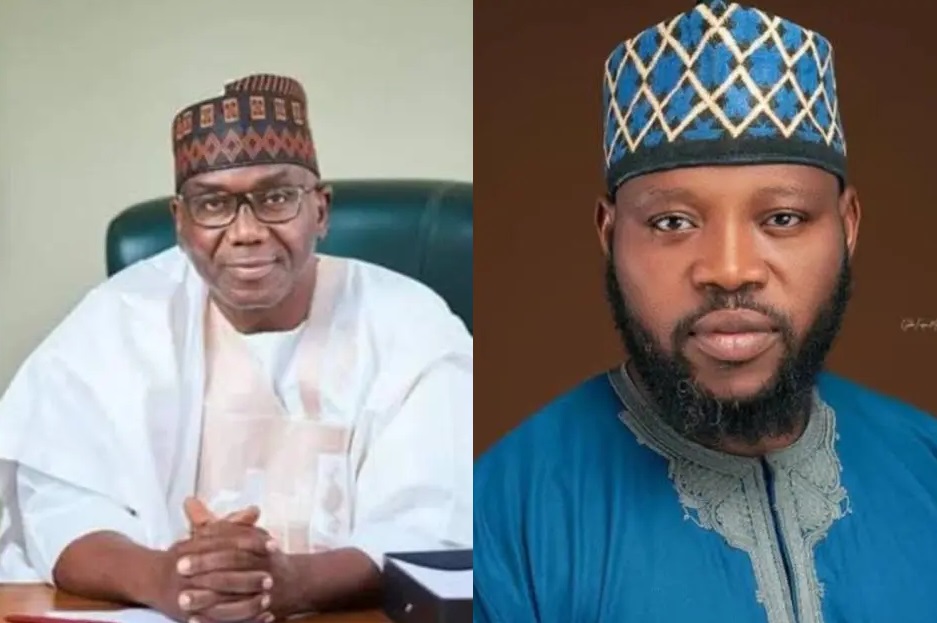
Kano State House of Assembly Speaker Jibril Falgore, Deputy Speaker Muhammad Butu and three others have been invited for questioning as part of the ongoing probe of the N440 million drugs contract scam in 44 local government areas in the state.


They were invited yesterday by the Independent Corrupt Practices and Other Related Offences Commission (ICPC).

Others invited are: Majority Leader Lawan Dala; Minority Leader Labaran Madari; Clerk of the House Bashir Diso;  and the Permanent Secretary, Ministry of Local Government and Chieftaincy Affairs.

Apart from the Permanent Secretary who will interact with ICPC team on September 18, the Speaker and the rest are to undergo interrogation on September 19.

Advertisement

The letter of invitation, dated yesterday and addressed individually to those invited, reads: “The commission is investigating alleged violations of the provisions of the Corrupt Practices and Other Related Offences Act, No. 5 2000.

“Pursuant to Section 28 of the said Act, you are to appear for an interview before the undersigned at the ICPC headquarters, Abuja. You are expected to come with either a lawyer, Justice of Peace, Staff of the Legal Aid Council, or any individual of your choice.

“The appointment is scheduled and should be strictly adhered to. Accept the assurances of the Hon. Chairman’s highest regard.”

Since July 18, the Kano State Public Complaints and Anti-Corruption Commission has been trying to investigate the award of the N440 million drugs contract, which was awarded to NOVOMED Pharmaceuticals.

Advertisement

The contract, which was meant for the supply of drugs to the 44 local government areas, was alleged to be in breach of the state’s Procurement Law and Financial Management Law.

But, on August 27, the Chairman of the Association of Local Government of Nigeria (ALGON), the Ministry of Local Government Affairs and all the 44 council bosses secured a court order restraining the state anti-graft agency from probing the alleged drugs contract scam.

They asked the court to declare that the arrest and detention of the applicants and their employees by the Kano State Public Complaints and Anti-Corruption Commission amounted to an infringement and encroachment of their fundamental human rights under Section 34, 35, 36, 41 and 46 of the 1999 Constitution.

The applicants also asked a Kano State High Court, presided by Justice Ibrahim Musa Muhammad, to restrain ICPC, the Economic and Financial Crimes Commission (EFCC), the Commissioner of Police, the Assistant Inspector-General of Police (Zone 1) Kano and the Nigeria Security and Civil Defence Corps (NSCDC), Kano Zonal Command.

Advertisement

Justice Muhammad, who granted the request to retrain ICPC and others, adjourned the matter to September 12 (yesterday).

But ICPC chairman, Dr. Musa Aliyu (SAN), who appeared before the Kano State High Court yesterday said the chairmen have no locus standi to institute the matter because the Supreme Court has declared all the caretaker committees in LGAs as illegal nationwide.

He also said the resolution of the Kano State House of Assembly to extend the tenure of the 44 chairmen of the 44 Caretaker Committees in the councils was not valid because such committees were unknown to the 1999 Constitution.

He asked the court to vacate the restraining order sought by ALGON, the Ministry of Local Government and Chieftaincy Affairs and the 44 chairmen of the Caretaker Committees.

Advertisement

As at press time last night, the ICPC had decided to go ahead with the probe of the N440 million drugs contract.

A source said: “We received Intel from a whistleblower on the drugs scandal and we have decided to investigate all the allegations. There are many other allegations we are looking into.

“We have invited the Speaker and five others to assist in the course of our investigation. We need to ask them to clarify some issues which may inhibit ongoing investigation.”
Advertisement
Continue Reading
Advertisement
Click to comment

Warning: Undefined variable $user_ID in /home/naijuinz/public_html/wp-content/themes/zox-news/comments.php on line 49

You must be logged in to post a comment Login

Leave a Reply

News

Nigeria Does not need new State Police, needs legal support for lexisting security structures — Major General Ishola Williams

Published

on

ADVERTISEMENT
Zoom Ad
ADVERTISEMENT
Zoom Ad

A Retired Nigerian Army Major General, General Ishola Williams, has declared that Nigeria’s debate over state policing is largely misplaced, insisting that what the country requires urgently is not further argument but a constitutional amendment to properly formalise existing security structures already functioning across states.

Speaking on Friday during an interview on Frontline, a current affairs Programme on Eagle 102.5 Fm, Ilese Ijebu, Ogun State, Williams maintained that Nigeria has, in practice, already implemented a form of state policing through regional security outfits, especially the Southwest security network, Amotekun, which he described as an operational reality lacking constitutional backing.

According to him, the continued call for the creation of state police ignores the fact that sub-national security structures are already active, though poorly coordinated and legally constrained by the current constitution.

“We’ve already got a state police in practice, what we actually need now is a constitutional amendment to recognise and properly structure what already exists on the ground,” he said, stressing that endless debate was slowing down meaningful reform.

Advertisement

Williams argued that the country’s worsening insecurity reflects not just operational failure but a deeper crisis of policy confusion and institutional overlap, which he said has left security agencies working at cross purposes.

He said Nigeria is currently facing what he described as a “dual national emergency,” where citizens are trapped between insecurity and economic hardship, making survival increasingly difficult.

“The reality is that Nigerians are now living in fear and deprivation at the same time. People cannot afford basic living, and at the same time, they cannot move safely. When both fear of hunger and fear of violence exist together, then the nation is in danger,” he stated.

He criticised the Federal Government’s handling of recent security crises, particularly in the South-West, saying official responses often lack urgency and operational seriousness.

Advertisement

Williams also questioned the visibility of the Office of the Special Adviser to the President on Homeland Security, noting that the role appeared inactive despite rising insecurity across multiple regions.

“We have an office that was created for homeland security, but there is no public engagement, no briefing, no visible strategy. It raises serious concerns about whether the system is even coordinated,” he said.

The retired general also criticised proposals to recruit large numbers of untrained operatives, describing them as ineffective in confronting organised criminal networks.

“So they felt the best thing is recruiting 1,000 foreign guards, Those 1,000 people, have they been trained already to be able to rescue those who are kidnapped in the forest? Does it make sense?” he said, dismissing such strategies as symbolic rather than practical.

Advertisement

He questioned Nigeria’s intelligence capacity, arguing that external observers often express disbelief at the country’s security coordination.

“My colleagues outside the country ask me whether we have people who are thinking at all in our Homeland security system.” he revealed, underscoring what he described as systemic failure.

The retired officer also noted that he had repeatedly submitted policy proposals over the years, particularly on school protection, but they were ignored.

“Do you know that nobody has taken up that proposal?” he said, lamenting what he sees as institutional neglect of expert recommendations.

Advertisement

Williams stressed the need to clearly separate public safety from national security responsibilities, saying confusion between both concepts is weakening the system.

“Secondly too, I keep telling people, including you journalists, stop confusing public safety with security. That is a confusion and government is confused. Government is confused.” he stated emphatically.

He argued that the absence of clear operational boundaries between agencies has created overlap and inefficiency in responding to threats.

Williams questioned the visibility and effectiveness of the newly appointed Special Adviser on Homeland Security, Adeyinka Famadewa.

Advertisement

“The office has been appointed, nobody has heard anything from him, nobody has interviewed him, and he too have been keeping quiet.” he said.

He further criticised the delegation that visited Oriire Local government area of Oyo state, describing them as lacking urgency and seriousness.

“All of them were well-dressed, they were not going like people who are going to an area with lack of safety.” he said.
Williams argued that such symbolic gestures fail to reflect the gravity of insecurity on the ground.

He further warned that Nigeria’s security response structure appears disorganised and driven by ad hoc decisions rather than long-term planning.
“And they are acting like confused people. As if there are people there who do not think about what to do.” he said.

Advertisement

The retired general criticised the idea that recruitment alone could solve kidnapping and banditry challenges.
He lamented the continued abduction of schoolchildren and rural dwellers, describing it as a tragic indication of state failure to respond decisively to early warnings further expressing frustration over repeated failures to implement existing security proposals and frameworks.

Williams also condemned what he described as lack of rapid response to kidnapping incidents involving children.
He referenced the abduction case involving sister of former minister of power, Bayo Adelabu and her twin sons noting the rapid response of the police to the incident.
“Within 6 hours, police said they were doing something about it.” he said.

He argued that this was not in the case of the kidnapping that happened in Oriire Lcal Government of Oyo State insisting that a properly structured special forces response would have changed the outcome of such incident.

“As soon as they announced that they had been kidnapped, special forces with drones and helicopters should have gone after these people.” he said.
Williams maintained that failure to act decisively within critical hours emboldens criminal groups.

Advertisement

Political commentary blog
He reiterated that Nigeria already possesses multiple layers of security institutions but lacks coordination.

“We’ve already got a state police, what is Amotekun? Tell me. What is Amotekun?” he repeated, stressing his earlier position.

He insisted that the real issue is not creating new structures, but reforming and legally empowering existing ones.

Williams criticised the slow pace of governance on the issue of state policing, alleging deliberate delays in decision-making processes.

Advertisement

“They continue to deceive people. And if you look at it, President Bola Ahmed Tinubu is not interested in state police. He is not interested in the restructuring.
And they are playing tricks now to keep the whole thing going until December. Even Senate President, Akpabio said so openly that they will not do anything until December”

The retired general also questioned the role of the Inspector General of Police in shaping security restructuring proposals.

“The IGP wants to protect his interests. But we want independent state police. But he too wants to have control.” he said.

Williams argued that institutional self-interest is slowing down meaningful reform of policing structures.
He further criticised the continued centralisation of elite police units, arguing for structural independence while maintaining that Nigeria requires specialised paramilitary units capable of rapid response to internal threats.

Advertisement

Williams warned that insurgent groups are becoming increasingly entrenched in specific regions, particularly the North-East.
He said prolonged conflict has allowed extremist groups to consolidate territorial influence in parts of the region.

The retired general also criticised regional security coordination across West Africa.
“So the whole security system along the West Coast is in a mess.” he said, blaming weak regional cooperation and poor funding structures.
He concluded that Nigeria’s security crisis is rooted in structural confusion, lack of constitutional clarity, and weak accountability systems.

Source: Eagle FM

Advertisement
Continue Reading

News

FCT Police nab three suspected kidnappers seen display I AK-47s in viral video

Published

on

ADVERTISEMENT
Zoom Ad
ADVERTISEMENT
Zoom Ad

The FCT police command have nabbed suspected k!kidnappers sighted in a viral video openly brandishing AK-47 rifles, ammunition, and walkie-talkies, while dressed in military camouflage.

Confirming their arrest to newsmen, the FCT Commissioner of Police, CP Ahmed Sanusi, said immediately he received the viral video and pictures, he directed a detailed forensic analysis into the origin of the content and ordered the immediate arrest of the suspects.

Sanusi mentioned that following digital forensic analysis and actionable intelligence, he directed operatives of the FCT Police VCRU Sector 5 and personnel from Zuba Division, led by the DPO, CSP Ogu Caleb Ikechukwu, on a coordinated operation at Runji Village, Zuba, on May 25 at about 3:22am, where three suspects featured in the videos were arrested at their hideout.

He gave the names of the suspects as Umar Babangida, 25 years old; Adamu Yeti, 22 years old; and Yahaya Idris, 24 years old, all residents of Rijana, Kaduna State.

Advertisement

The police boss said investigations revealed that the suspects had previously been in possession of the AK-47 rifles, which were obtained from their gang leader identified only as “Esco” from Rijana, Kaduna State who is currently at large.

He mentioned that further investigations also led to the recovery of additional videos and photographs from the suspects’ mobile phones showing them dressed in military camouflage while brandishing AK-47 rifles and carrying walkie-talkies.

The suspects are currently in custody undergoing further investigation, while efforts are ongoing to apprehend Esco the gang leader and other members of the gang who are at large and recover the firearms.

Advertisement
Continue Reading

News

2027: INEC nullifies primaries held after May 30

Published

on

ADVERTISEMENT
Zoom Ad
ADVERTISEMENT
Zoom Ad

The Independent National Electoral Commission has warned political parties that any primary election conducted outside the commission’s May 30 deadline remains invalid, unless a higher court overturns an earlier Federal High Court judgment on the matter.

INEC National Commissioner and Chairman of the Information and Voter Education Committee, Mohammed Kudu Haruna, made the disclosure in a chat with The Punch.

He advised that political parties would have to continue to comply with the provisions of the Electoral Act 2026 pending the determination of the commission’s appeal before the Court of Appeal.

Haruna stated: “Obviously, for now, any primary held outside INEC’s May 30 deadline will be invalid unless the Court of Appeal overturns the Federal High Court judgment in INEC’s appeal against the ruling that the timetable breached the Electoral Act 2026 in some of its provisions.

Advertisement

“In other words, for now, the political parties are better advised to be guided by the existing Act.”

The INEC commissioner’s position follows the ongoing legal dispute over the commission’s timetable for party primaries and candidate nominations ahead of the 2027 general election.

A Federal High Court in Abuja presided over by Justice Mohammed Umar, in a judgment, had nullified aspects of INEC’s electoral guidelines and schedule put in place for the conduct of the 2027 general elections.

Justice Umar, delivering judgment in a suit filed by the Youth Party against INEC, marked FHC/ABJ/CS/517/2026, held that the commission could not lawfully shorten the timelines provided under Section 29(1) of the Electoral Act 2026 for the submission of party membership records and candidates’ particulars.

Advertisement

The court also held that INEC could not abridge timelines already provided under the Electoral Act 2026, noting that the electoral body acted outside its statutory powers under the Electoral Act 2026.

process would be invalid unless it had the consent of all parties involved.

Fagge stressed that no aspirant should be denied a fair opportunity due to procedural lapses or electoral irregularities.

Haruna’s latest clarification on the INEC deadline, however, suggested that, pending the outcome of the appeal, political parties risk having any primary election conducted outside the May 30 deadline.

Advertisement
Continue Reading

Trending

Copyright © 2024 Naija Blitz News