…says insecurity is caused by international community
…as agric minister assures FG will protect the interest of Nigerians
By Gloria Ikibah
A group of experts known as the “GMO-Free Nigeria Alliance” which comprises of over 200 individuals and groups including farmers, civil society, scientists/researchers, nutritionists, legal practitioners, medical practitioners, women and youth groups have raised alarm on the negative effects of Genetically Modified Organisms on Nigeria food system, human and environmental health.
The group which urged members of the National Assembly to place a ban on GMOs in the country stating that external forces who are behind the introduction of GMOs in Nigeria have fueled insecurity.
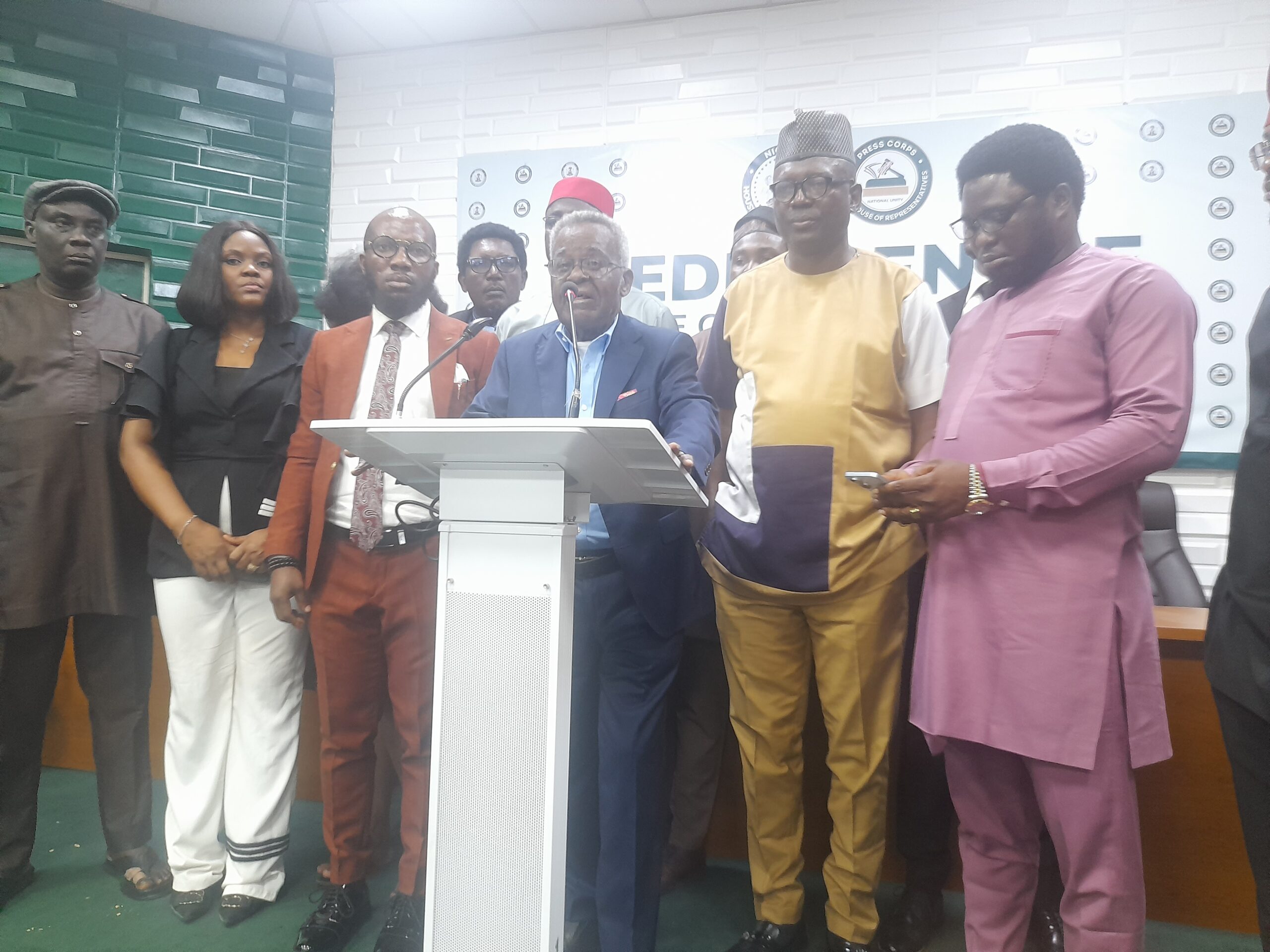
The group which represents millions of the Nigerian people with a share common concern disclosed this during a public hearing by the House Committee on Agricultural Production on genetically Modified Organisms (GMOs).
One of the consultant to the group, Johnson Ekpere presenting their memorandum to the Commitee said that government must take it as a personal responsibility to immediately declare a policy of no to GMO and GMO distribution and circulation in Nigeria should be halted.
He said: “We would like to see in the interim, while the argument is even going on, a national moratorium declared that even if they are not convinced that the adverse effects which majority of the experts have spoken eloquently to are obvious, even if they still want to go ahead with the investigation, pending when they reach a conclusion, GMO distribution and circulation in Nigeria should be halted.
“Because there is not a perception that you can do to Nigerians whatever you want to do and nothing will happen. And that explains some of the institutional arrogance that we witness today. To the point that someone was so audacious to say it is better to eat and die than not to eat and die.
“While we recognise the governments efforts at improving food security in Nigeria, the adoption of GMOs as a silver bullet to agricultural challenges is an error. Continuing this path holds serious implications on Nigeria’s food sovereignty, on our biodiversity/environmental sustain-ability, and on our health.
“We recommend a wholistic approach to these problems – one that addresses the root causes, ensures food security/food sovereignty, empowers the small holder farmers who are the mainstay of Nigeria’s agriculture system and builds biodiversity and overall environmental resilience.
“This Memorandum calls on the Nigerian National Assembly to ban GMOs in Nigeria and to instead, invest in Agroecology comprising of Organic Agriculture, Regenerative Agriculture, Agroforestry and other practices that are proven to be able to transform the Nigerian Food system to sustain-ability.
“GMOs do not Improve Productivity
In September 2024 the National Cotton Association of Nigeria (NACOTAN) reported that they “did not record any significant increase in their yields compared to the local seed varieties but instead, since the introduction of GM cotton seeds during the 2020/2021 farming season, yield per hectare has remained almost the same.
“They also reported that no other plant has been able to germinate on the farmlands where the GM seeds were planted, even after four years. Across the country, farmers have complained that with GMOs, productivity reduces in the second planting season, meaning farmers cannot replant these seeds but have to continuously purchase the seeds every new season.
“While some GMOs are designed to have increased levels of some nutrients, studies have revealed that other essential nutrients or functions can be reduced in the process. An in-depth scientific comparison of GM crops and their non-GM varieties shows that the assumption of substantial equivalence is false, as unexpected differences has been found. Examples include that GM soy had 12–14% lower amounts of isoflavones than non-GM soy; GM soy had 27% higher levels of a major allergen, trypsin-inhibitor, than the non-GM parent variety.
“Burkina Faso, in 2016 phased out GM Cotton because it produced a poor quality lint which fetched low prices for the farmers and amounted to millions of dollars of losses. The same variety was approved for commercial release in Nigeria, that same year.
“Nigerians’ Right to Safe Food
Decisions made by the government should be in the interest of the Nigerian people. Since this year, 2024, there has been increased demands from the Nigerian people in online media and several other fora for a ban on GMOs.
” Nigerians do not want this technology in our food and the government’s persistent approval of GMOs, means a total disregard for the rights of the people and exposes the vested interest in this technology.
“GMOs are not currently being labeled in Nigeria. Although this is important, it is not a realistic practice considering of socio-economic context; with food mostly sold in basins in open markets and in processed forms.
“Additionally, Nigerians are consuming imported processed foods bought from supermarkets without any idea that they are made from the genetically modified organisms (GMOs). The manner in which these items are imported into the country calls for serious concern” he stated.
Briefing Journalist on the aftermath of the hearing, Executive Director Center for Food Safety and Agriculture Research, Qrisstuberg Amua said international forces were reason behind insecurity in Nigeria .
He said: “From Benue State, a food basket that is becoming empty, not because Benue people are not producing food, not because they don’t have GMOs, it’s because ethnic and foreign interests have successfully, and I’m saying this boldly to the media and to Nigerians, because I’m a researcher, ethnic interests that are interested in marketing, dumping GMOs, which are agents of mass destruction. These are biological weapons. I’m a professor of bioinorganic chemistry.
“They are pushing insecurity on our nation, sponsoring it clandestinely, and I challenge the national security apparatus to look deeply into, investigate into why our farmers can’t go to farms, only to create a scenario of hunger to advertise genetically modified poisons.
“In agriculture, they are gain-of-function research outcomes. That means these transgenes, they are transgenic, can be manipulated to do exactly what they have been manipulated to do. Number one, whereas our grandparents were having children, our mothers were having children, 11, 12, 13, today, young Nigerian girls marry, and they are jumping from one fertility clinic to another, struggling to get pregnant”.
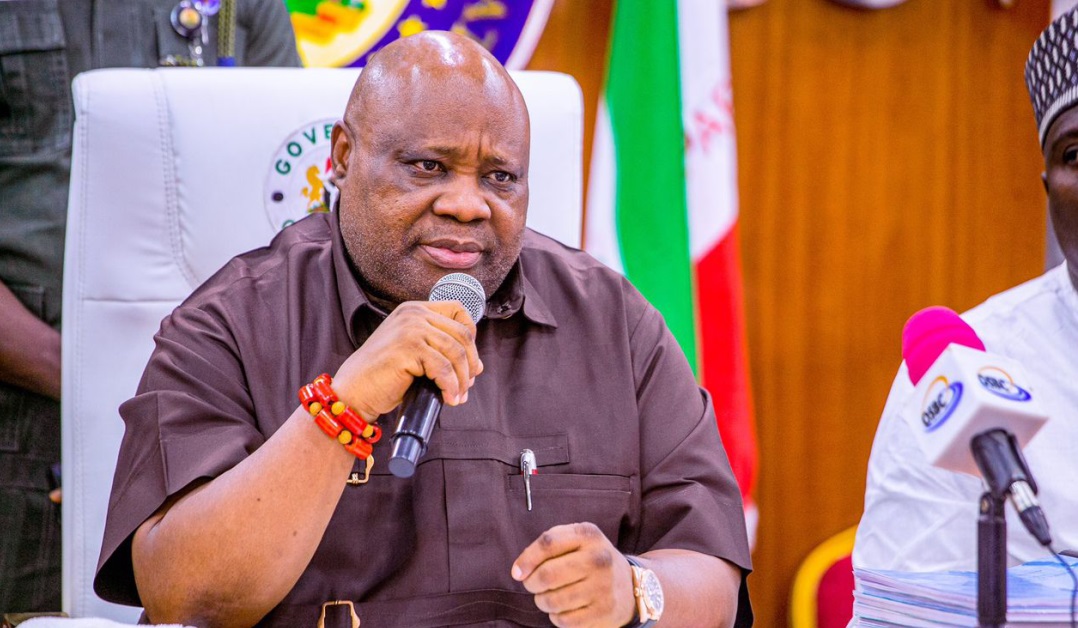
Also speaking earlier at the hearing, Minister of Agriculture and food security Sen Abubakar Kyari said the federal government would not in any way promote anything that would endanger the people .
“The government would not deliberately bring what is poisonous to the people . This forum is meant for searing ideas from the GMOs experts to find a level plane field for food security.
“There are seed councils and regulatory bodies, res rich institute in charge of checkmating seedlings used by farmers hence the need for a collaborative effort”, he stated.