
News
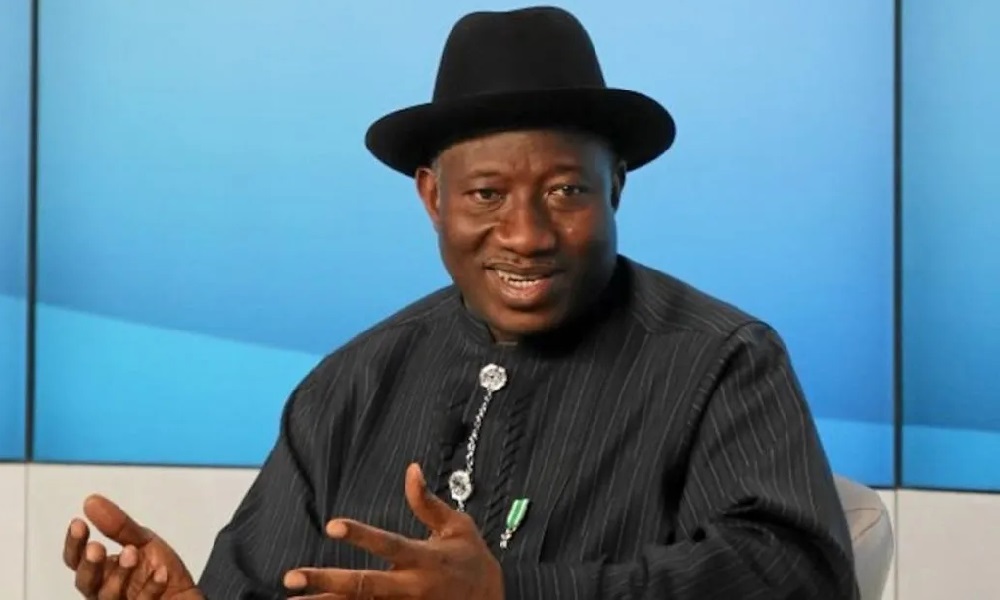
Ex-President Yar’Adua’s Aide Hid Letter to Make Me Acting President from NASS – Jonathan Reveals

- /home/naijuinz/public_html/wp-content/plugins/mvp-social-buttons/mvp-social-buttons.php on line 27
https://naijablitznews.com/wp-content/uploads/2024/06/Goodluck-Jonathan.jpg&description=Ex-President Yar’Adua’s Aide Hid Letter to Make Me Acting President from NASS – Jonathan Reveals', 'pinterestShare', 'width=750,height=350'); return false;" title="Pin This Post">
- Share
- Tweet /home/naijuinz/public_html/wp-content/plugins/mvp-social-buttons/mvp-social-buttons.php on line 72
https://naijablitznews.com/wp-content/uploads/2024/06/Goodluck-Jonathan.jpg&description=Ex-President Yar’Adua’s Aide Hid Letter to Make Me Acting President from NASS – Jonathan Reveals', 'pinterestShare', 'width=750,height=350'); return false;" title="Pin This Post">


Former President Goodluck Jonathan has revealed that a key aide to the late President Umaru Musa Yar’Adua deliberately withheld a crucial letter meant to notify the National Assembly of a formal transfer of power during Yar’Adua’s prolonged medical absence in 2009. This act, according to Jonathan, created a constitutional crisis and left the country in a power vacuum for months.
Jonathan, who was then the Vice President, recounted the tense political situation that followed Yar’Adua’s sudden medical trip to Saudi Arabia in November 2009. The Nigerian Constitution stipulates under Section 145 that if the President is unable to discharge the functions of his office, he must transmit a written declaration to the President of the Senate and the Speaker of the House of Representatives, thereby empowering the Vice President to act in his stead. However, no such formal communication was received by the legislature at the time, leading to a standoff over who was constitutionally in charge.
According to Jonathan, Yar’Adua had actually written the letter authorizing the transfer of power, but one of his close aides chose not to deliver it to the National Assembly. This concealment of the letter triggered uncertainty in governance, halted key executive functions, and deepened public anxiety over the President’s health and the fate of the nation.
With the nation gripped in political paralysis and no clear line of authority, the National Assembly was compelled to invoke the doctrine of necessity. On February 9, 2010, lawmakers passed a resolution naming Jonathan as Acting President, despite the absence of a formal letter from President Yar’Adua. The doctrine of necessity, though not explicitly outlined in the constitution, was applied as an extraordinary measure to protect the integrity and continuity of the Nigerian government.
Jonathan disclosed that the delay in transferring power not only destabilized the administration but also presented a serious threat to national unity. During the period, some ministers, government officials, and aides loyal to Yar’Adua resisted acknowledging Jonathan’s authority, resulting in a fragmented federal cabinet and confusion within the civil service.
He also described how he faced enormous pressure and uncertainty, as even after he was declared Acting President, some power blocs within the presidency remained uncooperative. The eventual return of President Yar’Adua to Nigeria in late February 2010, while still gravely ill, only compounded the leadership crisis, as he remained absent from public view and continued to be inaccessible to many officials, including Jonathan.
It was not until President Yar’Adua’s death on May 5, 2010, that Jonathan was formally sworn in as President. In the aftermath of the crisis, the Nigerian constitution was amended to close the loopholes that had allowed for such a power vacuum. The revised Section 145 now mandates that if a President fails to transmit a letter within 21 days of absence, the National Assembly has the authority to declare the Vice President as Acting President.
Jonathan’s revelation underscores the depth of political maneuvering that occurred during one of the most turbulent transitions in Nigeria’s democratic history. It also highlights the importance of transparency, constitutional adherence, and the dangers posed by personal interests in matters of national governance.


The Nigerian National Petroleum Company Limited, NNPCL, has slashed its fuel pump price for the second time within four days.
A market survey on Saturday by DAILY POST showed that NNPCL retail outlets around Airport Junction and Wuse Zone 6 (Berger) in Abuja have reduced their petrol price to N1210 per litre, down from N1260.
This means that the state-owned oil firm slashed the petrol price by N50 per litre.
This comes barely two days after Dangote Refinery reduced its petrol gantry price by N50 to N1,125 per litre.
Recall that four days ago, NNPCL had adjusted its fuel price pump by N75 per litre to N1260.
With the latest drop by NNPCL retail outlets, petrol prices stand between N1210 per litre and N1305 per litre in Abuja and its environs.
The reduction in domestic fuel comes amid falling crude oil prices, which stand at $69 per barrel and $71 per barrel for West Texas Intermediate and Brent crude, respectively, following the easing of the conflict in the Middle East.
Recall that President Bola Tinubu has kept mum amid the clamour by Nigerians for a commensurate drop in domestic fuel pump prices due to the significant reduction in crude oil prices.
The Independent National Electoral Commission, INEC, has said it is yet to receive the Certified True Copy, CTC, of the Federal High Court judgment that set aside an earlier order directing it to register the Nigeria Democratic Congress, NDC, as a political party.
INEC revealed this in a statement issued on Saturday by its Chief Press Secretary and Media Adviser to the Chairman, Adedayo Oketola.
According to the commission, although it is aware of media reports on the judgment delivered by the Federal High Court sitting in Lokoja on June 26, it cannot comment on the ruling until it obtains and reviews the certified copy.
The Independent National Electoral Commission, INEC, is aware of reports circulating in the media regarding the judgment delivered on Friday, June 26, 2026, by the Federal High Court sitting in Lokoja, which set aside an earlier order concerning the registration of the Nigeria Democratic Congress.
“However, as of this moment, the Commission has not yet received the Certified True Copy, CTC, of the court’s order,” the statement said.
INEC stated that its legal department would study the judgment upon receipt of the CTC before advising the commission on the next course of action.
“Once the Commission’s legal department receives and thoroughly studies the CTC of the judgment, INEC will take an informed, lawful decision in line with the court’s directives.
“Until then, we cannot comment on the specifics of the ruling, and the public is urged to await the Commission’s formal position on the matter,” Oketola added.
Justice Isah Dashen of the Federal High Court in Lokoja had on Friday set aside the court’s December 10, 2025, judgment directing INEC to register the NDC as a political party.
The court held that the rights of the Peace Movement Party were affected by the earlier judgment because it was not joined in the suit despite claiming ownership of the logo relied upon in securing the registration order.
Justice Dashen consequently ordered that all parties be restored to the positions they occupied before the December 2025 judgment and directed that the substantive suit be heard afresh with all necessary parties joined.
The NDC has rejected the ruling and announced plans to appeal the decision. Its National Chairman, Senator Moses Cleopas, maintained that the party had not been deregistered and argued that the trial court lacked jurisdiction to revisit a matter on which it had already delivered a final judgment.
The ruling has also attracted reactions from opposition figures, including the NDC’s presidential candidate, Peter Obi, the party’s National Leader, Senator Henry Dickson, and other stakeholders, who described the decision as a threat to Nigeria’s multiparty democracy and vowed to challenge it through all available legal channels.
INEC, however, maintained that it would reserve its position on the judgment until it receives and reviews the Certified True Copy.
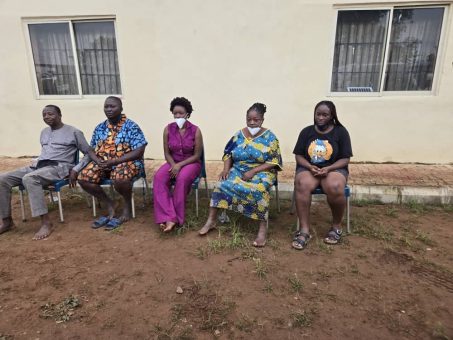
A joint police operation rescued five victims abducted near Ogbere Forest in Ogun state on Wednesday.
They were rescued within 25 hours by the Lagos and Ogun Police Commands, which were part of a joint operation codenamed KOSAYE, meaning “No Space” in Yoruba.
The woman was among the victims who were shot in the incident. Her daughter and sister were among those rescued by the police on Thursday.

NNPC slashes petrol price twice within four days

Lokoja Court order: INEC speaks on NDC, says it’s yet to receive CTC

Just in: Police rescue five abductees in Ogun




-

 News24 hours ago
2027: Former President Obasanjo Visits Kwankwaso in Kano(Photos)
-
 News14 hours ago
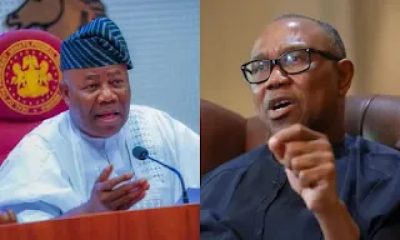
You Clearly Didn’t Read the State Police Bill — Akpabio’s Aide Fires Back at Obi
-

 News24 hours ago
Insecurity: Bandits set ablaze Niger school after collecting N10m levy
-

 News14 hours ago
Peter Obi Reacts To court Ruling Nullifying NDC’s Registration
-

 Sports24 hours ago
World Cup 2026: Australia zooms into knockout stage as USA top Group D despite late Turkey defeat
-

 News14 hours ago
My Dad’s Wife Needs Money To Maintain Her Lavish Lifestyle- Mr. Ibu’s Son
-
 Metro13 hours ago
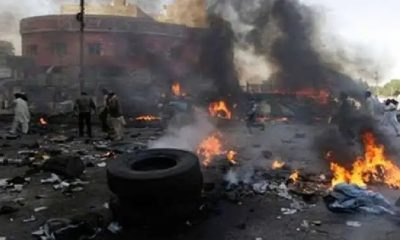
Two killed in fresh Imo bomb explosion
-

 Metro14 hours ago
Alakija Building Collapse: Sanwo-Olu Directs Demolition Of Distressed Structures, Owner To Be Prosecuted
Warning: Undefined variable $user_ID in /home/naijuinz/public_html/wp-content/themes/zox-news/comments.php on line 49
You must be logged in to post a comment Login