
News
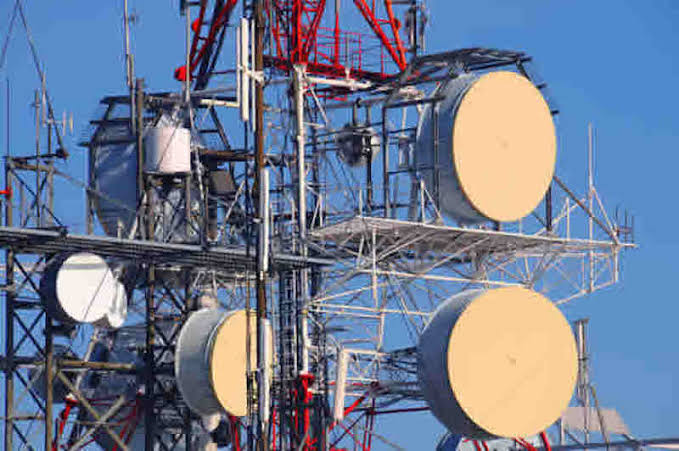
Call Masking resurfaces again in telecom networks

- /home/naijuinz/public_html/wp-content/plugins/mvp-social-buttons/mvp-social-buttons.php on line 27
https://naijablitznews.com/wp-content/uploads/2024/08/images-2024-08-07T082122.677.jpeg&description=Call Masking resurfaces again in telecom networks', 'pinterestShare', 'width=750,height=350'); return false;" title="Pin This Post">
- Share
- Tweet /home/naijuinz/public_html/wp-content/plugins/mvp-social-buttons/mvp-social-buttons.php on line 72
https://naijablitznews.com/wp-content/uploads/2024/08/images-2024-08-07T082122.677.jpeg&description=Call Masking resurfaces again in telecom networks', 'pinterestShare', 'width=750,height=350'); return false;" title="Pin This Post">


By Sonny Aragba-Akpore
It is unusual to receive supposedly foreign calls only for the caller identification to show a local number. Strangely, many people take this for granted especially if eventually the caller is able to identify him or herself on the other side. Talks go on as if nothing has happened. Really? The caller on the other side may be or may not be aware that his or her number didn’t show on this side of the communications link. What has happened is “Call Masking “. It is dangerous to the receiving end and very big economic loss to local network operators.
It is calling dumping that is a potential national security risk as threats and intimidation take place and detrimental to the receiving end and society. And no traces of the caller as the number does not show actual caller who may well pass as a ghost. Call masking is the act of concealing or disguising the origin of an international call and presenting it as a local call. The International Telecommunication Union (ITU)addresses call masking primarily through recommendations that combat fraudulent practices like spoofing and refiling, which manipulate Caller Line Identification (CLI). Although ITU does not ban all forms of call masking, its guidelines aim to ensure the delivery of true call origin information, combat revenue fraud, and protect users from illegal activity. These include evading international call rates where one of the most significant problems identified by the ITU is the masking of international calls to make them appear as less-expensive local calls. This call refiling or masking helps operators and fraudsters bypass international termination rates, causing massive revenue losses for legitimate network operators.
Call masking is executed through a deployment of a technology called SIM boxes, which are devices containing multiple SIM cards deployed to terminate international calls as local ones. The practice bypasses the higher international termination rates, allowing illegal operators to profit from the difference between local and international call costs.
Call masking in Nigeria and indeed anywhere in the globe is the illegal practice of disguising incoming international calls as local calls to exploit the rate difference between international and local call charges, leading to significant revenue loss for telecom operators and potential security risks. The Nigerian Communications Commission (NCC) put measures in the past to combat this through technical solutions, public awareness campaigns, and stricter enforcement, which led to arrests and a decline in the practice until recently when the practice resurfaced.
On Wednesday, December 8,2021 the Federal Executive Council (FEC) at its weekly meeting approved N1.8 billion to combat the menace of call masking in the country.“The first memo that was approved by the Federal Executive Council was for the deployment of regulatory systems in the telecommunications industry, to be implemented by the Nigerian Communications Commission (NCC),” then Communications and Digital Economy Minister,Isa Pantami announced.He said then that money will be deployed for regulatory systems that will have two components to help tackle insecurity in the country and bolster revenue generation by the government.
The minister said the systems were expected to fight criminal activities perpetrated through SIM box traffic and call masking traffic. But it is however not clear how much success was recorded because as we write now, the scourge has resurfaced in delicate dimensions. And despite spirited efforts to combat this, the problem has resurfaced through Subscriber Identification Module (SIM) box activities in general.
SIM boxing is a fraud allegedly committed via the use of a SIM box, by diverting international calls to a cellular device through the internet. The device, routes the connections back into the network as local calls, using hundreds of low-cost or even unpaid and unregistered SIM cards, which are often obtained with forged identities. “The scammers thus benefit by exploiting the difference between local and international charges by paying just local rates or none at all to network operators after billing international rates from the source. The caller pays the high call rates, but the local telecom operator does not collect these, leading to revenue losses to the Mobile Network Operators (MNOS) and the government” an industry player said. With sustained losses by industry players put at nearly $3billion so far, call masking didn’t come open until about eight years ago when operators lamented losing about 2.5 million minutes per day to the activities of the alleged fraudsters.
Although the NCC put in remedial measures to check the menace, the scammers appear to be ahead of the regulator. But an insider said “the commission is aware of the prevalence of the criminal activities and was deploying more technical solutions to tackle the situation “.
“SIM registration across networks has been tightened to reduce the availability of SIM cards for SIM boxing as well as address the security issues around the availability of pre-registered SIMs.”
Arrests made in the past revealed that the alleged perpetrators of SIM boxing had multiple SIM cards registered with fictitious names and used to divert international calls.
Call masking, also known as number masking, is a technique used in telecommunications to conceal the real phone number of one or both parties in a call, typically by substituting it with a temporary or proxy number. While it is commonly used to protect user privacy in ride-hailing apps, customer service platforms, or delivery services, it is viewed as calls with sinister intentions. It leads to call quality degradation because extra layers of routing or anonymization may affect latency or audio quality. “Proxy numbers can introduce complications in call routing, especially if there’s network congestion or number recycling” a telecom engineer admits.
Repeated misuse by bad actors erodes trust in legitimate services using call masking for privacy.
There is also a false sense of security as users might believe their data is secure, but masking does not guarantee end-to-end encryption or data protection.
In many regions of the world including Nigeria, masking without user consent or proper authorization are clear violations of telecom laws. There are sanctions in various degrees.
In this regard, organizations may face heavy fines or license revocations if call masking is used inappropriately or without safeguards. Such safeguards include but not limited to verified and regulated masking solutions and implementation of strong logging and monitoring systems.
Operators are admonished to educate users about masked calls and potential fraud.
Cooperating with telecom regulators and law enforcement, when necessary, could be one of the safeguards. But regulators are sometimes incapacitated especially when real numbers are hidden, making it impossible to hold the caller accountable for malicious, threatening, or abusive behaviour.
And because the caller has no identity, law enforcement is restricted as regulatory agencies may face difficulties in tracing criminal activities in that regard.Essentially such attackers use masked or spoofed numbers to impersonate trusted entities including banks, government organizations and even businesses to carry out attacks by tricking receivers into sharing sensitive information in what is commonly referred to as social engineering attacks. Fraudsters often use call masking to execute voice phishing (vishing) schemes without being traced. The ITU recommendations to combat the broader problem of Caller ID spoofing to prevent the scourge where callers deliberately falsify their numbers are in place.
The recommendations include ITU-T E.157 which provided guidance on the delivery and format of the calling party’s number across international borders.
And to ensure origin identification, resolutions from the World Telecommunication Standardization Assembly (WTSA) encourage the delivery of international Caller Line Identification (CLI) and Origin Identification (OI) information to the destination network. The goal is to provide receiving parties and their operators with information to identify the true origin of a communication.


The Nigerian National Petroleum Company Limited, NNPCL, has slashed its fuel pump price for the second time within four days.
A market survey on Saturday by DAILY POST showed that NNPCL retail outlets around Airport Junction and Wuse Zone 6 (Berger) in Abuja have reduced their petrol price to N1210 per litre, down from N1260.
This means that the state-owned oil firm slashed the petrol price by N50 per litre.
This comes barely two days after Dangote Refinery reduced its petrol gantry price by N50 to N1,125 per litre.
Recall that four days ago, NNPCL had adjusted its fuel price pump by N75 per litre to N1260.
With the latest drop by NNPCL retail outlets, petrol prices stand between N1210 per litre and N1305 per litre in Abuja and its environs.
The reduction in domestic fuel comes amid falling crude oil prices, which stand at $69 per barrel and $71 per barrel for West Texas Intermediate and Brent crude, respectively, following the easing of the conflict in the Middle East.
Recall that President Bola Tinubu has kept mum amid the clamour by Nigerians for a commensurate drop in domestic fuel pump prices due to the significant reduction in crude oil prices.
The Independent National Electoral Commission, INEC, has said it is yet to receive the Certified True Copy, CTC, of the Federal High Court judgment that set aside an earlier order directing it to register the Nigeria Democratic Congress, NDC, as a political party.
INEC revealed this in a statement issued on Saturday by its Chief Press Secretary and Media Adviser to the Chairman, Adedayo Oketola.
According to the commission, although it is aware of media reports on the judgment delivered by the Federal High Court sitting in Lokoja on June 26, it cannot comment on the ruling until it obtains and reviews the certified copy.
The Independent National Electoral Commission, INEC, is aware of reports circulating in the media regarding the judgment delivered on Friday, June 26, 2026, by the Federal High Court sitting in Lokoja, which set aside an earlier order concerning the registration of the Nigeria Democratic Congress.
“However, as of this moment, the Commission has not yet received the Certified True Copy, CTC, of the court’s order,” the statement said.
INEC stated that its legal department would study the judgment upon receipt of the CTC before advising the commission on the next course of action.
“Once the Commission’s legal department receives and thoroughly studies the CTC of the judgment, INEC will take an informed, lawful decision in line with the court’s directives.
“Until then, we cannot comment on the specifics of the ruling, and the public is urged to await the Commission’s formal position on the matter,” Oketola added.
Justice Isah Dashen of the Federal High Court in Lokoja had on Friday set aside the court’s December 10, 2025, judgment directing INEC to register the NDC as a political party.
The court held that the rights of the Peace Movement Party were affected by the earlier judgment because it was not joined in the suit despite claiming ownership of the logo relied upon in securing the registration order.
Justice Dashen consequently ordered that all parties be restored to the positions they occupied before the December 2025 judgment and directed that the substantive suit be heard afresh with all necessary parties joined.
The NDC has rejected the ruling and announced plans to appeal the decision. Its National Chairman, Senator Moses Cleopas, maintained that the party had not been deregistered and argued that the trial court lacked jurisdiction to revisit a matter on which it had already delivered a final judgment.
The ruling has also attracted reactions from opposition figures, including the NDC’s presidential candidate, Peter Obi, the party’s National Leader, Senator Henry Dickson, and other stakeholders, who described the decision as a threat to Nigeria’s multiparty democracy and vowed to challenge it through all available legal channels.
INEC, however, maintained that it would reserve its position on the judgment until it receives and reviews the Certified True Copy.

A joint police operation rescued five victims abducted near Ogbere Forest in Ogun state on Wednesday.
They were rescued within 25 hours by the Lagos and Ogun Police Commands, which were part of a joint operation codenamed KOSAYE, meaning “No Space” in Yoruba.
The woman was among the victims who were shot in the incident. Her daughter and sister were among those rescued by the police on Thursday.

NNPC slashes petrol price twice within four days

Lokoja Court order: INEC speaks on NDC, says it’s yet to receive CTC

Just in: Police rescue five abductees in Ogun



-

 News15 hours ago
You Clearly Didn’t Read the State Police Bill — Akpabio’s Aide Fires Back at Obi
-

 News15 hours ago
Peter Obi Reacts To court Ruling Nullifying NDC’s Registration
-

 News15 hours ago
My Dad’s Wife Needs Money To Maintain Her Lavish Lifestyle- Mr. Ibu’s Son
-
 Metro15 hours ago
Two killed in fresh Imo bomb explosion
-
 News15 hours ago
Army to recruit 28,000 additional soldiers to combat insecurity
-

 News15 hours ago
Edo CJ constitutes special court to try cultists, kidnappers
-

 Entertainment15 hours ago
Nollywood Actor Joseph Momodu Joins US Army
-

 News23 hours ago
Don’t Reject State Police Over Fear of Abuse – Kalu Tells Nigerians