Connect with us

News

ISIS Claims Anti-Christian Attacks in Africa, Challenges Trump’s Warnings

Published

on

ADVERTISEMENT
Zoom Ad
ADVERTISEMENT
Zoom Ad

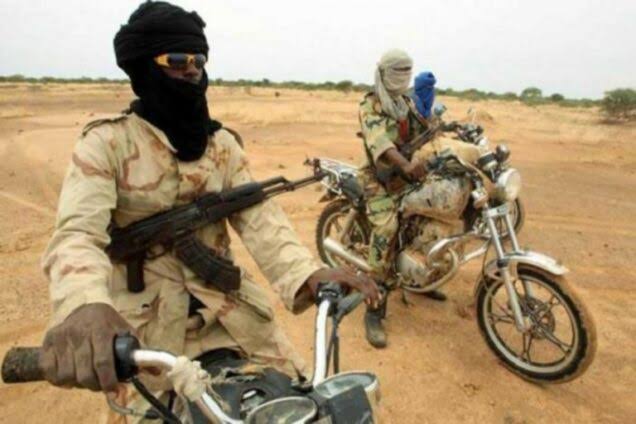
The Islamic State (ISIS) has openly acknowledged orchestrating attacks against Christian communities in Africa, framing the violence as a religious duty and directly challenging President Donald Trump’s warnings of potential U.S. military intervention.


The statements appeared in ‘An Naba’, ISIS’s weekly propaganda bulletin, and were first reported by Spanish newspaper La Razón. In the editorial, ISIS dismissed Trump’s remarks as part of a broader “Crusader” agenda, asserting that protecting Christians is seen by the group as an affront to Islam.

“Any threats from the American tyrant to intervene militarily in Nigeria will not deter us,” the bulletin read, while cautioning its fighters not to underestimate U.S. military strength. ISIS claims, however, that such interventions could overextend U.S. forces across Africa, including Mozambique and the Congo, areas it says are already affected by anti-Christian violence.

Security analysts note that the bulletin represents one of ISIS’s most explicit acknowledgments of anti-Christian campaigns in Africa. The group also seeks to provoke Washington while bolstering morale among its West African fighters, instructing them to intensify operations despite external threats.

Advertisement

The release comes as the Nigerian government continues to reject claims of Christian genocide within its borders. Observers warn that ISIS’s statements could have broader geopolitical consequences, potentially drawing international attention and military involvement to West Africa’s volatile regions.

The U.S. government has not responded to ISIS’s latest claims. Analysts say the bulletin underscores the ongoing threat posed by jihadist networks in Africa and highlights the challenges of containing extremist propaganda while protecting vulnerable communities.

Continue Reading
Advertisement

News

BEWARE: FG warns 26 States of flood, places, Bayelsa, Delta, Lagos, Adamawa, Benue, others as critical risk areas

Published

on

ADVERTISEMENT
Zoom Ad
ADVERTISEMENT
Zoom Ad

The Federal Government has alerted residents of 26 states and the Federal Capital Territory (FCT) to the possibility of flooding between June 22 and July 5, 2026, following forecasts of heavy rainfall in different parts of the country.

The warning was issued by the Federal Ministry of Environment through the National Flood Early Warning Centre under its Erosion, Flood and Coastal Zone Management Department.

The ministry said several communities across the country have been identified as areas that could face serious flood threats during the period.

According to the forecast released on June 22, heavy rainfall is expected in many locations, raising concerns about possible flooding in vulnerable communities.

Advertisement

States placed under the critical-risk category include Abia, Adamawa, Akwa Ibom, Anambra, Bayelsa, Benue, Cross River, Delta, Ebonyi, Edo, Ekiti, Enugu, Imo, Kogi, Kwara, Lagos, Niger, Ogun, Ondo, Osun, Oyo and Rivers.

In Abia State, the affected communities include Aba, Arochukwu and Umuahia. In Adamawa, the ministry listed Jimeta and Numan, while Eket, Oron and Uyo were named in Akwa Ibom. In Anambra, Onitsha Inland Town and Awka Urban Drainage Corridors were identified as vulnerable locations.

Bayelsa communities such as Yenagoa, Brass and Nembe Town were also listed among areas that could be affected by flooding.

Other locations mentioned include Makurdi, Gboko and Katsina-Ala in Benue State; Calabar Metropolis and Creek Town in Cross River State; Asaba, Warri and Sapele in Delta State; and Abakaliki, Afikpo and Onueke in Ebonyi State.

Advertisement

The ministry also identified Benin City Urban Core and Auchi in Edo State, Ado-Ekiti and Ikere-Ekiti in Ekiti State, as well as Enugu, Nsukka and Oji River Town in Enugu State.

In Imo State, Owerri, Orlu and Okigwe were listed, while Lokoja and Ajaokuta were named in Kogi State. Communities such as Ilorin, Jebba and Pategi in Kwara State were also included in the warning.

Several parts of Lagos State were equally listed among the areas at risk.

These include Agege, Alimosho, Apapa, Badagry, Ikeja, Ikorodu, Lagos Island, Lekki and Surulere.

Advertisement

In Niger State, Bida, Minna, Mokwa, Suleja and Kontagora were identified, while Abeokuta, Ota and Sagamu were listed in Ogun State.

The flood alert further covered Akure, Owo and Okitipupa in Ondo State; Oshogbo, Ile-Ife and Ilesa in Osun State; Ibadan, Ogbomoso and Oyo in Oyo State; as well as Port Harcourt Urban Core, Bonny, Ahoada and Omoku in Rivers State.

Apart from the states under the critical-risk category, the ministry also placed parts of Adamawa, the FCT, Kebbi, Kogi, Nasarawa, Plateau and Taraba states under a high-risk category.

Communities listed in this group include Yola North, Yola South, Mubi and Gurin in Adamawa State; Abuja Municipal, Gwagwalada, Kubwa, Nyanya and Wuse in the FCT; Birnin Kebbi and Argungu in Kebbi State; Bako in Kogi State; and Keffi, Lafia, Karu and Toto in Nasarawa State.

Advertisement

The warning also covered Jos and Jos North in Plateau State, as well as Jalingo, Wukari, Takum, Serti and Karim Lamido in Taraba State.

Continue Reading

News

Finally, INEC confirms suspension of staff linked to Emeka Ike’s voter data leak

Published

on

ADVERTISEMENT
Zoom Ad
ADVERTISEMENT
Zoom Ad

Finally, the Independent National Electoral Commission, INEC, has confirmed suspended an electoral officer allegedly involved in the voter data leak concerning Nollywood actor and politician, Emeka Ike.

The Commission disclosed that investigations by security agencies and data protection regulators are still ongoing.

INEC National Commissioner and Chairman of the Information and Voter Education Committee, Mohammed Haruna, made the disclosure during a fireside chat organised by the Peering Advocacy and Advancement Centre in Africa, PAACA, in Abuja.

The suspension came against the backdrop of a controversy that arose after the voter registration details of actor and politician, Emeka Ike, surfaced online during a dispute linked to a political party primary election in the Federal Capital Territory.

Advertisement

The electoral body said preliminary findings showed there was no external breach of its ICT infrastructure or compromise of its voter register.

Rather, according to the Commission, the data was allegedly accessed using valid credentials assigned to officials involved in the ongoing CVR exercise and subsequently disclosed without authorisation.

INEC said its audit trail enabled investigators to identify the specific user account used to access the voter record, leading to the questioning of personnel with access to the system.

Advertisement
Continue Reading

News

Again, Dangote Refinery reduces fuel price

Published

on

By

ADVERTISEMENT
Zoom Ad
ADVERTISEMENT
Zoom Ad

Dangote Refinery has again reduced its gantry petrol price nationwide to N1,125 per litre from N1,175 per litre.

The spokesperson of Dangote Group, Anthony Chijiena, confirmed the latest reduction to DAILY POST on Thursday.

This means that the refinery dropped its petrol gantry price by N50 per litre.

“It is true our petrol gantry price was reduced by N50 per litre,” Chijiena told DAILY POST.

Advertisement

Similarly, the coastal petrol supply price of Dangote Refinery decreased from N1,495,215 per metric tonne to N1,428,165 per metric tonne.

The development comes as crude oil prices dropped significantly to $69 and $73 per barrel, the same rates as pre-Middle East crisis times.

Recall that on June 16, the Dangote Refinery had reduced its gantry petrol price by N75 per litre, triggering a nationwide retail fuel reduction days later. This brought the total price reduction by Dangote Refinery in two weeks since global prices eased to N125 per litre.

Currently retail fuel prices stand at between N1,241 and N1,305 per litre in Abuja and its environs.

Advertisement

However, Nigerians are clamouring for a further drop in retail fuel to around N800 and N900 per litre, the rate before the Iran-United States-Israel war, which escalated on February 28, 2026.

Continue Reading

Trending

Copyright © 2024 Naija Blitz News