News
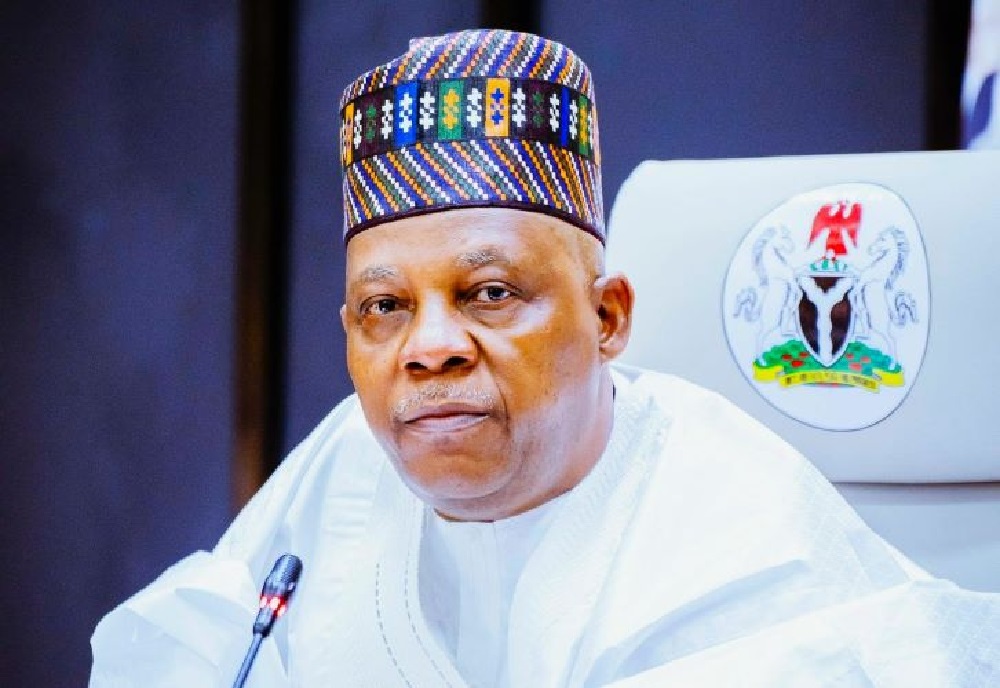
Shettima urges stakeholders to widen support for MSMEs, harness digital, agriculture potential
- /home/naijuinz/public_html/wp-content/plugins/mvp-social-buttons/mvp-social-buttons.php on line 27
https://naijablitznews.com/wp-content/uploads/2024/11/Kashim-Shettima-1000x600.jpg&description=Shettima urges stakeholders to widen support for MSMEs, harness digital, agriculture potential', 'pinterestShare', 'width=750,height=350'); return false;" title="Pin This Post">
- Share
- Tweet /home/naijuinz/public_html/wp-content/plugins/mvp-social-buttons/mvp-social-buttons.php on line 72
https://naijablitznews.com/wp-content/uploads/2024/11/Kashim-Shettima-1000x600.jpg&description=Shettima urges stakeholders to widen support for MSMEs, harness digital, agriculture potential', 'pinterestShare', 'width=750,height=350'); return false;" title="Pin This Post">
Vice President Kashim Shettima has urged financial institutions, government agencies, and private sector partners to expand their scope of support for Micro, Small, and Medium Enterprises (MSMEs), stressing that Nigeria must urgently harness its vast potential in the digital space, agriculture, and other high-impact sectors.

Shettima made the call on Tuesday at the Presidential Villa, Abuja, when he received the 2025–2026 MSME report during a stakeholders’ meeting convened to review progress under the MSME and job creation framework of the Tinubu administration.
Emphasising the role of MSMEs in economic growth, job creation, and poverty reduction, the Vice President said stakeholders must deepen collaboration and leverage technology to unlock opportunities for young Nigerians, particularly in the fast-growing digital economy.

According to a statement issued by Senior Special Assistant to the President on Media and Communications, Office of the Vice President, Stanley Nkwocha, Shettima said, “we have our jobs cut out for us. SMEDAN is doing an awesome job, and so is ITF. Every stakeholder here, from NAFDAC, to CAC, NITDA, Export Promotion Council, and NIPC, is putting in their best, and we are mighty proud of all of you”.
He challenged both public and private sector actors to take a cue from India’s outsourcing success, noting that the Asian country generated about $130 billion in 2025 from business process outsourcing alone.
“So, we need to really harness our potential in the digital space, in agriculture,” he added.
The Vice President thanked the agencies and partners for their contributions, assuring them that President Bola Ahmed Tinubu’s administration would continue to do all it could to support the growth of small businesses across the country.
Earlier, Minister of Information and National Orientation, Mohammed Idris, described the meeting as an overview of the progress recorded in the MSME sector over time, noting that key stakeholders were present to appraise the achievements of the programme.
Idris disclosed that over 250,000 jobs had been created, with more expected in the months ahead.
He also commended the Special Adviser to the President on MSMEs and Job Creation in the Office of the Vice President, Mr. Temitola Adekunle-Johnson, for convening stakeholders across Africa in Abuja to showcase Nigeria’s MSME progress and chart a way forward for the sector’s development on the continent.
Presenting the MSME report, Adekunle-Johnson said the Renewed Hope Agenda had repositioned MSMEs as a central pillar of national economic transformation and job creation.
He said the administration’s focus over the past year had been on improving access to affordable financing, reducing operational constraints through shared infrastructure, strengthening market linkages, and institutionalising recognition frameworks that promote excellence and competitiveness.
Adekunle-Johnson noted that access to funding was expanded through MSME Clinics, which he described as a bridge between the Federal Government, state governments, and small businesses.
According to him, the clinics create market visibility, improve business formalisation opportunities, and provide access to instant on-site grants for outstanding businesses at each clinic.
On job creation, the presidential aide disclosed that over 11 shared hubs had been deployed in the past year, creating more than 250,000 jobs across the country.
He said the roadmap for 2026 would focus on stronger coordination with partner agencies and state governments, de-risking of funds, the National MSME Awards, sustainable job creation programmes, capacity development and improved access to financing.
In a goodwill message, Director-General of the Small and Medium Enterprises Development Agency of Nigeria (SMEDAN), Mr. Charles Odii, commended President Tinubu and Vice President Shettima for what he described as “setting the blueprint” for MSME growth in Nigeria.
Odii said shared facilities created through the Office of the Vice President were helping to engage Nigerians even late into the day, creating more jobs and renewed interest in government policy.
“This is the first time the people have been so fascinated by the policy of the government,” he said.
Managing directors of the Corporate Affairs Commission (CAC), National Agency for Food and Drug Administration and Control (NAFDAC), and the Nigerian Export Promotion Council (NEPC) also outlined how their agencies supported thousands of MSMEs over the past year.
Representatives of Access Bank, Zenith Bank, and Wema Bank pledged continued partnership with the Office of the Vice President to strengthen support for MSMEs, as stakeholders reaffirmed their commitment to their roles in driving Nigeria’s economic growth.

News
Tinubu’s re-election my priority project, Oborevwori declares
Delta State Governor, Sheriff Oborevwori, has declared that President Bola Tinubu’s re-election in 2027 remains his “number one political project,” insisting that the President’s economic reforms are yielding tangible benefits for Delta State and other subnational governments.
Oborevwori, who spoke in an interview on ARISE News monitored on Tuesday, said the improved revenue allocation under the Tinubu administration had enabled Delta to execute projects without financial strain, adding that contractors are now being paid promptly as a result of increased federal inflows.
“I’m begging people to vote for President Bola Tinubu. It’s my number one project.
That project is bigger than any other project because it will help us achieve more for our people,” the governor said.
According to him, for the first time in the state’s history, Delta is not indebted to contractors, stressing that project financing is now done seamlessly without waiting for monthly federal allocations.
Oborevwori attributed the development to the Federal Government’s ongoing economic reforms, arguing that increased revenues accruing to states are evidence that the policies are working.
“If the reforms are not working, will we get this money? More money is coming to the states. The reforms are working very well in Delta State, and that is why we are able to execute projects and meet our obligations,” he said.
The governor also expressed confidence that the All Progressives Congress would record strong support in Delta State in 2027, following what he described as broad consultations that led to the mass defection of political stakeholders from the Peoples Democratic Party to the ruling party.
He described the movement as a “political tsunami,” saying it involved party leaders, elected officials, stakeholders, religious leaders and other groups across the state.
“We all agreed that we should move. That was why the movement was a tsunami. We moved en masse into the APC, and nobody was left behind,” he said.
Oborevwori further said opposition parties had little chance of making electoral gains in Delta, insisting that ongoing projects across the state would secure voter confidence for the APC.
“There are too many projects that we have done, and we are still doing. If I start commissioning projects every week, I may not finish before the election. The people can see what we are doing, and they know the difference,” he said.
On the political landscape ahead of 2027, the governor dismissed concerns over the resignation of former Deputy Senate President, Ovie Omo-Agege, from the APC, saying the development did not pose any threat to the party in Delta State.
He said indications of Omo-Agege’s exit had been evident for months, noting that many of his political associates had already left the party long before his resignation.
“We saw it coming. Before he left, most of his people had already left over three months ago, so we were all aware,” Oborevwori said.
The governor also dismissed suggestions that Omo-Agege’s departure would weaken the APC in Delta Central Senatorial District, insisting that the party remained strong and united behind Senator Ede Dafinone.
“He is not a threat because I have won it before,” he said, adding that Dafinone remains a respected figure with deep roots in Urhoboland.
Oborevwori maintained that the APC primary election that produced Dafinone was transparent and fair, urging aggrieved aspirants to accept the outcome.
“Somebody was given the opportunity, we conducted a free and fair primary, and he lost. It is for him to embrace the outcome because the process was transparent,” he said.
The governor expressed optimism that President Tinubu enjoys strong support in Delta State, citing political alignment, development projects and personal ties as factors that would favour the President’s re-election bid.
He added that consultations across the state showed broad acceptance of the APC and confidence in the administration’s economic direction.
Oborevwori also claimed that Tinubu shares strong familial and political ties with different ethnic groups in Delta State, which he said would further boost his chances in 2027.
“The people of Delta State believe in President Bola Tinubu. They believe in him because, among all the candidates that may emerge, he is the only one with a strong affiliation to Delta State,” he said.
News
Shettima Urges States To Unlock Full Potential Of $750m SABER Programme
The Vice President, Kashim Shettima, has implored state governments to accelerate business-enabling reforms to unlock the full potential of the $750 million World Bank-assisted State Action on Business Enabling Reforms (SABER) programme.
This, he said, has become necessary to attract domestic and global capital, enhance local infrastructure, and drive subnational economic growth.
Shettima, who spoke on Tuesday during a stakeholder meeting on optimising the implementation of the SABER programme at the Presidential Villa, noted that a fully implemented SABER programme would help create a more predictable and transparent business environment.
He also listed other benefits of the programme to include attracting domestic and foreign investment, strengthening private-sector confidence, reducing the cost of doing business, expanding digital and physical infrastructure, improving access to land and commercial justice systems, and enhancing the competitiveness of the states.
“These outcomes will translate into increased economic activity, higher productivity, job creation, improved internally generated revenue, and better living standards for our citizens,” he stated.
Accordingly, the Vice President directed the Director General of the Presidential Enabling Business Environment Council (PEBEC), Zarah Mustapha-Audu, to initiate moves towards extending the lifespan of the programme by an additional year “so that our states can fully utilise the opportunities at our doorsteps.”
Shettima noted that Nigeria stood a better chance of facilitating the actualisation of its one trillion-dollar economy drive by fully optimising SABER implementation.
“I therefore encourage us to engage constructively and contribute meaningfully to our deliberations. Let us seize this opportunity to unlock the full potential of the SABER Programme and position our States as engines of economic growth, investment, and sustainable development,” he stated.
Shettima tied the success of the ongoing reforms of the administration of President Bola Tinubu to a conducive and enabling environment for businesses to thrive, maintaining that this could be determined at the subnational level.
“As a nation, we have embarked on a bold economic reform agenda under the leadership of His Excellency, President Bola Ahmed Tinubu, GCFR. The success of this agenda depends significantly on our ability to create an enabling environment for businesses to invest, expand, and create jobs.
“While the Federal Government continues to implement reforms at the national level, the reality remains that many of the conditions that define the experience of investors and businesses are determined at the subnational level. This is why the role of State Governments in the implementation of SABER is critical.”
Minister of State for Budget and Economic Planning, Dr Doris Uzoka-Anite, encouraged stakeholders to address identified implementation bottlenecks as the SABER programme delivers its intended outcomes for Nigeria in line with the Renewed Hope Agenda.
She expressed optimism that the $750 million performance-based intervention designed by the World Bank technical team and the PEBEC Secretariat would be fully accessed by the states.
Giving an overview of the SABER Programme and implementation matters, the Director-General of PEBEC, Zarah Mustapha-Audu, assured that the council remained committed to removing bureaucratic bottlenecks by working with all arms of government, civil society organisations (CSOs), the private sector, and other stakeholders towards achieving the programme’s objectives.
She explained that while the funds were tied to deliverables, progress was being made by participating states to meet all disbursement-linked indicators as stipulated by the programme.
News
Insecurity: CAN declares 3-day national mourning
The Christian Association of Nigeria (CAN) has declared a three-day national mourning period, from June 12, to June 14 to honour the victims of violent attacks, mass abductions, and banditry across the country.
The apex Christian body also designated June 14 as “Black Sunday” across all Churches as a mark of solidarity with families affected by the lingering security crisis.
The President of CAN, Archbishop Daniel Okoh, made the announcement on Tuesday in Abuja while reading a communiqué issued at the end of the National Church Denominational Leaders Summit.
The summit, held at the National Christian Centre and themed “The State of the Nation and the Way Forward,” brought together top Church leaders, block leaders, and delegates to prayerfully review the country’s challenges.
Okoh expressed deep concern over the escalating wave of violence, citing recent incidents of killings, kidnappings, and destruction of communities in states such as Oyo, Ogun, Borno, Kwara, and Kogi.
He urged the Federal Government to immediately declare a state of emergency on national security to halt the ongoing bloodshed.
”Communities are under attack; citizens are kidnapped from their homes and places of work, travelers are abducted on highways, and farmers are driven from their lands.
”Innocent men, women, and children are killed, maimed, displaced, and, in some cases, brutally beheaded by criminal and terrorist elements,” Okoh said.
The CAN President criticised the “recurring resort to conciliatory and pacifist rhetoric by senior government officials” in response to grave security threats, calling instead, for a proactive, result-oriented approach.
He reminded the government that the primary responsibility of any administration remains the protection of lives and property.
Consequently, the Cleric demanded a comprehensive review of the nation’s security architecture, improved intelligence gathering, stronger inter-agency cooperation, and greater operational accountability.
He also threw his weight behind decentralising security operations, calling for the immediate acceleration of constitutional and legislative processes for the establishment of state police.
The CAN President further demanded the immediate and unconditional release of all abducted school children, teachers, and other citizens currently held captive by criminal elements.
On the humanitarian front, Okoh called for the establishment of a comprehensive compensation, rehabilitation, and resettlement programme for victims of terrorism and families who have lost livelihoods or loved ones.
He also tasked individual Churches across the federation to strengthen internal support systems by providing humanitarian assistance, trauma care, and peace-building initiatives for displaced persons within their localities.
Okoh lamented that premature electioneering, political calculations, and party defections were taking center stage among the political class while many communities remained under siege.
He advised political leaders and parties to shun divisive distractions and prioritise national security.
The Cleric called on organised labour groups, civil society organisations and traditional institutions to collaborate in holding the government accountable.
Okoh reaffirmed the commitment of the Church to national unity, peace, and justice.
He stressed that, while prayers would be intensified, they must be matched with sustained civic engagement and advocacy.
-
News14 hours agoWike Assures Protesting Teachers of Rescue Efforts, Warns Against Politicising Insecurity
-
News24 hours ago2022 train attack: FG re-arraigns Tukur Mamu on amended terrorism charge
-
News24 hours agoKano lawmaker rejoins APC after losing return ticket in NDC
-
Economy24 hours agoMiddle East Tensions: Oil Prices Jump as Iran Suspends Peace Talks with US
-
News12 hours agoBETNLAFF New Betting Platform Set To Hit Nigerian Markets
-
News19 hours agoSix members of same family shot dead during domestic dispute in US
-
News14 hours agoDefection Storm Rocks Reps as 13 Lawmakers Switch Parties, Chinda Quits Minority Leader Role
-
Economy23 hours agoCBN targets 95% financial inclusion in new payment system goal