News
Citizens Groan As Rice Hits N77,000 Per Bag
- /home/naijuinz/public_html/wp-content/plugins/mvp-social-buttons/mvp-social-buttons.php on line 27
https://naijablitznews.com/wp-content/uploads/2024/02/02185F53-9FD9-4176-8686-B1B78EAEF357.jpeg&description=Citizens Groan As Rice Hits N77,000 Per Bag', 'pinterestShare', 'width=750,height=350'); return false;" title="Pin This Post">
- Share
- Tweet /home/naijuinz/public_html/wp-content/plugins/mvp-social-buttons/mvp-social-buttons.php on line 72
https://naijablitznews.com/wp-content/uploads/2024/02/02185F53-9FD9-4176-8686-B1B78EAEF357.jpeg&description=Citizens Groan As Rice Hits N77,000 Per Bag', 'pinterestShare', 'width=750,height=350'); return false;" title="Pin This Post">
This is not the best of times for Nigerian families, who have had to adopt bizarre cost-cutting measures to cope with the recent hardship occasioned by the dramatic hike in the prices of goods and services.

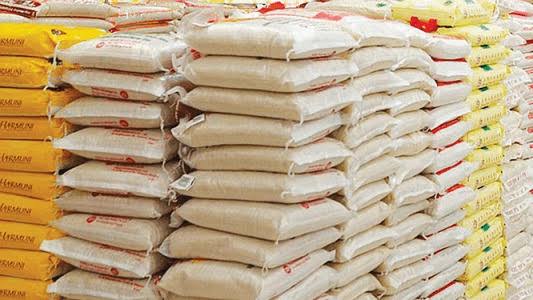
Several of them lamented that their income could no longer take care of their daily needs, adding that the prices of staples had almost tripled in the market. Rice, which is arguably one of the commonest consumed staples in the country, has risen to N77,000 per bag.
In December, the National Bureau of Statistics stated that the country’s inflation rate hit a 27-year high as headline inflation rose to 28.9 per cent.

The December headline inflation rate showed an increase of 0.72 percent when compared to the previous month’s rate.
In recent years, food prices have been on the rise across Nigeria. The situation deteriorated due to the impact of government policies such as the removal of subsidy on petrol and the free fall of the naira in the foreign exchange market.
Foodstuffs sellers in major cities, who spoke to Sunday PUNCH, lamented that the cost of a bag of rice had risen almost 200 per cent.
Sunday PUNCH gathered that long grain rice, which used to sell for between N45,000 and N50,000 in November, now costs over N70,000, putting a huge pressure on the consumers.
The unprecedented increase in the prices of commodities has caused nationwide hardship, with residents of some major cities taking to the streets to register their displeasure.
From Kano to Niger, Rivers to and Osun, residents protested the hardship on the streets.
In Niger State, for instance, residents of Suleja took to the street last Wednesday to register their displeasure over the high cost of living in the country.
Wednesday’s protest came two days after a similar protest in Minna, the state capital.
The Organised Labour on Friday insisted on embarking on an industrial action to register its displeasure over the current economic hardship in the country.
Although the Federal Government has ordered the distribution of grains and other items to cushion the effects of the economic crisis across the country, citizens are still grappling with the hike in the prices of commodities.
Lagos residents lament
In Lagos, some residents, who spoke to one of our correspondents, lamented that the incessant increase in the prices of foodstuffs had strained their finances.
This is as they urged the government to intervene before things got out of hand.
A mother of two, Mrs Mede Orunmade, said this present situation had made life unbearable for her and her family.
Orunmade stated that it was as though the country was at war, adding that the hike in the prices of foodstuffs was continuous.
She said, “It has been a hard time for me and my family. The country hasn’t been in the right position for the past eight months. I have been struggling with my family to clear up our electricity bills. Coupled with the ever-rising price of foodstuffs, I don’t know if I am going to survive.
“I used to operate an online business but it has packed up. There’s no gain on any business in Nigeria like before anymore. I am just striving to survive.
“The surprising thing is that a small carton of noodles is now N7,000 to N7,800. We used to buy it for between N1,900 and N2,000 in the past. It is so shocking that the price of a bag of rice continues to change almost every minute.
“A bag of rice five months ago was around N49,000, but it increased to N68,000. As of yesterday (Thursday), my supplier said it had risen to N70,000. The cheapest thing we used to buy before, garri, is now N2,500 for a paint bucket. It was N800 before.”
Another Lagos resident and father of four, Mr Taiwo Babatunde, said he could no longer afford to feed his family like he used to.
He asked the government to come to her aid, as her suffering was becoming too much.
A housewife simply identified as Wunmi said, “The government needs to come to our aid now as everything is very hard. A bag of beans is now N65,000, which is three times the price it used to be. Also, groundnut oil is now N8,400 for four litres, and a bag of rice is now N70,000.
“This is getting too much. We hope the government will come to help us.”
Further findings by our correspondents revealed that a kilogramme of Semovita, which sold for N800 four months ago, now sells for N1,200.
The price of beans also increased from around N1,500 to N4,200 per tin.
Some women, who spoke to one of our correspondents at the Ibafo Market, Ogun State, lamented the difficulties they were facing in purchasing items from the market with little resources.
A trader, Mrs Bamise Olaiya, said, “The prices of the foodstuffs are just annoying. I came to the market with N8,000 to buy some food items but the prices have changed between last week and now. Just last week, I bought three portions of tomatoes for N1,200 and pepper for N1,000, but today I have spent N4,200 for the same items. Pepper grinding has also increased from N200 to N300.”
Businesses struggling – Traders
Entrepreneurs across various sectors are feeling the pinch as they struggle to navigate through the challenging times.
A skincare consultant, Mr Damilola Olasunkanmi, said the current economic situation had almost put her out of business.
“I don’t get customers like I used to. My customers are cutting down on skincare purchases to prioritise other essentials like food and transportation, and that is affecting sales significantly. Restocking has become a daunting task as costs continue to soar,” he said.
Similarly, a dental therapist managing a private clinic in Iwo, Osun State, Dr Oluwafemi Ogunsakin, noted that the surge in the cost of his services had deterred patients from seeking dental care.
A foodstuffs retailer, Mrs Ore Ilerioluwa, lamented that the increase in prices had continued to threaten the operation of her business.
She said, “I buy foodstuffs from the market wholesale and sell them in a little shop I run at home. But these daily changes in the prices of items are affecting me so much that I find it difficult to buy the items.
“Do you know that three days ago I bought a carton of spaghetti for N13,000, today I was told it was N14,000. Now, when you add to the cost of each one today, by the time you return, the prices will have gone up again.
“So, you will be forced to add more money. A bag of beans is now N120,000, whereas it was N70,000 before. People are going for anything cheap now. Many families are hungry.”
Another foodstuffs seller at the Magboro Market in the Obafemi-Owode Local Government Area, Ogun State, Sukurat Akanni, complained that prices of many items had doubled.
Another trader, Adeola Israel, noted that a bag of brown beans had increased to N62,000, while a paint rubber now costs N6,200.
She lamented that she no longer made as much sales as she used to in the past.
Govt concerned – A’Ibom
The Akwa Ibom State Governor, Umo Eno, said that his administration had concluded plans to establish a bulk purchase agency to regulate prices of foodstuffs and bring them within the reach of the citizens.
The governor announced this on Friday during the Nigerian Unity Conference 2024 tagged, ‘That We May be One’, organised by the 10th Episcopal District, Christian Methodist Episcopal Church, at the Ibom Hall, Uyo.
He said that a bill to establish the agency would soon be sent to the state House of Assembly for legal backing to enable the agency to intervene and stem skyrocketing food prices in the state.
Kwara gives palliatives
The Kwara State Government delivered 10,000 bags of 10kg rice to labour unions for onward distribution to their members.
This was disclosed by the Chief Press Secretary to the Governor, Rafiu Ajakaye, on Friday, following an engagement with Governor AbdulRahman AbdulRazaq.
In their separate remarks, the state chairmen of the Trade Union Congress, Joseph Meshach, and the Nigerian Labour Congress, Saheed Olayinka, commended the governor for his continuous efforts to provide relief to the people in the state
Anambra residents groan
Residents of Anambra State are battling with the soaring costs of food items like rice, beans, garri, palm oil, tomatoes, onions, fruits, and others in the various markets across the state.
One of our correspondents, who spoke to residents and marketers in Awka, the state capital, and Onitsha on Saturday, gathered that the high cost of items was attributed to the rise in the value of the dollar, just as the situation dampened the mood of the people and forced them to ration food.
A visit to the Relief Market in Onitsha, and the Eke-Awka Market in Awka, showed that a 50kg bag of foreign rice was sold for N72,000 as against N51,000 a month ago. A full bag of iron beans was sold for N110,000 as against N89,000 a month ago

News
Watch moment construction staff indigenous company, Val Construction hailing FCT minister Wike (Wike)
It was an atmosphere of joyful noise as Staff of Abdul Val Construction Company, an indigenous contractor handling the ongoing construction of Karu, Abuja roads hailing the FCT Minister, Nyesom Wike, while inspecting the road project today.
Watch:
News
Experts Say Africa Forfeits $89bn Every Year To Illicit Financial Flows
By Gloria Ikibah
African economies continue to suffer major revenue losses due to illicit financial flows, with experts estimating that as much as 89 billion dollars slips out of the continent annually.
Specialists from the West African Tax Administration Forum WATAF and Tax Justice Network Africa TJNA highlighted the scale of the challenge during an engagement with lawmakers at the ongoing 2026 First Ordinary session of the Economic Community of West African States Parliament in Abuja on Monday.
They linked the persistent losses to a range of harmful tax practices that continue to undermine public finances across the region. These include tax evasion, aggressive tax avoidance and the manipulation of trade invoices, all of which weaken governments’ ability to generate revenue.
Discussions at the session also focused on how to implement regional tax directives more effectively, with particular emphasis on strengthening domestic resource mobilisation and promoting greater alignment of tax systems across West Africa.
According to the experts, the continent is grappling with a substantial funding gap, with nearly 194 billion dollars needed each year to meet development demands, a shortfall made worse by ongoing financial leakages.
“Africa has a prevalent problem of illicit financial flows, and at least 65 per cent of these could be categorised as commercially-driven.
“The main practices that could lead to IFFs are: tax evasion, tax avoidance, tax misinvoicing and other harmful tax practices.
“These harmful tax practices haemorrhage the available resources that can be used for development of the continent, and Africa loses up to eighty-nine billion dollars annually,” they said, citing a 2020 report.
They also asserted that advancing tax harmonisation within the ECOWAS sub-region presents a strategic opportunity for WATAF to strengthen regional integration, enhance domestic resource mobilisation, and support sustainable development.
“Tax harmonisation is the fiscal backbone of ECOWAS integration. Without it, the region will continue to lose revenue through loopholes, smuggling, opacity, and profit shifting,” they said.
However, they emphasised that the effectiveness of such efforts would depend on strong political commitment, effective national-level implementation, and active parliamentary oversight.
Dr Nita Belemaobgo, Research Manager, WATAF, while highlighting the session’s expected outcomes, said the organisation’s objective was to support ECOWAS’ transition on tax directives aimed at harmonising fiscal policies across member states.
“Regional cooperation and evidence-based tools can significantly enhance accountability and reform outcomes,” she said.
Danicius Sengbeh, WATAF’s Manager, Communications and Information Technology, underscored the importance of setting regional tax harmonisation and domestic resource mobilisation.
He said the ECOWAS Parliament had an indispensable role to play in the oversight function of tax administration, adding that the engagement was about “sovereignty, fairness, accountability and West Africa’s future.”
Dr Zandile Ndebele of TJNA, in her submission, urged the regional MPs to make laws to ensure that local citizens in African countries benefited from domestic resource mobilisation and management.
Speaking on the theme, “Addressing Tax-Related Illicit Financial Flows (IFFs) through Legislative Frameworks and Transparency,” she said:
“It’s possible to introduce legislation for domestic beneficiation to gain more resources and revenues, apart from gaining from just taxes.”
The experts urged lawmakers to adopt a broad and coordinated approach to tackling illicit financial flows, noting that meaningful progress in this area would be critical to strengthening both national and regional revenue generation.
Speaking on behalf of the Tax Justice Network Africa, Solomon Adoga called on parliamentarians to prioritise stronger legal frameworks for the mining sector, emphasising the need for stricter oversight and accountability.
He advised legislators to focus on “strengthening extractive legislation, scrutinising new mining agreements and monitoring tax incentives through cost-benefit analysis.”
He also stressed the importance of safeguarding the continent’s fiscal interests, warning against continued dependence on external systems.
“It’s important that Africa protects its taxing rights. We must look at where we are losing revenue as Africans. We don’t need to be reliant on other countries outside of Africa,” he said.
The experts further encouraged the Economic Community of West African States to deepen tax harmonisation efforts across the region as a way of reducing distortions, curbing unhealthy tax competition and reinforcing economic integration.
They pointed out that progress in tackling illicit financial flows does not necessarily depend on a unified currency, maintaining that countries can retain separate monetary systems while still working together to address the problem.
“There must be local beneficiation in our countries. Africa has been deprived of taxing rights. Multinational companies are not paying their fair share of taxation,” they noted.
In addition, lawmakers were urged to give priority to global tax reforms, improved information exchange and greater transparency, while encouraging member states to draw lessons from advocacy efforts in countries such as Nigeria, Ghana and Côte d’Ivoire.
A representative of the West African Tax Administration Forum, Jonas Igwe, highlighted the need for sustained commitment to make regional reforms effective.
“Effective implementation of tax harmonisation would require political commitment, institutional coordination, digital modernisation, sustained regional cooperation, monitoring and evaluation by national transition committees,” he added.
News
ECOWAS Sets Out Sweeping Reform Plan To Steady Regional Bloc Amid Mounting Crises
By Gloria Ikibah
The Economic Community of West African States has introduced an extensive roadmap aimed at overhauling regional integration, as it seeks to rebuild confidence, restore cohesion and respond more effectively to growing political, economic and security pressures across West Africa.
The proposal, unveiled during a session of the ECOWAS Parliament in Abuja on Tuesday, was presented by the organisation’s Commissioner for Political Affairs, Peace and Security, Ambassador Abdel-Fatau Musah. It outlines a broad reset of the bloc’s direction, with a renewed focus on making integration more inclusive and people-centred.
At the core of the initiative is the implementation of the ECOWAS Vision 2050 framework, alongside efforts to reposition the organisation at a time when it faces one of its most challenging periods since its establishment in 1975. Ongoing governance concerns, democratic backsliding and the rise of alternative alliances such as the Alliance of Sahel States, involving Burkina Faso, Mali and Niger, have all contributed to the strain.
The reform plan stems from a directive issued by regional leaders during their 65th Ordinary Session in Abuja in July 2024, which called for a dedicated summit to reassess the future of integration in West Africa.
Structured around six key pillars, the framework sets out priorities including economic transformation, peace and democratic governance, advances in science and technology, social inclusion, institutional reform and a clearer geopolitical strategy for the bloc.
On the economic front, the organisation is targeting a significant increase in intra-regional trade, with ambitions to deepen industrialisation, strengthen food security and introduce a single regional currency, the ECO, in the coming years.
Security and governance proposals emphasise stricter opposition to unconstitutional changes of government, alongside plans to reinforce regional peacekeeping capacity through a stronger standby force.
In the technology space, the roadmap envisions the creation of a unified digital market, while social measures include increasing women’s representation in leadership roles and embedding youth participation in governance structures.
Institutional reforms are also central to the plan, with proposals aimed at improving accountability, strengthening merit-based systems and achieving financial independence for ECOWAS institutions through enhanced revenue mechanisms.
A major feature of the document is its emphasis on “strategic autonomy,” positioning ECOWAS as a unified geopolitical actor capable of defending West Africa’s sovereignty in an increasingly multipolar world.
The proposal further outlines a framework for structured dialogue and confidence-building measures with the AES countries to prevent permanent fragmentation of the region.
To address ECOWAS’ longstanding implementation deficit, the Compact introduces a robust monitoring and evaluation system, including compliance scorecards for member states and an evidence-based approach to policy implementation.
Musah said the ultimate goal is to transform ECOWAS from an institution known for issuing declarations into one that delivers concrete public goods such as security, economic mobility and digital connectivity to citizens.
He noted that the draft Compact was developed through extensive consultations involving citizens across West Africa, civil society groups, the African diaspora, ECOWAS institutions and heads of state and government.
“The Compact for the Future of Regional Integration is a survival strategy for the region,” Musah said. “It seeks to rebuild trust between states and their peoples, ensuring that regional integration remains relevant, citizen-centred and capable of responding to 21st-century challenges.”
The presentation formed part of deliberations at the ongoing ECOWAS Parliament session, where lawmakers are examining the future of regional cooperation amid rising insecurity, democratic instability and economic pressures across West Africa.
-
Entertainment10 hours agoSad: Real cause of death of popular movie star, Ekubo finally revealed
-
News19 hours agoBREAKING: Popular Nollywood actor, Alex Ekubo is dead
-
News24 hours agoFG in Talks With World Bank For Fresh $1.25bn Loan
-
Entertainment9 hours agoEmeka Rollas, Kate Henshaw, Others Mourn as Details Emerge on How Alexx Ekubo Died at 40
-
Entertainment4 hours agoNollywood poster boy Alexx Ekubo had a prepared will before his demise
-
News9 hours agoFG orders varsities to suspend drug offenders
-
News19 hours agoElectricity Costs May go up Again as NERC Defends Tariff Review Plan
-
Health9 hours agoMore Hantavirus cases may emerge in coming weeks — WHO