Connect with us

News

Act Fast, Nigerians Are Starving, Anglican Primate Urges Tinubu

Published

on

ADVERTISEMENT
Zoom Ad
ADVERTISEMENT
Zoom Ad

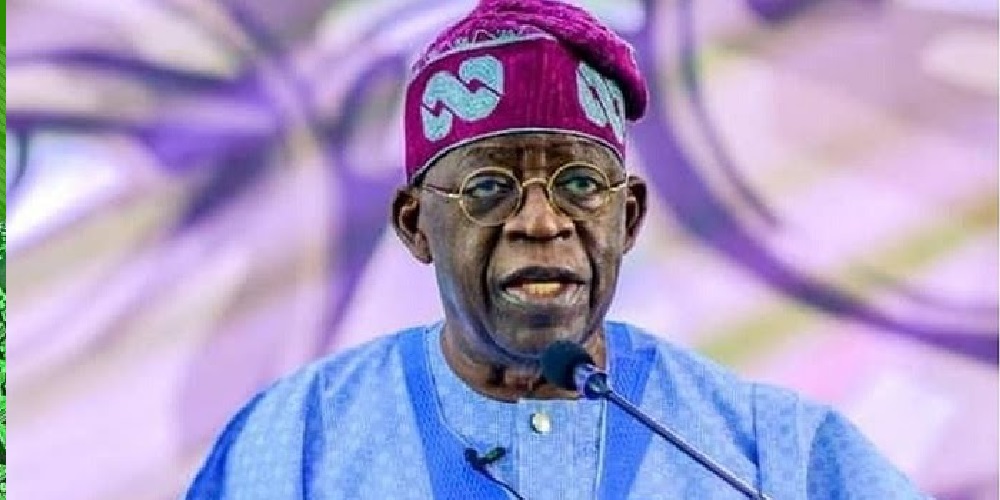
The Primate of the Church of Nigeria (Anglican Communion), Most Rev. Henry Ndukuba, has implored President Bola Ahmed Tinubu to urgently tackle the growing hunger and economic hardship facing Nigerians.


In the wake of a communiqué issued on Sunday in Abuja, after the Church’s Standing Committee meeting, Primate Ndukuba’s message was clear.

The communiqué, endorsed by key church figures including Primate Ndukuba, the Dean Most Rev. Blessing Enyindah, and the General Secretary Ven. Gershinen Paul Dajur, stressed the critical state of national affairs and called for repentance and resistance to apostasy.

The document spotlighted government plans and policy directions, the fight against corruption, judiciary concerns, the faltering economy, and the neglect of quality education.

Advertisement

It also condemned ongoing attacks across several states and urged the government and security forces to uphold their duty to protect citizens and their property.

The communiqué further reiterated the need for a civil and democratic constitution that truly represents the populace, ensuring no group is sidelined or oppressed.

It partly reads, “The Standing Committee meeting of the Church of Nigeria (Anglican Communion) therefore calls on the President and government to rise to the occasion of the challenging issues facing the nation:

“All corrupt public office holders and their collaborators should be brought to book and disciplined accordingly. We call on the Judiciary to do more to guarantee justice in the country.

Advertisement

“The Nigeria economy has been a subject of great concern due to its diverse and biting challenges. It is currently at its lowest ebb since independence with macro-economic indicators moving in discouraging directions. Monetary policies have been inconsistent, non-supportive of economic growth, ineffective and cost-push inflation has been out of control resulting in high food prices. Nigerians are hungry.

“We, therefore, call on the government to have a rethink on its penchant for external borrowing, give proper attention to fiscal policies, and diversify its economic base by harnessing our abundant natural resources.

“The Standing Committee meeting decries the constant attacks in Plateau, Zamfara, Ekiti, Ondo, Benue, parts of Imo and Anambra States and other parts of the country. It therefore calls on the government and statutory security agencies to rise to their responsibilities of protection of the lives and property of the citizenry, giving heed to the call for effective community policing.

“We note with dismay the failure of government to provide quality education for her citizenry, which has compelled Nigerians to seek admission in other countries, thus spending huge sums of money in foreign countries, thereby weakening the Nigerian economy.

Advertisement

“The Standing Committee renews her call for a totally civilian and democratic Constitution made by a sovereign representation of her people and not the continuous amendment of a military formulated Constitution. This will reflect the birthing of the government of the people in a new Nigeria.”

During an extensive interaction with journalists, the Archbishop Ndukuba addressed multiple pressing issues, including the purported involvement of religious organizations in sponsoring terrorism.

He called on the EFCC to operate independently and hold religious bodies accountable without generalizing.

“Religion is expected to be a source of solutions, not to add to societal issues. It’s commendable that these issues are brought to public attention, but that’s not sufficient. The EFCC should be permitted to perform its duties without interference, allowing religious organizations to be held accountable.

Advertisement

“We must avoid blanket judgments of all religious groups and instead focus on actions that promote national unity and progress. All citizens should have the freedom to pursue a good life.

“No reasonable religious person, whether Christian or Muslim, would support terrorism. Yet, the depth of our problems is revealed when identities are weaponized, leading to societal collapse. Those responsible must be held accountable.,” he stated.

On the potential Nigeria Labour Congress (NLC) strike, the Primate advocated for dialogue over conflict and suggested governmental measures to meet national requirements, potentially including a cabinet reshuffle.

While highlighting the injustice of silencing public expression, he said, “Nigeria is a free country, and people should have the right to express themselves. I hope that the government will implement policies that address the nation’s needs, even if it requires a cabinet reshuffle. The people are hungry, and a hungry man is an angry man. It’s unjust to silence their expressions.

Advertisement

“The government and the NLC leaders should pursue negotiation instead of confrontation. The release of those arrested during protests would serve to calm public anger, as selective justice is detrimental.

“Our nation’s problem is not with its ordinary citizens, who ask only for food security and basic infrastructure. Nigerians are not lazy; they are hardworking and deserve the opportunity to provide for their families.”

The Primate also dismissed the idea of moving the capital from Abuja to Lagos, instead advocating for the development of new cities across the six geopolitical zones to reduce congestion and promote balanced development.

Drawing on China’s strategy of constructing new cities, he said, “Abuja was chosen as the Federal Capital Territory for valid reasons, and we must ensure justice for its indigenous people to prevent further agitation. Lagos is already overburdened, and building new cities, like China’s approach, could be a solution for Nigeria’s growing population and economic needs.

Advertisement

“It’s crucial that we work together to harness Nigeria’s human and material resources for the benefit of all. If we can learn from the example of China, which is actively building new cities and industrial centers to accommodate its development, why can’t we do the same?

“With God’s blessings, we have what it takes to establish new satellite cities across the six geopolitical zones. If we could construct one additional city in the North and another in the South, we would alleviate the congestion in both Abuja and Lagos, giving rise to growth and equal opportunities for everyone who settles there.

“These new cities would also aid in our national development. With Nigeria projected to be one of the most populous nations by 2050, we must have robust plans to address the deficits in infrastructure, housing, and employment.”

He emphasized the importance of strategic, long-term planning for Nigeria’s future sustainability and growth.

Advertisement

“Investing in the creation of new urban areas is not just about expansion; it’s about strategic development that can provide a sustainable future for the growing population. It’s about creating a legacy of balanced, equitable growth that embraces all regions and communities.

“In essence, we must commit to long-term, strategic planning that places the wellbeing of all Nigerians at the forefront. By doing so, we can ensure that Nigeria not only meets the challenges of today but also builds a foundation strong enough to support the generations of tomorrow.

“The path ahead is not easy, and it will require sacrifice, unity, and unwavering commitment from all sectors of society—government officials, religious leaders, and citizens. Together, we can forge a path toward a prosperous and equitable Nigeria,” the Primate added.

Archbishop Ndukuba encouraged Nigerians to invest in agriculture and urged the political elite to ensure equitable distribution of national wealth.

Advertisement

He also highlighted the importance of the rule of law in promoting national virtues of faith, love, and progress.

“Nigeria may struggle with these issues in the future, particularly when ‘sacred cows’ exist—people who believe they own the nation and can operate above the law, be they politicians, community leaders, traditional rulers, or religious figures. I am convinced that adherence to the rule of law is essential to safeguard society,” he concluded.
Continue Reading
Advertisement

News

Just in: Andy Burnham Emerges as UK PM

Published

on

ADVERTISEMENT
Zoom Ad
ADVERTISEMENT
Zoom Ad

Veteran British politician Andy Burnham has emerged as the new leader of the United Kingdom’s governing Labour Party, clearing the way for him to become the country’s next Prime Minister following the resignation of Keir Starmer.

Burnham was confirmed as Labour leader on Friday after no other candidate secured the required nominations to challenge his bid during a special Labour Party conference, effectively handing him the leadership unopposed. The outcome was officially announced by the UK’s Interior Minister, Shabana Mahmood, who declared Burnham the duly elected leader of the Labour Party.

“There being no other eligibly nominated candidate, it is therefore my honour to declare that the duly elected leader of the Labour Party is Andy Burnham,” Mahmood told party delegates.

Burnham’s emergence comes at a pivotal moment for the Labour Party, which has been grappling with internal uncertainty following Starmer’s decision to step down as party leader amid mounting pressure from within the party. A seasoned politician, Burnham has held several senior ministerial positions under previous Labour governments.

He later became Mayor of Greater Manchester, where he built a strong national profile through his advocacy for greater regional autonomy, improved public services, and increased investment in local communities.

His tenure as mayor earned him widespread recognition, particularly during periods of national crisis when he repeatedly called for increased financial support and greater decision-making powers for local authorities. Burnham is expected to complete the constitutional process and formally assume office as the United Kingdom’s Prime Minister on Monday.

In his acceptance speech, the incoming Labour leader pledged to reunite the governing party after a period of internal divisions and restore public confidence in government.

He also promised to devolve more powers from central government to local authorities, arguing that local communities should have greater control over decisions affecting their economies and public services.

Among his key priorities are strengthening the National Health Service (NHS), improving public transport, stimulating economic growth, and expanding opportunities across every region of the United Kingdom. Political analysts believe Burnham’s administration will focus heavily on regional development, investment in public infrastructure, and reforms aimed at reducing economic inequalities across the country.

His confirmation has already drawn reactions from political leaders, Labour members, and supporters, many of whom expressed optimism that his leadership could mark the beginning of a new chapter for both the Labour Party and the United Kingdom. Attention is now expected to shift to the formation of Burnham’s cabinet and the policy agenda his government intends to pursue during its first weeks in office.

Continue Reading

News

Senate moves to amend archaic provisions in Petroleum Laws

Published

on

ADVERTISEMENT
Zoom Ad
ADVERTISEMENT
Zoom Ad


The Chairman of the Senate Committee on Petroleum (Upstream), Senator Williams Eteng, has revealed that the National Assembly is moving to amend Nigeria’s petroleum laws to align them with current economic realities, describing many of the existing provisions as obsolete.

Speaking with journalists after the committee’s meeting, the Cross River Central lawmaker said the committee’s priority is to strengthen the petroleum sector by improving infrastructure, increasing crude oil production and providing a legal framework capable of supporting sustainable growth.

“We are looking at ways of improving the petroleum sector, strengthening infrastructure, and increasing crude oil production. That is our major focus,” Eteng said.

The senator disclosed that the committee had already received a proposal seeking amendments to the principal petroleum laws, noting that several penalties and fines currently contained in the legislation have remained unchanged for decades.

“A presentation has been made for us to amend the principal petroleum laws. The penalties are old and outdated. Some of the fines were enacted in 1951, while others date back to 1962. There is a need to bring these laws in line with present-day realities,” he stated.

According to him, reviewing the laws has become imperative to ensure they adequately reflect modern economic conditions and provide an effective regulatory framework for the petroleum industry.

“Laws are made to serve society, and they must be amended from time to time to reflect current economic realities,” he added.

Eteng also addressed reports suggesting that the Nigerian National Petroleum Company Limited (NNPCL) delegated a junior officer to appear before the committee, dismissing the claim as inaccurate.

He clarified that the official seen at the committee meeting was merely the company’s liaison officer to the National Assembly and not a representative appearing on behalf of the NNPCL management.

“There was no junior officer representing NNPCL before the committee. The person you saw is the liaison officer between the National Assembly and NNPCL. Please get that right. NNPCL requested an excuse, and another date will be fixed,” he explained.

The chairman reaffirmed the committee’s commitment to engaging relevant stakeholders as it advances legislative reforms aimed at modernising Nigeria’s petroleum industry, enhancing regulatory efficiency and creating an enabling environment for increased investment and production.

Continue Reading

News

Ex-Miss Universe Nigeria Chidimma Adetshina appears in South African court to fight deportation

Published

on

ADVERTISEMENT
Zoom Ad
ADVERTISEMENT
Zoom Ad


Ex-Miss Universe Chidinma Adetshina, returned to the Cape Town Regional Court on Thursday, July 16, 2026 as she continued her legal fight against deportation after her arrest for allegedly being in South Africa illegally.

Proceedings resumed shortly after 2pm, when the former Miss South Africa contestant was expected to submit an affidavit detailing the steps she says she has taken to regularise her immigration status.

According to an update from eNCA reporter Nobesuthu Hejana, the affidavit forms part of her effort to challenge the Department of Home Affairs’ deportation case.

Adetshina was arrested on 6 June and first appeared in the Cape Town Regional Court on 9 June.

She was released on warning while the matter was postponed to allow the legal process to continue.

The Department of Home Affairs alleges that she and her minor son were living in South Africa without lawful immigration status and is seeking her deportation through the courts.

Court documents previously filed by immigration officials state that authorities believe Adetshina entered South Africa while prohibited from doing so.

Those allegations remain before the court and have not been tested at trial.

Speaking outside court, Nobesuthu Hejana reported: ‘After 14H00 she will present an affidavit on steps she’s taken to regularise her status in the country.’

The court is expected to consider the affidavit alongside the Department of Home Affairs’ submissions before deciding on the next steps in the deportation proceedings.

The court proceedings mark the latest development in the immigration dispute surrounding the beauty queen, whose nationality became the subject of intense public debate during her participation in the 2024 Miss South Africa pageant.

Adetshina, who was born in Soweto, South Africa, to a Nigerian father and a Mozambican mother, had initially contested for the Miss South Africa 2024 crown before withdrawing from the competition amid controversy surrounding her family’s citizenship status.

Her withdrawal followed an investigation by South African authorities into allegations concerning her mother’s identity and citizenship documentation.

The controversy also sparked widespread social media attacks directed at Adetshina because of her Nigerian heritage, despite the fact that she was born in South Africa and had met the eligibility requirements for the beauty pageant.

In August 2024, the South African government stated that Adetshina’s mother, at the time the contestant was a finalist in the Miss South Africa competition, may have been involved in identity theft.

Adetshina was later accepted an invitation to compete in the Miss Universe Nigeria pageant, and emerged as the winner, earning the opportunity to represent Nigeria at the global Miss Universe competition.Africans & Diaspora

At the 73rd Miss Universe pageant held in Mexico City, Adetshina, finished as the first runner-up and was also crowned Miss Universe Africa and Oceania.

Continue Reading

Trending

Copyright © 2024 Naija Blitz News