Economy
Dollar To Naira Black Market Exchange Rate For Today Saturday 24 February 2024
Dollar To Naira Black Market Exchange Rate For Today Saturday 24 February 2024 can be accessed below.

This online medium obtained the official dollar to naira exchange rate in Nigeria today including the Black Market rates, Bureau De Change (BDC) rate, and CBN rates.
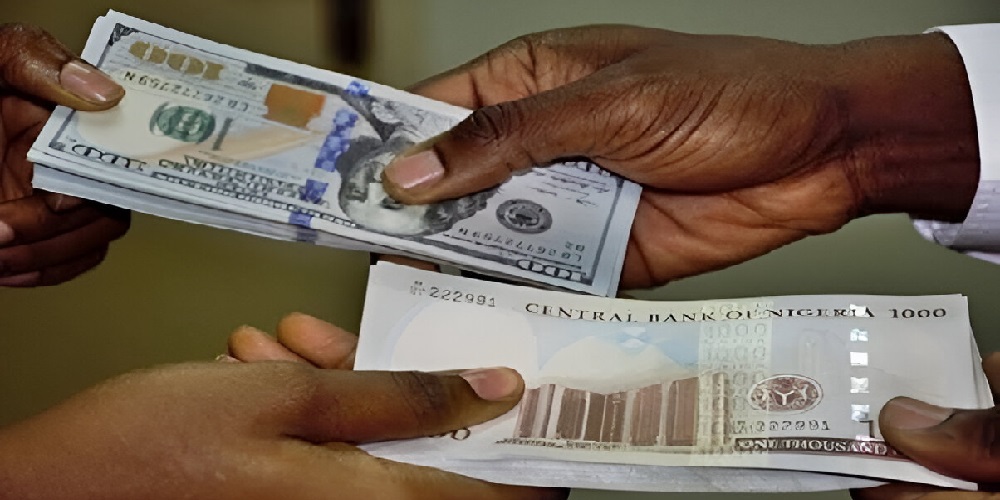
The exchange rate for a dollar to naira at Lagos Parallel Market (Black Market) players buy a dollar for N1750 and sell at N1800 as of the time of filing this report.

Exchange Rate of Dollar To Naira in Black Market Today Feb 24th 2024?
Dollar to Naira (USD to NGN) Black Market Exchange Rate Today
Buying Rate 1750
Selling Rate 1800
It is important to know that the black market, also known as the parallel market, is where foreign currencies are traded unofficially at rates that differ from the official exchange rate set by the Central Bank of Nigeria (CBN).
How much is a dollar to naira today in the black market?
The black market dollar to naira exchange rate today, 24th February 2024, is as follows:
Buying rate: ₦1,750.00 per US dollar
Selling rate: ₦1,800.00 per US dollar
This means that if you want to buy 1 US dollar in the black market today, you will need to pay 1,800.00 naira, and if you want to sell 1 US dollar, you will receive 1,750.00 naira.
NB: These rates may vary slightly depending on the location and the dealer.
How does the black market dollar-to-naira exchange rate compare to the official rate?
The official exchange rate of the US dollar to the Nigerian naira, as of today, 24th February 2024, is ₦1,492.67 per US dollar.
This is the rate that the CBN uses for its transactions and interventions in the foreign exchange market. The official rate is also the basis for the exchange rates of other foreign currencies, such as the euro, the pound sterling, and the Chinese yuan.
The difference between the black market rate and the official rate is called the parallel market premium. The parallel market premium indicates the degree of divergence between the official and unofficial markets, and reflects the level of confidence in the naira and the CBN’s policies.
Factors Influencing Foreign Exchange Rates
Here are some of the causes of the dwindling dollar to naira exchange rate.
Inflation Rates: It is well known that inflation directly impacts black market exchange rates. If the Nigerian economy can be stabilized and inflation is controlled, the naira will benefit; however, if the naira continues to fall, it may indicate that food and other necessities are becoming more expensive daily.
Interest Rates: Another tool to keep an eye on is interest rates. If the interest rate at which banks lend money rises, it would harm the economy, causing it to contract and, as a result, the value of the naira to fall.
Government Debt: National debt can impact investor confidence and, as a result, the influx of funds into the economy. If inflows are high, the naira exchange rate will rise in favour of the naira.
Speculators: Speculators frequently impact the naira-to-dollar exchange rate. They stockpile money in anticipation of a gain, causing the naira to plummet even lower.
Conditions of Trade: Favorable trade terms will increase the value of the naira to the dollar, although Nigeria is currently experiencing a trade deficit. Everything comes from China, India, and the majority of Asian countries.
Economy
NDIC moves to wind down 89 failed banks
The Nigeria Deposit Insurance Corporation (NDIC) has commenced the final phase of winding down 89 defunct Microfinance Banks (MFBs) and Primary Mortgage Banks (PMBs) across the country following their acquisition by new operators under its resolution framework, it emerged on Wednesday.
The Corporation said the move follows the earlier revocation of licences by the Central Bank of Nigeria (CBN) in May 2023, which affected 179 microfinance banks and four primary mortgage banks.
Under the Purchase and Assumption (P&A) model, according to Hawwau Gambo, the Head of Communication and Public Affairs, 89 new institutions were subsequently licensed to take over the assets and liabilities of the failed banks and have since commenced operations under new identities.
NDIC, acting as liquidator, the statement noted, will now approach various divisions of the Federal High Court to obtain formal orders dissolving the defunct entities and discharging the Corporation from its liquidation responsibilities, in line with its enabling law.
A breakdown of the affected institutions shows that Lagos accounts for the highest number, with 27 banks undergoing the process.
This is followed by Osun with seven, Anambra with six, the Federal Capital Territory (FCT) with five, while Akwa Ibom, Ogun, and Adamawa recorded four each.
Oyo, Kaduna, Edo, and Niger recorded three each.
Other states affected include Benue, Delta, Imo, and Ondo, with two each, while Abia, Ekiti, Enugu, Rivers, Plateau, Nasarawa, Kano, Kwara, Jigawa, and Katsina recorded one each.
The Corporation said the exercise aims to bring closure to the resolution process while ensuring depositors’ interests remain protected, and the financial system remains stable.
The NDIC added that the transition under the P&A arrangement has allowed continuity of banking services in affected locations, as the acquiring institutions have fully taken over operations of the defunct banks.
Economy
Nigeria’s Inflation hits15.38% in March
Nigeria’s headline inflation rate rose to 15.38% in March 2026, reflecting a modest increase from the 15.06% recorded in February.
This is according to the latest data from the National Bureau of Statistics (NBS).
The Consumer Price Index (CPI) increased to 135.4 in March 2026, reflecting a 5.4-point increase from the preceding month (130.0).
In March 2026, the headline inflation rate rose to 15.38%, up from 15.06% in February 2026 and stood 27.35% in the same month of the preceding year (March 2025).
Looking at the movement, the March 2026 headline inflation rate showed an increase of 0.32% compared to that recorded in February 2026.
However, on a month-on-month basis, the rate in March 2026 was 4.18%, which was 2.17% higher than the rate recorded in February 2026 (2.01%).
The percentage change in the average CPI for the twelve months ending March 2026 over the average for the previous twelve-month period was 20.05%, showing a 1.48% increase compared to 18.58% recorded in March 2025.
On a year-on-year basis, in March 2026, the Urban inflation rate was 14.64%. On a month-on-month basis, the Urban inflation rate was 3.16% in March 2026, up by 0.61% compared to February 2026 (2.55%).
The corresponding twelve-month average for the Urban inflation rate was 20.04% in March 2026. This was 0.06% points lower compared to the 20.10% reported in March 2025.
Rural inflation rate in March 2026 was 17.22% on a year-on-year basis.
On a month-on-month ba sis, the Rural inflation rate in March 2026 was 6.73%, up by 6.02% compared to February 2026 (0,71%).
The corresponding twelve-month average for the Rural inflation rate in March 2026 was 19.74%. This was 2.93% points higher compared to the 16.81% recorded in March 2025.
The food inflation rate in the month under review was 14.31% on a year-on-year basis and stood at 25.22% in the same month of the preceding year (March 2025).
However, on a month-on-month basis, food inflation rate in March 2026 was 4.17%, down 0.52 percentage points from February 2026 (4.69%).
The drop was attributed to the rate of change in the average prices of the following products: Yam, Ginger (Fresh), Cassava Tuber, Groundnuts (Shelled), Irish Potatoes, Avenger (Ogbono/Apon) – Dried Ungrinded, Toma toes (fresh), Cassava Flour sold loose, etc.
NBS said average annual rate of Food inflation for the twelve months ending March 2026 over the previous twelve-month average was 18.21%, which was 17.81% points lower compared with the average annual rate of change recorded in March 2025 (36.02%).
The “All items less farm produces and energy” or Core inflation, which excludes the prices of volatile agricultural produce and energy, stood at 16.21% in March 2026 on a year-on-year basis; a decline of 10.91% points when compared to the 27.12% recorded in March 2025.
On a month-on-month basis, the core inflation rate was 4.03% in March 2026, up by 3.14% points compared to Feb ruary 2026 (0.89%).
The average twelve-month annual inflation rate was 21.09% for the twelve months ending March 2026, which was 6.25% points lower than the 27.34% recorded in March 2025.
On a state level, headline inflation was highest in Bayelsa Year-on-Year with (27.37%), Sokoto (26.03%), and Bauchi (23.67%), while Osun (5.25%), Kano (9.85%), and Kaduna (10.38%) recorded the lowest rise.
On a Month-on-Month basis, however, March 2026 recorded the highest increases in Zamfara (10.77%), Bauchi (9.37%), and Sokoto (9.05%), while Lagos (1.54%), Akwa Ibom (1.80%), and Rivers (1.89%) recorded the lowest rise in the Month-on-Month inflation.
Food inflation was highest in Bayelsa (33.35%), Sokoto (28.02%), and Adamawa (21.67%), while Kano (4.29%), Oyo (4.86%), and Katsina (7.48%) recorded the slowest rise on a Year-on-Year basis.
On a Month-on-Month basis, however, March 2026 food inflation was highest in Sokoto (11.78%), Niger (8.59%), and Gombe (8.10%), while Katsina (0.09%), Ogun (0.77%), and Adamawa (1.30%) recorded the slowest rise in Food inflation on a Month-on-Month basis.
Economy
Nigeria becomes net petrol exporter as Dangote Refinery ships 44,000bpd
Nigeria has reached a historic milestone in its downstream oil sector, emerging as a net exporter of petrol for the first time, largely driven by increased production from the Dangote Petroleum Refinery.
Industry data shows that the 650,000 barrels-per-day facility exported about 44,000 barrels per day (bpd) of petrol in March 2026, resulting in a surplus of roughly 3,000 bpd for the month.
The development marks a major turnaround for a country that has long relied heavily on imported refined petroleum products.
The shift from import to export reflects a structural transformation in Nigeria’s oil trade, with positive implications for foreign exchange earnings, energy security, and regional fuel supply dynamics.
In a significant expansion of its export reach, the refinery also delivered a 317,000-barrel cargo of petrol to Mozambique—its first shipment to East Africa. Another consignment is expected to be delivered to Beira in April, underscoring growing regional demand as buyers seek alternatives to Middle Eastern supplies amid ongoing geopolitical tensions.
Data from Kpler further revealed that Nigeria’s petrol imports plunged to 41,000 bpd in March, the lowest level on record, highlighting the rapid displacement of imports by local refining.
It would be recalled that in September last year, President of the Dangote Group, Aliko Dangote, projected that the refinery would turn Nigeria into a net exporter of fuel while ending decades of fuel scarcity.
“We have been battling fuel queues since 1975, but today Nigerians are witnessing a new era,” he said.
-
News17 hours agoPDP approved appointment of Wike as minister – APC
-
News17 hours agoSee Black Market Dollar To Naira Exchange Rate Today 16th April 2026
-
News11 hours agoBREAKING : Gunmen kidnap JAMB candidates, others in Benue
-
News17 hours agoTerrorists plotting massive attacks on Abuja International Airport, Correctional Centres, military detention centre — AP Report
-
News17 hours agoBBC to fire 2,000 workers to make £500m savings
-
Opinion13 hours agoDIAMOND DISTINCTIONS FOR THE PEOPLE’S MAN; DR. CHIDO ONUMAH
-
News16 hours agoPresidency mocks Atiku over 2027 ambition, calls him serial loser, advises Obi to leave ADC
-
News12 hours agoWike: Atiku a serial contestant, loser, he will still contest in 2031 (PHOTO)