News
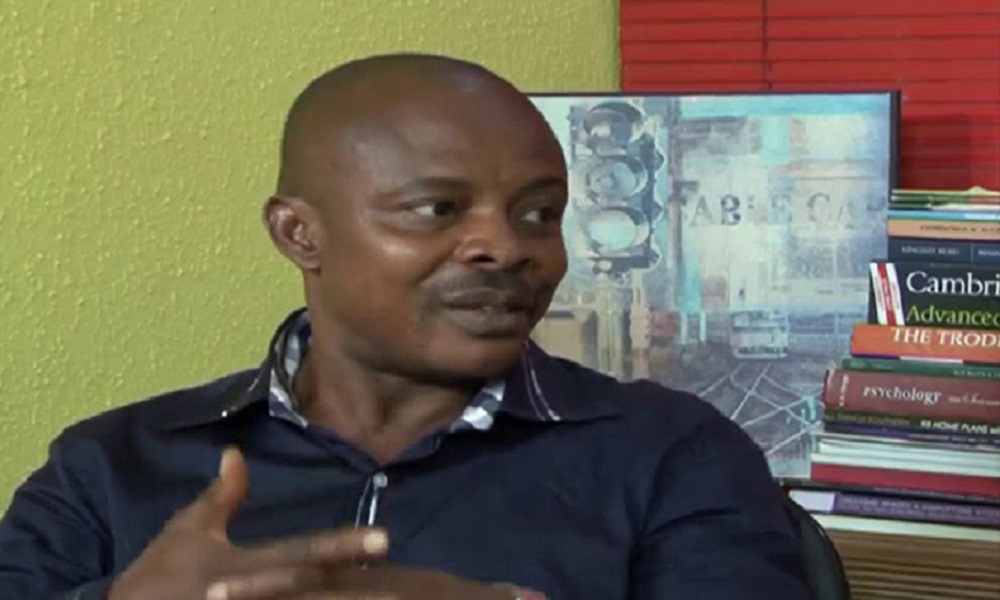
Hardship: Nationwide Protest Must Hold, DSS Can Keep Its Unsolicited Advice – NLC President, Ajaero
- /home/naijuinz/public_html/wp-content/plugins/mvp-social-buttons/mvp-social-buttons.php on line 27
https://naijablitznews.com/wp-content/uploads/2024/02/Joe-Ajaero4.jpg&description=Hardship: Nationwide Protest Must Hold, DSS Can Keep Its Unsolicited Advice – NLC President, Ajaero', 'pinterestShare', 'width=750,height=350'); return false;" title="Pin This Post">
- Share
- Tweet /home/naijuinz/public_html/wp-content/plugins/mvp-social-buttons/mvp-social-buttons.php on line 72
https://naijablitznews.com/wp-content/uploads/2024/02/Joe-Ajaero4.jpg&description=Hardship: Nationwide Protest Must Hold, DSS Can Keep Its Unsolicited Advice – NLC President, Ajaero', 'pinterestShare', 'width=750,height=350'); return false;" title="Pin This Post">
The President of the Nigerian Labour Congress (NLC), Joe Ajaero, has explained why the labour union is determined to embark on the planned nationwide hunger protest across the country on February 27 and 28.

Ajaero, who gave the explanation on Friday evening while speaking on X space hosted by SaharaReporters, also clarified that the Trade Union Congress (TUC) had never been part of the planned protest from the beginning.
Asked of the specific challenges facing Nigerians that necessitated the declaration of the two-day nationwide protest and the position of the Trade Union Congress (TUC), Ajaero listed the high cost of food items, cement, transport, amongst others, which according to him were orchestrated by removal of fuel subsidy.

He said, “Clearly speaking, TUC has never been part of the action from conception. The only warning signal was the TUC coming out to say they are not part of it, even when we didn’t say they are part of it.
“For them to have gone further to deduce some letters disassociating themselves and leaking it to the media. Such statements were unprovoked. Their letter coming the same day the DSS sent a letter to us, warning us to shelve the protest, gives course to odd.
“The NLC at its National Executive Council last Friday, resolved to have a two-day protest on the cost of living on the high sea faced by Nigerians, and by implication, workers, to make their (NLC) position known, not just to the government but to every Nigerian.”
Ajaero said that the NLC in its response told the DSS “To keep their unsolicited advice; because history will not forgive NLC if we should keep quiet at this moment in Nigeria’s political history.”
On mobilisation for the planned protest, the NLC President said that all industrial unions in the country and 36 state councils and Abuja had resolved to organise the protest, adding that the union had started forwarding all the mobilisation materials to all the states, and had held several meetings with the union’s civil society allies.
Ajaero said that “The whole crisis of this hardship and hunger started with the removal of fuel subsidy,” stressing that “The moment that was touched, transportation and everything associated with it went up, that even if a wanted to go to a bush market to buy plantain, before she would transport it to the town, a lot of money has gone into it, and it will go out of the reach of an ordinary man.”
He said that this was further aggravated by the free float of the Naira “Where Naira today is getting to almost N2,000 per Dollar.”
According to him, “The implication of that is that every other neighbouring country’s currencies are higher than Nigeria in value and that has led to a very large extent, the issue of smuggling.
“For a businesswoman, no matter how primitive and local, who knows that if she sells a paint of garri for N3,000, if she takes it through the border between Nigeria and Cotonou or Nigeria and Niger Republic, she will sell it maybe for N7,000, she would find her way to that area. To that extent, food will no longer be cheap and available to the common man.”
The NLC President further noted that those who have their children abroad, some of the children are really suffering at the moment.
He said that this is “Because, assuming there is any worker that is earning N1 million in Nigeria, but I doubt, if you convert it, you will hardly get maybe $500. Now, you can’t even take care of your kids.”
He added that “In that circumstances, school fees seem to have jumped up. Cost of cement has jumped up. We may say that it is someone who has money that is building a house, the people who manage to build can’t rent it because of the costs of cement and other building materials.
“There is nothing that the Nigerian government has a competitive advantage that will make people import such products from Nigeria. The only one which is crude oil, the government has equally not been refining it here. A bag of rice now is about N70,000 and above.
“An average worker who holds a wage economy, some of them earn N30,000, and that N30,000 most states are not paying it. And that N30,000 is not enough for you to transport yourself to office to and fro for about 20 days. Those are the challenges we have.”
News
SAD! 164 killed, 1,000 Injured In Venezuela
A twin earthquake that was Venezuela’s largest in over a century has killed at least 164 people and destroyed multiple buildings near the capital, where residents searched Thursday for missing relatives.
Venezuela’s strongest earthquake since 1900 sent rescuers and locals clambering in the dark over flattened apartments, hunting for survivors and extracting people from under the ruins.
France, Spain and the US offered to urgently send rescuers after the magnitude 7.2 and 7.5 quakes the United States Geological Survey (USGS) said struck areas west of the capital on Wednesday evening.
The toll has climbed quickly, with interim president Delcy Rodriguez reporting at least 164 dead and over 970 hurt and noting the state of La Guaira north of Caracas was hit hard.
“We have nothing, right now we have nothing, not even the strength or the courage to go in there, just imagine,” Larry Rojas, 49, told AFP, standing in front of a collapsed building where his family was trapped in the La Guaira city of Catia La Mar.
The coastal city was without electricity, and many residents spent the night in the streets or searching for their relatives, according to AFP reporters.
The 7.5-magnitude earthquake was Venezuela’s most powerful since October 29, 1900, when a 7.7-magnitude tremor struck offshore.
After Wednesday’s shock, some residential buildings showed large cracks and fallen walls, with dozens of others destroyed, according to AFP reporters.
“There are people alive in there and no-one is coming to save them,” said a woman waiting for news of her daughter, who was buried in a ruined 12-story building.
France said it would send 85 rescuers and Spain pledged 54 army searchers as nations including China, India, Brazil and the United States also offered help.
Washington was “immediately deploying search and rescue teams, medical resources, and humanitarian assistance to Venezuela,” US Secretary of State Marco Rubio said on Thursday.
Earthquake hits Iranian capital Tehran
The first quake, with an epicenter 21 kilometers (13 miles) west of the coastal town of Moron, occurred at 2204 GMT, USGS said. Within a minute, a 7.5-magnitude quake struck about 45 kilometers away.
“This earthquake was the second event in a doublet. This magnitude 7.5 mainshock was preceded by 39 seconds by a 7.2 foreshock,” USGS said.
Interior Minister Diosdado Cabello asked people to leave their homes, adding that gas supplies had been cut to several buildings as a precaution.
“We have some damaged structures and we don’t want any kind of accident involving gas to occur,” he said.
The Maiquetia International Airport, located near Caracas, was closed due to “serious damage” to its infrastructure, Rodriguez said, with social media posts showing its severely damaged facilities.
The quakes triggered panic in the capital and drove people into the streets, AFP journalists saw.
“The stairs came away, the whole wall cracked. Things fell from the ceiling. It was horrible,” said 54-year-old bank employee Odalis Escalona.
An AFP journalist saw a 22-story building completely destroyed in the capital’s Altamira neighborhood, where people cried out relatives’ names as volunteers climbed over the rubble.
“We need flashlights,” one of them said.
The tremors struck at a depth of 22 kilometers and 10 kilometers, respectively.
They prompted screams of panic at a shopping center in Caracas, an AFP journalist observed.
“It was unbelievable, I don’t even know how long it lasted,” said shopkeeper Heidi Romero, who was on the top floor when the quake struck.
“We went out through the emergency stairs; that’s how they got us out,” the 42-year-old told AFP.
Many more in the capital exited buildings and waited outside before returning to their offices and homes.
Carmen Guedez, 69, was in the same room as her bedridden sister when she felt the jolt.
“It kept getting stronger,” said the administrator, who lives in a hilly middle-class neighborhood above the capital. “I started to see the windows begin to move and then everything shook.”
She described how she “huddled together” with her sister and a neighbor, adding that “we couldn’t get out. The neighbors are still out on the street.”
The states of Trujillo, Carabobo, Miranda and La Guaira were the hardest hit, according to Cabello.
The quake was felt as far away as the Colombian capital of Bogota, where alarms sounded and some residents evacuated buildings as a precaution.
Freddy Tovar, coordinator of Colombia’s National Seismological Network, said they had received more than 200 reports of tremors nationwide.
“The conditions of this seismic event mean that some aftershocks may occur, which could also be widely felt across Colombian territory,” he said in a video posted on X.
The strongest tremors in earthquake-prone Venezuela’s recent history occurred in the northeast in 1997, killing 73 people, and in Caracas in 1967, when 236 people died.
AFP
News
FG freezes bank accounts of confirmed terrorism financiers(See list)
The Federal Government has directed banks and other financial institutions across the country to immediately comply with sanctions against individuals and organisations linked to terrorism financing by freezing their assets and reporting suspicious transactions.
The directive followed recent sanctions imposed by the United States on a Nigerian man, Mukhtar Adamu Muhammad, and three Bureau De Change operators accused of helping move funds for the Islamic State group.
The action formed part of a wider operation targeting terror financing networks operating in Europe, the Middle East and West Africa.
Authorities disclosed that the affected BDC companies are Generation Currency Bureau De Change Limited, Nine to Nine Exchange Bureau De Change Limited and Manhattan Bureau De Change Limited.
The firms were accused of taking part in financial transactions connected to terrorist activities.
Reacting to the development, the Nigerian Sanctions Committee said all financial institutions and designated non-financial businesses must fully obey existing sanctions rules.
The committee directed them to freeze assets linked to sanctioned persons, file reports on suspicious transactions and notify the relevant authorities whenever matches are discovered.
The committee stated that Nigeria would not allow terrorists or those funding them to make use of the country’s financial system.
It added that the action taken by the United States supports measures already introduced by Nigeria and strengthens efforts to block the flow of money to terrorist groups.
The committee also noted that Nigeria had earlier expanded its sanctions list on June 18, 2026, by adding six individuals and one company.
Those listed include Ibrahim Yakubu Ogirima, Adamu Chiroma, Ibrahim Abubakar, Abdullahi Umar Usman, Babangida Muhammed, Adamu Hammajam and Abbal Bako & Sons Bureau De Change Limited.
According to the committee, the sanctions were based on intelligence reports, financial investigations and assessments carried out by different government agencies.
The investigations reportedly found grounds to believe that the affected individuals and entities provided financial support and assistance to the Islamic State West Africa Province (ISWAP) and related terrorist networks.
The committee praised the Federal Ministry of Justice and the Office of the National Security Adviser for their involvement in the sanctions process.
It also commended the Central Bank of Nigeria, the Department of State Services, the Economic and Financial Crimes Commission and the Nigerian Financial Intelligence Unit for their roles in disrupting financial channels used by terrorist groups.
It said the agencies had worked together to stop terrorists from accessing funds and resources needed to sustain their operations.
News
DAY 12 of Projects Commissioning in the FCT: Watch Arterial Road N16 – Ring Road Il Intersection linking Jahi to Gwarimpa District
This is the road.
Interchange and road at Arterial Road N16 – Ring Road Il Intersection linking Jahi District to Gwarimpa District.
#FCTRenewedHope
#FCTProjectsCommissioning
-
News23 hours agoKuje-Gwagwalada Road Was a Death Trap for Decades, Tinubu Declares as He Commissions Phase I Dual Carriageway (Photos)
-
News23 hours agoJUST IN: Senate passes Police Bill
-
News22 hours agoBandit Kingpin Ado Aleru Declares fellow Bandit Leader who k!lled Gen Rabe Wanted
-
News11 hours ago2027: Be Prepared to struggle for power, Wike tells PDP candidates
-
Sports23 hours agoNigerians Are Bitter About Super Eagles’ World Cup Absence, Wike Tells Ex-Super Eagles Captain,Yobo
-
News3 hours agoXenophobic attacks: FG evacuates another 66 citizens from South Africa
-
News24 hours agoScienceOpen Names Nigerian Scholar-Journalist Max Amuchie Expert Member
-
Metro12 hours agoArmed Men Are Vigilantes And Hunters – Police Dismiss Viral Katsina Video