Health
Nigeria receives first-ever meningitis vaccine
- /home/naijuinz/public_html/wp-content/plugins/mvp-social-buttons/mvp-social-buttons.php on line 27
https://naijablitznews.com/wp-content/uploads/2024/03/vaccine.jpg&description=Nigeria receives first-ever meningitis vaccine', 'pinterestShare', 'width=750,height=350'); return false;" title="Pin This Post">
- Share
- Tweet /home/naijuinz/public_html/wp-content/plugins/mvp-social-buttons/mvp-social-buttons.php on line 72
https://naijablitznews.com/wp-content/uploads/2024/03/vaccine.jpg&description=Nigeria receives first-ever meningitis vaccine', 'pinterestShare', 'width=750,height=350'); return false;" title="Pin This Post">
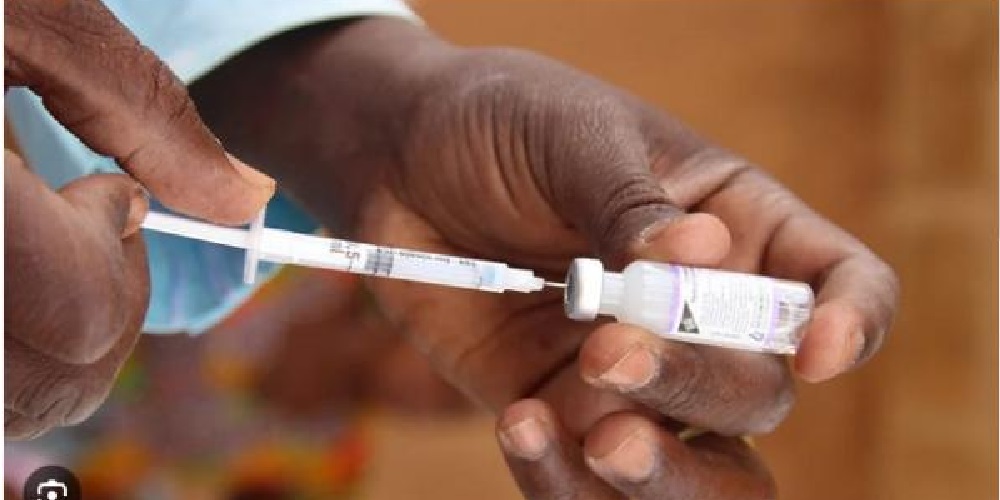
Nigeria has become the first country to receive the new MenFive meningitis vaccine from the Vaccine Alliance-funded global stockpile, with a shipment delivered by the United Nations Children’s Fund.

This was disclosed in a press statement made available to our correspondent by Gavi on Thursday.
Meningitis, according to the World Health Organisation, is transmitted from person to person through droplets of respiratory and throat secretions, it is an infection of the meninges, the thin lining that surrounds the brain and spinal cord.

The disease is known to cause hearing loss, brain damage, seizures, limb loss or other disabilities and death, and can also be triggered by viruses, fungi or parasites.
The African meningitis belt stretches from Senegal in the west to Ethiopia in the east (26 countries), including the northern part of Nigeria.
Meningitis in these countries follows a seasonal pattern, being most common during the dry season (December through June) with a peak between March and April when there is persistent low air humidity and high dust loads that are believed to damage the pharyngeal mucosa and ease the colonization of the nasopharyngeal epithelium by the meningococci.
The statement noted that the vaccine doses will be used to respond to an ongoing meningococcus C outbreak, targeting to vaccinate around a million children in six local government areas in Jigawa state – Babura, Birniwa, Gagarawa, Gumel, Maigatari, and Sule Tankarkar.
The MenFive vaccine, developed through a 13-year collaboration between PATH and Serum Institute of India, with support from the UK government’s Foreign, Commonwealth and Development Office, received WHO prequalification in July 2023. The vaccine protects against the five main serogroups of meningococcal meningitis impacting Africa – meningococcal serogroups A, C, W, Y, and X. It is the only vaccine that protects against serogroup X.
As of end 2023, the global meningococcal vaccines stockpile had been accessed 62 times by 16 countries since 2009, with more than 29 million doses deployed from the stockpile in support to countries.
Alliance funds the global stockpiles of vaccines against cholera, Ebola, meningitis and yellow fever, and supports outbreak response campaigns in lower-income countries.
“Country requests to these stockpiles are managed by the WHO’s International Coordinating Group on Vaccine Provision.
“The ICG approved the deployment of 1,043,377 doses of MenFive in response to Nigeria’s request,” the statement noted.
Commenting on the milestones, the Director of High Impact Countries at Gavi, the Vaccine Alliance, Dr Tokunbo Oshin said, “With outbreaks of infectious diseases on the rise worldwide, new innovations such as MenFive are critical in helping us fight back.
“Thanks to vaccines, we have eliminated large and disruptive outbreaks of meningitis A in Africa: now we have a tool to respond to other meningococcal meningitis serogroups that still cause large outbreaks resulting in long-term disability and deaths.
“Gavi will be working closely with the Nigerian government as well as our partners such as UNICEF and WHO to support the response to this outbreak.”
Gavi added that this first shipment signals the start of its support for a multivalent meningococcal conjugate vaccine programme, which will see the MenFive vaccine rolled out through outbreak response, routine immunisation, and catch-up campaigns in high-risk countries.
“Over the years, Gavi has worked with countries to support vaccination against meningitis A, reaching nearly 400 million children through campaigns and routine immunisation. These efforts have helped Africa defeat meningitis A, with no new cases detected since 2017.
“The addition of MenFive into health systems’ toolkit holds out the possibility that the other circulating serogroups could also one day be defeated,” it said.
Health
Bitter kola, salt water not Ebola cure, NCDC warns
The Nigeria Centre for Disease Control and Prevention has warned Nigerians against relying on unverified home remedies for Ebola Virus Disease, stressing that substances such as bitter kola, salt water, herbs, and seasoning cubes cannot prevent or cure the deadly infection.
The agency issued the warning in a public advisory obtained by our correspondent, titled “Ebola Virus Disease (EVD): Myths vs Facts,” amid growing concerns and online rumours linked to a regional Ebola outbreak.
According to the NCDC, Nigeria has not recorded any confirmed case of Ebola, but misinformation surrounding fake cures could create panic and endanger lives.
“There is currently no approved home remedy for Ebola Virus Disease,” the agency stated.
It added: “Early reporting, supportive medical care, and strict infection prevention and control measures are critical. Avoid self-medication and seek care promptly if symptoms develop.”
The agency specifically debunked widespread claims circulating on social media suggesting that “drinking salt water, consuming bitter kola, or using herbal mixtures could protect people from Ebola infection.”
Public health experts have repeatedly warned that reliance on unproven remedies during disease outbreaks often delays proper treatment and increases the risk of transmission.
The NCDC also cautioned Nigerians against spreading unverified health information online, noting that false claims could undermine public health response efforts.
“Sharing unverified information can create panic and confusion. Members of the public are advised to rely only on updates from official public health authorities and credible sources,” the advisory said.
The agency urged Nigerians to remain vigilant despite the absence of any confirmed Ebola case in the country.
“Although no case has been confirmed in Nigeria, outbreaks in the region require vigilance, preparedness, and responsible public health behaviour to reduce the risk of importation and transmission,” it stated.
The warning has revived memories of Nigeria’s 2014 Ebola outbreak, when rumours about salt-water baths and bitter kola consumption flooded communities after the virus entered the country through an infected traveller from Liberia.
At the time, health authorities dismissed the claims after reports emerged that some Nigerians consumed excessive amounts of salt water in desperate attempts to avoid infection, leading to health complications in some cases.
Nigeria was eventually lauded globally for successfully containing the 2014 Ebola outbreak through aggressive contact tracing, rapid isolation of suspected cases, public awareness campaigns, and coordinated emergency response measures.
In its latest advisory, the NCDC urged Nigerians to prioritise preventive measures such as regular hand hygiene, avoiding contact with bodily fluids of sick persons, and promptly reporting unusual illnesses to health authorities.
The agency also reassured the public that surveillance and preparedness activities were ongoing across the country to prevent any possible outbreak.
Health
Ebola outbreak will get worse as cases rise in DRC, Uganda – WHO
The World Health Organisation, WHO, on Monday raised fresh alarm over the rapidly spreading Bundibugyo Ebola outbreak in the Democratic Republic of Congo, DRC, and neighbouring Uganda, warning that the epidemic is outpacing response efforts and could worsen in the coming weeks.
Speaking at a virtual ministerial briefing convened by the Africa Centres for Disease Control and Prevention, WHO Director-General Tedros Ghebreyesus described the outbreak as extremely serious and difficult, revealing that more than 900 suspected cases and 220 suspected deaths have already been recorded in DRC.
“So far, 101 cases have been confirmed in DRC, with 10 confirmed deaths. But we know the epidemic in DRC is much larger. In the early hours of Sunday, May 17, I declared the Ebola outbreak in DRC a Public Health Emergency of International Concern after consulting the Ministers of Health of both DRC and Uganda, and following Africa CDC’s notification,” Tedros said.
He disclosed that WHO had upgraded the national risk assessment in DRC from “high” to “very high,” while maintaining regional risk at “high.”
Countries bordering DRC, he warned, are particularly vulnerable and must take immediate preventive action.
“In Uganda, there are five confirmed cases and one death,” he said, commending President Yoweri Museveni for cancelling this year’s Martyrs’ Day celebrations, an annual religious event that attracts nearly two million people.
“I appreciate the leadership of President Museveni in cancelling the Martyrs’ Day commemoration to prevent further spread of the virus,” he added.
Tedros noted that insecurity and public distrust in eastern DRC are worsening the crisis.
“The delay in detecting the outbreak means that we are now playing catch-up with a very fast-moving epidemic. We are urgently scaling up operations, but at the moment, the epidemic is outpacing us.”
According to him, intensified fighting in the provinces of Ituri and North Kivu has displaced more than 100,000 people in recent months, complicating surveillance and response operations.
“There is also significant distrust of outside authorities among the local population. In the past week, there have been two security incidents at health facilities,” he stated.
“Building trust in affected communities is critical to a successful response and is one of our highest priorities.”
The WHO chief further disclosed that there are currently no approved vaccines or therapeutics specifically for the Bundibugyo strain of Ebola, which has only caused two previous outbreaks — in Uganda in 2007 and DRC in 2012.
“Last week, WHO convened leaders of several partner organisations to review the pipeline of vaccines, therapeutics and diagnostics,” he said.
“WHO has recommended prioritising two monoclonal antibodies to advance in clinical trials. We are also recommending evaluation of the antiviral obeldesivir in a clinical trial as post-exposure prophylaxis for high-risk contacts.”
He added that the clinical trial is being jointly developed with Africa CDC and the Collaborative Open Research Consortium on Filoviruses.
Tedros said WHO had already released $3.9 million from its Contingency Fund for Emergencies to support response efforts and announced plans to travel to DRC alongside Chikwe Ihekweazu.
He stressed that unity among African nations and international partners would determine how quickly the outbreak could be contained.
“We are facing an extremely serious and difficult outbreak. It will get worse before it gets better. But we know this virus, and we know how to stop it. We have stopped every previous Ebola outbreak, and we will stop this one too.
“The question is just how quickly we can do it, and how many more lives will be lost before we do,” he said.
Health
Ebola: WHO releases additional $3.4m as death toll rises to 139
The World Health Organisation (WHO) has approved an additional $3.4 million to support emergency response efforts following the worsening Ebola outbreak in the Democratic Republic of the Congo (DRC) and Uganda, where suspected deaths have risen to 139.
WHO Director-General, Tedros Adhanom Ghebreyesus, announced on Wednesday during a media briefing in Geneva that the agency had declared the outbreak a Public Health Emergency of International Concern (PHEIC) amid growing fears of wider regional transmission.
Tedros said the declaration was made on Sunday under Article 12 of the International Health Regulations after consultations with health authorities in the DRC and Uganda, citing the need for urgent international action.
According to WHO, 51 Ebola cases have so far been confirmed in the DRC, particularly in the provinces of Ituri and North Kivu, including the cities of Bunia and Goma, while Uganda has recorded two confirmed cases in Kampala, including one death linked to travellers from the DRC.
The agency also confirmed that an American national who contracted the virus in the DRC had been transferred to Germany for treatment.
Tedros, however, warned that the outbreak was far more severe than confirmed figures indicate, with nearly 600 suspected cases and 139 suspected deaths already reported.
He said the outbreak had spread to several urban centres, while infections among health workers pointed to transmission within healthcare facilities.
The WHO chief identified insecurity, mass displacement and intense population movement in mining communities within eastern DRC as major factors heightening the risk of regional spread.
He noted that over 100,000 people had been displaced in Ituri Province following escalating violence since late 2025.
Tedros also expressed concern that the outbreak involves the Bundibugyo strain of Ebola, for which no approved vaccines or therapeutics currently exist.
“In light of all these risks, I decided it was urgent to act immediately to prevent more deaths and mobilise an effective international response,” he said.
He commended the governments of the DRC and Uganda for their cooperation, particularly Uganda’s decision to postpone the annual Martyrs’ Day celebrations, which typically attract millions of participants.
WHO said the additional $3.4 million approved from its Contingency Fund for Emergencies brings the organisation’s total emergency support funding for the outbreak to $3.9 million.
The agency added that response teams, medical supplies and emergency support personnel had already been deployed to affected areas as efforts intensify to contain the virus.
-
News21 hours agoTech Derby hosts funding readiness programme for start-ups in UK
-
Politics13 hours agoDickson Welcomes Omo-Agege, Ochei to NDC, Grants Senatorial Primary Waivers
-
Metro13 hours agoBandits hold abducted Niger State medical doctor despite N20m ransom payment
-
News13 hours agoIgnore ‘Illogical’ Election Results In Circulation, We’ll Hold Our Primaries Today – NDC
-
Sports13 hours agoUCL final: Thierry Henry to present trophy as Arsenal face PSG
-
Sports12 hours agoSinner Stunned In Paris, Crashes Out Of French Open
-
Entertainment12 hours ago‘I have checked out of marriage,’ says Regina Daniels
-
Sports24 hours agoCrystal Palace defeat Rayo Vallecano to win first European trophy