> By Sonny Aragba-Akpore
The Nigerian Communications Commission(NCC) regulations on inactive Subscriber Identification Module(SIM) card stipulates that any SIM card that has not had any form of economic activity within 180 days should be deactivated and reassigned by the Mobile Network Operators (MNOs).
And this may have foreclosed any form of grumblings if we understood what the regulations meant.
> We should ordinarily absolve the commission from any harm or errors of the deactivation of 42 million subscribers by this understanding.
> However some Nigerians think the NCC may have erred in its judgment and so must be liable.
Some even think,the commission should unbar the cards with apologies to the beleaguered subscribers.
> But did the NCC actually over step its bounds or contradict itself when it says its mandate is to protect all consumers yet deactivated 42 million subscribers?
> A former Kaduna State Senator Shehu Sani has his observations about the NCC action especially as he compared the Commission,s position vis a vis those on bandits whose lines still ring despite NCC,s manifest deactivation of SIMcards not linked to National Identity Numbers(NIN). 
The outspoken Senator tweeted recently “the NCC and the Telecom operators know how to quickly block SIM cards;the ones they are yet to know how to quickly block are those ones used by Bandits to collect ransom.”
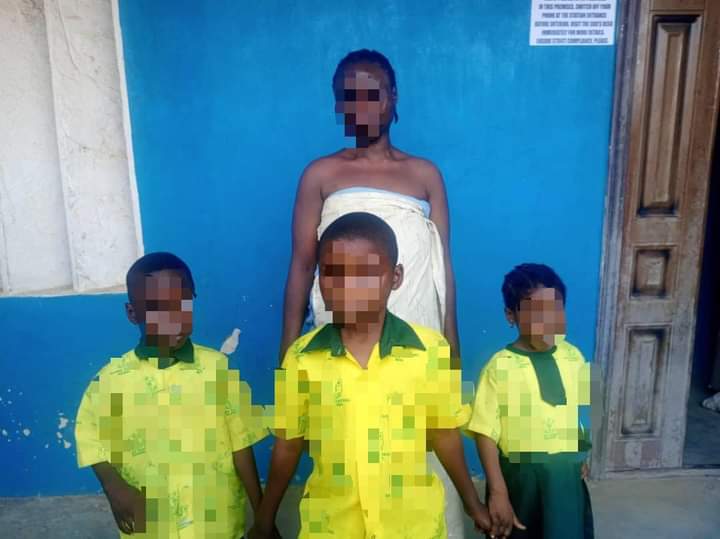
Some weeks ago, despite the presence of military personnel and police patrols, two teenage sisters, aged 14 and 16, were kidnapped by gunmen in the Guita community of Chikakore, located in Kubwa, Bwari Area Council of the Federal Capital Territory, Abuja and N30 million was required for the safe return of the kidnapped girls.
> And the Senator thinks,the NCC should go beyond deactivating SIM cards of those 42 million ‘innocent Nigerians ‘.
> Senator Sani is not alone.
Socio-Economic Rights and Accountability Project (SERAP) has urged Dr. Aminu Maida, the Chief Executive Officer of the Nigerian Communications Commission (NCC) “to immediately revoke the apparently unlawful directive to network providers to bar the phone lines of millions of Nigerians who have linked their SIM cards to their National Identification Numbers (NINs).”
SERAP also urged him to “restore the phone lines of these Nigerians, and to urgently establish a mechanism for effective consultation to provide Nigerians who are yet to link their SIM cards to their NINs with the appropriate support and infrastructure and adequate time and opportunity to do so.”
The Commission had recently ordered telecommunications companies to bar the phone lines of millions of citizens including those who allegedly “did not submit a good NIN or didn’t get a cleared or verified NIN by February 28.”
SERAP said, “No agency has the right to strip the citizens of their basic constitutional rights under the guise of failing to properly link their SIM cards with their NINs or failing to do so timeously.”
> SERAP said, “No agency has the right to strip the citizens of their basic constitutional rights under the guise of failing to properly link their SIM cards with their NINs or failing to do so timeously.”
> SERAP, in a letter it wrote to the NCC stated that “the blocking of phone lines of Nigerians must only be a last resort measure, and strictly in line with the Nigerian Constitution 1999 [as amended], international human rights and due process safeguards.”
The letter, read in part: “The arbitrary barring of people’s phone lines is never a proportionate measure as it imposes disastrous consequences and severely hinders the effective enjoyment of economic, social, and cultural rights, as well as civil and political rights.”
“Blanket measures of barring the phone lines of millions of Nigerians are inconsistent and incompatible with the Nigerian Constitution and human rights treaties to which the country is a state party.”
> “We would be grateful if the recommended measures are taken within 7 days of the receipt and/or publication of this letter. If we have not heard from you by then, SERAP shall consider appropriate legal actions to compel the NCC to comply with our request in the public interest.”
The NCC guidelines, titled, ‘Quality of Service Business Rules’, stipulate the minimum quality and standards of service, associated measurements, and key performance indicators for measuring the quality of service.
Per the guidelines, if a subscriber remains inactive for an additional six months, there is a possibility of losing their number, unless there is a network-related issue preventing the activation of the Registered Glove Enclave (RGE).
> “A subscriber’s line may be deactivated if it has not been used, within six months, for a Revenue Generating Event (RGE), and if the situation persists for another six months, the subscriber may lose their number, except for a network-related fault inhibiting an RGE,” the guidelines stipulated.
While this remains a big subject as it relates to inactive phone numbers in Nigeria, following the arrest of one Anthony Okolie, a Delta State-based trader, by the Department of State Services (DSS), for using a SIM previously owned by Hanan Buhari, the president’s daughter,the NCC has said there was nothing wrong in recycling SIM cards already deactivated
“Based on the new guidelines, the NCC said that telcos have the authority to reassign dormant SIM cards without recourse to the previous owners, as long as the inactivity falls within the stipulated period of six months@
> according to analysts.
> SERAP thinks “the arbitrary directive and the barring of the phone lines are extreme measures which must meet the strict legal requirements of legality, necessity and proportionality.”
“The NCC has also apparently failed to conduct an impact assessment of these extreme measures in order to avoid their arbitrary or excessive effects. These extreme measures go against the regulatory objectives of the Nigerian Communications Act and violate Nigerians’ fundamental human rights.”
“The NCC has clearly failed to abide by the Nigerian Constitution, human rights standards, democratic processes, the rule of law and due process safeguards.”
> “There is no legal justification for the arbitrary barring of phone lines of millions of Nigerians, especially those who have linked their SIM cards with their NINs.”
“The NCC has a direct responsibility to respect the rights to freedom of expression, information and privacy and to take effective measures to protect these fundamental human rights against attacks by third parties such as network providers.”
Chief Adeolu Ogunbanjo, President of the National Association of Telecoms Subscribers has stated that the group will seek redress in court
> soon if the SIM card blockade deadline is not extended.
> Ogunbanjo also confirmed ALTON’s position on the increased number of deactivated telephone numbers, saying the number of barred subscribers was so large that millions of subscribers are now in limbo.
Urging the NCC to consider the plight of telecoms consumers, and grant a 31-day extension for the exercise, he stated: “We have appealed to the Nigerian Communications Commission to extend the deadline till March 31.
> “But if this is not done, we will observe the situation for the next three days, that is Monday to Wednesday, and if this is not granted, we will have to file a case in court on Thursday.”
Ogunbanjo further said: “We have, and still appealing that this deadline be extended. We understand their position concerning security issues but a 31-day extension would not harm anyone and that is why we didn’t ask for three months.
“The NCC boss should please give us this gift as a resumption gift and not punish subscribers.”
The Nigerian gt had in December 2020 instructed residents and mobile users to link their SIM cards to their National Identity Number (NIN) as part of efforts to curb the rising security issues in the country.
> In fact, the NCC claimed that the SIM-NIN linkage frustrated the efforts of terrorists in Nigeria’s North East.
> Aside from Nigeria, other African countries are deploying SIM registration as a strategy to curb several vices, including cyber crimes.
> Not too long ago , Ghana’s Ministry for Communications announced that to ensure digital security, all SIM cards which have not been fully registered and linked with the Ghana Card will be blocked from the end of October 2022.
> A five-year jail term was also prescribed for vendors that are selling pre-registered SIM cards. The ministry disclosed that a total of 19 million SIM Cards were fully registered—representing 45% of the total SIM cards issued in Ghana.
In Kenya, the Communications Authority of Kenya blocked an undisclosed number of SIM cards in a move meant to curb illegal activities perpetrated by fraudsters with unregistered lines following its Saturday, October 15, 2022 deadline.
> Although this precaution is relevant for cyber protection, the aforementioned numbers show popular unwillingness towards SIM registrations, experts attribute this to a lack of trust in government authorities considering the violation of human rights on the continent.
> “Even if people are not actually being surveilled by the government, the fact that people may fear they are being tracked has a chilling effect on innocent and ordinary behaviour, including what information people look up on the Internet, who they contact, and how they express themselves,” Privacy International a UK-based data protection charity, said in a statement. “Journalists and human rights defenders may feel it is unsafe to communicate with confidential sources.”
African countries with mandatory SIM registration laws include
> Algeria, Angola, Benin, Botswana, Burkina Faso, Burundi, Cameroon, Central African Republic, Chad, Congo, Côte d’Ivoire, Democratic Republic of Congo, Egypt, Equatorial Guinea, Eritrea, Ethiopia, Gabon, Gambia, Ghana, Guinea, Guinea-Bissau, Kenya, Lesotho, Liberia, Libya, Madagascar, Malawi, Mali, Mauritania, Mauritius, Morocco, Mozambique, Niger, Nigeria, Rwanda, Sao Tome and Principe, Senegal, Seychelles, Sierra Leone, Somalia, South Africa, South Sudan, Sudan, Swaziland, Tanzania, Togo, Tunisia, Uganda, Zambia, and Zimbabwe.
> Amidst the widespread adoption of this law on the continent, critics have challenged the strategy especially because it has not adequately curbed the challenges that it intends to tackle stating that the risks of SIM card registration, which outweigh any possible benefits.
> In South Africa, the Right2Know Campaign took telecom operators—MTN, Cell C and Telkom—on the transparency in handling data provided during SIM registrations. Pre-paid SIM cards are preferred by many mobile phone users.
According to GSMA, 73% of mobile subscriptions globally are pre-paid. In Africa, 94% of mobile subscriptions are pre-paid.
The deactivation of 42 million subscribers may have impacted negatively on Nigeria,s teledensity.
In August 2023, the teledensity stood at 115.63% but dropped to 102.97% in November 2023. This adjustment stems from the prediction by the Nigerian Population Commission (NPC), projecting Nigeria’s population at 216.7 million as at 2022, replacing the previously used projection of 2017 190 million population.
Teledensity refers to the number of telephone connections for every hundred individuals within a specific geographical area, usually a country or region. It is a measure used to assess the level of telecommunications penetration or usage within a population.
A higher teledensity indicates greater access to telecommunications services within a population, reflecting the level of communication infrastructure development and the extent of connectivity among individuals. It is also an important indicator used by policymakers, telecommunications companies, and analysts to evaluate the progress of telecommunications infrastructure deployment and assess the level of connectivity within a given area.