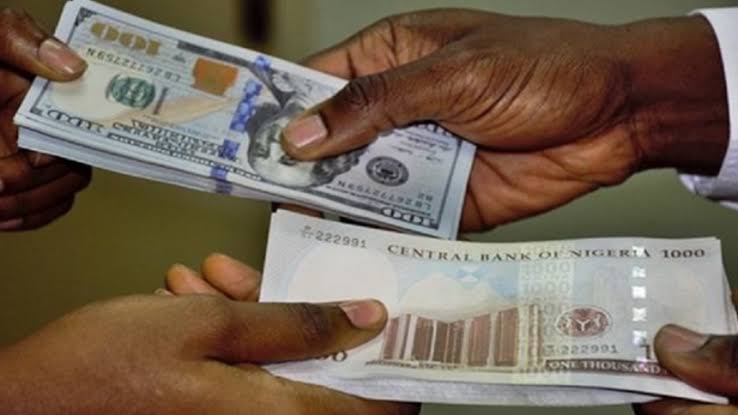
Why the rich is getting richer, the poor poorer in Nigeria – Experts


The recent policies in the financial and energy sector have created the path to further widening of the gap in the months and probably years ahead without any sign of poverty reduction except palliative measures.
Saturday Vanguard findings in the commodities and financial markets indicate that much more money is now being controlled by the rich as efforts of the Central Bank of Nigeria, CBN, to mop up excess financial liquidity in its attempts to control inflation are not yet achieving expected results as the plight of the poor worsens. 
Economy experts and financial analysts told Vanguard that though some of the big players in the economy and the rich members of the society playing in a few sectors were also affected by the policies, they have demonstrated the capacity to not only overcome the negative impact quickly but are also exploiting the advantage of the new policies.
They added that the poor have not only been further impoverished but have been stripped of the capacity to survive the harsh policies.
They also said that while the poor were still groaning under the existing policies introduced in the early months of the current administration, more of such policies are still being rolled out monthly with indications that many more are still underway in the months if not weeks ahead.
Some of the policies they listed include the withdrawal of petroleum subsidy, depreciation of the Naira against the world’s major currencies, raising of customs duty rates, and raising of benchmark interest rates, all of which have propelled the inflation rate to all-time high.
Also, the analysts mentioned the rollout of new adverse policies including electricity tariffs as one of the major hardship-inducing policies that has recently added to the rising cost of living, which reduces the disposable income of the poor.
According to the analysts, amidst all these adversities companies and individuals running the sectors in which the policies were based have been declaring stupendous profits.
The banks have declared average industry profits of N3.8 trillion in 2023 and N2.1 trillion in the first quarter of 2024 (Q1’24) indicating 220 percent and 314 percent average rise in profit for 2023 and 2024 respectively.
Those operating in the petroleum sector have equally declared mouth-watering profit growth amounting to 388 per cent in 2023 while Q1’2024 is also expected to come up as high.
Equally, the employees in these sectors have benefited to some extent with average salaries and allowances increase of about 75 per cent during the period.
The bulk of the profits went to the owners of the businesses in the sectors.
The rich across other sectors have also demonstrated their relative comfort with the current economic environment especially with the unprecedented over-subscription of 254 per cent to the CBN’s Treasury Bill sales three days ago.
It is only the rich and the middle class that invest in Treasury Bills and they over-subscribed to the tune of N531 billion three days ago bringing their total investments in the treasury instrument to about N3.1 trillion in the past six months, while the poor searched for money to eat at least once a day during the period.
Analysts’ insight
Commenting on the impact of the various government policies on the income groups, Mr Tunde Awolola, Managing Director, Parthian Securities Limited, a Lagos-based investment house, stated: “The removal of petrol subsidies impacts everyone, but it disproportionately affects the poor due to increased transportation and living costs.
“In the electricity tariff hike, Band A subsidy removal affects the rich but can indirectly harm the poor through economic ripple effects.
‘‘Interest rate hikes tend to benefit the wealthy while burdening borrowers, widening wealth disparities.
“High inflation further exacerbates poverty by reducing the purchasing power of those with fixed incomes. ‘‘These dynamics emphasize the need for policymakers to consider the socio-economic ramifications of their decisions.”
However, commenting also, Muda Yusuf, CEO, Centre for the Promotion of Public Enterprise (CPPE) said though the pains of the reforms might be more severe on the poor due to lack of capacity to absorb the shock, Nigerians across all income levels feel the impact nonetheless but on a different scale.
While arguing that it is not entirely true to say that the rich get richer while the poor get poorer as a result of the recent reforms, he explained that the rich whose businesses are exposed to the vagaries of fluctuations in the exchange rate, for instance, feel the impact the most.
He said: “The current economic situation up until a few weeks ago has been very challenging.
“First, it was an inevitable reform which brought a lot of challenges and pains and hardship. And I think everybody will agree with that. Hardship, especially in terms of inflation, which is driven largely by the depreciation of the Naira, and the high energy costs, that’s the cost of diesel, the cost of PMS, the cost of aviation fuel, and the cost of gas.
“All of these things have taken a toll on the welfare of the citizens. And from the business point of view, the higher the inflationary pressure, the more challenging it is for businesses, especially those in the SME space because they are not in a position to transfer these additional costs to their consumers or to their customers.
“So they have to bear the brunt to a larger extent of the increases in costs, which means that their profit margins have been eroded, and that also means in some cases that they are just struggling to break even.”
On the other hand, he said: “Reforms and economic reforms by nature, impact more on the poor than the rich.
“In other words, the pains of reforms are much more severe on the poor in the short term because when we talk about reforms, we talk about something that may not give an immediate result, but which is necessary to put the economy on the right footing going forward.
“And because the poor have a lesser capacity to absorb the shock of these reforms, it follows that the pain on them will be higher than those who are in the upper economic bracket.
“I must say at this point that even those who are in the middle class are also feeling the pains of these reforms.”
Explaining further he said: “So, it is not entirely correct to say that the rich are getting richer while the poor are getting poorer. It’s not necessarily so.
“It depends on the segment of the economy each individual finds himself or herself. For those who have high exposure, particularly, in their businesses to foreign exchange, and those whose businesses are dependent on importation, the impact of the reforms, at least, in the last few months, has been very severe.
“I am talking about SMEs, manufacturers, and other micro-enterprises. This is because the rich have more exposure to exchange rate activities and transactions. Some of them even suffer more.
“That is why we saw many instances of some companies declaring huge losses as a result of these reforms, particularly, the foreign exchange reforms that took place. So, you can say that the rich also cry.
“There are some people in the upper bracket that are suffering a lot. In fact, their business went under because they could no longer afford to import and if they imported anything, the landing costs were so high that to get people to buy the goods became extremely difficult.
“So, the challenges of the reforms are very profound even for the rich. So, it is something that cuts across everybody. But just like I said, it is easier for the rich, in most cases, to absorb these shocks than the poor.
“Again, if you look at it from the energy point of view, the cost of diesel over the last six months has also gone very high, and most of the people and businesses that use diesel are people in the middle to high-Income bracket.
“We know the implication of that even for their businesses. So, the impact on the rich is even more because if their businesses are not doing well, there’s no way they will claim that they are getting better.”
He, however, said that people who are big shareholders in the financial sector, especially the banks and others who operate in sectors that have monopoly privileges seem to enjoy the benefits of the reforms by virtue of the fact that they are in a sector that’s generally favoured almost in all seasons.
“But on balance, I think the reforms have affected both the rich and the poor. It is very difficult to say that the rich are getting richer. If you convert what some of the people you call rich have in dollars, it is almost peanuts. The value of what they own in terms of riches has dropped significantly except, of course, if you are talking about the political class.
“This is because politicians are not doing any business, and they are not borrowing money. Moreso, they have access to government resources, some legitimate, some not too legitimate.”