Health
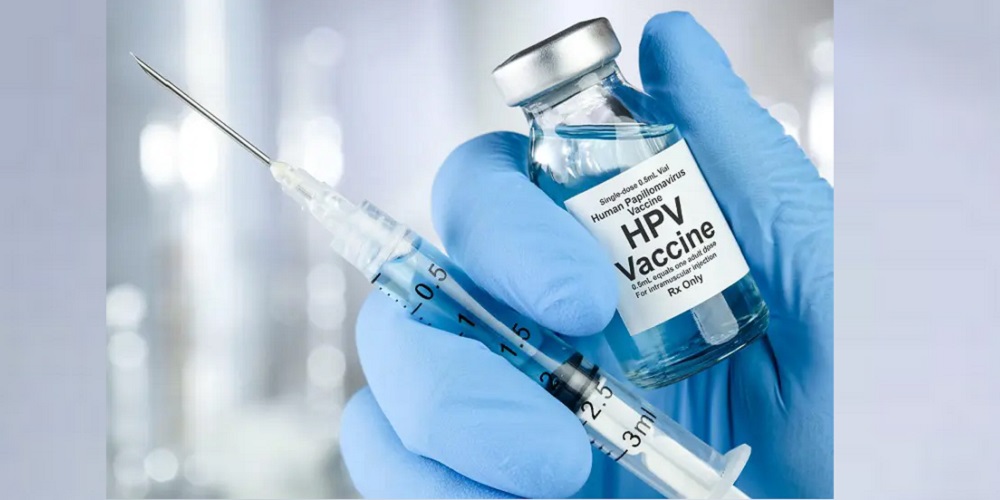
HPV vaccine not meant to reduce African population – Oyo government
- /home/naijuinz/public_html/wp-content/plugins/mvp-social-buttons/mvp-social-buttons.php on line 27
https://naijablitznews.com/wp-content/uploads/2024/05/HPV-vaccine.jpg&description=HPV vaccine not meant to reduce African population – Oyo government', 'pinterestShare', 'width=750,height=350'); return false;" title="Pin This Post">
- Share
- Tweet /home/naijuinz/public_html/wp-content/plugins/mvp-social-buttons/mvp-social-buttons.php on line 72
https://naijablitznews.com/wp-content/uploads/2024/05/HPV-vaccine.jpg&description=HPV vaccine not meant to reduce African population – Oyo government', 'pinterestShare', 'width=750,height=350'); return false;" title="Pin This Post">
The Oyo State Government has declared that the Human Papilloma Virus (HPV) vaccine is not an avenue to reduce population of Africa, contrary to insinuations.

Executive Secretary of Oyo State Primary Healthcare Board, Dr Muideen Olatunji, made this declaration while addressing a press conference on Monday.
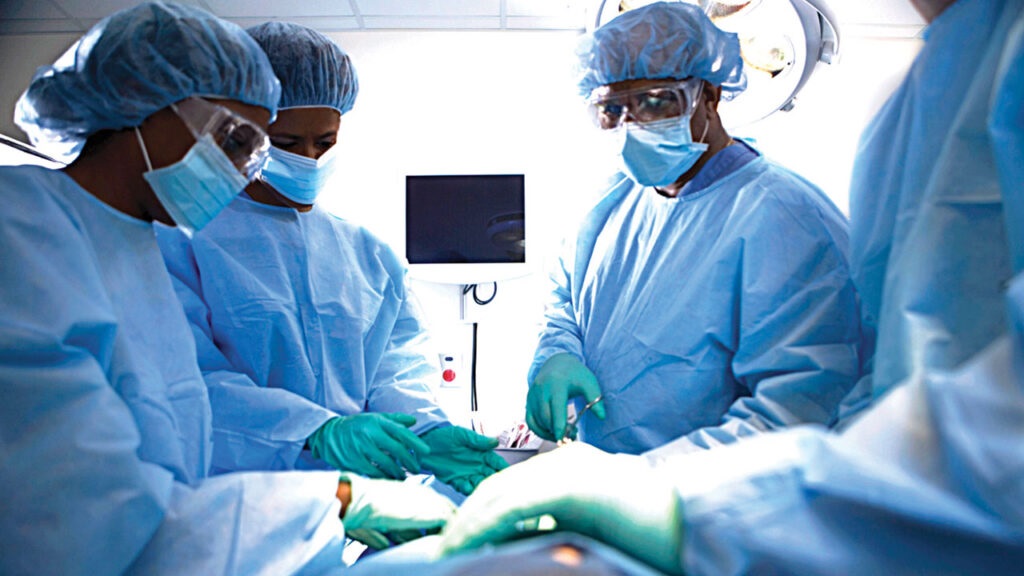
Olatunji, while addressing the journalists at the event held in Ibadan, the state capital, said that the state has launched the HPV Vaccine into the Extended Programme on Immunization (EPI) targeting girls between 9-14 years of age in the state.

He described cervical cancer as one of the most common forms of cancer that affects women, stressing that the disease must be tackled head-long.
He said that the vaccine was produced so as to prevent the disease and not to reduce the population.
Olatunji while speaking further, maintained that the government has launched the programme at St. Paul Anglican Primary School, Yanbule, Bashorun and over 300 pupils have been vaccinated.
Olatunji said, “It is pertinent to reiterate that the vaccine is not designed to reduce the population of the state. This is a demonstration of our continued partnership and indeed, collective efforts to protect young girls and citizens of the state against the prevalence of cervical cancer disease.
“Cervical cancer is a serious, and second most fatal cancer that affects women especially females of productive age.
“However, it’s important to note that Cervical cancer is a preventable disease, which can be controlled through routine human papilloma virus (HPV) vaccine.
“We have trained and retrained those that will administer this vaccine, and there are supervisors who will regularly take measures of safety and there are measures put in place to checkmate the administration of these vaccines. We have a structure in place to reach every part of Oyo State.
“We want to make sure no one is left out in this vaccination, for this reason we must utilize the opportunity as critical stakeholders to significantly reduce the prevalence of this disease to protect the lives of our citizens, particularly young girls between the ages of 9 and 14.
Cervical cancer globally accounts for a huge number of deaths and is the fourth among the cancers that kill women in the world. HPV which causes cervical cancer is preventable, so what we are doing is cost-effective, and safe so that we don’t have to wait for treatment or management when cancer has set it. Prevention is better than treatment and cure.”
Health
Ebola deaths exceed 300 in DR Congo – Heath authorities
The Ebola epidemic has claimed more than 300 lives in the Democratic Republic of Congo (DRC), a little over one month after it was declared, health authorities said on Friday.
The deadly viral disease, which spreads through direct contact with bodily fluids, can cause severe bleeding and organ failure.
A total of 304 people in the DRC have now died of the virus, from 1,115 confirmed infections since the outbreak was detected on May 15, giving a mortality rate of 26.3 percent, the National Public Health Institute (INSP) said.
This is a jump from the 202 deaths confirmed on June 18 by the African Union’s health agency, from 875 confirmed infections — a mortality rate of 23 percent.
The Red Cross warned last week that the outbreak of the haemorrhagic fever has yet to peak and could take up to a year to contain.
In some rare good news, the DRC authorities announced in early June that several Ebola patients had been treated and cured.
Responders to the epidemic, the 17th to hit the vast, unstable central African country, face towering challenges.
No approved vaccines or treatments exist for the Bundibugyo strain of the virus responsible for the latest outbreak to hit the DRC, which is one of the world’s poorest countries.
The three affected provinces in eastern DRC — Ituri, North Kivu and South Kivu — have been plagued for three decades by conflict and mass displacement, complicating the response.
The outbreak has spread to neighbouring Uganda, where containment measures have been effective.
Kampala has reported 20 confirmed cases nationwide, including two deaths since May 15. Most of those infected are Congolese nationals who have travelled to Uganda.
On Wednesday, France reported the outbreak’s first confirmed case of Ebola outside Africa — a Congolese doctor who was working in the DRC for the international medical aid NGO ALIMA.
The World Health Organization says there is minimal risk of the virus spreading in Europe and there is no need for travel restrictions.
Air France, on which the doctor flew back to France, has nevertheless suspended all flights to Kinshasa for several days.
– Ituri –
The vast majority of cases in the DRC have been detected in Ituri.
The mineral-rich province is plagued with unrest from a string of rival armed groups, and frequent population movements favour the spread of the disease.
More than 91 percent of all infections have been registered in the provincial capital, Bunia, and more than 82 percent of all deaths.
Efforts to contain the virus have been ratcheted up in Ituri.
But healthcare facilities -– which often operate with limited resources — still lack basic equipment and supplies, such as personal protective equipment and chlorine.
Many clinics set up by the WHO and aid agencies are close to full, the country’s public health agency said.
At least 78 healthcare workers have been infected with the virus, and 18 have died, it added.
Medical and aid workers also have to contend with deep mistrust from some local communities.
Some families have demanded that hospitals hand over the bodies of the deceased, not realising that touching the body puts them at risk of contamination.
The reluctance of some families to allow post-mortem examinations on the victims is also leading to an underestimation of the number of cases, officials said.
AFP
Health
DR Congo Ebola outbreak tops 1,000 cases, kills 254
More than 1,000 Ebola infections have been recorded in the Democratic Republic of Congo, where the latest outbreak has killed more than 250 people, official figures showed Monday.
The country’s National Institute of Public Health (INSP) confirmed 1,003 cases and 254 deaths, with a fatality rate of 25 percent.
The latest outbreak of the deadly haemorrhagic fever was declared on May 15.
Almost all cases are in Ituri province in the northeast, a conflict-weary region plagued by armed groups.
In total, three provinces have been affected: Ituri, neighbouring North Kivu and South Kivu, home to around 15 million people.
The virus has also spread to neighbouring Uganda, where the World Health Organization has recorded 20 cases and two deaths, though Kampala said the situation was “under control” earlier this month.
The outbreak is caused by the rare Bundibugyo strain of the virus, for which there is no vaccine or specific treatment.
Existing Ebola vaccines, developed between 2018 and 2019, are only effective against the Zaire strain, which caused previous major outbreaks.
The World Health Organization has declared an international public health emergency, warning the outbreak could last months.
“The outbreak was declared around two months after the first suspected deaths were reported… During that time, the disease spread unchecked in ways we still don’t fully understand,” an international aid group representative told AFP, speaking anonymously.
AFP
Health
Fed govt moves to prevent Ebola outbreak, sets up presidential task force
The federal government on Thursday inaugurated a Presidential Task Force on Ebola Virus Disease Preparedness, declaring that Nigeria would not wait for an outbreak before taking action and vowing to prevent a repeat of the 2014 Ebola scare.
Chief of Staff to the President, Femi Gbajabiamila, said the task force was established as a proactive measure to ensure the country is fully prepared against any possible outbreak of the deadly disease, even as he confirmed that no case of Ebola has been reported in Nigeria.
Speaking with State House correspondents after inaugurating the task force at the State House, Abuja, Gbajabiamila said the government’s focus is on prevention rather than response, stressing that authorities were determined not to be caught unprepared.
“We did the inauguration today on the preparedness of Nigeria for the Ebola virus disease. We’ve covered a lot of ground. Right now, there’s no reported case, which is good news, and that’s why all hands have to be on deck to make sure the measures we are taking are preventive, not curative.
“We don’t want to be in the situation we were last time, where we had a carrier in the country and we’re all running helter-skelter”, he said.
He disclosed that the task force had established several subcommittees to coordinate critical areas of preparedness, including surveillance, border control, immigration management and emergency response.
According to him, one of the key lessons from the 2014 outbreak is the need for stronger coordination among all stakeholders, particularly between the Federal Government and states with international points of entry.
Gbajabiamila noted that governors and representatives of states hosting international airports, including Lagos, Rivers, Enugu and the Federal Capital Territory, participated in the meeting, describing the collaboration as essential to preventing the virus from entering the country.
He said special attention was also being given to Nigeria’s extensive land borders, warning that disease transmission through informal migration routes posed a significant risk.
“Normally, when people talk about emergency preparedness and cross-border diseases such as this, they think about airports. But now we’re covering not just airports; we’re placing greater emphasis on land borders.
“We have a lot of cross-migration through the land borders, and the Border Control Development Agency is involved, immigration is involved, and a lot of the border communities are involved”, he said.
The Chief of Staff said the government had drawn valuable lessons from the country’s successful containment of the Ebola outbreak in 2014 and was building stronger structures to eliminate gaps in preparedness.
“What we want is a zero case, as we have now. We want to maintain a zero case”, he added.
Also speaking, Director-General of the Nigeria Centre for Disease Control and Prevention (NCDC), Dr. Jide Idris, said surveillance systems had already been strengthened at major points of entry across the country, particularly airports.
He confirmed that Nigeria currently has no recorded case of Ebola but stressed that preparedness remained critical given recent developments in parts of Africa.
“The focus is to be prepared. We don’t have any Ebola case here now, but we need to be prepared. We need to ensure that we don’t get that Ebola virus here.
“However, just in case one slips in, we want to be prepared nationally to identify and deal with the case”, Idris said.
The NCDC boss explained that existing disease surveillance and emergency response structures were being upgraded and adapted specifically to address Ebola-related threats.
He said the preparedness framework brings together multiple government institutions, including the ministries of health, interior and education, as well as immigration, border control agencies and state governments.
According to him, emergency preparedness requires a coordinated national response built on teamwork, clearly defined responsibilities and an effective command-and-control structure.
“The bottom line is that the objective is that we do not allow Ebola to come in. If it does come in, we are prepared to rapidly identify and manage the case nationally”, he said.
Idris added that state governments across the federation had already been mobilised as part of the preparedness strategy, with efforts focused on surveillance, early detection, rapid response and public health coordination.
The inauguration of the task force comes amid heightened vigilance across several African countries following renewed concerns over Ebola outbreaks in parts of the continent.
-
News19 hours agoYou Clearly Didn’t Read the State Police Bill — Akpabio’s Aide Fires Back at Obi
-
News19 hours agoPeter Obi Reacts To court Ruling Nullifying NDC’s Registration
-
News19 hours agoMy Dad’s Wife Needs Money To Maintain Her Lavish Lifestyle- Mr. Ibu’s Son
-
News19 hours agoEdo CJ constitutes special court to try cultists, kidnappers
-
Metro19 hours agoTwo killed in fresh Imo bomb explosion
-
News19 hours agoArmy to recruit 28,000 additional soldiers to combat insecurity
-
News19 hours agoXenophobia: “South Africa is nothing without Africa — MTN Group Chairman, Mcebisi Jonas
-
Metro19 hours agoAlakija Building Collapse: Sanwo-Olu Directs Demolition Of Distressed Structures, Owner To Be Prosecuted

Warning: Undefined variable $user_ID in /home/naijuinz/public_html/wp-content/themes/zox-news/comments.php on line 49
You must be logged in to post a comment Login