Connect with us

Health

Ogun records 151 suspected Mpox cases

Published

on

ADVERTISEMENT
Zoom Ad
ADVERTISEMENT
Zoom Ad

The Ogun State Commissioner for Health, Dr Tomi Coker, announced on Wednesday that the state has not recorded any confirmed cases of Mpox across its twenty local government areas.


Coker reported that, as of August 18, the state had recorded 151 suspected cases of Mpox, but none had been confirmed as positive.

In a statement released to journalists in Abeokuta, the state capital, the Commissioner affirmed that the state has maintained a high level of surveillance since the global outbreak in 2022.

She stated, “Mpox is a disease of public health importance, and the World Health Organisation has declared outbreaks of a more virulent strain in some countries. Some states in Nigeria have also reported outbreaks of Mpox.

Advertisement

“The Ogun State Ministry of Health is aware of this public health threat and has instituted appropriate measures to prevent it, detect it early, and respond as necessary.”

She added, “The last case of Mpox in Ogun State was in May 2023, and no confirmed case has been reported in Ogun State to date. As of 18th August 2024, the state surveillance system has reported 151 suspected cases of Mpox, but none has been confirmed. However, 53 cases have been confirmed as Chickenpox.”

“We are aware of the Chickenpox cases in the state, and the necessary measures are already in place.”
Public sensitisation on Mpox, Chickenpox, and other priority diseases is ongoing through established platforms.

“Therefore, there is no need to panic,” she said.

Advertisement

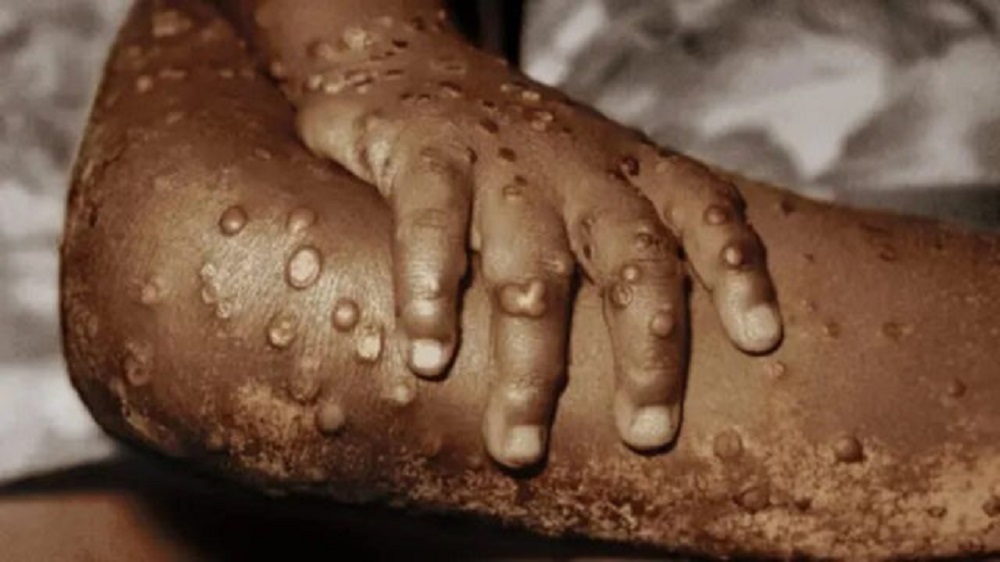
Coker explained that the signs and symptoms of Mpox include rashes containing pus or fluid on any part of the body, including the hands, face, feet, and genitals, as well as headache, fever, muscle and back aches, sore throat, swollen lymph nodes, and weakness.

The Commissioner urged residents to avoid close contact with individuals showing symptoms, particularly those with rashes or skin lesions, as the disease is highly contagious.

To further protect against the disease, Coker advised residents to practice good hand hygiene by regularly washing hands with soap and water or using an alcohol-based hand sanitiser.

She also recommended wearing protective gear (gloves, masks) when caring for someone with suspected or confirmed Mpox and avoiding contact with animals that may harbour the virus, such as rodents and primates, especially in areas where the disease is known to occur. She also stressed the importance of ensuring that meat is thoroughly cooked before consumption.

Advertisement

Finally, she urged residents to report all suspected cases to the nearest health facility in the state.

Continue Reading
Advertisement
Click to comment

Warning: Undefined variable $user_ID in /home/naijuinz/public_html/wp-content/themes/zox-news/comments.php on line 49

You must be logged in to post a comment Login

Leave a Reply

Health

Bitter kola, salt water not Ebola cure, NCDC warns

Published

on

By

ADVERTISEMENT
Zoom Ad
ADVERTISEMENT
Zoom Ad

The Nigeria Centre for Disease Control and Prevention has warned Nigerians against relying on unverified home remedies for Ebola Virus Disease, stressing that substances such as bitter kola, salt water, herbs, and seasoning cubes cannot prevent or cure the deadly infection.

The agency issued the warning in a public advisory obtained by our correspondent, titled “Ebola Virus Disease (EVD): Myths vs Facts,” amid growing concerns and online rumours linked to a regional Ebola outbreak.

According to the NCDC, Nigeria has not recorded any confirmed case of Ebola, but misinformation surrounding fake cures could create panic and endanger lives.

“There is currently no approved home remedy for Ebola Virus Disease,” the agency stated.

Advertisement

It added: “Early reporting, supportive medical care, and strict infection prevention and control measures are critical. Avoid self-medication and seek care promptly if symptoms develop.”

The agency specifically debunked widespread claims circulating on social media suggesting that “drinking salt water, consuming bitter kola, or using herbal mixtures could protect people from Ebola infection.”

Public health experts have repeatedly warned that reliance on unproven remedies during disease outbreaks often delays proper treatment and increases the risk of transmission.

The NCDC also cautioned Nigerians against spreading unverified health information online, noting that false claims could undermine public health response efforts.

Advertisement

“Sharing unverified information can create panic and confusion. Members of the public are advised to rely only on updates from official public health authorities and credible sources,” the advisory said.

The agency urged Nigerians to remain vigilant despite the absence of any confirmed Ebola case in the country.

“Although no case has been confirmed in Nigeria, outbreaks in the region require vigilance, preparedness, and responsible public health behaviour to reduce the risk of importation and transmission,” it stated.

The warning has revived memories of Nigeria’s 2014 Ebola outbreak, when rumours about salt-water baths and bitter kola consumption flooded communities after the virus entered the country through an infected traveller from Liberia.

Advertisement

At the time, health authorities dismissed the claims after reports emerged that some Nigerians consumed excessive amounts of salt water in desperate attempts to avoid infection, leading to health complications in some cases.

Nigeria was eventually lauded globally for successfully containing the 2014 Ebola outbreak through aggressive contact tracing, rapid isolation of suspected cases, public awareness campaigns, and coordinated emergency response measures.

In its latest advisory, the NCDC urged Nigerians to prioritise preventive measures such as regular hand hygiene, avoiding contact with bodily fluids of sick persons, and promptly reporting unusual illnesses to health authorities.

The agency also reassured the public that surveillance and preparedness activities were ongoing across the country to prevent any possible outbreak.

Advertisement
Continue Reading

Health

Ebola outbreak will get worse as cases rise in DRC, Uganda – WHO

Published

on

By

ADVERTISEMENT
Zoom Ad
ADVERTISEMENT
Zoom Ad

The World Health Organisation, WHO, on Monday raised fresh alarm over the rapidly spreading Bundibugyo Ebola outbreak in the Democratic Republic of Congo, DRC, and neighbouring Uganda, warning that the epidemic is outpacing response efforts and could worsen in the coming weeks.

Speaking at a virtual ministerial briefing convened by the Africa Centres for Disease Control and Prevention, WHO Director-General Tedros Ghebreyesus described the outbreak as extremely serious and difficult, revealing that more than 900 suspected cases and 220 suspected deaths have already been recorded in DRC.

“So far, 101 cases have been confirmed in DRC, with 10 confirmed deaths. But we know the epidemic in DRC is much larger. In the early hours of Sunday, May 17, I declared the Ebola outbreak in DRC a Public Health Emergency of International Concern after consulting the Ministers of Health of both DRC and Uganda, and following Africa CDC’s notification,” Tedros said.

He disclosed that WHO had upgraded the national risk assessment in DRC from “high” to “very high,” while maintaining regional risk at “high.”

Advertisement

Countries bordering DRC, he warned, are particularly vulnerable and must take immediate preventive action.

“In Uganda, there are five confirmed cases and one death,” he said, commending President Yoweri Museveni for cancelling this year’s Martyrs’ Day celebrations, an annual religious event that attracts nearly two million people.

“I appreciate the leadership of President Museveni in cancelling the Martyrs’ Day commemoration to prevent further spread of the virus,” he added.

Tedros noted that insecurity and public distrust in eastern DRC are worsening the crisis.

Advertisement

“The delay in detecting the outbreak means that we are now playing catch-up with a very fast-moving epidemic. We are urgently scaling up operations, but at the moment, the epidemic is outpacing us.”

According to him, intensified fighting in the provinces of Ituri and North Kivu has displaced more than 100,000 people in recent months, complicating surveillance and response operations.

“There is also significant distrust of outside authorities among the local population. In the past week, there have been two security incidents at health facilities,” he stated.

“Building trust in affected communities is critical to a successful response and is one of our highest priorities.”

Advertisement

The WHO chief further disclosed that there are currently no approved vaccines or therapeutics specifically for the Bundibugyo strain of Ebola, which has only caused two previous outbreaks — in Uganda in 2007 and DRC in 2012.

“Last week, WHO convened leaders of several partner organisations to review the pipeline of vaccines, therapeutics and diagnostics,” he said.

“WHO has recommended prioritising two monoclonal antibodies to advance in clinical trials. We are also recommending evaluation of the antiviral obeldesivir in a clinical trial as post-exposure prophylaxis for high-risk contacts.”

He added that the clinical trial is being jointly developed with Africa CDC and the Collaborative Open Research Consortium on Filoviruses.

Advertisement

Tedros said WHO had already released $3.9 million from its Contingency Fund for Emergencies to support response efforts and announced plans to travel to DRC alongside Chikwe Ihekweazu.

He stressed that unity among African nations and international partners would determine how quickly the outbreak could be contained.

“We are facing an extremely serious and difficult outbreak. It will get worse before it gets better. But we know this virus, and we know how to stop it. We have stopped every previous Ebola outbreak, and we will stop this one too.

“The question is just how quickly we can do it, and how many more lives will be lost before we do,” he said.

Advertisement
Continue Reading

Health

Ebola: WHO releases additional $3.4m as death toll rises to 139

Published

on

By

ADVERTISEMENT
Zoom Ad
ADVERTISEMENT
Zoom Ad

The World Health Organisation (WHO) has approved an additional $3.4 million to support emergency response efforts following the worsening Ebola outbreak in the Democratic Republic of the Congo (DRC) and Uganda, where suspected deaths have risen to 139.

WHO Director-General, Tedros Adhanom Ghebreyesus, announced on Wednesday during a media briefing in Geneva that the agency had declared the outbreak a Public Health Emergency of International Concern (PHEIC) amid growing fears of wider regional transmission.

Tedros said the declaration was made on Sunday under Article 12 of the International Health Regulations after consultations with health authorities in the DRC and Uganda, citing the need for urgent international action.

According to WHO, 51 Ebola cases have so far been confirmed in the DRC, particularly in the provinces of Ituri and North Kivu, including the cities of Bunia and Goma, while Uganda has recorded two confirmed cases in Kampala, including one death linked to travellers from the DRC.

Advertisement

The agency also confirmed that an American national who contracted the virus in the DRC had been transferred to Germany for treatment.

Tedros, however, warned that the outbreak was far more severe than confirmed figures indicate, with nearly 600 suspected cases and 139 suspected deaths already reported.

He said the outbreak had spread to several urban centres, while infections among health workers pointed to transmission within healthcare facilities.

The WHO chief identified insecurity, mass displacement and intense population movement in mining communities within eastern DRC as major factors heightening the risk of regional spread.

Advertisement

He noted that over 100,000 people had been displaced in Ituri Province following escalating violence since late 2025.

Tedros also expressed concern that the outbreak involves the Bundibugyo strain of Ebola, for which no approved vaccines or therapeutics currently exist.

“In light of all these risks, I decided it was urgent to act immediately to prevent more deaths and mobilise an effective international response,” he said.

He commended the governments of the DRC and Uganda for their cooperation, particularly Uganda’s decision to postpone the annual Martyrs’ Day celebrations, which typically attract millions of participants.

Advertisement

WHO said the additional $3.4 million approved from its Contingency Fund for Emergencies brings the organisation’s total emergency support funding for the outbreak to $3.9 million.

The agency added that response teams, medical supplies and emergency support personnel had already been deployed to affected areas as efforts intensify to contain the virus.

Continue Reading

Trending

Copyright © 2024 Naija Blitz News