Connect with us

News

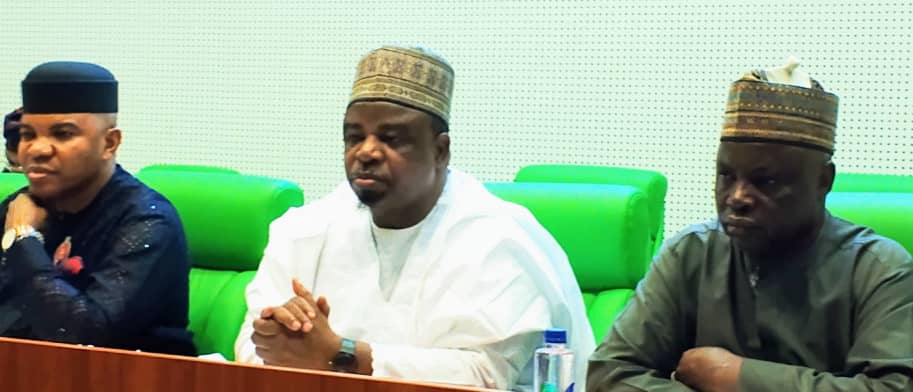
Governors Forum, State Assemblies Support LG Financial, Administrative Autonomy

Published

on

ADVERTISEMENT
Zoom Ad
ADVERTISEMENT
Zoom Ad
…as Speaker Abbas say poor conduct of council elections must be improved
By Gloria Ikibah
The Nigerian Governors’ Forum (NGF) has thrown its weight behind the administrative and financial autonomy of local government councils in Nigeria.
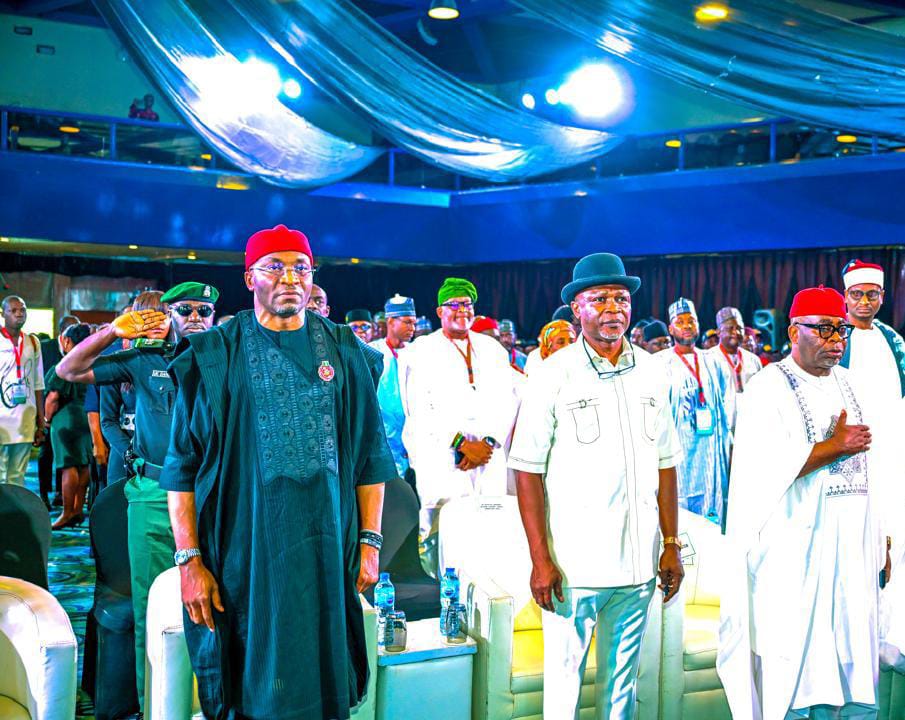
Chairman of the Forum and Governor of Kwara State, Abdulrahman Abdulrazaq, stated this at the National Dialogue on Local Government and Constitution Amendment Constitution Amendment organised by the House Committee on the Review of the Constitution in collaboration with the Policy and Legal Advocacy Centre (PLAC) with support from the UK Foreign, Commonwealth Development Office (FCDO), on Monday in Abuja.
According to Governor A dulrazaq, majority of the states have duly elected local government councils in place, and this reflects a strengthened commitment to democracy at grassroots level.
Represented by the Director, Legal Services of the Forum, Chijioke Chukwu, he said the NGF recognizes the Supreme Court’s ruling on local government autonomy as a landmark development with profound implications for governance.
The Governor said the LG autonomy presents an opportunity to deepen service delivery across critical sectors, particularly health, care, education, and other social services.
He further noted that by empowering local governments to manage resources effectively, we can collectively ensure that development to choose every Nigerian, no matter how remote their community may be.
He said: “The Governor’s Forum remains resolute in its commitment to the effective implementation of local government autonomy. The Governors are keen to collaborate with stakeholders, including development partners, civil society, and other arms of government to translate this autonomy into tangible improvements in the lives of our people.
“It is our belief that a well-structured autonomy with mutually aligned implementation framework would not only drive accountability and efficiency in resource management, but would also catalyze sustainable development goals at the sub-national level. Together, we can transform the local government system into a vibrant vehicle for economic growth, social development, and national integration.
“The Nigerian Governors Forum also reiterates its readiness  to ensure that this transition to local government autonomy is impactful. Let us continue to work together in building a stronger, more inclusive Nigeria”.
Speaker of the House of Representatives, Tajudeen Abbas in his remarks, described the conduct of local government elections in the country as disgraceful, and said it must be addressed.
He said, “Importantly, we must confront the disgraceful poor conduct of elections into the councils. We must find a way of instilling transparency, fairness and openness in the conduct of elections into local governments.doing this would require the understanding and collaborative efforts of the State governors and Houses of Assembly.
“We must find a way of convincing them that a strengthened local government system would relieve the States of unnecessary burdens and lead to grassroots development”.
Speaker Abbas, who represented by the Deputy Speaker, Benjamin Kalu, said the national dialogue was one in a series of consultations to harness citizens’ views and preferences towards efforts at having a truly peoples’ constitution in the country.
According to him, it serves as a vital opportunity for substantive discussions that will inform the Constitution Review Committee in making appropriate recommendations for amending the necessary provisions of the Constitution.
Abbas emphasised that this was essential to ensure compliance with the existing ruling of the Supreme Court regarding the status of local government councils.
He said it focuses on a critical aspect of our governance structure: the local government system.
“Local governments, the closest tier of government to the people, play an essential role in delivering services, fostering community development, and ensuring that citizens’ voices are heard at all levels of governance.
“However, for local governments to fulfil these roles effectively, they must operate with a degree of autonomy that allows them to respond promptly and appropriately to the unique needs of their communities”, he stated.
The Speaker further noted that there are significant challenges that hinder the effectiveness of local government councils, and they include inadequate funding, lack of autonomy, insufficient capacity, usurpation of its functions by other levels of government, corruption.
These and many more, he said, have plagued local governments for decades, not only stifle local governance but also impede national development.
He said the “need for reform has never been more urgent”.
The Deputy Speaker, Benjamin Kalu, said the dialogue was not only to discuss a critical aspect of governance but also to reaffirm thr collective commitment to advancing democratic principles and sustainable development at the grassroots level.
Kalu, who is the Chairman of the Committee on the Review of the Constitution, also reiterated that as the closest tier of government to our citizens, local governments are pivotal in ensuring the delivery of essential services,ensuring inclusion, and enhancing democratic participation.
Represented by the House Leader, Prof Julius Ihonvbere, he regretted that the current state of local government councils and areas in Nigeria leaves much to be desired.
He said issues of limited autonomy, constrained financial independence, and weakened administrative capacity have continued to hinder their effectiveness.
Kalu said, “The recent Supreme Court judgment reaffirming that local government councils and areas must be democratically elected and that their statutory allocations be paid directly to them marks a watershed moment in our nation’s governance journey.
“This ruling underscores the importance of ensuring that governance at all levels adheres to democratic principles and serves the people’s best interests. Yet, to fully realize the intent and impact of this landmark decision, we must confront the systemic issues that have long plagued local government administration.”
Executive Director of PLAC, Mr Clement Nwankwo, said the national dialogue on local government reforms is very key to improving the quality of our democracy.
“Local governments are so very key to any country’s democracy because it’s government at the grassroots. Unfortunately, the local governments in Nigeria continue to suffer from the lack of development of its institutions and its ability to deliver on its expectations of development.
“The House of Representatives Committee on the Constitutional Review taking on this issue as a major issue and as one of its flagship considerations as it proceeds and embarks on the Constitutional Review is so very important,” he said.
He hoped the conversation will translate into passage of landmark amendments l to the constitution that will impact on improving the quality of democracy.
Chairman of the Conference of Speakers and State Legislatures, Adebo Ogundoyin, said the issue of the independence and autonomy of local governments is at the heart of grassroots governance and development in Nigeria.
Ogundoyin, who is the Speaker of the Oyo State House of Assembly was represented by the Speaker of the Jigawa House of Assembly, Haruna Aliyu.
“Local governments will be pivotal to delivering essential services.fostering community participation and ensuring inclusive development. However, achieving this require robust financial and administrative independence, as well as transparent, credible, and legitimate elections.
“The state legislatures play an indispensable role in the realization of these goals as constitutionally empowered bodies.We are the gatekeepers of democracy and the sub-national levels. It is our duty to enact laws that empower local governments, ensure accountability, and provide oversight that guarantees the proper utilization of resources for the benefit of our citizens,” he said.
Director of Development, UK Foreign, Commonwealth and Development Office, Cynthia Rowe, said local governments brings governance closer to the people and has real impact on the lives of the people.
She stressed the need for a proper local government system for the benefit of citizens.

News

Army Hands Over Rescued Oyo Teachers, Pupils To Governor Makinde

Published

on

By

ADVERTISEMENT
Zoom Ad
ADVERTISEMENT
Zoom Ad

The Nigerian Army has officially handed over the teachers and pupils rescued from captivity in Oyo State to Governor Seyi Makinde.

The handover ceremony took place on Monday at the Oyo State Secretariat in Ibadan, where the General Officer Commanding (GOC), 2 Division, Nigerian Army Headquarters, Major General Chinedu Nnebeufe, personally presented the rescued victims to the governor.

The victims were abducted on May 15, 2026, from Oriire Local Government Area of Oyo State and spent more than 50 days in captivity before regaining their freedom.

They were rescued on July 12 following an extensive security operation involving the Nigerian Army and other security agencies.

Advertisement

The operation, which lasted several weeks, reportedly targeted the kidnappers’ network, logistics channels and hideouts before the victims were eventually freed.

Receiving the rescued teachers and pupils, Governor Makinde expressed gratitude to the military and other security agencies for their efforts in securing the safe release of the victims.

The successful rescue has been widely welcomed by Nigerians, with many commending the coordinated operation while urging security agencies to sustain efforts aimed at tackling kidnapping and other violent crimes across the country.

Advertisement
Continue Reading

News

United States Lobbying Firm Offers Asylum Support To Adeniyi Adeyemi Amid PFIPC Scandal

Published

on

By

ADVERTISEMENT
Zoom Ad
ADVERTISEMENT
Zoom Ad

A United States-based lobbying firm, Von Batten-Montague-York, has said it is willing to assist Prince Adeniyi Adeyemi, the embattled Director-General of the controversial Presidential Foreign Intervention Promotion Council (PFIPC), in seeking asylum in the United States.

The Genius Media Nigeria reports that the firm also called for an investigation by American authorities into allegations made by Adeyemi against senior Nigerian government officials.

The development follows a series of posts shared over the weekend and on Monday by the firm’s representative, Dr Von Batten, on 𝕏.

In one of the posts published on Saturday, Von Batten said the organisation was interested in speaking directly with Adeyemi and was prepared to support any application for asylum and whistleblower protection.

Advertisement

“To anyone in contact with Mr. Adeyemi, we are very interested in speaking with him. We are prepared to assist Mr Adeyemi in seeking asylum in the United States and requesting whistleblower protection,” he wrote.

The lobbyist argued that allegations involving World Bank-financed projects could attract the attention of US authorities because of Washington’s role in the international financial institution.

“Because @WorldBankGroup funds reportedly form part of Nigeria’s national budget, and the United States is the World Bank’s largest shareholder, any credible allegations involving those funds would be of significant interest to U.S. authorities,” he stated.

He further warned that if anything happened to Adeyemi, his organisation would demand a thorough investigation into the circumstances.

Advertisement

In another statement issued on Monday, Von Batten said he had spoken directly with Adeyemi and believed his claims deserved further scrutiny.

He wrote, “This is Dr. Von Batten. I just spoke with Mr. Adeyemi. I found him to be sincere and credible.

“Based on our discussion, I believe his allegations warrant an investigation by Congress, @StateDept, @USTreasury, @USGAO, and other relevant U.S. agencies due to the alleged misappropriation of U.S.-funded World Bank loans by senior members of the Nigerian government.”

He also claimed that his organisation had already briefed senior members of US President Donald Trump’s team and would begin engagements with members of Congress this week.

Advertisement

“This past weekend, I briefed senior members of President @realDonaldTrump’s team on these allegations, and our team will begin briefing Members of Congress this week,” he added.

According to Von Batten, Adeyemi alleged that he was appointed to head the PFIPC by President Bola Tinubu’s Chief of Staff, Femi Gbajabiamila.

The lobbyist further claimed that Adeyemi told him the agency operated from government premises, maintained accounts with the Central Bank of Nigeria, and received funding from the national budget, including resources allegedly linked to World Bank-supported projects.

Von Batten also said Adeyemi accused Gbajabiamila of demanding 45 per cent of the agency’s budget and alleged that he became a target after refusing to comply.

Advertisement

The claims have not been independently verified, and the Presidency has consistently denied wrongdoing in relation to the PFIPC controversy.

The American lobbyist also claimed that Adeyemi informed him that he and members of his family had gone into hiding over fears for their safety.

Von Batten warned that if any harm came to Adeyemi while he was preparing to cooperate with US authorities, those circumstances should be thoroughly investigated.

Advertisement
Continue Reading

News

Reps Launch Nationwide Probe into Illegal Mining, Vow Crackdown on Revenue Leakages

Published

on

ADVERTISEMENT
Zoom Ad
ADVERTISEMENT
Zoom Ad

By Gloria Ikibah

The House of Representatives has commenced a comprehensive investigation into illegal mineral exploitation across Nigeria, pledging to tackle the activities of criminal networks draining the country’s vast mineral resources.

The move was the resolution at a high-level stakeholders’ workshop on extractive industry governance organised by the House Ad Hoc Committee on Mineral Exploitation, Security and Anti-Money Laundering on Monday in Abuja.

Declaring the workshop open, Speaker of the House of Representatives, Rt. Hon. Tajudeen Abbas, described the committee’s assignment as one of the most significant responsibilities before the National Assembly.

Advertisement

He lamented that for years, illegal operators had continued to exploit Nigeria’s mineral wealth, depriving the country of much-needed revenue and weakening its economic potential.

Abbas explained that the workshop was designed to gather credible information, evidence and practical recommendations from regulators, security agencies and operators within the extractive industry before the House considers further legislative action.

He urged participants to speak openly and contribute meaningful solutions.

According to him, “Nigeria cannot achieve economic diversification, fiscal stability or job creation if the sector that should be a second revenue pillar is bleeding from illegality and opacity.

Advertisement

“This is not an inquisition; it is a partnership. Withhold nothing, speak plainly and proffer solutions. The success of this intervention depends on the quality of information we receive and the sincerity of purpose we all bring to this room”.

Earlier, Chairman of the House Ad Hoc Committee on Mineral Exploitation, Security and Anti-Money Laundering, Rep. Sanni Abdulraheem, said the committee was also examining whether existing laws and regulatory institutions were strong enough to close loopholes that continue to encourage illegal mining.

He explained that the investigation will also trace the financial networks through which proceeds from illegal mining are concealed and laundered, while assessing whether security arrangements around mining communities are adequate.

Abdulraheem identified illegal mining, weak enforcement and money laundering as the major factors responsible for the disconnect.

Advertisement

“Nigeria is blessed. Few nations on earth carry the range and richness of mineral deposits that lie across our states—gold, lithium, tin, coal, tantalite and many more. On paper, these resources should be transforming livelihoods, funding schools and hospitals, and strengthening our national economy. Yet, for too long, a troubling gap has persisted between the wealth in our ground and the prosperity in our communities.

“That gap has a name: illegal mining, weak enforcement, and the laundering of proceeds that should belong to the Nigerian people. It is a gap filled instead by criminal networks, by revenue leakages we can no longer afford to ignore, and by security threats that have, in some of our communities, turned mineral-rich land into contested and dangerous territory”, hesaid.

The lawmaker noted that the committee had already engaged several government agencies and, where necessary, issued summons to compel cooperation.

He emphasised that the exercise was not intended to create confrontation but to ensure transparency and accountability.

Advertisement

“Oversight without candour achieves nothing, and reform without accurate information is guesswork dressed as policy,” he added.

Abdulraheem maintained that addressing illegal mining required collaboration among regulators, security agencies, financial intelligence institutions, state governments, traditional rulers, licensed operators and civil society organisations.

He also commended security agencies, particularly the Nigeria Security and Civil Defence Corps (NSCDC) and the Mining Marshals, for their efforts in protecting the country’s mineral resources.

According to him, “We must understand your capacity gaps honestly, so that we can recommend the support and reform you genuinely need.”

Advertisement

He further noted that illicit mining proceeds often pass through complex financial channels that require coordinated efforts to track and dismantle.

“Illicit proceeds do not vanish—they move through accounts, shell arrangements and cross-border channels that can be traced with the right tools and the right political will. We look to your expertise to help this Committee and the nation close those channels,” he said.

He therefore assured participants that all submissions, data and recommendations received during the workshop would form part of the committee’s final report to the House.

Also speaking at the event, the Nigeria Security and Civil Defence Corps disclosed that its Mining Marshals had arrested more than 671 suspected illegal miners across the country, with 397 already facing prosecution.

Advertisement

Representing the Commandant-General of the NSCDC, Ahmed Audi, the Commander of the Mining Marshals, Attah Onoja, said the Corps had dismantled several illegal mining sites, leading to improved government revenue and renewed investor confidence in the sector.

He, however, identified inadequate logistics, limited manpower, delays in the judicial process and interference from organised criminal syndicates as major obstacles to effective enforcement.

Onoja called for increased funding, improved surveillance technology and the establishment of specialised courts to handle mining-related offences more efficiently.

The workshop attracted regulators, security agencies, industry operators and other stakeholders, who pledged to support efforts aimed at sanitising Nigeria’s mining sector and ensuring that the country’s mineral resources contribute meaningfully to national development.

Advertisement
Continue Reading

Trending

Copyright © 2024 Naija Blitz News