Health
NAFDAC Seals Kaduna Warehouse Over N75 Million Expired Goods
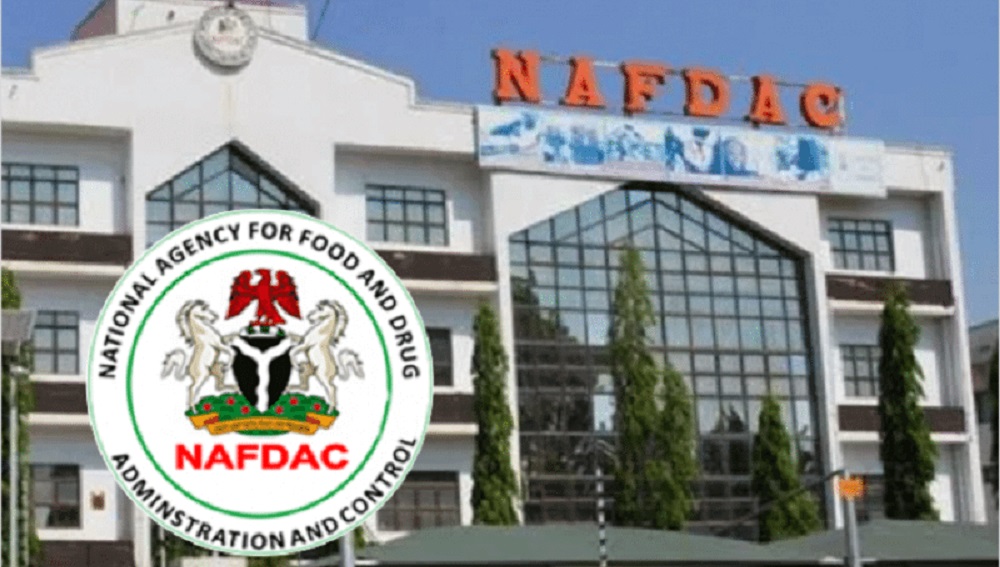
The National Agency for Food and Drug Administration and Control (NAFDAC) recently sealed a warehouse in Kaduna for storing expired food and cosmetic products valued at over N75 million.

The agency announced the development on its official X handle, identifying the warehouse’s location as PP2A Bayajidda Street by Kano Road, New Ogbomosho Road. The operation was prompted by a tip-off from a concerned citizen, leading to a raid by NAFDAC enforcement officers.
During the operation, workers were caught repackaging expired biscuits into sacks. Other expired items, including dairy milk, vegetable oil, soft drinks, and detergents, were also uncovered, underscoring the severity of the malpractice.

The warehouse’s managing director was apprehended for interrogation. NAFDAC assured the public that strict regulatory actions would follow the investigation to deter others from engaging in similar illegal practices.
The agency encouraged citizens to remain vigilant and promptly report any suspicious activities or products to the nearest NAFDAC office, emphasizing the importance of public cooperation in ensuring safety standards.
In a related development, NAFDAC recently shut down a pharmacy on Onitsha Crescent, Area 11 – Garki, Abuja, for selling expired and unregistered drugs. Among the discoveries were expired products worth over N7 million, including “H-Pylori” test kits, which pose significant health risks. The pharmacy’s Managing Director and Superintendent Pharmacist were arrested as part of the investigation.
Since November 2024, NAFDAC has established comprehensive guidelines for the handling and disposal of unwholesome products. These include food, medicines, medical devices, and cosmetics. The agency has reiterated that no regulated product can be manufactured, imported, exported, sold, or used in Nigeria without proper registration.
Unwholesome products, as defined by NAFDAC, include items that are expired, counterfeit, substandard, improperly stored, incorrectly labeled, or unauthorized. Facilities are required to maintain an inventory of such products and follow disposal guidelines to ensure compliance.
NAFDAC’s Director-General, Prof. Mojisola Adeyeye, has emphasized the agency’s commitment to upholding safety and quality standards. She highlighted that enforcing best practices, ensuring supply chain integrity, and monitoring regulated products remain core pillars in safeguarding public health and fulfilling NAFDAC’s mandate.
Through these efforts, NAFDAC continues to prioritize the health and well-being of Nigerians while sending a strong message to perpetrators of such illicit activities.

Health
Striking health workers insist on salary adjustment
Striking health workers under the Joint Health Sector Unions have insisted that only the adjustment of the Consolidated Health Salary Structure will end their ongoing industrial action, as efforts by the Federal Government to resolve the dispute remain stalled.
The strike, which entered its 82nd day on Wednesday, has paralysed activities in government-owned hospitals across the country, leaving patients stranded and forcing many to seek essential medical services outside public health facilities.
JOHESU, which represents health professionals in pharmacies, laboratories and other support departments, has maintained that the action will continue until the Federal Government implements the report of the Technical Committee on the adjustment of CONHESS, submitted since 2021.
The protracted strike has also triggered a 14-day ultimatum issued by the Nigeria Labour Congress and the Trade Union Congress in solidarity with the health workers.
The ultimatum, which expires on Friday, February 6, 2026, warned that other affiliate unions could join the action if the government fails to resolve what labour describes as the “maltreatment” of health workers.
In a joint statement by the Secretary-General of the TUC, Nuhu Toro, and the acting General Secretary of the NLC, Benson Upah, the labour centres accused the Federal Government of deliberately refusing to implement the salary adjustment despite repeated engagements.
They rejected what they described as “the persistent and deliberate provocative refusal of the Federal Government to implement the report of the Technical Committee on the adjustment of the Consolidated Health Salary Structure.”
According to the unions, the continued delay “is no longer an administrative lapse but a conscious act of injustice, bad faith and institutional disrespect to health workers and organised labour.”
“It is, therefore, unacceptable and a blatant provocation that while the government had no difficulty implementing the adjustment of the Consolidated Medical Salary Structure with effect from January 2, 2014, the same government has wilfully refused to implement the same for CONHESS,” the statement read.
Speaking with our correspondent in Abuja on the state of negotiations, the National President of JOHESU, Kabiru Minjibir, said discussions with the government remain deadlocked.
“Negotiations are still deadlocked, and the strike continues. NLC and TUC’s 14-day ultimatum to the government to resolve the issue or have other affiliate unions join in solidarity expires on Friday,” Minjibir said.
He stressed that the union’s demands remain singular and clear.
“We are on strike because of one single demand, which is CONHESS adjustment, as done for the sister scale, CONMESS, in 2014. So, if the government does the needful, we will surely suspend the strike,” he added.
Asked whether the Federal Government had reached out to the union ahead of the ultimatum deadline, Minjibir said, “We have yet to receive any invitation from the government.”
Efforts to get an official response from the Federal Ministry of Health and Social Welfare were unsuccessful.
When contacted, the Director of Press at the ministry, Alaba Balogun, said he would revert to our correspondent but had yet to do so as of press time.
The strike is coming at a critical time for the country’s public health system, as cases of Lassa fever continue to rise.
Data from the Nigeria Centre for Disease Control show that more than 90 cases and 17 deaths were recorded nationwide in the first three weeks of 2026 alone, raising concerns about the impact of the prolonged shutdown of key services in public hospitals.
Health
Over 2000 Nigerian Resident Doctors Yet To Receive Seven-Month Arrears Under Tinubu Govt
The National Association of Resident Doctors (NARD) has disputed the Nigerian government’s claim that outstanding arrears of the 25–35 per cent Consolidated Medical Salary Structure (CONMESS) adjustment have been fully paid, revealing that thousands of doctors are still owed.
Speaking on Channels Television on Friday, NARD National President, Dr Mohammad Suleman, said more than 2000 resident doctors are yet to receive the seven months’ arrears, despite assurances from the President Bola Tinubu-led government.
“On the seven months’ arrears of 25–35 per cent, we still have over 2,000, almost 3,000 of our members who are yet to be paid those arrears,” Suleman said.
The Nigerian government had earlier stated that seven out of the 19 demands presented by the association had been statutorily addressed, including the payment of the CONMESS adjustment.
However, Suleman described the government’s approach as inconsistent, noting that the issue had repeatedly been pushed into service-wide vote provisions rather than being properly captured in the national budget.
“In 2023, it was said to be put inside the service-wide vote if it wasn’t paid. In 2024, it was put in the service-wide vote; in 2025, it was again put there,” he explained.
According to him, resident doctors should not have to rely on repeated special interventions by the President before their lawful entitlements are honoured.
“The President had to make special provision when doctors agitated for that money to be paid. Are we saying these arrears have to go through that route of waiting for service-wide vote after service-wide vote and waiting for the President of the country to specifically intervene before they are captured in the budget?” he asked.
Suleman confirmed that negotiations were ongoing with the Federal Government and the Ministry of Health, expressing cautious optimism that concrete progress could be achieved before the weekend.
“Right now, we are in discussions with the Federal Government team. I would hope that from tonight to tomorrow, to Sunday, a lot of things are going to be done in the proper way,” he said.
He added that any decision on the planned industrial action would be guided by evidence of government goodwill rather than legal threats.
“So that the National Executive Council will now look at it, not in the context of court injunctions and ‘no work, no pay,’ but in the context of what has been done and the evidence that good faith is on the table,” Suleman stated.
Despite a court injunction restraining the association from proceeding with its planned strike, the NARD president insisted that the resolve of its members remained firm.
“I am making it very clear that the resolve of our members is not shaken by all these. All these were factored into the decision to embark on this strike,” he said.
When asked whether the nationwide strike scheduled to commence on Monday would still hold, Suleman said the final call rested with the association’s leadership.
“Unless the National Executive Council of the Nigerian Association of Resident Doctors says otherwise,” he said.
He also questioned whether the court order adequately addressed the realities facing doctors and patients across the country.
“Are we ignoring the sufferings that doctors are going through in this country? Are we ignoring the suffering that patients go through because doctors are exhausted, frustrated and have difficulties executing their jobs?” he asked.
The National Industrial Court of Nigeria in Abuja had on Friday ordered NARD and its members to suspend the strike slated for January 12. The injunction, granted by Justice Emmanuel Subilim, followed an application filed by the Federal Government and the Attorney General of the Federation after submissions by the Ministry of Justice.
NARD, however, has maintained that it plans to proceed with a total, indefinite strike, citing the Federal Government’s failure to fully implement agreements contained in a Memorandum of Understanding signed after the last strike was suspended on November 29. The association also dismissed allegations that its actions were politically motivated.
Health
Include TXA in delivery kits to reduce maternal deaths, WARDC urges govts
By Francesca Hangeior
The Women Advocates Research and Documentation Centre has called on governments and key stakeholders to urgently integrate tranexamic acid into standard delivery kits across Nigeria to reduce maternal deaths caused by post-partum haemorrhage.
According to the World Health Organisation, PPH, also known as severe bleeding after childbirth, is the leading cause of maternal mortality worldwide.
It noted that every year, about 14 million women experience PPH, resulting in about 70,000 deaths globally.
To reduce the incidence of PPH, the WHO in 2017 recommended the early use of intravenous TXA within three hours of birth, alongside standard care, for women diagnosed with PPH after vaginal or caesarean delivery.
WARDC says PPH remains one of the leading causes of maternal death in Nigeria, contributing significantly (almost 25 per cent) to the country’s unacceptably high maternal mortality ratio.
Speaking at a press briefing marking the closing ceremony of the rights group’s 12-month-long community-focused intervention, the Founding Director of WARDC, Dr Abiola Akiyode-Afolabi, said awareness was insufficient without interventions to ensure lifesaving medicines are readily available where women give birth.
She stressed that tranexamic acid, commonly known as TXA, has been proven to reduce bleeding after childbirth significantly, but remains largely inaccessible to many women due to cost and policy gaps.
“While awareness is critical, awareness alone cannot save lives. For tranexamic acid to truly reduce maternal mortality in Nigeria, system-level action is urgently required,” she said.
In outlining specific demands, Akiyode-Afolabi urged the governments to prioritise public funding and access to the drug across the three healthcare levels.
She said, “Federal and state governments to subsidise and include tranexamic acid in all standard delivery kits in public health facilities, and ensure TXA is consistently available at primary, secondary, and tertiary levels of care.”
She also called for stronger policy integration and capacity building within the health system to support effective use of the drug.
“Health authorities and regulators to integrate TXA fully into maternal health protocols, emergency obstetric guidelines, and training curricula for healthcare workers. There’s an urgent need to strengthen supply chains so that cost, stock-outs, and access barriers do not continue to cost women their lives,” Akiyode-Afolabi said.
According to her, development partners and donor agencies also have a critical role to play in scaling interventions that have shown measurable impact at the community level.
She said, “Development partners and donors to support scale-up of successful community engagement models like Project TRANSFORM, and invest in sustained advocacy, training, and monitoring to ensure long-term impact.”
She noted that progress in reducing maternal deaths depends on collective responsibility and evidence-driven action.
“When communities are informed, stakeholders collaborate, and evidence guides advocacy, change is possible,” she said.
However, she cautioned that such progress would remain limited without strong political backing and sustained investment.
The WARDC founding director noted, “However, for that change to translate into lives saved, it must be matched with political will, adequate financing, and institutional commitment.”
Akiyode-Afolabi described maternal deaths from post-partum bleeding as unacceptable, given the availability of effective and affordable medical solutions.
“No woman should die while giving birth. No family should lose a mother, daughter, spouse, or sister to a preventable cause.”
She added that denying women access to proven medicines undermines efforts to improve maternal health outcomes nationwide.
“And no proven, affordable medicine like TXA should remain out of reach,” she said.
Akiyode-Afolabi explained that WARDC, with technical and research support from the London School of Hygiene and Tropical Medicine, had, in the last 10 months, embarked on a community-focused intervention aimed at reducing maternal mortality in Nigeria through improved awareness, access, and advocacy for tranexamic acid.
“Over 20,000 people were reached through physical, community-based engagements, including town hall meetings, grassroots dialogues, engagements at primary healthcare centres, faith-based spaces, and market outreaches,” she said.
Through these efforts, she said Project TRANSFORM contributed to increased awareness, improved community knowledge, and stronger public discourse around preventable maternal deaths and evidence-based solutions.
-
News20 hours agoShettima Arrives Ethiopia Ahead Of AU Summit
-
News12 hours agoReps Move to Bar NiMet, FHA, SON, Others from 2026 Budget Over Audit Failures
-
Economy15 hours agoSee Black Market Dollar To Naira Exchange Rate Today 13th February 2026
-
News20 hours agoElectricity supply gap: FG delivers 1 MW of clean energy to underserved Nigerians in Abuja
-
News15 hours agoAnthony Joshua Gets Tattoos Of His Friends Killed In Auto Crash In Nigeria
-
Metro20 hours agoPlateau raises the alarm over imminent collapse of five bridges
-
Sports20 hours agoAdemola Lookman Scores As Atletico Madrid Humiliate Barcelona In Copa Del Rey Semi-Final
-
Economy20 hours agoCentral Bank Sends Strong Warning Against Naira Abuse

You must be logged in to post a comment Login