
Economy
CBN targets single-digit inflation in three years




The Central Bank of Nigeria (CBN) has set its sights on reducing inflation to a single digit in the medium to long term, following the recent rebasing of the Consumer Price Index (CPI) and subsequent decline in inflation to 24.48 per cent.
CBN Governor, Dr Olayemi Cardoso, who spoke yesterday at a press briefing after the first Monetary Policy Committee (MPC) meeting of 2025, reiterated the apex bank’s commitment to orthodox monetary policies, noting that the positive outcomes so far indicate that inflation is trending downward.
He said that after two days of deliberation, the MPC decided to maintain all key monetary policy parameters, including the Monetary Policy Rate (MPR) at 27.50 per cent, the asymmetric corridor around the MPR at +500/-100 basis points, the Cash Reserve Ratio (CRR) at 50.00 per cent for Deposit Money Banks and 16.00 per cent for Merchant Banks, and the Liquidity Ratio at 30.00 per cent.
Clarifying the impact of the rebased CPI, Cardoso explained that the lower inflation figure should not be misinterpreted.
He underlined the need to analyse more data before drawing comparisons, noting that the CBN is currently assessing the figures and will provide further guidance in due course.
Despite the complexities, he pointed out that inflation is gradually declining, supported by the recent stability and appreciation of the foreign exchange rate, with the differential between the official and parallel markets now less than one percent.
He stressed the critical importance of collaboration between monetary and fiscal authorities in sustaining recent economic improvements.
He cited the recent Monetary Policy Forum as an example, where stakeholders from the organised private sector, Bureau de Change operators, and government representatives, including the Minister of Finance, participated.
Cardoso noted that both sides are committed to deepening their dialogue and holding regular meetings to address key economic issues proactively.
Addressing concerns about the impact of elevated borrowing costs on economic growth, the CBN Governor assured that the apex bank’s primary objective is to stabilize the foreign exchange and financial markets.
He expressed confidence that such stability would attract increased foreign investments, stimulating the much-needed economic growth.
He also highlighted the competitiveness of the Nigerian currency, which has spurred growing interest from international investors.
Cardoso said that improved oil production, reaching 1.54 million barrels per day by the end of January 2025, would strengthen Nigeria’s current account position and positively impact external reserves. Despite prevailing macroeconomic challenges, the MPC observed that the banking sector remains resilient. However, the Committee urged the CBN to maintain vigilant oversight, particularly in light of ongoing banking system recapitalisation, ensuring that only quality capital is injected.
The MPC noted several factors expected to positively influence price dynamics in the near to medium term, including the stabilisation of the foreign exchange market, the moderation of Premium Motor Spirit (PMS) prices, and the federal government’s efforts to improve security in food-producing areas.
The Committee emphasised the need for continued collaboration between monetary and fiscal authorities to maintain and build upon these gains.
Additionally, the MPC acknowledged improvements in the external sector, with the convergence of exchange rates between the Nigeria Foreign Exchange Market (NFEM) and Bureau de Change (BDC) operators.
The Committee commended CBN’s recent measures, such as the Electronic Foreign Exchange Matching System and the Nigeria Foreign Exchange Code, aimed at enhancing transparency and credibility in the forex market.
The MPC expressed confidence that recent monetary and fiscal policy measures would attract increased foreign direct investment, portfolio inflows, and diaspora remittances as investor confidence grows.
The Committee also assured of its commitment to sustaining these measures to anchor inflation expectations, ease exchange rate pressures, deepen financial inclusion, and enhance the effectiveness of monetary policy transmission mechanisms.











The Nigeria Deposit Insurance Corporation (NDIC) has commenced the final phase of winding down 89 defunct Microfinance Banks (MFBs) and Primary Mortgage Banks (PMBs) across the country following their acquisition by new operators under its resolution framework, it emerged on Wednesday.
The Corporation said the move follows the earlier revocation of licences by the Central Bank of Nigeria (CBN) in May 2023, which affected 179 microfinance banks and four primary mortgage banks.
Under the Purchase and Assumption (P&A) model, according to Hawwau Gambo, the Head of Communication and Public Affairs, 89 new institutions were subsequently licensed to take over the assets and liabilities of the failed banks and have since commenced operations under new identities.
NDIC, acting as liquidator, the statement noted, will now approach various divisions of the Federal High Court to obtain formal orders dissolving the defunct entities and discharging the Corporation from its liquidation responsibilities, in line with its enabling law.
A breakdown of the affected institutions shows that Lagos accounts for the highest number, with 27 banks undergoing the process.
This is followed by Osun with seven, Anambra with six, the Federal Capital Territory (FCT) with five, while Akwa Ibom, Ogun, and Adamawa recorded four each.
Oyo, Kaduna, Edo, and Niger recorded three each.
Other states affected include Benue, Delta, Imo, and Ondo, with two each, while Abia, Ekiti, Enugu, Rivers, Plateau, Nasarawa, Kano, Kwara, Jigawa, and Katsina recorded one each.
The Corporation said the exercise aims to bring closure to the resolution process while ensuring depositors’ interests remain protected, and the financial system remains stable.
The NDIC added that the transition under the P&A arrangement has allowed continuity of banking services in affected locations, as the acquiring institutions have fully taken over operations of the defunct banks.


Nigeria’s headline inflation rate rose to 15.38% in March 2026, reflecting a modest increase from the 15.06% recorded in February.
This is according to the latest data from the National Bureau of Statistics (NBS).
The Consumer Price Index (CPI) increased to 135.4 in March 2026, reflecting a 5.4-point increase from the preceding month (130.0).
In March 2026, the headline inflation rate rose to 15.38%, up from 15.06% in February 2026 and stood 27.35% in the same month of the preceding year (March 2025).
Looking at the movement, the March 2026 headline inflation rate showed an increase of 0.32% compared to that recorded in February 2026.
However, on a month-on-month basis, the rate in March 2026 was 4.18%, which was 2.17% higher than the rate recorded in February 2026 (2.01%).
The percentage change in the average CPI for the twelve months ending March 2026 over the average for the previous twelve-month period was 20.05%, showing a 1.48% increase compared to 18.58% recorded in March 2025.
On a year-on-year basis, in March 2026, the Urban inflation rate was 14.64%. On a month-on-month basis, the Urban inflation rate was 3.16% in March 2026, up by 0.61% compared to February 2026 (2.55%).
The corresponding twelve-month average for the Urban inflation rate was 20.04% in March 2026. This was 0.06% points lower compared to the 20.10% reported in March 2025.
Rural inflation rate in March 2026 was 17.22% on a year-on-year basis.
On a month-on-month ba sis, the Rural inflation rate in March 2026 was 6.73%, up by 6.02% compared to February 2026 (0,71%).
The corresponding twelve-month average for the Rural inflation rate in March 2026 was 19.74%. This was 2.93% points higher compared to the 16.81% recorded in March 2025.
The food inflation rate in the month under review was 14.31% on a year-on-year basis and stood at 25.22% in the same month of the preceding year (March 2025).
However, on a month-on-month basis, food inflation rate in March 2026 was 4.17%, down 0.52 percentage points from February 2026 (4.69%).
The drop was attributed to the rate of change in the average prices of the following products: Yam, Ginger (Fresh), Cassava Tuber, Groundnuts (Shelled), Irish Potatoes, Avenger (Ogbono/Apon) – Dried Ungrinded, Toma toes (fresh), Cassava Flour sold loose, etc.
NBS said average annual rate of Food inflation for the twelve months ending March 2026 over the previous twelve-month average was 18.21%, which was 17.81% points lower compared with the average annual rate of change recorded in March 2025 (36.02%).
The “All items less farm produces and energy” or Core inflation, which excludes the prices of volatile agricultural produce and energy, stood at 16.21% in March 2026 on a year-on-year basis; a decline of 10.91% points when compared to the 27.12% recorded in March 2025.
On a month-on-month basis, the core inflation rate was 4.03% in March 2026, up by 3.14% points compared to Feb ruary 2026 (0.89%).
The average twelve-month annual inflation rate was 21.09% for the twelve months ending March 2026, which was 6.25% points lower than the 27.34% recorded in March 2025.
On a state level, headline inflation was highest in Bayelsa Year-on-Year with (27.37%), Sokoto (26.03%), and Bauchi (23.67%), while Osun (5.25%), Kano (9.85%), and Kaduna (10.38%) recorded the lowest rise.
On a Month-on-Month basis, however, March 2026 recorded the highest increases in Zamfara (10.77%), Bauchi (9.37%), and Sokoto (9.05%), while Lagos (1.54%), Akwa Ibom (1.80%), and Rivers (1.89%) recorded the lowest rise in the Month-on-Month inflation.
Food inflation was highest in Bayelsa (33.35%), Sokoto (28.02%), and Adamawa (21.67%), while Kano (4.29%), Oyo (4.86%), and Katsina (7.48%) recorded the slowest rise on a Year-on-Year basis.
On a Month-on-Month basis, however, March 2026 food inflation was highest in Sokoto (11.78%), Niger (8.59%), and Gombe (8.10%), while Katsina (0.09%), Ogun (0.77%), and Adamawa (1.30%) recorded the slowest rise in Food inflation on a Month-on-Month basis.
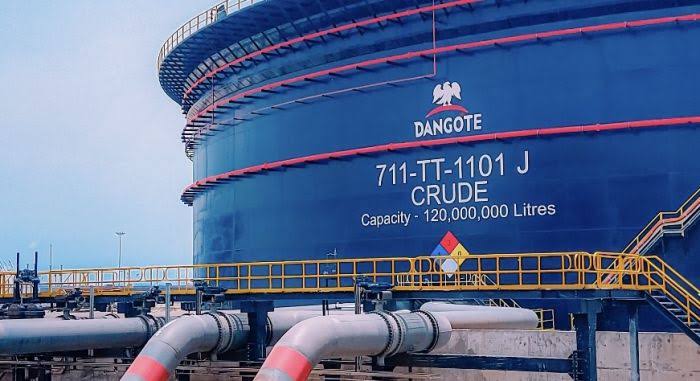
Nigeria has reached a historic milestone in its downstream oil sector, emerging as a net exporter of petrol for the first time, largely driven by increased production from the Dangote Petroleum Refinery.
Industry data shows that the 650,000 barrels-per-day facility exported about 44,000 barrels per day (bpd) of petrol in March 2026, resulting in a surplus of roughly 3,000 bpd for the month.
The development marks a major turnaround for a country that has long relied heavily on imported refined petroleum products.
The shift from import to export reflects a structural transformation in Nigeria’s oil trade, with positive implications for foreign exchange earnings, energy security, and regional fuel supply dynamics.
In a significant expansion of its export reach, the refinery also delivered a 317,000-barrel cargo of petrol to Mozambique—its first shipment to East Africa. Another consignment is expected to be delivered to Beira in April, underscoring growing regional demand as buyers seek alternatives to Middle Eastern supplies amid ongoing geopolitical tensions.
Data from Kpler further revealed that Nigeria’s petrol imports plunged to 41,000 bpd in March, the lowest level on record, highlighting the rapid displacement of imports by local refining.
It would be recalled that in September last year, President of the Dangote Group, Aliko Dangote, projected that the refinery would turn Nigeria into a net exporter of fuel while ending decades of fuel scarcity.
“We have been battling fuel queues since 1975, but today Nigerians are witnessing a new era,” he said.

Reps Open Fresh Probe into N1.12tn Farm Scheme, Summon Insurers Over Gaps

Reps Back N248bn Lifeline for Power Firms, Unveil Debt Shake-Up Plan

Kalu Drives Global Backing for New Post-Conflict Peace Blueprint at IPU Assembly




-

 News18 hours ago
PDP approved appointment of Wike as minister – APC
-

 News18 hours ago
See Black Market Dollar To Naira Exchange Rate Today 16th April 2026
-
 News18 hours ago
BBC to fire 2,000 workers to make £500m savings
-

 Opinion14 hours ago
DIAMOND DISTINCTIONS FOR THE PEOPLE’S MAN; DR. CHIDO ONUMAH
-

 News13 hours ago
BREAKING : Gunmen kidnap JAMB candidates, others in Benue
-

 News19 hours ago
Terrorists plotting massive attacks on Abuja International Airport, Correctional Centres, military detention centre — AP Report
-

 News17 hours ago
Presidency mocks Atiku over 2027 ambition, calls him serial loser, advises Obi to leave ADC
-

 News13 hours ago
Wike: Atiku a serial contestant, loser, he will still contest in 2031 (PHOTO)
You must be logged in to post a comment Login