Connect with us

Foreign

Trump administration seeks legislative backing to terminate vaccine funding

Published

on

ADVERTISEMENT
Zoom Ad
ADVERTISEMENT
Zoom Ad

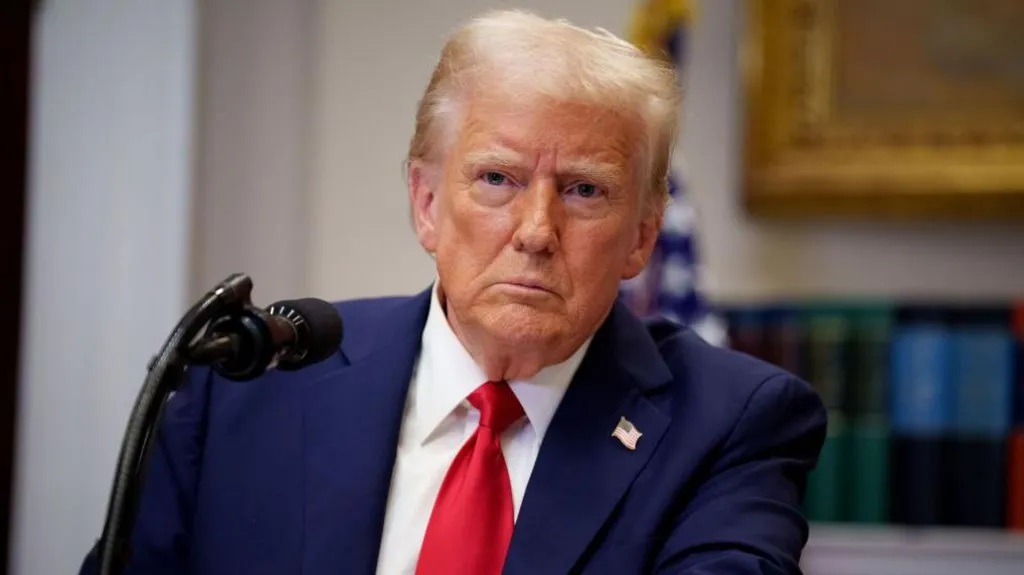
The President Donald Trump administration plans to terminate the United States’ financial support for the Global Alliance for Vaccine and Immunisation, the organization that has helped purchase critical vaccines for children in developing countries.


Some other programs terminated is funding for the United Nations Food and Agriculture Organization, which conducts surveillance for diseases that can be transmitted from animals to humans, including bird flu, in 49 countries. Some major programs to track and fight malaria, one of the world’s top killers of children, have also been ended.

Those decisions are included in a 281-page spreadsheet that the United States Agency for International Development sent to the US Congress, listing the foreign aid projects it plans to continue and to terminate.

The New York Times obtained a copy of the spreadsheet and other documents describing the plans.

Advertisement

For many years, developing countries have relied on GAVI support to combat malaria.

Gavi is estimated to have saved the lives of 19 million children since it was set up 25 years ago. The United States contributes 13 percent of its budget.

The terminated grant to Gavi was worth $2.6 billion through 2030.

By Gavi’s own estimate, the loss of U.S. support may mean 75 million children do not receive routine vaccinations in the next five years, with more than 1.2 million children dying as a result.

Advertisement

The U.S. has been among the top donors to the organization since its creation, and became the largest during the Covid-19 pandemic.

Gavi was counting on a pledge made last year by President Joseph R. Biden Jr. for its next funding cycle.

New vaccines with the promise to save millions of lives in low-income countries, such as one to protect children from severe malaria and another to protect teenage girls against the virus that causes cervical cancer, have recently become available, and Gavi was expanding the portfolio of support it could give those countries.

The loss of U.S. funds may set back the organization’s ability to continue to provide its basic range of services — such as immunization for measles and polio — to a growing population of children in the poorest countries, let alone expand to include new vaccines.

Advertisement

While European countries have historically provided significant funding, many are now reducing foreign aid spending as they grapple with the change in U.S. policy on Ukraine and the U.S. demand that they increase their defense spending.

Japan, another major Gavi donor, is struggling with a depreciating currency.

GAVI’s chief executive, Dr. Sania Nishtar said that she hoped the Trump administration would reconsider the decision to end its support. “Gavi’s work keeps people everywhere, including Americans, safe. In addition to protecting individual children, vaccination reduces the possibility of large outbreaks. The organization maintains global stockpiles for vaccines against diseases such as Ebola and cholera, deploying them in rapid response efforts for epidemics,” she said.

Gavi’s structure requires countries to pay part of the cost of vaccines, with their share growing as income levels rise; middle-income countries are weaned from support.

Advertisement

The Trump administration, according to the letter has decided to continue 898 U.S. Agency for International Development Awards and to end 5,341.

It says the remaining programs are worth up to $78 billion.

But only $8.3 billion of that is unobligated funds — money still available to disburse, because the amount covers awards that run several years into the future.

The figure shows a massive reduction in the $40 billion that U.S.A.I.D. used to spend annually.

Advertisement

The administration has decided to continue some key grants for medications to treat H.I.V. and tuberculosis, and food aid to countries facing civil wars and natural disasters.

The cover letter details the skeletal remains of U.S.A.I.D. after the cuts, with most of its funding eliminated, and only 869 of more than 6,000 employees still on active duty.

The memo says that 869 U.S.A.I.D. personnel were working as of last Friday, while 3,848 were on administrative leave and 1,602 are in the process of being laid off.

Of 300 probationary employees who were initially fired, 270 have returned to work following a court order prohibiting their dismissal.

Advertisement

A spokesperson for the State Department, which now runs what is left of U.S.A.I.D., confirmed the terminations on the list were accurate and said that “each award terminated was reviewed individually for alignment with agency and administration priorities, and terminations were executed where Secretary Rubio determined the award was inconsistent with the national interest or agency policy priorities.”

Although the administration has repeatedly said publicly that its foreign assistance review process has been concluded, the information in the documents suggests that there is still some fluidity in which programs will survive.

Staff members of one major malaria program that was terminated weeks ago, and which appears on the list of canceled projects sent to Congress, for example, were informed on Monday that it is being restored.

Nevertheless, cuts to malaria response are deep. While awards that fund the bulk purchase of bednets and malaria treatments have been preserved, many of the programs to deliver these and other malaria control efforts in individual countries such as Cameroon and Tanzania — among the most affected in the world — have been terminated.

Advertisement

Some organizations with awards that have not been officially canceled have received no funds for more than two months, and have folded. Without them, there is no one to take treatments from ports to local clinics, or deliver them to children.

Continue Reading
Advertisement
Click to comment

Warning: Undefined variable $user_ID in /home/naijuinz/public_html/wp-content/themes/zox-news/comments.php on line 49

You must be logged in to post a comment Login

Leave a Reply

Foreign

Death Toll From Venezuela Quakes Jumps To 188, Over 1,500 Injured

Published

on

By

ADVERTISEMENT
Zoom Ad
ADVERTISEMENT
Zoom Ad

The death toll from Venezuela’s devastating earthquakes has risen to at least 188, with 971 people injured, National Assembly chief Jorge Rodriguez, said on Thursday.

Interim president Delcy Rodriguez had earlier said that round 30 aftershocks have been recorded following the two strongest quakes on Wednesday.

Authorities initially reported 32 dead and more than 700 injured.

The earthquakes of magnitude 7.2 and 7.5 struck the same area of Venezuela on Wednesday, according to the United States Geological Survey (USGS), causing buildings in the capital to crumble and forcing the closure of the country’s main airport.

Advertisement

US President Donald Trump said late Wednesday that “the two major earthquakes that just hit the great people of Venezuela are both massive in scale and have left a devastating number of deaths.”

“The U.S.A. stands ready, willing, and able to help! I have instructed all agencies of our government to get ready to move quickly,” the American president wrote on his Truth Social platform.

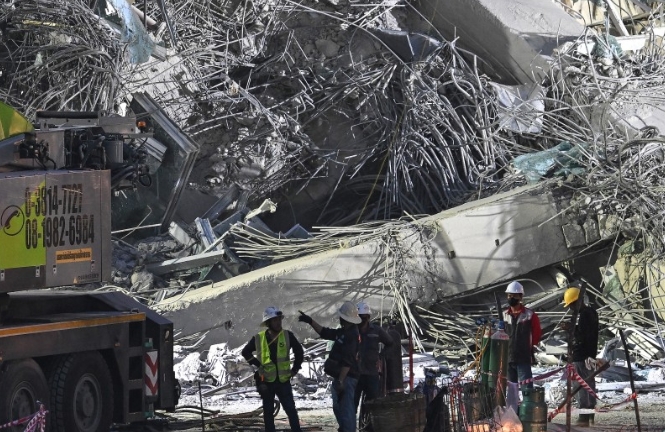
An AFP journalist saw a 22-story building completely destroyed in the capital’s Altamira neighborhood, where people cried out relatives’ names as volunteers climbed over the rubble.

“We need flashlights,” one of them said.

Advertisement

The first quake, with an epicenter 21 kilometers (13 miles) west of the coastal town of Moron, occurred at 2204 GMT, USGS said. Within a minute, a 7.5-magnitude quake struck about 45 kilometers away.

“This earthquake was the second event in a doublet. This magnitude 7.5 mainshock was preceded by 39 seconds by a 7.2 foreshock,” USGS said.

Continue Reading

Foreign

US Targets Alleged ISIS Funding Network, Names Nigerian

Published

on

By

ADVERTISEMENT
Zoom Ad
ADVERTISEMENT
Zoom Ad

The United States government has identified a Nigerian national among several individuals and organisations accused of facilitating financial operations for the Islamic State of Iraq and Syria (ISIS), as part of a broader crackdown on the group’s global funding network.

In a statement issued by the U.S. Department of State, officials said the action targeted three individuals and six entities operating across Europe, the Middle East, and West Africa, who are allegedly involved in moving funds used to support ISIS activities.

According to the department, the measures are aimed at disrupting the terrorist group’s ability to finance attacks and sustain its international operations.

“Under the leadership of President Trump, the United States is dismantling ISIS’s ability to finance terrorism around the world. We are cutting off the financial lifelines from around the world that enable ISIS to fund attacks, support its regional affiliates, and threaten civilians, including religious minorities,” spokesperson Thomas Pigott said.

Advertisement

The statement noted that the network spans France, Syria, Türkiye, and Nigeria, and is believed to have facilitated the cross-border movement of funds linked to the extremist group.

Officials alleged that the designated individuals include a France-based facilitator connected to explosives-related information shared with ISIS supporters, a Syria-based operator who reportedly used cryptocurrency to transfer funds internationally, and a Nigeria-based facilitator whose money exchange businesses were allegedly used as channels for ISIS financing.

The U.S. government said the designations are part of ongoing efforts to dismantle financial pipelines supporting terrorist organisations and to restrict their global operations.

Advertisement
Continue Reading

Foreign

Seven PMs In 10 Years: Britain’s Decade Of ‘Change’

Published

on

By

ADVERTISEMENT
Zoom Ad
ADVERTISEMENT
Zoom Ad

Britain will have its seventh prime minister in 10 years after Labour leader Keir Starmer was ousted on Monday by his own party.

The party’s self-inflicted wound was a trend set by the Conservatives when they were in office.

Starmer announced his resignation on Monday following months of nose-diving poll ratings and manoeuvring by his own MPs.


Advertisement
Britain’s Prime Minister Keir Starmer makes a statement on his future outside 10 Downing Street on the morning of June 22, 2026, in London. Photo by HENRY NICHOLLS / AFP

Veteran Labour politician Andy Burnham has confirmed he will seek to replace him.

The main opposition Tories went through five prime ministers between 2016 and July 2024 when Starmer swept to power in a landslide general election victory.

The rapid turnover at the top prompted Starmer — before he became prime minister — to call for an end to the “chaos” of chopping and changing leaders.

After less than two years, Starmer has now met a similar fate himself.

Here’s what happened to his predecessors:

Advertisement

David Cameron (May 2010 to July 2016)

David Cameron, Libya, UK
Former UK Prime Minister, David Cameron

Britain’s decision to leave the European Union ended Cameron’s second term as prime minister.

After the country voted to leave in a June 2016 referendum, Cameron, who had campaigned to remain in the bloc, resigned.

Theresa May (July 2016 to July 2019)

Britain’s Prime Minister Theresa May announces her resignation outside 10 Downing street in central London on May 24, 2019. Beleaguered British Prime Minister Theresa May announced on Friday that she will resign on June 7, 2019 following a Conservative Party mutiny over her remaining in power.
Tolga AKMEN / AFP

May took over amid the fallout from the Brexit referendum after a long tenure in the notoriously difficult post of interior minister.

She called a snap election the following year to strengthen her hand in Brexit negotiations, but the move backfired when her party emerged as the biggest in parliament but without a majority.

Advertisement

Unable to get her Brexit deal through parliament, the Conservatives suffered a drubbing in European Parliament elections in May 2019, leading to her resignation.


Boris Johnson (July 2019 to September 2022)

A video grab from footage broadcast by the UK Covid-19 Inquiry shows Britain’s former Prime Minister Boris Johnson speaking at the UK Covid-19 Inquiry, in west London, on December 6, 2023 to give evidence. (Photo by UK Covid-19 Inquiry / AFP)

Johnson, a maverick politician famed for making a career out of breaking the rules, had to navigate the coronavirus pandemic and Britain’s departure from the European Union.

He led the Conservatives to victory in the December 2019 snap general election.

Advertisement

But weakened by scandals, he was eventually forced to step down following a cascade of resignations by ministers and aides.

Liz Truss (September 2022 to October 2022)

Britain’s Prime Minister Liz Truss delivers a speech outside of 10 Downing Street in central London on October 20, 2022 to announce her resignation. (Photo by Daniel LEAL / AFP)

Truss was prime minister for just 49 days, the shortest on record, before being ousted over her disastrous tax-cutting mini-budget.

Her economic agenda spooked the markets and took the UK to the brink of financial meltdown, losing her the support of her own party.

Rishi Sunak (October 2022 to July 2024)

Advertisement
Britain’s outgoing Prime Minister and leader of the Conservative party, Risihi Sunak, delivers a statement after his general election defeat, outside 10 Downing Street in London on July 5, 2024, a day after Britain held a general election. (Photo by HENRY NICHOLLS / AFP)

Sunak was at the helm for 20 months before losing the 2024 general election to Starmer, bringing to an end 14 years of Conservative rule.

He brought some stability following the Truss debacle but failed to stop bitter Tory infighting.

The privately wealthy former financier ultimately failed to connect with regular voters struggling with a cost-of-living crisis.

AFP


Advertisement

Continue Reading

Trending

Copyright © 2024 Naija Blitz News