Connect with us

Foreign

Pope Francis Death: Italy, Argentina 25 other Countries Declared National Mourning (Full List)

Published

on

ADVERTISEMENT
Zoom Ad
ADVERTISEMENT
Zoom Ad

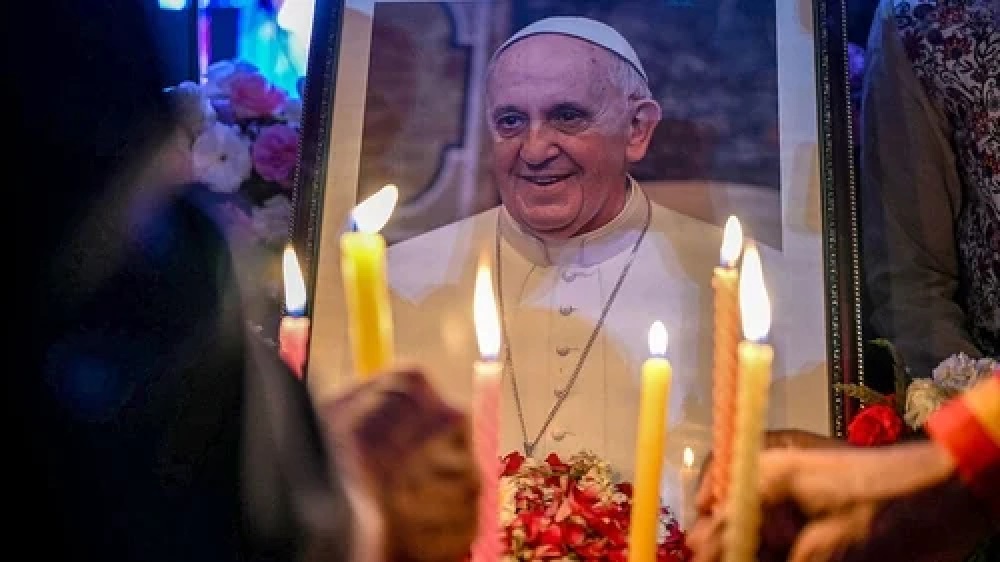
The world stood still on April 21, 2025, as the Vatican officially confirmed the death of Pope Francis, aged 88. His passing marked the end of a historic papacy and triggered an outpouring of grief across continents. Numerous nations, especially those with significant Catholic populations, declared national mourning periods to honor the pontiff’s life, spiritual leadership, and global influence.


From Latin America to Europe, Asia, and Africa, countries initiated solemn observances, lowered national flags to half-mast, and held public commemorations. This article highlights the full list of countries that declared national mourning in memory of Pope Francis.

Why Pope Francis’s Death Resonated Globally

Pope Francis, born Jorge Mario Bergoglio in Buenos Aires, Argentina, was the first Jesuit and the first Latin American pope in the history of the Catholic Church. Since his election in 2013, he championed issues such as poverty alleviation, climate action, interfaith dialogue, and social justice, making him a spiritual leader not just for Catholics, but for people of all faiths.

Advertisement

His legacy transcended religious boundaries, prompting state-led tributes even in non-Catholic majority nations.

List of Countries That Declared National Mourning for Pope Francis
Below is a country-by-country breakdown of declared national mourning periods:

Country Mourning Period Remarks
Argentina 7 days (Apr 22–28) Pope Francis’s homeland; nationwide memorial services held.
Brazil 7 days Churches and public buildings observed solemn tributes.
East Timor 7 days Predominantly Catholic nation with extensive observances.
Italy 5 days (Apr 21–26) Vatican’s host country; held massive state ceremonies.
Costa Rica 4 days Flags at half-mast; public prayers offered.
Spain 3 days Public processions and masses conducted.
India 3 days Interfaith tributes and official condolences shared.
Philippines 3 days Nation-wide tributes; churches filled with mourners.
Poland 3 days Mourning coincided with the Pope’s funeral.
Portugal 3 days Official services in Lisbon and major cities.
Lebanon 3 days Christian and Muslim leaders offered joint prayers.
Venezuela 3 days Government-organized memorials.
Chile 3 days National flags at half-mast; televised funeral services.
Cuba 3 days Nationwide mourning with Catholic mass ceremonies.
Guatemala 3 days Memorial services across Catholic institutions.
Panama 3 days Official decree and observances.
Dominican Republic 3 days Nationwide religious services held.
Paraguay 3 days Church bells rang across the country in honor.
Peru 3 days Large public gatherings held for prayers.
Ecuador 3 days Tributes from religious and government figures.
Puerto Rico 3 days Government-declared mourning period observed.
Malta 1 day (Apr 26) Marked during the Pope’s funeral.
Croatia 1 day Flags lowered; public messages of condolence shared.
Hungary 1 day National mourning aligned with funeral rites.
Uruguay 1 day Ceremonies held in Catholic schools and churches.
Cape Verde 1 day Special services held across Catholic communities.

Global Religious and Political Reactions

World leaders, religious figures, and citizens across continents expressed grief and paid glowing tributes to Pope Francis’s legacy. The United Nations, European Union, and African Union all issued statements acknowledging his contributions to world peace, interreligious harmony, and humanitarian service.

Advertisement

In cities like Manila, Rome, Buenos Aires, and Lagos, candlelight vigils were held. Cathedrals rang their bells in synchronized tribute, while mosques and temples also joined in interfaith memorial services.

Pope Francis’s death has left a void in the global religious and moral conscience. His efforts to promote compassion, inclusiveness, and humility in leadership will continue to inspire generations to come.

While the Vatican prepares for a papal conclave to elect a successor, the world continues to reflect on the lessons and legacy of a pope who bridged faith and humanity in unprecedented ways.

The widespread declaration of national mourning in countries around the world highlights just how impactful Pope Francis was—not only to Catholics but to people of all beliefs. His death marks the end of a deeply influential era in the Church’s history.

Advertisement

May his soul rest in peace.

Continue Reading
Advertisement
Click to comment

You must be logged in to post a comment Login

Leave a Reply

Foreign

Two Untrained Nigerians Killed While Fighting For Russia in Eastern Ukraine

Published

on

By

ADVERTISEMENT
Zoom Ad
ADVERTISEMENT
Zoom Ad

‎Ukrainian military intelligence has officially identified two Nigerian men whose bodies were recovered in the Luhansk region of eastern Ukraine after they were killed while serving with Russian forces, authorities said.

‎According to Ukraine’s Main Directorate of Intelligence, the deceased were Hamzat Kazeen Kolawole, 42, and Mbah Stephen Udoka, 38, both of whom had signed contracts with the Russian Armed Forces’ 423rd Guards Motor Rifle Regiment in the second half of 2025.

‎The intelligence statement said neither man received formal military training before being sent to the front lines, with Udoka deployed only days after signing his contract.

‎Their bodies were discovered in late November 2025 following a drone strike that hit their unit during an attempt to advance on Ukrainian positions near Luhansk.

‎Ukraine’s defence officials have warned foreign nationals against travelling to Russia or taking up employment there, saying such trips carry a risk of being drawn into combat roles with little preparation.

‎Kolawole is survived by his wife and three children back in Nigeria, authorities noted.

‎The Russian invasion of Ukraine, which began in February 2022, has drawn international scrutiny not only for its humanitarian impact but also for recruitment practices involving foreign fighters on both sides of the conflict.

Continue Reading

Foreign

What Trump Plans To Do To US Soldiers Who Captured Venezuela President

Published

on

By

ADVERTISEMENT
Zoom Ad
ADVERTISEMENT
Zoom Ad

U.S. President Donald Trump is set to travel to Fort Bragg, North Carolina, to publicly commend the elite U.S. special operations forces responsible for the high-profile capture of Venezuelan President Nicolás Maduro earlier this year.

‎The visit will include time with service members and their families at one of the United States Army’s largest bases, the White House said, underscoring Trump’s effort to highlight the operation as a key achievement of his administration. The first lady, Melania Trump, will accompany him on the trip.

‎The Venezuelan leader and his wife, Cilia Flores, were detained in a dramatic early-January mission that saw U.S. special forces fly into Caracas under cover of darkness, overpowered defenses and seized Maduro from a fortified compound.

‎ Trump supporters have described the mission as a demonstration of American military capability.

‎Maduro is currently in U.S. custody, facing charges including drug trafficking. His next hearing is scheduled in New York federal court in March.

‎White House officials said Trump plans to use the Fort Bragg event to recognize what he calls the “heroic members” of the operation.

‎ The administration has promoted the raid as part of a broader strategy to counter narcotics and regional instability, though critics including some foreign governments have questioned the legality and long-term implications of U.S. actions in Venezuela.

‎International reactions continue to vary, with some allies viewing the operation as a setback for Venezuelan authoritarianism and others condemning it as a breach of sovereignty under international law.

Continue Reading

Foreign

Nigerian Bolt Driver Brutally Murdered In South Africa, Weeks Before Graduation

Published

on

By

ADVERTISEMENT
Zoom Ad
ADVERTISEMENT
Zoom Ad

A Nigerian e-hailing driver has been brutally murdered in South Africa, sparking renewed concerns over the safety of Nigerian migrants and African foreign nationals living in the country amid persistent reports of violent attacks.

The incident was first disclosed by CrimeInSA, a prominent South African crime-monitoring platform, in a post on X (formerly Twitter), where it revealed that the victim, identified as Isaac Satlat, was killed during a violent hijacking in Pretoria.

According to the platform, a dashboard camera captured the fatal attack on the 22-year-old driver, who worked as a driver on the Bolt e-hailing platform.

“A NIGERIAN E-HAILING DRIVER MURDERED IN PRETORIA,” CrimeInSA wrote, adding that “a dash cam captured the fatal attack of a 22 year old Nigerian e-hailing/Bolt driver Isaac Satlat in Pretoria. The young man was hijacked and strangled last night in Pretoria.”

Advertisement

The platform further disclosed that the attackers abandoned both the victim’s body and the vehicle several kilometres away from the crime scene.

“His body and the car were found some kilometers away in Moshongo, Attridgeville just outside Pretoria,” the post stated, referring to the township area of Attridgeville.

The killing has drawn outrage among Nigerians on social media, many of whom described the incident as another tragic example of the dangers faced by foreign nationals working in South Africa’s gig economy, particularly e-hailing drivers who often operate at night and in high-risk areas.

CrimeInSA noted that Satlat was not only working to support himself but was also pursuing his education, revealing that he was a student preparing for a major milestone.

Advertisement

“Satlant was a student and he was due to graduate next month and plans were underway for him to move to Canada to continue with his studies,” the statement added.

The development has once again highlighted long-standing tensions and recurring violent crimes affecting migrants in South Africa, where foreign workers — including Nigerians — have repeatedly raised concerns about targeted attacks, robberies and killings.

As of the time of filing this report, the South African police authorities have yet to issue an official public statement detailing arrests or identifying suspects linked to the killing.

Efforts to obtain comments from law enforcement officials were unsuccessful.

Advertisement

The murder has intensified calls from members of the Nigerian diaspora for stronger diplomatic engagement and improved protection measures for Nigerians living and working abroad, particularly those employed in high-risk sectors such as ride-hailing services.

Continue Reading

Trending

Copyright © 2024 Naija Blitz News