

Connect with us

News

Governor Otti Calls for Collective Action in Ongoing Constitution Review

Published

on

ADVERTISEMENT
Zoom Ad
ADVERTISEMENT
Zoom Ad


…say 31 additional states is a burden, warn on LG autonomy viability 
 
By Gloria Ikibah 

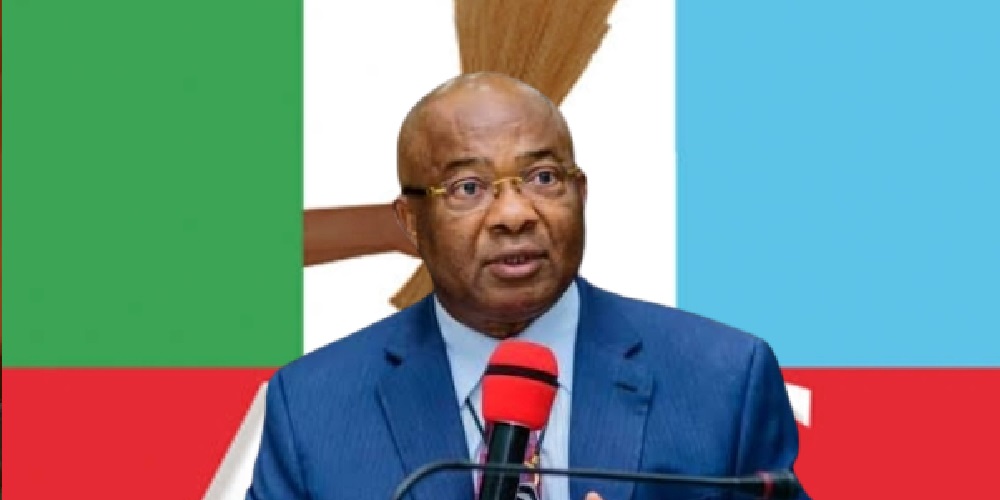
The Governor of Abia State, Dr. Alex Otti, has described the ongoing 2025 Constitution Review as a rare chance for Nigerians to critically examine the system and decide on reforms that can place the nation on the right path.

Speaking at the South-East Zonal Constitution Review for Abia and Imo States, held in Owerri on Saturday, Otti who was represented by his deputy, Ikechukwu Emetu stressed that building a better Nigeria is a shared responsibility.

According to the Governor, no matter our political affiliations or personal beliefs, this country belongs to all everyone and Nigeria cannot outsource the task of nation-building to others; as “it is ours to do.”

Advertisement

While admitting that Nigeria may not yet reflect the dreams of its citizens, Otti maintained that history has shown that no situation is beyond change. He urged Nigerians to shun cynicism, apathy, and distrust, insisting that meaningful transformation can only happen when people believe in the nation’s potential.

He said: “We must begin to see ourselves as a great people with a proud national heritage.
“I would share my thoughts on some of the key agenda for debates and considerations in the 2025 constitutional review process. As many in this auditorium may know, the positions I would be sharing today have since been documented in my writings and public engagements from the last decade so they are not entirely new ideas. 
 
“I have to, however, add that my personal views should not override the legitimate concerns of other stakeholders who also have a right to disagree or present alternative viewpoints. The most important thing is that all of us deserve to have a say in the process. Thankfully, the platform for that broad engagement has been presented to us through these public hearings.
 
“My first interest is the clamour for the creation of additional states. I am aware that proposals for the creation of 31 new states were received by the National Assembly prior to this time. While I respect the rights of those who believe that the creation of new states would address concerns of marginalisation and exclusion of some ethnic and religious groups in the current structure in some parts of the country.
 
“I am more concerned about the additional burden these proposals, if adopted, would add to the lean resources of the nation through the multiplication of administrative costs and further bloating of an oversized bureaucracy. Except we can magically find independent sources of financing the new states outside what currently exists, I do not share the optimism of those promoting the idea of adding new states to the current 36-state structure. 
 
“My recommendation would be the development of an inclusive governance model in the states, one that gives every major clan a say in the allocation of resources, a seat at the decision-making table and the structural leverage to advance their political and economic interests”.
 
Governor Otti urged Nigerians to be more concerned about improving the economic structure of the states, creating jobs for the young people outside the civil service and make the welfare of the common man a priority. 
 
According to him, the current system is too elite driven to be functional and that, it is high time ordinary people are placed at the centre of decision making.
 
On the creation of state police and related matters, Otti argue that the present realities in the land have made it a matter of urgent national priority. 
 
“The current exclusive federal policing system is largely inadequate and has exposed our people to a litany of vulnerabilities over the years. So, I would vote for the creation of State police but with a proviso that standards be clearly defined as it relates to leadership, relationship with federal and other sub-national policing structures, recruitments, accountability and respect for human rights”, he added.
 
The Governor also supported the creation of additional seats for women in the national and state assemblies saying that, his endorsement is total. 
 
He noted that, while it would guarantee the inclusion of women in the political process and giving them a say in shaping the character of the Nigerian governance architecture, Otti however said, just having women in our legislative assemblies would not achieve the desired impact unless a number of fundamental issues are holistically addressed. 
 
“the internal processes within the political parties have to be strengthened to make for the active participation of women in decision making. The ordinary women, not persons related or affiliated to powerful male party leaders, must be at the centre of the process. 
 
“If we are not careful, we may be creating new opening for men with vested interests to further entrench themselves in the system using proxies. If that happens, nothing in the real sense of it would change in the political fortunes of average Nigerian women”, he stated.
 
Speaking on the proposal to alter the provisions of the 1999 Constitution to establish the local government councils as a separate tier of government, he called for caution and a holistic appreciation of the broad implications of the proposal. 
 
“Like I argued with the creation of additional states, we must be mindful of further bloating an already-overfed bureaucracy. I may not be very correct but if I understand this proposal correctly, we may be looking at creating hundreds of new bureaucratic structures for the autonomous administration of the local councils. 
 
“The local government system as we know is statutorily responsible for the provision of primary healthcare; basic, adult and vocational education and similar functions that impact directly on the lives of the population at the grassroots. 
 
“Like I asked at the 18th Community of Practice Meeting of the Honourable Commissioners of Budget and Economic Planning in Umuahia last May, would it be financially prudent to have 774 or more universal basic education commissions and similar number of agencies managing primary health and human services for LGAs in the country? What are the implications for cost of governance, corruption and systemic abuses? 
 
“There may be need to think this through and make a choice between having new layers of administrative structures that further drain public resources through inflated overheads and creating a system that cuts down bureaucratic bottlenecks — guaranteeing that the larger chunk of public resources is channelled into the provision of social services”, Otti asserted.
 
The Governor also supported the proposal to make free and compulsory basic education a fundamental right of all citizens, saying that, it should not be debatable but to be adopted without much ado. 
 
“The proposal aligns perfectly with the 1948 Universal Declaration of Human Rights; the 1989 International Convention on Economic, Social and Cultural Rights; the 1989 Convention on the Rights of the Child; the 1981 African Charter on Human and Peoples’ Rights and the 1990 African Charter on the Rights and Welfare of the Child amongst other international conventions and agreements. 
 
“Beyond just making the right to basic education a fundamental right for our people and enshrining same in the Constitution, I think we need to pay more attention to education financing. Quality education does not come cheap and it is not just enough to ask everyone to go to school. Deliberate efforts must be made to fund education across the entire value chain. 
 
“We need to invest in teacher education with particular emphasis on training and retraining especially in the relevant fields of sciences, technology, engineering and mathematics. Our teachers must be trained and motivated to acquire relevant skills to be able to teach the pupils and students effectively and prepare them for the competition of the new global environment. 
 
“These teachers have to be well remunerated, their welfare prioritised and the environment where they work made conducive for the very important work that they do. So, in addition to making education compulsory and a fundamental right of citizens, we also have to make effective provisions for the statutory funding of the educational system, especially basic education.  
 
“Our target should not be to create a perfect constitution. While perfection would be the ideal thing to aspire to, the truth remains that we will do better by focusing on what is practical within the context of our democratic evolution, economic realities and social dynamics. What I think we should rather seek at this point is to build on the gains that have been made over the past 26 years since the present Constitution came into effect”, he stated.
 
He also acknowledged that, there are too many gaps and ambiguities in the 1999 Constitution that are being exploited by different stakeholder groups to advance interests that are not entirely altruistic in scope. 
 
“Even then, I am also cautious when blaming those who left the scene almost 30 years ago for the problems of today. My view is that we now have sufficient governance experience to determine what is not working and make changes as may be relevant from time to time. 
 
“I am aware that since 2010, the 1999 Constitution has undergone 5 epochs of alterations in response to demands for structural changes by Nigerians. Going through the whole 9 yards of constitution amendment at 5 times over a 15-year period speaks to our evolving desire to change our national experience by periodically tinkering with the Supreme Laws of the land. We must congratulate ourselves for not being afraid to test the system and brave the odds to make some much-needed changes”, otti said.
Continue Reading
Advertisement
Click to comment

Warning: Undefined variable $user_ID in /home/naijuinz/public_html/wp-content/themes/zox-news/comments.php on line 49

You must be logged in to post a comment Login

Leave a Reply

News

Tinubu government begins 2026 Tertiary Institutions National Laureate Programme

Published

on

ADVERTISEMENT
Zoom Ad
ADVERTISEMENT
Zoom Ad

● Institutions directed to Constitute Laureate Committees as Nigeria Begins Search for its Finest Academic Research

The Tertiary Institutions National Laureate Committee has formally announced the commencement of the 2026 National Laureate Programme, marking the inaugural edition of what is expected to become Nigeria’s foremost national platform for recognising outstanding student academic research, innovation and scholarly excellence across tertiary institutions.

The launch of the Programme signals a major milestone in the Federal Government’s commitment to promoting research excellence, strengthening the nation’s knowledge economy and placing scholarship at the centre of Nigeria’s development agenda.

The National Laureate Programme, inaugurated by the Federal Government under the leadership of the Honourable Minister of Education, Dr Tunji Alausa, CON, is designed to identify, evaluate, celebrate and reward exceptional undergraduate dissertations, master’s theses and doctoral research produced in accredited Nigerian tertiary institutions.

Advertisement

Supported by an annual research prize fund of ₦365 million, the Programme ranks among Nigeria’s most prestigious academic recognition initiatives and reflects the Federal Government’s determination to encourage original research, innovation and solutions capable of addressing national and global challenges.

Beyond recognising academic excellence, the Prize is intended to strengthen Nigeria’s research ecosystem by promoting innovation, encouraging the commercialisation of research outputs, supporting industrial development, inspiring future researchers and establishing scholarship as a strategic national asset.

As part of the commencement of the 2026 edition, all accredited universities, polytechnics, colleges of education, monotechnics, military institutions and other eligible tertiary institutions are requested to immediately commence internal preparations for participation.

Every eligible institution is expected to constitute an Institutional Laureate Selection Committee made up of experienced academics with proven research records, unquestionable integrity and the capacity to conduct objective evaluations in accordance with the approved National Laureate Programme framework.

Advertisement

Institutions are also required to formally submit the names and designations of the Chairman, Secretary and members of the Committee, after which the Committee will coordinate the institution’s participation in the Programme.

Following the institutional evaluation process, each participating institution is expected to nominate up to eighteen outstanding research works, comprising six undergraduate dissertations, six master’s theses, and six doctoral theses in the case of universities, or their equivalents for polytechnics, monotechnics, colleges of education, and other tertiary institutions, drawn from the six approved thematic areas, such as Agriculture, Teaching Innovation, Medicine and Health Sciences, Engineering, Science, and Technology, Law, Arts and Social Sciences.

The Programme offers Star Prizes of ₦35 million for the undergraduate category, ₦50 million for the master’s category, and ₦100 million for the doctoral category.

In addition, 15 Thematic Laureate Awards, valued at ₦12 million each, will be presented to other outstanding winners.

Advertisement

Institutions are reminded that every nominated research work must first be formally submitted as required under the National Policy for the Nigeria Education Repository and Databank (NERD) and assigned a valid National Document Number (NDN) before it can be considered for the National Laureate Programme.

This requirement reinforces the Federal Government’s commitment to research integrity, proper documentation and the preservation of Nigeria’s academic output within the national knowledge infrastructure.

The Committee further reminds participating institutions that the National Laureate Programme operates a rigorous three-tier evaluation system, comprising Institutional, Regional, also referred to as Zonal, and National assessments.

This multi-layered process has been designed to guarantee transparency, fairness, objectivity and merit in the selection of the country’s finest academic research.

Advertisement

Institutions are therefore encouraged to conduct their internal assessments with the highest standards of professionalism and impartiality, recognising that only the very best research works will progress through the successive stages of evaluation.

The management of every participating institution is responsible for constituting its Institutional Laureate Selection Committee in accordance with the approved guidelines. Once constituted, the institution’s approved NERD Focal Officer (NFO) is required to designate the Committee members through NFO dashboard on NERD.

This formal designation grants authorised members secure access to make entries, evaluate submissions and digitally manage the institution’s participation on the national Laureate Dashboard throughout the Programme.

The National Laureate Committee also calls on Nigerian professional bodies and associations to play an active role in safeguarding the integrity of the Programme by nominating distinguished scholars and subject experts for appointment into the Regional Laureate Selection Committees across the six geopolitical zones of the Federation.

Advertisement

Professional bodies representing agriculture, science, engineering and technology, medicine, law, arts and social sciences, teaching, and related disciplines are encouraged to submit nominations of suitably qualified experts with established records of scholarship, peer review, integrity and professional leadership.

Those appointed will participate in the independent regional evaluation of research submissions before the national assessment. All nominations will undergo rigorous screening based on merit, experience, integrity, diversity and conflict of interest requirements to ensure that the Programme maintains the highest standards of credibility and academic excellence.

Institutions and professional bodies are advised to conclude the selection of committee members and subject matter experts by 15 August 2026 while the submission of institutional entries will continue until the 31st of August 2026.

It noted that submissions would include mandatory digital transmission as provided in the guideline on the National Laureate portal.

Advertisement

Describing the Programme as a landmark national investment in intellectual capital, the Chairman of the National Laureate Committee, Emeritus Professor Abubakar S. Sambo (OON), said the National Laureate Programme was designed to elevate academic excellence to national prominence, encourage world-class research, inspire innovation and recognise scholars whose work has the potential to transform lives, industries and the future of Nigeria.

He encouraged every eligible institution and every relevant professional association to participate actively in ensuring the success of the inaugural edition of the Programme.

Further information, including detailed guidelines, committee manuals and application procedures, is available on the National Laureate Programme website at www.nationalaureate.ng.

Additional guidance may also be obtained through the Committee Guide and the Application Guide available on the website.

Advertisement

Issued by:
Ita Ekpenyong
Spokesperson
National Laureate Committee

Continue Reading

News

Troops rescue 34 abductees, nab ISWAP informant, recover arms

Published

on

ADVERTISEMENT
Zoom Ad
ADVERTISEMENT
Zoom Ad

Troops of the Nigerian Army have, in the last 24 hours, rescued 34 kidnap victims, apprehended suspected ISWAP informants and recovered arms and ammunition in coordinated operations nationwide.

This is contained in an operational report made available to the News Agency of Nigeria (NAN) on Sunday.

The report said that troops of Operation HADIN KAI rescued 31 kidnap victims from terrorists along the Buratai-Kamuya road in Biu Local Government Area of Borno.

It said the rescue followed a swift response after troops of 135 Special Forces Battalion detected ISWAP/JAS terrorists abducting civilians from four vehicles through CCTV surveillance.

Advertisement

According to the report, troops immediately deployed a quick reaction force, engaged the terrorists and forced them to abandon the victims and flee, with one motorcycle left behind.

“In another operation, troops of 145 Battalion conducted a fighting patrol to the Turoh general area of Damasak in Mobbar Local Government Area.

“The terrorists reportedly fled on sighting the troops, leaving behind two motorcycles and illicit drugs recovered during exploitation of the area.

“Also, troops of 232 Battalion Tactical apprehended a suspected ISWAP informant at Garaha Market in Hong Local Government Area of Adamawa,” it said.

Advertisement

In the North-West, the report revealed that troops of Operation FANSAN YAMMA engaged terrorists moving with rustled cattle in Tsafe Local Government Area of Zamfara.

It added that the troops’ superior firepower forced the terrorists to withdraw in disarray during the encounter.

The report also revealed that troops of Operation MESA rescued a kidnapped woman and her two children along the old Obajana-Jakura-Tajimi road in Lokoja Local Government Area of Kogi.

According to the report, preliminary investigation revealed that the victims were abducted on July 29 from a Ruga settlement in the Gada-Biyu area of the same local government.

Advertisement

“In Plateau State, troops of Operation Enduring Peace responded to reports of an attack on a herder in Bassa Local Government Area.

“The assailants had fled before the troops arrived, while the deceased and recovered cattle were handed over to the victim’s family,” it added.

In the South-East, the report said the troops of Operation UDO KA recorded a major breakthrough with the arrest of three suspected terrorists linked to the ambush of troops in Imo on May 4.

It added that the operation, conducted in Delta and Imo states, followed intelligence obtained from earlier arrested suspects.

Advertisement

According to the report, troops recovered four AK-47 rifles, one FN rifle, a pistol, 11 AK-47 magazines, two FN magazines, 239 rounds of assorted ammunition, a fragmentation jacket and other military items from terrorist camps.

“The recovered weapons included rifles earlier carted away during the May ambush on troops, while further exploitation led to the discovery of another terrorist camp containing additional arms and ammunition,” it said.

Continue Reading

News

Joint military task force rescue kidnapped Lt Col, civilian after 10-day search operation

Published

on

ADVERTISEMENT
Zoom Ad
ADVERTISEMENT
Zoom Ad

A joint military task force has rescued a senior Nigerian Army officer, Lt. Col. Ofor Amobi, and a civilian, Mr. Ikechukwu Onwuanra, after an intensive 10-day search-and-rescue operation across forests and communities in Enugu State.

This was contained in a military operational report made available to the News Agency of Nigeria (NAN) on Saturday, August 1, 2026 in Abuja.

The breakthrough came in the early hours of Saturday following sustained operations by troops of Sector 1, Operation UDO KA (OPUK).

The search mission involved personnel of the 82 Division Garrison, 103 Battalion (Rear), the Nigerian Navy Special Boat Service (NN SBS), and the 197 Special Forces Battalion, operating under the leadership of the Commander, 82 Division Garrison, with support from the Air Component.

Advertisement

According to the report, between 6:00 p.m. on July 31 and 6:00 a.m. on August 1, the joint troops continued search operations using actionable intelligence across Inyi, Awlaw and Akpugo-Eze forests and adjoining communities in Oji River Local Government Area of Enugu State.News

At about 2:00 a.m., the Divisional Police Officer (DPO) of Inyi Division alerted the troops to the suspected location of the kidnapped victims.

The troops immediately mobilised and launched a fighting patrol into the area, where they discovered Lt. Col. Amobi and Mr. Onwuanra abandoned at the edge of a forest. The civilian was found with a gunshot wound.

The victims were successfully rescued and evacuated to Inyi before being moved to the 82 Division Medical Hospital for medical treatment and comprehensive evaluation.

Advertisement

During preliminary debriefing, the victims disclosed that they had been blindfolded shortly after their abduction and transported to an unknown location.

They said they were later abandoned in a forest around the Enugu–Anambra border as the kidnappers came under sustained operational pressure.

The military attributed the successful rescue to the relentless pressure mounted by the joint force, supported by the Air Component, which maintained continuous dominance of the suspected hideouts and denied the abductors freedom of movement throughout the 10-day operation.

The sustained search-and-rescue mission ultimately forced the kidnappers to abandon the captives and flee.

Advertisement

Further investigations and follow-up operations are ongoing to identify, track and apprehend those responsible for the abduction.

Continue Reading

Trending

Copyright © 2024 Naija Blitz News