News
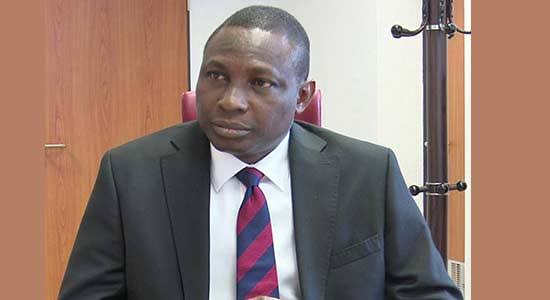
Senate screens new INEC chair Amupitan today
- /home/naijuinz/public_html/wp-content/plugins/mvp-social-buttons/mvp-social-buttons.php on line 27
https://naijablitznews.com/wp-content/uploads/2025/10/Prof-Joash-Amupitan.jpeg&description=Senate screens new INEC chair Amupitan today', 'pinterestShare', 'width=750,height=350'); return false;" title="Pin This Post">
- Share
- Tweet /home/naijuinz/public_html/wp-content/plugins/mvp-social-buttons/mvp-social-buttons.php on line 72
https://naijablitznews.com/wp-content/uploads/2025/10/Prof-Joash-Amupitan.jpeg&description=Senate screens new INEC chair Amupitan today', 'pinterestShare', 'width=750,height=350'); return false;" title="Pin This Post">
The Senate will today (Thursday) screen Prof. Joash Ojo Amupitan for the position of Chairman of the Independent National Electoral Commission.

The announcement was contained in a circular issued on Wednesday by the Director of Information for the Senate, Bullah Audu Bi-Allah, and made available to journalists in Abuja.
The development comes barely 24 hours after President Bola Tinubu’s letter seeking the speedy confirmation of Amupitan was read on the Senate floor by the President of the Senate, Godswill Akpabio.

The circular read in part: “The Office of the Secretary, Research and Information wishes to notify members of the press and the general public that the Senate will on Thursday, 16th October, 2025, conduct the screening of the nominee of President Bola Tinubu, Prof. Joash Ojo Amupitan, as INEC Chairman.
“The exercise is scheduled to hold at the Senate Chamber, National Assembly Complex. Members of the Senate Press Corps are kindly requested to provide their usual media coverage and support to ensure adequate dissemination of information to the public. Similarly, television stations are expected to extend the usual courtesies of providing live coverage of the event.”
Amupitan’s nomination, which followed last week’s endorsement by the National Council of State, marks a significant transition for the electoral body following the exit of Prof. Mahmood Yakubu after a decade at the helm of INEC.
In his letter to the Senate, Tinubu stated that the appointment was made “in line with Section 154 (1) of the 1999 Constitution (as amended)” and urged lawmakers to grant it their “usual expeditious consideration.”
“I am pleased to present for confirmation by the Senate the appointment of Professor Joash Amupitan, Senior Advocate of Nigeria, as Chairman of the Independent National Electoral Commission,” the President wrote.
Amupitan’s nomination comes at a politically sensitive time, with renewed debates over INEC’s independence and credibility following contentious post-election reviews.
While the Presidency described him as “an apolitical figure of impeccable integrity,” opposition parties and civil society groups have urged the Senate to ensure a transparent and rigorous confirmation process.
Today’s screening is expected to be closely watched nationwide, as it will set the tone for electoral reforms and test the administration’s commitment to credible polls ahead of the 2027 general elections.
Meanwhile, the Northern Nigeria Minorities Group has warned against attempts by individuals and interest groups to ethnicise Amupitan’s appointment.
In a strongly worded statement issued in Kaduna on Tuesday and signed by its Convener, Chief Jacob Edi, the group expressed concern over what it described as “divisive commentaries and social media tirades” questioning President Tinubu’s choice of the Kogi-born scholar.
Edi noted that Amupitan, an indigene of the Okun ethnic group in Kogi State, represents one of the minority nationalities in northern Nigeria and that his appointment should be celebrated rather than politicised.
“We view with consternation the ongoing attempts by certain individuals and interest groups to ethnicise the nomination of Professor Joash Ojo Amupitan, SAN, as Chairman of the Independent National Electoral Commission,” Edi said.
“For the avoidance of doubt, Professor Amupitan is an Okun man from Kogi State, one of the minority ethnic nationalities in Northern Nigeria. There are 19 states in the North, each richly diverse and unique, none superior to another by tribe, tongue, or faith.”
He expressed concern that “some self-styled northern voices” were portraying the President’s decision as an act of ethnic preference, describing such a narrative as “false, dangerous, and inimical to national unity.”
Edi, who also holds the title of Kakaki Basanghe, noted that this is the first time in 65 years—since the establishment of a statutory electoral commission in 1959—that someone from a northern minority group has been appointed to lead the nation’s electoral body.
“In all these decades, no northern minority group has ever questioned the decisions of successive Heads of State or Presidents to appoint individuals they felt comfortable working with, even when the North-West and North-East held the position consecutively for 15 years,” the statement added.
The NNMG urged Nigerians to recognise northern minorities as equal stakeholders in the Nigerian project and to desist from questioning their appointments to national offices.
Edi lamented that the “unfortunate trend” of delegitimising northern minority appointments began during the administration of former President Olusegun Obasanjo, when such appointments were derisively dismissed as “not northern enough.”
“The current ethnicisation of Professor Amupitan’s appointment is a direct continuation of that ugly and retrogressive trend, and it must stop,” he declared.
The group stressed that the North should not be defined by ethnicity but by inclusiveness and diversity, warning that those peddling divisive narratives were “the real enemies of national unity and progress.”
It further outlined four key points, asserting that the backlash over Amupitan’s appointment exposes a long-standing prejudice against northern minorities.
“This jejune narrative underscores our growing concern that some of our northern colleagues continue to perceive northern minorities merely as fillers of demography, unworthy of the privileges and recognition that come with our place in the federation,” it stated.
“Such thinking is antiquated, divisive, and inimical to the spirit of modern governance.”
According to the NNMG, 65 years after independence, Nigeria should be guided by competence, integrity, and capacity rather than ethnic considerations.
“The appointment of Professor Amupitan should be celebrated as a bold step toward inclusivity, equity, and meritocracy. These are values that must be internalised if we are to strengthen our democracy,” the statement added.
While commending President Tinubu for “recognising the diversity of the North,” the group said the President deserves credit for giving all constituent groups in the region a sense of belonging through his recent appointments.
Edi cautioned that further attempts to polarise the country along ethnic or sectional lines would only undermine democratic development.
“We urge political actors, commentators, and citizens alike to rise above petty identity politics and focus on building institutions that work, irrespective of who heads them. The time for ethnic arithmetic is over. The era of competence, fairness, and national responsibility must begin in earnest,” he said.
The group also maintained that northern minorities play a crucial role in stabilising the Nigerian federation, noting that collectively they represent “the real majority” that continues to believe in the unity and progress of the nation.
“We must reiterate, without ambiguity, that northern minorities collectively constitute the true stabilising force of this federation — and when placed together, we are not just minorities; we are the real majority that believes in the unity and progress of Nigeria,” Edi said.
He concluded by calling for an end to the politicisation of national appointments and urged Nigerians to rally behind Professor Amupitan as he prepares to lead the electoral commission.
“Let competence and fairness, not ethnicity, define our national discourse. The success of Nigeria’s democracy depends on it,” Edi added.
News
FG to evacuate 271 from South Africa today
By Francesca Hangeior
The Federal Government will evacuate 271 Nigerians stranded in South Africa, today, The Nation learnt.
According to an update by the spokesperson Ministry of Foreign Affairs, Kimiebi Imomotimi Ebienfa, Air Peace aircraft will depart Nigeria today, Monday, 29th June 2026, at 3:00 pm for the evacuation.
Ebienfa said the plane will depart South Africa at midnight to arrive on Tuesday morning.
The anti-immigration vigilante groups have set a June 30, 2026 deadline demanding undocumented foreign nationals, especially blacks, to leave South Africa.
The threat has sparked widespread fear of xenophobic unrest, leading several African nations to evacuate thousands of their citizens. Though South African authorities have heavily condemned the vigilante threats and deployed the police and military to tighten security nationwide.
Ebienfa in a terse statement said: “Nigeria will resume the evacuation of our Nationals from South Africa today.
“Air Peace aircraft will depart Nigeria today, Monday, 29th June 2026, at 3:00 pm, and is expected to arrive in South Africa at approximately 9:00 pm local time.
“The return flight is scheduled to depart South Africa at 12:00 midnight and is expected to arrive Murtala Mohammed International Airport, Lagos on Tuesday morning. The expected number is 271.”
News
UK rejects 1.34m Nigerian visa applications in 21 years
… As Nigeria records 33% refusal rate, accounts for 44% of Africa’s denials
By Francesca Hangeior
The United Kingdom has rejected more than 1.34 million visa applications from Nigerians over the past 21 years, according to official figures from the UK Home Office.
The data, drawn from the UK’s Entry Clearance Visa Outcomes database, show that 1,344,595 applications by Nigerians were refused between 2005 and the first quarter of 2026, placing Nigeria second only to India among countries with the highest number of UK visa denials.
Despite the high rejection rate, Nigeria remained one of the UK’s biggest sources of successful applicants. During the period, 2,723,558 visas were issued to Nigerians, making the country the third-largest recipient of UK visas after China and India.
Overall, Nigerians submitted more than 4.09 million visa applications, with decisions taken on about 4.07 million. The figures translate to an average refusal rate of 33.1 per cent—more than double the global average of 14.8 per cent. Nigeria also accounted for 44.4 per cent of all visa refusals involving African applicants.
Visitor visas accounted for the bulk of refusals, with 1,127,088 refusals—almost 84 per cent of the total. Study visas recorded 130,712 refusals, while 41,410 work visa and 12,217 family visa applications were also denied.
The highest rejection rates were recorded in the mid-2000s.
In 2006, UK authorities refused 117,968 Nigerian applications, a refusal rate of 49.6 per cent, while 111,058 applications were rejected in 2005.
Approval rates improved steadily over the years, peaking in 2023, when the UK granted a record 281,658 visas to Nigerians and the refusal rate fell to 21 per cent, the lowest in the review period.
However, the trend reversed after Britain tightened immigration rules in 2024 by raising salary thresholds for Skilled Worker visas and restricting dependents of international students and care workers.
Following the changes, Nigerian work visa applications fell sharply, while refusal rates climbed to 33.5 per cent in 2024, eased marginally to 33.1 per cent in 2025, and rose again to 35.4 per cent in the first quarter of 2026.
Among African countries, Ghana recorded the second-highest number of UK visa refusals, at 374,108, followed by Algeria, Egypt, Zimbabwe, Morocco, Kenya, Uganda, South Africa, and Sudan.
The UK Home Office also noted that Nigerian nationals remain among the largest groups seeking asylum after entering Britain on valid visas, a development it said has contributed to increased scrutiny of applications from Nigeria.
Former Nigerian Ambassador to Singapore, Ogbole Amedu-Ode, attributed the sustained surge in applications to Nigeria’s economic challenges and the “Japa” migration wave.
He said expanding economic opportunities at home would reduce the pressure on Nigerians seeking to relocate abroad, adding that the large number of visa approvals also reflected the UK’s continued attractiveness as a destination for Nigerians.
News
FCCPC threatens sanction against petrol price profiteers
By Francesca Hangeior
The Federal Competition and Consumer Protection Commission (FCCPC) is set to wield the big stick against oil marketers.
It follows their reluctance to reduce petrol pump prices in line with the falling global crude oil price.
The planned action, the commission said, became necessary after it observed that despite downward reviews of petrol ex-depot prices by domestic refiners, marketers, depot owners and retail outlet operators had only made negligible reductions at the pumps, which were not commensurate with the sharp fall in global crude oil prices.
Following a ceasefire agreement between the United States (U.S.) and Iran two weeks ago and the reopening of the Strait of Hormuz, crude oil prices have declined steadily, with Brent crude trading at $71.99 per barrel and West Texas Intermediate (WTI) at $69.23 per barrel yesterday.
The decline represents a sharp drop from the peak recorded during the conflict, returning prices to pre-war levels.
The earlier spike in global crude prices prompted local refiners and marketers to raise pump prices across the country, with petrol rising from about N800 per litre to between N1,350 and N1,500, while diesel sold for as much as N2,000 per litre as hostilities intensified in the Gulf.
Despite the subsequent decline in crude prices, petrol still sells for an average of N1,200 per litre, although some local refiners have reduced ex-depot prices to between N1,025 and N1,075 per litre.
Executive Vice Chairman and Chief Executive Officer of the FCCPC, Mr. Tunji Bello, explained that although the commission does not regulate or approve petroleum prices in a deregulated downstream market, it has a statutory responsibility under the Federal Competition and Consumer Protection Act 2018 to promote competitive markets, prevent anti-competitive conduct and protect consumers from unfair, deceptive and exploitative business practices.
According to a statement by the FCCPC Director of Corporate Affairs, Ondaje Ijagwu, Bello said: “We are concerned that while dealers often respond swiftly by hiking pump prices whenever crude prices rise, it is curious that it is taking so long for consumers to benefit significantly when crude prices fall. Competitive markets must work fairly in both directions.
“Though recognising that domestic prices are influenced by a range of commercial and market factors, including refining costs, foreign exchange movements, logistics, financing and distribution expenses, the commission expects competitive market dynamics to facilitate the timely transmission of resulting cost efficiencies to consumers.
“Market liberalisation does not diminish businesses’ obligations to compete fairly or consumers’ right to fair treatment.
“Where credible evidence indicates conduct that undermines competition, exploits consumers or otherwise contravenes the Federal Competition and Consumer Protection Act, the commission will investigate and take appropriate enforcement action.”
However, the National President of the Independent Petroleum Marketers Association of Nigeria (IPMAN), Abubakar Maigandi, said marketers were already complying with the reductions, explaining that pump prices had been lowered in line with refiners’ ex-depot price cuts.
“You have to know that these price reductions come in batches. As they reduce their prices, we also reduce ours.
“When Dangote Refinery reduced its ex-depot price by N50 per litre, we reflected the same N50 reduction at our filling stations.
“Any amount reduced from the ex-depot price is the same amount we reduce from our pump price,” he said.he
Maigandi challenged the FCCPC to conduct a survey of IPMAN filling stations to verify the level of compliance among its members.
“Compliance is compulsory because if you don’t comply, nobody will patronise you.
“No one will buy a product at a higher price when the same product is available cheaper elsewhere.
“Our marketers are complying. In fact, we welcome the reductions because lower prices translate into higher sales volumes,” he added.
Some operators in the downstream oil sector, however, faulted the FCCPC’s planned action, describing it as a case of double standards.
Asked to comment on the commission’s position, they argued that it was unfair to threaten marketers with sanctions in a deregulated market where pricing decisions are driven by commercial considerations.
Chief Executive Officer of the Centre for the Promotion of Private Enterprise (CPPE), Dr. Muda Yusuf, supported the FCCPC’s intervention, provided there was evidence of anti-competitive conduct.
“If there are obvious cases of exploitation or where players with significant market power abuse their position, the FCCPC can intervene because the commission has broad powers to address anti-competitive practices and abuse of market dominance.
“But it must first establish that such conduct exists before taking action. The downstream sector has many players, and there is already a framework that allows competition,” he said.
Yusuf, however, noted that despite its statutory powers, the FCCPC would find it difficult to compel marketers to reduce prices because pricing remains a commercial decision.
“If you bought stock at a particular price, your selling price is determined largely by the replacement cost. Even if you bought the product cheaper, you have to consider how much it will cost to replenish your stock. That is normal business practice, and it would be difficult to compel businesses to act otherwise,” he said.
He added that businesses generally respond faster to rising costs than falling costs because of replacement cost considerations.
“The argument by many marketers is that they still have old stock purchased at higher prices.”
“Until they exhaust that stock, they cannot significantly reduce pump prices. Once they begin buying new stock at lower prices, consumers should see further reductions,” Yusuf explained.
Bello encouraged consumers to continue reporting suspected anti-competitive conduct, misleading pricing practices and other forms of unfair market behaviour through the commission’s established complaint channels.
-
News20 hours agoSAD! Bandits’ bomb hits vehicle, kills one, injures many in Sokoto
-
News20 hours agoSaudi Arabia ‘s Aramco Helicopter Crashes, Kills 14
-
Entertainment10 hours ago‘I didn’t sell my husband properties alone’ – Mr Ibu’s wife
-
Entertainment10 hours agoNew Video Of Hanks Anuku Sparks Fresh Concern Over Actor’s Well-Being
-
News3 hours agoPhotos: DAY 14 of Projects Commissioning in the FCT: See Karu road during construction by Nigerian contractor
-
Sports10 hours ago‘It’s a disaster World Cup’ — Iran captain Taremi slams FIFA over visa, travel chaos
-
News3 hours agoDAY 14 of Projects Commissioning in the FCT
-
News3 hours agoCJN declares war on delayed Justice, orders Judges to embrace active case management