Connect with us

News

Illicit drugs: Marwa calls for national response, support for alternative development (Photos)

Published

on

ADVERTISEMENT
Zoom Ad
ADVERTISEMENT
Zoom Ad

. .says it’s people-centred intervention to uplift communities, strengthen national security, and secure Nigeria’s future


Chairman/Chief Executive Officer of the National Drug Law Enforcement Agency (NDLEA) Brig Gen Mohamed Buba Marwa (rtd) has called for a strong national response and sustained support for the alternative development programme recently initiated to curb illicit cannabis cultivation, uplift rural communities and strengthen national security.

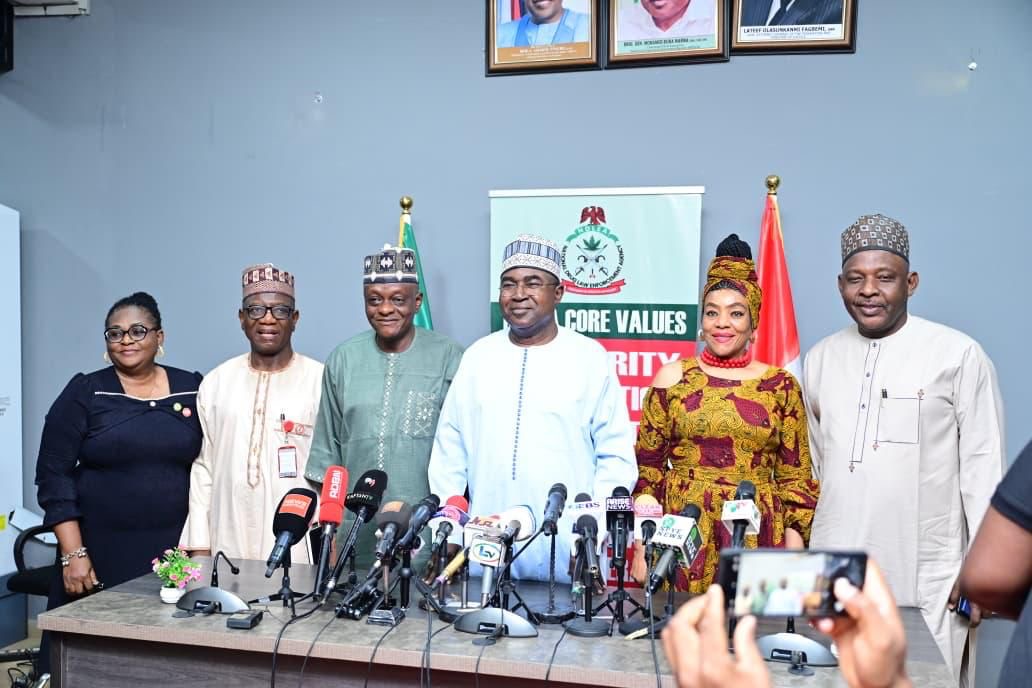
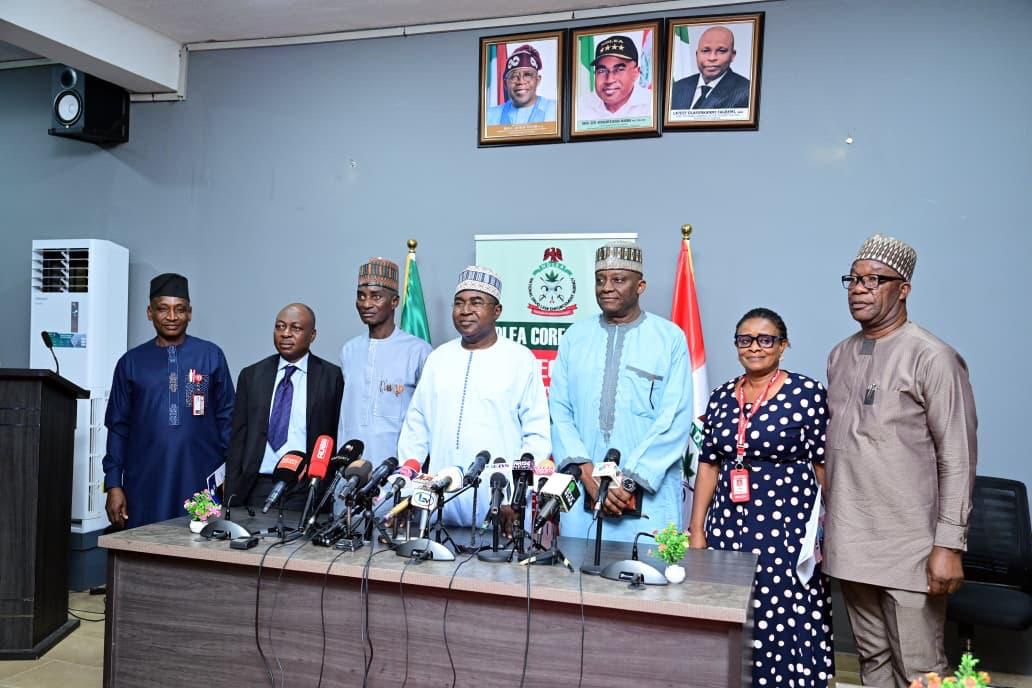
Marwa spoke at a press conference in Abuja on Tuesday 3rd February 2026 to drum support for the first in Africa drug control initiative, which pilot scheme was launched in three cannabis growing communities in Ondo state last week.

While explaining the alternative development strategy of drug control, the NDLEA boss said the concept goes far beyond crop substitution, stressing that “its wider benefits include: strengthening rural economies through value-chain development; reducing the burden on law enforcement and the justice system; promoting peace and social cohesion in previously crime-prone areas; supporting national food production and agricultural diversification; improving Nigeria’s international standing in global drug control and development cooperation.”

Advertisement

According to him, “this approach represents a win-win solution—for communities, for government, and for national security. The successful take off of the pilot scheme in Ilu Abo, Ifon, and Eleyewo in Ondo state last week clearly demonstrates that alternative development works when communities are engaged, supported, and empowered.
We therefore call for a strong national response and sustained support from all stakeholders across all layers of government, traditional rulers and community leaders, development partners and donor agencies, the private sector and agricultural value-chain actors as well as civil society organisations and the media.”

He also urged communities across the country, particularly those affected by illicit drug cultivation, to embrace the model and work with the NDLEA in building lawful, productive, and secure livelihoods. “Let me reiterate that the alternative development programme is not just a drug control initiative; it is a people-centred development intervention designed to uplift communities, strengthen national security, and secure Nigeria’s future.”
He assured that the Agency “remains fully committed to expanding this programme nationwide, in partnership with all stakeholders, as we collectively build a safer, healthier, and more prosperous Nigeria in alignment with the renewed hope agenda of the President Tinubu administration.”

Speaking on the successful flag-off of the scheme in Ondo state, Marwa said “one of the most encouraging outcomes of this pilot project has been the overwhelming acceptance and support expressed by the host communities and their traditional and community leaders. They have openly stated that this programme has renewed their hope in Nigeria and restored their confidence in government. They recognize that Alternative Development offers a dignified and lawful source of income for farmers; reduction in poverty and vulnerability, especially among rural households; improved food security through the introduction of viable alternative crops; enhanced community stability and safety, as illicit drug cultivation often fuels criminal networks and insecurity.”

He noted that replacing cannabis cultivation with sustainable agricultural and economic opportunities, the programme directly tackles the root causes of drug production rather than merely treating the symptoms.

Advertisement

The NDLEA boss said the dire reality of illicit cannabis cultivation and use in Nigeria made the Agency to look beyond law enforcement and consider a United Nations endorsed alternative to solving the cannabis conundrum. “The evidence-based comprehensive data on drug use in Nigeria exposes a bleak and deeply troubling reality. According to the 2018 National Drug Use Survey, conducted by the National Bureau of Statistics with technical support from the United Nations Office on Drugs and Crime (UNODC), an estimated 14.4 per cent of Nigerians aged 15–64 years — or roughly 14.3 million people — reported using at least one psychoactive substance in the past year, a figure that is more than twice the global prevalence of drug use. Cannabis stands starkly at the centre of this crisis, dominating both patterns of consumption and the illicit cultivation landscape.”

He further disclosed that “cannabis is not a marginal issue in Nigeria – it is the most frequently used and widely available illicit drug in the country. An estimated 10.6 million adults – more than one in every ten Nigerians in the prime of life – reported using cannabis in the past year, far outstripping the use of other drugs. The severity of the problem extends beyond consumption into widespread cultivation and organized production. Field assessments focusing on high-risk areas in the South West reveal that nearly 8,900 hectares of land are under cannabis cultivation, often hidden deep within forests and remote regions. These illicit farms are clustered and interconnected, hinting at organized networks that not only supply domestic demand but also facilitate trafficking beyond Nigeria’s borders.”

Painting a grim picture of the challenge, Marwa said “the social and public health implications are stark. With youth and adults alike turning to habitual cannabis use often initiated in late adolescence the nation faces the threat of long-term health consequences, increased dependency, and cascading social harms, including lost productivity, crime, and the burden on overstretched healthcare systems. More revealing is the fact that out of a total of 15 million kilograms of assorted illicit drugs seized by NDLEA in the past five years, over 75 percent of them are cannabis. Just imagine the harm that quantity would have done to our youths, public health and national security.”

He however expressed confidence that the alternative development initiative will reverse the trend if given strong national response and sustained support because it’s fully aligned with the Renewed Hope Agenda of President Bola Ahmed Tinubu administration.

Advertisement

He commended national stakeholders and international partners that have shown support for the initiative.

“This pilot project was flagged off with the invaluable support of several global institutions and partners, including the United Nations Office on Drugs and Crime (UNODC); the International Institute of Tropical Agriculture (IITA), Global Partnership on Drug Policies and Development (GPDPD), Berlin, Germany; Mae Fah Luang Foundation under Royal Patronage (MFLF), Bangkok, Thailand; as well as support from friendly countries and development partners committed to sustainable livelihoods and community resilience, including friends and partners who participated virtually from Nigeria, Ghana, South Africa, Germany, Thailand, Peru, Colombia, Brazil, Mexico, Netherlands, Myanmar, Bhutan, Laos, Afghanistan, Iran, and Guatemala. Also significant was the presence and support of Ondo State Governor, Dr. Lucky Ayedatiwa and the Minister of Agriculture and Food Security, Senator Abubakar Kyariwho was ably represented by the Regional Director Southwest, Mrs. Alao Temitayo.”
Continue Reading
Advertisement

News

$4.5bn fraud trial: Court admits Emefiele’s EFCC statements

Published

on

By

ADVERTISEMENT
Zoom Ad
ADVERTISEMENT
Zoom Ad

Justice Rahman Oshodi of the Lagos State Special Offences Court sitting in Ikeja has admitted into evidence extra-judicial statements allegedly made by former Governor of the Central Bank of Nigeria (CBN), Godwin Emefiele, to the Economic and Financial Crimes Commission (EFCC).

The court dismissed objections raised by the defence team yesterday while ruling on the admissibility of document; he admitted it and marked exhibits (Exh) K31.

In his ruling, the court held that the provisions of Section 4 of the Anti-Torture Act, 2017, relied upon by Emefiele’s counsel, did not justify the conduct of a trial-within-trial to determine the admissibility of the statements.

Justice Oshodi agreed with the prosecution that the statements sought to be tendered were not confessional in nature and, therefore, did not require a separate trial to test their voluntariness.

Advertisement

The judge held that for a statement to qualify as confessional, it must contain an unequivocal admission of the alleged offences.

According to the court, none of the statements made by Emefiele contained any admission of the facts in issue. Consequently, the court dismissed the objections and admitted as exhibits the statements dated October 27, October 30, November 11, November 12 and November 13, 2023.

Following the ruling, the matter was adjourned to October 6, 7 and 8, and November 11, 12 and 13, 2026, for continuation of trial.

It would be recalled that Emefiele is standing trial alongside Henry Omoile on a 19-count charge bordering on abuse of office, receiving gratification, acceptance of gifts through agents, corruption and fraudulent property transactions involving about $4.5 billion and N2.8 billion.

Advertisement

Omoile is facing a three-count charge relating to alleged unlawful receipt of gifts connected with transactions involving the CBN. Both defendants have pleaded not guilty.

At an earlier sitting, Emefiele’s lead counsel, Mr Olalekan Ojo (SAN), had urged the court to reject the statements, arguing that they were obtained involuntarily through alleged oppression and torture during his client’s detention by the Department of State Services (DSS) for over 157 days.

Ojo submitted that the statements were inadmissible under the Anti-Torture Act and relevant provisions of the Evidence Act, contending that once voluntariness is challenged, the prosecution bears the burden of proving that the statements were made freely.

He argued that the absence of a video recording of the interrogation undermined the credibility of the statements, describing them as “poisoned fruits.”

Advertisement

He further contended that the prosecution failed to provide independent evidence corroborating the alleged confessional statements and questioned the role of the legal practitioner said to have witnessed the interviews.

In response, the Director of Public Prosecutions of the Federation, Mr Rotimi Oyedepo (SAN), maintained that a trial-within-trial was unnecessary as none of the statements amounted to a confession or contained any admission of wrongdoing.

Oyedepo argued that the Anti-Torture Act does not mandate a trial-within-trial in such circumstances and urged the court to dismiss the objections and proceed with the substantive trial.

The court, however, upheld the prosecution’s position and admitted the statements into evidence.

Advertisement
Continue Reading

News

Insecurity: Ndume backs defence minister’s shoot-on- sight order

Published

on

By

ADVERTISEMENT
Zoom Ad
ADVERTISEMENT
Zoom Ad

Former Senate Leader, Senator Ali Ndume on Thursday, threw his weight to the order by the Minister of Defence, Ge. Christopher Musa (retd) to the military to shoot on sight any terrorists or bandits, saying sustained military pressure, not negotiations or concessions, remains the surest path to ending insecurity in Nigeria.

Fielding question from State House correspondents after meeting behind closed-doors with President Bola Tinubu at the Presidential Villa, Abuja, Senator Ndume, who represents Borno South Senatorial District also kicked against reintegration of repentant terrorists in the society.

He also said those who aid criminal groups should be treated as accomplices.

Ndume, who was once the Chief Whip of the Senate, argued that recent military successes across the country demonstrate that insurgent groups are steadily losing ground under sustained offensives by the Armed Forces.

Advertisement

“If the tempo is kept, I’m sure this thing will come to an end,” he told journalists.

The ranking lawmaker cited the elimination of key terrorist leaders, the surrender of several commanders and improved security in parts of the North-East and South-East as evidence that the military strategy is yielding results.

He maintained that terrorists and bandits deserve no leniency.

“You don’t spare a bandit. You don’t spare a terrorist. Once you identify a terrorist, because if you don’t kill him, he will kill you,” Ndume said.

Advertisement

Recall that the Minister of Defence, Gen. Musa had recently told soldiers at the front line not to wait for any order when they confront the terrorists and bandits.

The Minister vowed that the government will neither negotiate with terrorists nor tolerate ransom payments, arguing that such concessions embolden criminal groups, enable them to regroup and prolong insecurity.

Although he refused to give details of his meeting with the President, the Borno South vocal senator said that his meeting with President Tinubu centred on security and the economy, describing both as Nigeria’s most urgent challenges.

He said the President demonstrated his commitment to restoring security by convening a meeting with the service chiefs before receiving him.

Advertisement

“I had an appointment for 3 pm, but I had to wait because the President was in a security meeting. As you can see, the service chiefs came in. That means the President is sitting up,” he said.

According to him, military operations have intensified in the North-West against bandits, while campaigns in the North-East have led to the neutralisation of insurgent leaders and the surrender of several fighters.

He also acknowledged improvements in the South-East, where he said separatist-related violence had declined significantly.

“The South-East issue is not as before, and that is one area where we need to commend the President, the Chief of Defence Staff, the Army and other security agencies for what they are doing,” he said.

Advertisement

Ndume also welcomed the decision by the 19 Northern governors to establish a regional security trust fund, describing it as a positive step towards strengthening collaboration between the Federal Government and the states.

“You don’t leave security entirely to the Federal Government. If the governors are contributing resources, they should work with existing security institutions. The more coordinated the effort, the stronger the response,” he said.

Beyond security, the senator urged the Tinubu administration to intensify efforts to cushion the economic hardship facing Nigerians through better coordination of interventions aimed at reducing the cost of living.

“We have all it takes. It is just that we need to coordinate our efforts. Once Nigerians see the efforts of the government, they will appreciate them,” he said.

Advertisement

Ndume also advised President Tinubu to engage Nigerians more directly through regular national addresses, arguing that effective communication would strengthen public confidence in government policies.

“I told Mr. President that he should speak directly to Nigerians. People expect their leader to tell them what is going on instead of leaving others to speak on his behalf. That is very important,” he said.

He said the President welcomed his suggestions and agreed that they should hold regular consultations on national issues, stressing that solving Nigeria’s multifaceted challenges require contributions from a broad range of stakeholders.

“A country like Nigeria must have problems, and the President alone cannot solve all the problems. He needs people that can share ideas with him because two heads are better than one,” Ndume said.

Advertisement
Continue Reading

News

Osun 2026: 2.33 million voters registered for governorship poll – INEC

Published

on

By

ADVERTISEMENT
Zoom Ad
ADVERTISEMENT
Zoom Ad

As the August 15 governorship poll in Osun State draws closer, the Independent National Electoral Commission has disclosed that 2,333,233 voters are registered to vote.

This was disclosed at the presentation of electronic voter registers to political parties by the Osun State Resident Electoral Commissioner, REC, Mrs Oluwatoyin Babalola at the commission’s office in Osogbo on Thursday.

She said the exercise was provided for under the Electoral Act to ensure transparency, inclusiveness, and credibility in the electoral process.

Her words: “The total number of voters registered for the governorship election in the State stands at 2,339,233.” The statistics on the voters are presented in the document.

Advertisement

“The Commission is guided in this responsibility by Section 20 of the Electoral Act, 2026 (As Amended ), which mandates INEC to compile, maintain, update, and make available the Register of Voters. In addition, Section 19 of the Electoral Act, 2026 provides that copies of the Register of Voters shall be made available to political parties in both printed and electronic formats not later than thirty (30) days before a general election and fourteen (14) days before an off-cycle governorship election. This statutory provision underscores the Commission’s commitment to openness and accountability in election administration.

“The Electronic Register of Voters being presented today will enable political parties to review the list of eligible voters across the State ahead of the election. It provides an opportunity for parties to adequately plan their campaigns, engage with the electorate in a lawful and meaningful manner, and contribute to a more transparent and inclusive electoral process”.

The document presented showed Osogbo Local Government with the highest number of registered voters, at 167,704, followed by Ife-East Local Government with 128,515 and Olorunda Local Government with 123,063.

Ife-Central has 122,454 voters; Iwo has 106,814 voters; Ede-North is fifth with 96,644 voters; Irewole and Ifelodun local governments have 96,528 and 94,870, respectively; Ilesa-East and Ilesa-West follow with 89,491 and 86,699 voters; Oriade local government has 84,238, while Odo-Otin and Boripe local governments have 82,574 and 81,067, respectively.

Advertisement

The local governments with the three lowest registered voters are Ifedayo with 28,361, Boluwaduro with 29,797, and Atakumosa-West with 44,076.

Continue Reading

Trending

Copyright © 2024 Naija Blitz News