Connect with us

Foreign

Trump urges UK and other nations to send warships to Strait of Hormuz

Published

on

ADVERTISEMENT
Zoom Ad
ADVERTISEMENT
Zoom Ad

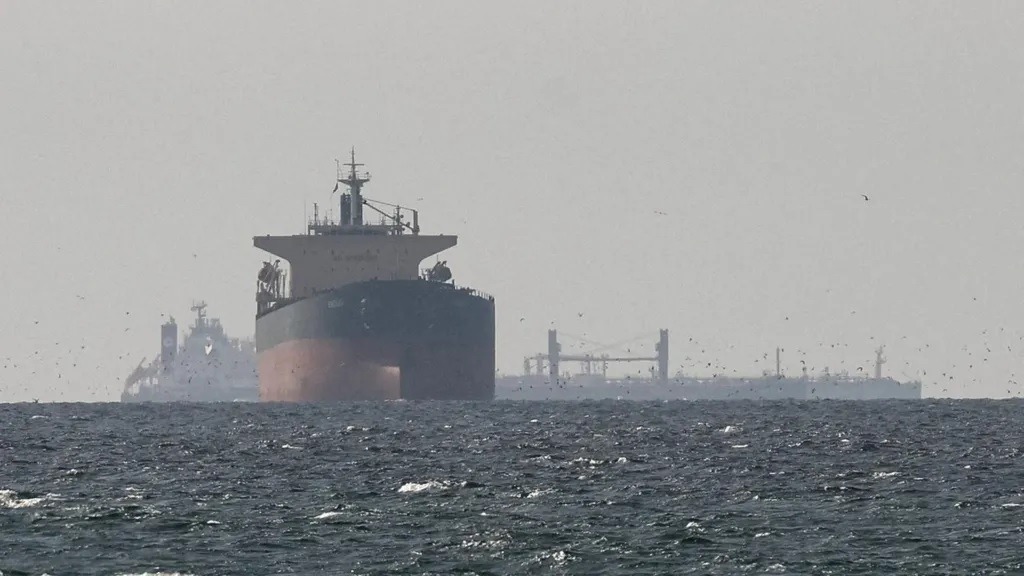
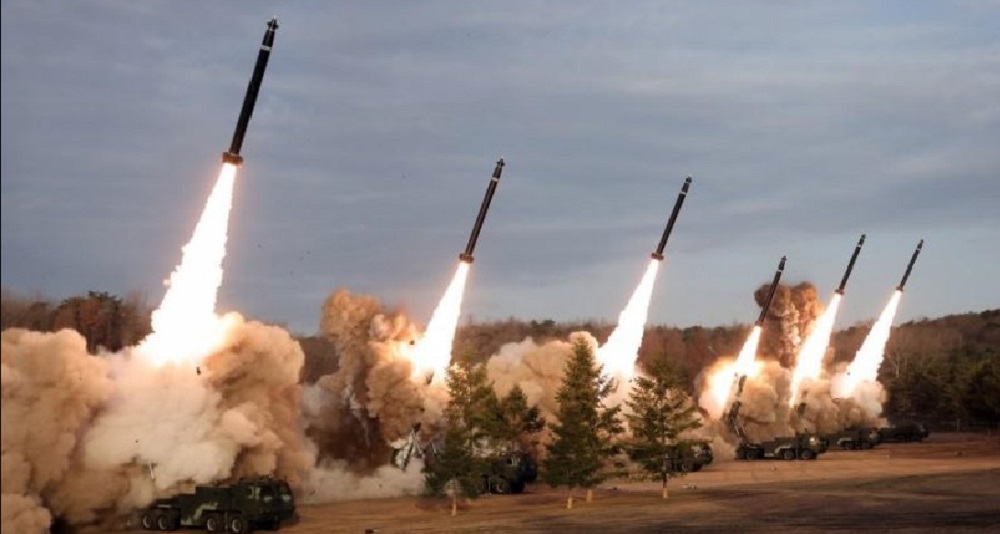
Donald Trump has urged the UK and other nations to send warships to the Strait of Hormuz to help secure the key shipping route out of the Middle East.


The US president said he hoped China, France, Japan and South Korea would also send ships to the passage, where a number of tankers are said to have been attacked since the US and Israel mounted their war against Iran a fortnight ago.

Responding to Trump’s comments, the UK Ministry of Defence said it was discussing “a range of options to ensure the security of shipping in the region” with allies.

Tehran has said it will keep blocking the strait – the world’s busiest oil shipping channel through which about 20% of world oil supplies usually pass.

Advertisement

Its effective closure, as well as strikes on shipping and energy infrastructure since the war started, has led to a huge rise in global oil prices.

Trump wrote on his Truth Social platform on Saturday that “many countries” would be sending warships in conjunction with the US to help keep the strait “open and safe”.

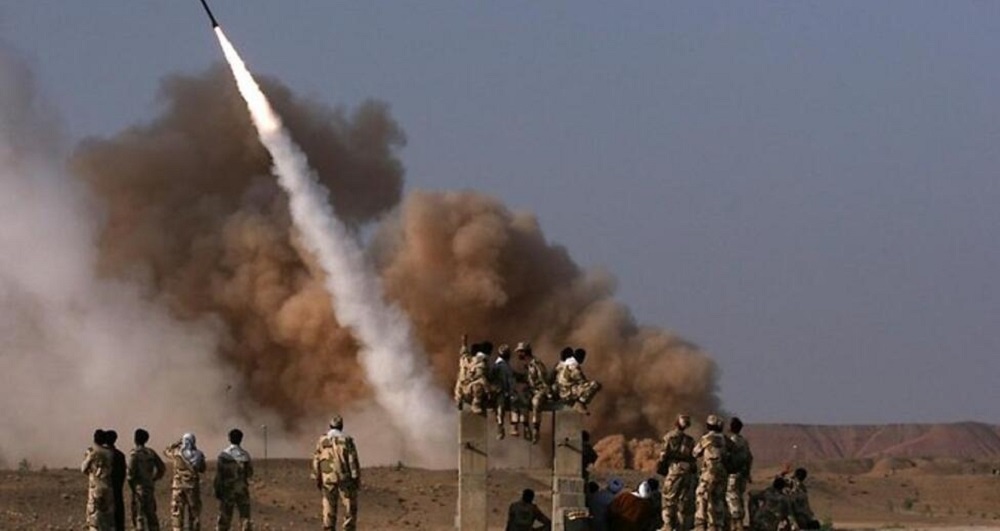
He claimed “100% of Iran’s military capability” had already been destroyed, but that Tehran could still “send a drone or two, drop a mine, or deliver a close-range missile somewhere along, or in, this waterway”.

“Hopefully China, France, Japan, South Korea, the UK, and others, that are affected by this artificial constraint will send ships to the area so that the Hormuz Strait will no longer be a threat by a nation that has been totally decapitated.”

Advertisement

He added: “In the meantime, the United States will be bombing the hell out of the shoreline, and continually shooting Iranian Boats and Ships out of the water. One way or the other, we will soon get the Hormuz Strait OPEN, SAFE, and FREE!”

Trump repeated his appeal in a post later on Saturday – extending it to all “the Countries of the World that receive Oil through the Hormuz Strait” – and said the US would provide “a lot” of support to those who participated.

The president has separately threatened to target Iran’s vital oil infrastructure on Kharg Island if its leadership were to “interfere” with ships seeking to pass through the Strait of Hormuz.

He said the US had “obliterated” military targets on the small island off Iran’s coast on Friday, calling it “one of the most powerful bombing raids in the history of the Middle East”.

Advertisement

Iran’s military said oil and energy infrastructure belonging to firms working with the US would “immediately be destroyed” should the island’s oil infrastructure be attacked.

Tehran has been stepping up such attacks on energy targets in the Gulf, which have become a key element of its response to US and Israeli strikes. It warned on Thursday that any tanker bound for the US, Israel or its partners was a legitimate target.

The UK Maritime Trade Operations (UKMTO) said in its latest update on 12 March that 16 ships were reported to have been attacked in and around the strait since the war began on 28 February.

Currently, not even the US Navy is escorting tankers through the narrow shipping lane.

Advertisement

Trump’s message came a week after he said the US did not need the UK to send aircraft carriers to the region and accused Prime Minister Sir Keir Starmer of seeking to “join wars after we’ve already won”.

He also told the BBC’s US partner CBS that he “couldn’t care less” whether allies could do more to assist with the war, adding: “It’s a little bit late to be sending ships, right? A little bit late.”

He had already criticised Sir Keir for not joining the initial strikes on Iran and refusing at first to allow the US to use UK bases for its joint offensive with Israel – calling him “no Winston Churchill”.

The prime minister later approved “defensive” US action on Iranian missile sites from RAF Fairford in Gloucestershire and Diego Garcia in the Indian Ocean, saying Iran’s response had become a threat to Britain.

Advertisement

The UK’s first and only warship set to be present in the region – the Type 45 destroyer HMS Dragon – departed for Cyprus on Tuesday, where it will bolster RAF Akrotiri after it was hit by drone strikes.

The Royal Navy used to keep minesweepers based in Bahrain, but no longer has that capability after it withdrew HMS Middleton.

Ministers have insisted the UK built up an RAF presence in the region before the conflict, with the aim of protecting British military personnel.

Liberal Democrat leader Sir Ed Davey said on Saturday that Sir Keir must “rule out deploying British ships just because Trump tells him to”.

Advertisement

“Last week, Trump said he didn’t need Britain’s help because he’d already won this war. So we mustn’t let him push the UK around now. Any decision on the deployment of our armed forces should be made in the UK’s national interest and subject to a vote in Parliament.”

France’s President Emmanuel Macron has previously said he was willing to send warships to the Gulf as “purely an escort mission” – but only once the most “intense phase of the conflict” had ended.
Continue Reading
Advertisement

Foreign

Iranian arrested in US for trafficking drones, bombs to Sudan

Published

on

By

ADVERTISEMENT
Zoom Ad
ADVERTISEMENT
Zoom Ad

US federal prosecutors said Sunday an Iranian national was arrested at Los Angeles International Airport for allegedly trafficking arms to Sudan on behalf of Tehran.

Shamim Mafi, 44, is charged with “brokering the sale of drones, bombs, bomb fuses and millions of rounds of ammunition manufactured by Iran and sold to Sudan,” US Attorney Bill Essayli wrote in an X post.

A resident of the Los Angeles suburb of Woodland Hills, Mafi “is an Iranian national who became a lawful permanent resident of the United States in 2016,” the prosecutor said.

Mafi was arrested Saturday and faces a maximum sentence of 20 years in federal prison if convicted.

Advertisement

The post was accompanied by images of a woman presumed to be Mafi surrounded by federal agents at the airport, a large drone on a tarmac, a woman’s ID image and bundles of cash.

The United Nations recently warned that Sudan is at risk of slipping into “full-scale famine and collapse,” as the war between the army and the paramilitary Rapid Support Forces (RSF) enters its fourth year.

The UN Sudan chief, Denise Brown, told AFP Thursday that Sudan is facing the world’s largest humanitarian crisis, and weapons from outside sources deserve part of the blame.

The UN has repeatedly called on foreign powers to stop fueling the war, but has not accused specific states.

Advertisement

On one side, the Sudanese army has been backed by Egypt and Saudi Arabia, and deployed Turkish and Iranian-made drones.

However, most of the blame has been pointed at the United Arab Emirates, which denies evidence that it has funnelled arms to the RSF, who have been accused of genocide.

AFP

Advertisement
Continue Reading

Foreign

Trump Says Iran Agrees To Hand Over Nuclear Dust Amid Strait of Hormuz Blockade

Published

on

By

ADVERTISEMENT
Zoom Ad
ADVERTISEMENT
Zoom Ad

United States President Donald Trump has claimed that Iran has agreed to hand over its remaining stockpile of enriched uranium and abandon ambitions for a nuclear weapon, describing negotiations as being on the verge of a major breakthrough.

Speaking to reporters at the White House on Thursday before departing for Las Vegas, Trump said: “We’re very close to making a deal with Iran. We had to make sure that Iran never gets a nuclear weapon… They’ve totally agreed to that. They’ve agreed to almost everything.”

He added that Iran had consented to return its enriched uranium, which he has repeatedly called “nuclear dust”, material believed to be buried deep underground following earlier U.S. and Israeli strikes on Iranian nuclear facilities.

“They’ve agreed to give us back the nuclear dust,” Trump stated. He also suggested that the next round of talks could take place over the weekend and expressed uncertainty about whether the current fragile ceasefire would need extension.

Advertisement

The comments come amid efforts to end six weeks of conflict in the Middle East that has disrupted global energy supplies and raised fears over the Strait of Hormuz, a vital chokepoint for oil exports.

However, Iran has not publicly confirmed Trump’s assertions. Multiple reports indicate that Tehran has previously pushed back against similar claims, describing them as exaggerated.

Recent direct talks in Islamabad on April 11-12 collapsed without agreement, with core disputes remaining over the future of uranium enrichment inside Iran and the removal of existing stockpiles.

The White House has been discussing a possible second round of negotiations in Pakistan, with officials expressing optimism.

Advertisement

A U.S. naval blockade of Iranian ports remains in place, adding pressure on Tehran.

Analysts caution that any final deal would require strict verification mechanisms, especially given the deeply buried nature of the material in question.

For Nigeria and other oil-producing nations, progress toward de-escalation could help stabilise crude prices, which have spiked due to fears of prolonged disruption in the Strait of Hormuz.

A lasting agreement might also open the door for sanctions relief on Iran, potentially shifting global energy dynamics.

Advertisement

Trump has maintained that preventing Iran from acquiring nuclear weapons is a non-negotiable red line, while offering the prospect of broader regional stability in return for Iranian concessions.

No immediate reaction from Iranian officials was available as of press time. Further developments are expected in the coming days as diplomatic channels continue.

Continue Reading

Foreign

Second Tragedy in Two Days: Student Gunman Kills Four at Middle School

Published

on

By

ADVERTISEMENT
Zoom Ad
ADVERTISEMENT
Zoom Ad

A devastating shooting at a middle school in southeastern Turkey on Wednesday has left at least four people dead and 20 others wounded. The incident, which occurred in the province of Kahramanmaras, marks a harrowing second day of educational violence in the region, an anomaly in a country where school shootings are exceedingly rare.

The local governor, Mukerrem Unluer, confirmed to reporters that the fatalities included three pupils and one teacher. The perpetrator, identified as an eighth-grade student at the school, also died during the attack.

According to Governor Unluer, the assailant, typically aged 13 or 14 arrived at the institution concealing an arsenal within his backpack. The weapons, which authorities believe belonged to his father, a retired police officer, included five firearms and seven ammunition magazines.

“An eighth-grade student entered two classrooms occupied by fifth-grade students and opened fire indiscriminately,” Governor Unluer stated. The victims in the fifth grade are generally between the ages of 10 and 11.

Advertisement

The Governor further disclosed that four of the wounded are currently in critical condition and are undergoing emergency surgery.

Television footage from the site depicted a harrowing scene as police cordoned off the school gates while frantic crowds gathered nearby. Ambulances were seen transporting at least two victims from the premises as emergency services worked to stabilise the survivors.

The Justice Minister, Akin Gurlek, announced via the social media platform X that a formal investigation has been launched into the circumstances surrounding the massacre. Authorities are expected to scrutinise how the minor gained access to his father’s service weapons.

This tragedy follows a similar incident on Tuesday in the neighbouring province of Sanliurfa, where a former student opened fire at a school, wounding 16 individuals including staff and pupils before taking his own life.

Advertisement

The back-to-back attacks have sent shockwaves through the Turkish nation, prompting urgent discussions regarding firearm security and the safety of academic environments.

Continue Reading

Trending

Copyright © 2024 Naija Blitz News