
News
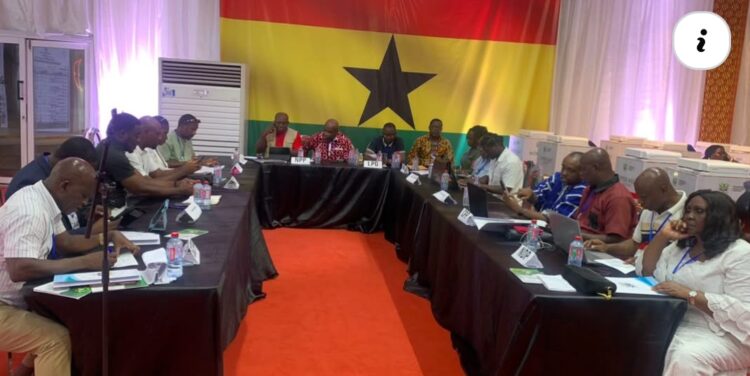
Ghana: NDC wins majority in parliament, secures 185 seats

- /home/naijuinz/public_html/wp-content/plugins/mvp-social-buttons/mvp-social-buttons.php on line 27
https://naijablitznews.com/wp-content/uploads/2024/12/Screenshot_20241209-084345-750x376-1.jpg&description=Ghana: NDC wins majority in parliament, secures 185 seats', 'pinterestShare', 'width=750,height=350'); return false;" title="Pin This Post">
- Share
- Tweet /home/naijuinz/public_html/wp-content/plugins/mvp-social-buttons/mvp-social-buttons.php on line 72
https://naijablitznews.com/wp-content/uploads/2024/12/Screenshot_20241209-084345-750x376-1.jpg&description=Ghana: NDC wins majority in parliament, secures 185 seats', 'pinterestShare', 'width=750,height=350'); return false;" title="Pin This Post">


Ghana’s main opposition party, the National Democratic Congress (NDC), is set to form a majority in Parliament with 185 seats out of the 276 available.
The General Secretary of the NDC, Fifi Kwetey, announced the figure on Sunday during a press briefing monitored by PREMIUM TIMES.
It is expected that the Electoral Commission of Ghana wil officially announce the results soon.
Elections were held in the 276 constituencies across the country on Saturday.
Mr Kwetey described his NDC’s victory as a “green wave,” noting that the party had won seats it had never previously secured in a competitive election.
“Our count shows 185 seats are with the NDC,” Mr Kwetey said, adding that the collation process should be sped up.
Vice President Mahamadu Bawumia, who is also the candidate of the New Patriotic Party (NPP), had earlier conceded defeat during a press briefing. He also stated that the NDC is projected to secure majority in the parliament.
Former President John Mahama is expected to address a press conference on Monday.
Premium Times




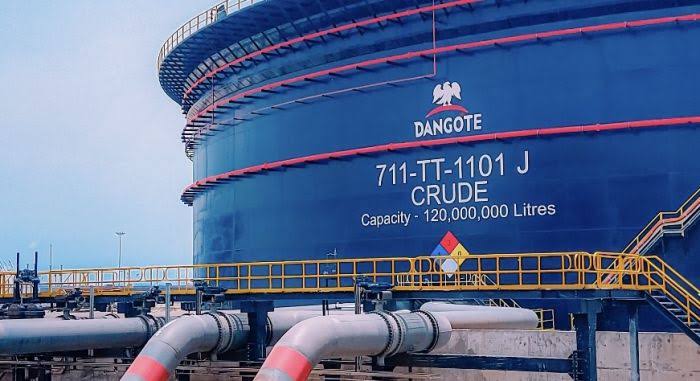
Dangote Refinery has again reduced its gantry petrol price nationwide to N1,125 per litre from N1,175 per litre.
The spokesperson of Dangote Group, Anthony Chijiena, confirmed the latest reduction to DAILY POST on Thursday.
This means that the refinery dropped its petrol gantry price by N50 per litre.
“It is true our petrol gantry price was reduced by N50 per litre,” Chijiena told DAILY POST.
Similarly, the coastal petrol supply price of Dangote Refinery decreased from N1,495,215 per metric tonne to N1,428,165 per metric tonne.
The development comes as crude oil prices dropped significantly to $69 and $73 per barrel, the same rates as pre-Middle East crisis times.
Recall that on June 16, the Dangote Refinery had reduced its gantry petrol price by N75 per litre, triggering a nationwide retail fuel reduction days later. This brought the total price reduction by Dangote Refinery in two weeks since global prices eased to N125 per litre.
Currently retail fuel prices stand at between N1,241 and N1,305 per litre in Abuja and its environs.
However, Nigerians are clamouring for a further drop in retail fuel to around N800 and N900 per litre, the rate before the Iran-United States-Israel war, which escalated on February 28, 2026.

The Court of Appeal, Abuja, has deferred until July 7, the hearing of substantive appeals seeking to set aside the judgment that ordered the Independent National Electoral Commission to deregister the African Democratic Congress (ADC) and four other political parties.
A three-member panel of the appellate court, led by Justice Abba Mohammed, agreed to a full-blown hearing of the appeals after house-keeping proceedings that enabled parties in the matter to identify and regularise all the processes they filed in the matter.
Aside from the ADC, the other parties seeking the nullification of the Federal High Court judgment are the Action Peoples Party (APP), Action Alliance (AA), Accord Party (AP), and Zenith Labour Party (ZLP).
The appellate court panel held that all the appeals would be heard on the scheduled date.
The court had on June 16 ordered the stay of execution of the high court judgment, even as it slammed the trial judge for disrespecting the judicial hierarchy.
The panel berated Justice Peter Lifu of the Federal High Court in Abuja for disobeying an order it made on May 22, which directed him to stay proceedings in the case pending the outcome of an appeal by the parties.
According to the appellate court, even though the trial judge’s attention was drawn to the order for stay of proceedings, he intentionally flouted it and went ahead to deliver the judgment.
It held that Justice Lifu’s action was “a form of judicial impertinence,” stressing that the Supreme Court had previously held that a judge who acted in such a manner “is unfit for the bench, as the conduct amounts to judicial rascality”.
The high court had directed INEC to deregister the five political parties it said failed to meet the constitutional requirements to warrant their continued existence and participation in future elections.
It also barred INEC from further according recognition to the parties, accepting nominations of candidates from the affected parties, or giving effect to their activities for the purpose of participating in the 2027 general elections.
Justice Lifu ordered the defendants to stop parading themselves as registered political parties in the country, saying he found merit in a suit that was filed against them by the National Forum of Former Legislators (NFFL).
The NFFL had, in the suit, prayed the court to determine whether INEC has a constitutional obligation to remove political parties that fail to meet the electoral performance thresholds set out in Section 225A of the 1999 Constitution (as amended), as reinforced by the Electoral Act 2022 and INEC’s regulations.
It was the position of the plaintiffs that the five political parties listed as defendants had persistently failed to meet the constitutional benchmarks required to retain their registration.
The former legislators stressed that the requirements included winning at least 25 per cent of votes in a state during a presidential election or securing at least one elective seat at the national, state, or local government level.
They told the court that the ADC and the four other parties performed poorly in both the 2023 general elections and the by-elections conducted by INEC, thereby failing to win seats across key tiers of government.
However, dissatisfied with the trial court’s verdict, all the defendants, including INEC, urged the appellate court to set it aside.

Human rights lawyer, Femi Falana, SAN, has warned that the creation of state police will not resolve insecurity in Nigeria unless the government addresses poverty and unemployment.
Falana, who appeared on Channels Television’s Politics Today on Thursday, said the country’s insecurity challenge was often narrowly reduced to questions of security architecture, without adequate attention to social security and the conditions driving young people into crime.
“We always reduce the problem of insecurity to security architecture, in fact structure. How do we have more police stations? How do we employ more policemen and women without considering social security?” Falana queried.
“Why are more young men taking to criminality? Why are we not talking about creating employment for young people? Why are we not giving assistance to Nigerians that are vulnerable, extremely poor or dimensionally poor? And unless you address these problems holistically, creating a state police or local government police will not address the crisis of insecurity in the country.”
His comments came after President Bola Tinubu on Tuesday transmitted to the Senate a bill seeking to amend the 1999 Constitution to provide for the establishment of state police services across the federation.
The Senate passed the bill on Wednesday after Senate Leader Opeyemi Bamidele presented its general principles. The bill subsequently scaled second reading, was considered clause-by-clause and passed third reading, with more than two-thirds of senators voting in support.
When assented to by the President, the legislation will replace the existing Nigeria Police Force framework with a dual structure comprising a Federal Police Service and State Police Services.
A key provision of the bill empowers state governors to appoint commissioners of police for their respective states, subject to confirmation by the state Houses of Assembly.
Lawmakers also incorporated safeguards aimed at protecting political freedoms and civil liberties, in response to concerns about possible abuse of the proposed policing structure.
Falana said regional police was not new to Nigeria, noting that the country operated a decentralised policing system during the First Republic.
However, he said the system was abolished due to what he described as the gross abuse of police powers by regional leaders.
He said Nigeria must address the issues that led to the abolition of the dual policing system if it intends to return to it.
“If we now want to go back to the status quo ante bellum, we must ask questions. The fears that were entertained, the problem that led to the abolition of the dual policing system, have they been taken care of? I haven’t seen any signs. I have seen the bill passed by both chambers of the National Assembly, the bill is so sketchy,” he said.
Falana also raised concerns about checks and balances in the operation of state police, as well as the ability of some state governments to fund the proposed police services.
He said some state governments could barely pay salaries and pensions.

Again, Dangote Refinery reduces fuel price

WAFCON: Plumptre clears air on dumping Super Falcons over demands from NFF officials

Suspects: Why we murdered Ogun Broadcaster




-

 News19 hours ago
Viral ‘Sign-Out’ Video: Ondo Govt Withholds WAEC Results of 17 Students
-
 News18 hours ago
Xenophobic attacks: FG evacuates another 66 citizens from South Africa
-

 News14 hours ago
Soldiers Reject Fresh Move To Deploy ‘Repentant’ Terrorists In Military Operations, Fear Sabotage, Intelligence Leaks
-
 News15 hours ago
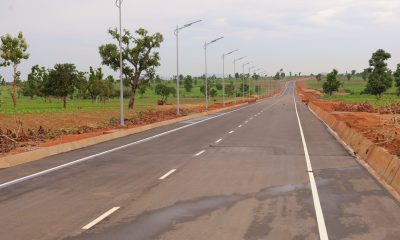
DAY 12 of Projects Commissioning in the FCT: Watch Arterial Road N16 – Ring Road Il Intersection linking Jahi to Gwarimpa District
-

 News18 hours ago
ICPC arraigns El-Rufai, six others over alleged N8.68bn CCTV contract fraud
-
 News14 hours ago
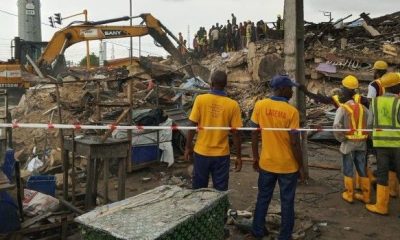
10 survived as building collapses in Lagos
-

 News14 hours ago
Finally, oil prices crash to $72 pre-war level
-

 News15 hours ago
FG freezes bank accounts of confirmed terrorism financiers(See list)
Warning: Undefined variable $user_ID in /home/naijuinz/public_html/wp-content/themes/zox-news/comments.php on line 49
You must be logged in to post a comment Login