
News
Nobody is above the law as FCTA officials move to ensure defaulting embassies pay ground rent

- /home/naijuinz/public_html/wp-content/plugins/mvp-social-buttons/mvp-social-buttons.php on line 27
https://naijablitznews.com/wp-content/uploads/2024/05/41CC8ED9-22E4-4F15-AA1F-680FB73D7474.jpeg&description=Nobody is above the law as FCTA officials move to ensure defaulting embassies pay ground rent', 'pinterestShare', 'width=750,height=350'); return false;" title="Pin This Post">
- Share
- Tweet /home/naijuinz/public_html/wp-content/plugins/mvp-social-buttons/mvp-social-buttons.php on line 72
https://naijablitznews.com/wp-content/uploads/2024/05/41CC8ED9-22E4-4F15-AA1F-680FB73D7474.jpeg&description=Nobody is above the law as FCTA officials move to ensure defaulting embassies pay ground rent', 'pinterestShare', 'width=750,height=350'); return false;" title="Pin This Post">


Apparently, nobody is above the law as Federal Capital Territory Administration (FCTA) has issued a stern warning to 34 embassies in Abuja over their failure to pay ground rent for over a decade.
According to reports, the affected foreign missions have not paid their dues since 2014, racking up a collective debt of ₦3,662,196 in unpaid ground rents. The FCTA has now threatened to shut down their facilities if the payments are not made promptly.
A recent publication by the FCTA revealed the alarming backlog, raising concerns about the level of compliance with local property laws by diplomatic entities in Nigeria’s capital.
Interestingly, while some institutions were initially listed as defaulters, the opposition Peoples Democratic Party (PDP), Federal Inland Revenue Service (FIRS), and the National Agency for the Prohibition of Trafficking in Persons (NAPTIP) have since settled their debts, clearing their names from the defaulters’ list.
On May 26, the FCT Minister, Nyesom Wike, ordered officials to commence enforcement on 4,794 properties that were revoked due to non-payment of ground rent, spanning between 10 and 43 years.
But President Bola Tinubu intervened, granting a 14-day grace period, which ends on Monday (today), to affected property holders to settle their outstanding obligations.
The Director of Land, FCTA, Chijioke Nwankwoeze, disclosed that the defaulters would pay penalty fees of N2m and N3m respectively, depending on their locations.
The defaulting embassies include the Ghana High Commission Defence Section; Embassy of Thailand, Embassy of Côte d’Ivoire; Embassy of the Russian Federation; Embassy of the Philippines; Royal Netherlands Embassy; Embassy of Turkey, and the Embassy of the Republic of Guinea.
Also included are the embassies of Ireland, Uganda, Iraq, and the Zambia High Commission.
Other missions on the list include the Tanzania High Commission, German Embassy, Embassy of the Democratic Republic of Congo, Embassy of the Bolivarian Republic of Venezuela, Embassy of the Republic of Korea, and the High Commission of Trinidad and Tobago.
The Embassy of Egypt, Embassy of Chad, Sierra Leone Commission, High Commission of India, Embassy of Sudan, Embassy of Niger Republic, and Kenya High Commission are also listed among the defaulters.
Others are the embassies of Zimbabwe, Ethiopia, and Indonesia.
The Delegation of the European Union, Embassy of Switzerland, Royal Embassy of Saudi Arabia, China’s Economic and Commercial Counselor’s Office, South African High Commission, and the Government of Equatorial Guinea also featured on the list.
Reacting, the Embassy of the Russian Federation firmly denied any outstanding debts.
“The Embassy pays all bills for the rent of the territory on which the Embassy complex is located in good faith and on time. The Embassy also has all necessary documents confirming payment,” it stated.
Similarly, the Embassy of Turkiye questioned its inclusion on the FCTA’s list, citing a possible administrative error.
A Turkish official told our correspondent, “We have not received a formal notification about the debt. We regularly make our payments on time, and we will check if we are on the list because of a bureaucratic mistake or a misunderstanding, and will fix the issue as soon as possible.”
The German Embassy, in a chat with this newspaper, clarified that no formal claim or demand regarding unpaid rent had been brought to its attention by the FCTA.
“We understand that you are referring to reports suggesting that the German Embassy in Abuja has outstanding rent obligations. We would like to clarify that no such claim or demand has been formally brought to our attention by the Federal Capital Territory Administration,” the embassy stated.
It further insisted that all official financial obligations relating to the embassy’s premises had been settled as of the end of 2024, adding that there are no known outstanding payments.
The embassy emphasised its commitment to maintaining a respectful and cooperative relationship with the Nigerian government and the FCTA, reaffirming its dedication to transparency and mutual trust.
“Moreover, we can confirm that all official financial obligations relating to the Embassy’s premises have been fully settled as of the end of 2024. There are no known outstanding payments.
“The Embassy of the Federal Republic of Germany highly values its respectful and cooperative relationship with the government of Nigeria and the Federal Capital Territory Administration and remains fully committed to transparency and mutual trust,” the statement added.
The Embassy of Ghana also told this newspaper that even though it had not been notified officially of the development, it would reach out to the Foreign Affairs on ways to resolve the issue.
The embassy stated, “The High Commission has noted the publication but has not been officially communicated to. We will liaise with the Ministry of Foreign Affairs on this matter.”
An official at the Sierra Leone Embassy said they were unaware of the issue and would verify the claim.
He noted, “I am not aware and I am not in the office now. On my return, I will inform my authorities to cross-check.”
Concerning the claims by some embassies that they were not indebted to the FCTA, spokesman for the FCT minister, Lere Olayinka, stated, “This claim will be promptly investigated and appropriate action will be taken.”
Commenting on the development, a former Nigerian ambassador to Mexico, Ogbole Amedu-Ode, referenced the 1961 Vienna Convention and urged caution.
“For the diplomatic premises, if we are to go by the Vienna Convention of Diplomatic Relations, the premises of a diplomatic mission are inviolable,” he submitted.
“But that is not to say that they are not supposed to obey local municipal rules and regulations or the rules and regulations governing such things as relate to property ownership. However, there may be a caveat,” Amedu-Ode said.
He suggested that the Ministry of Foreign Affairs should handle the matter diplomatically.
“It is a question of the Ministry of Foreign Affairs looking at each one on a bilateral basis and implementing it on a reciprocal basis,” the ex-envoy stated.
A foreign affairs analyst, Charles Onunaiju, also questioned the legality of applying ground rent rules to diplomatic missions, arguing that it was not applicable under international laws.
“By the Vienna Convention establishing diplomatic missions, diplomatic premises are sovereign territory of their respective countries,” Onunaiju pointed out.
He warned that any enforcement action against embassies could trigger diplomatic fallout.
“If you get into their premises to lock it down, you are obviously violating a very advanced diplomatic protocol. It will be a breach of diplomatic protocol,” the analyst warned.
Meanwhile, a reliable source close to the Peoples Democratic Party leadership, who spoke on condition of requested anonymity because he was not authorised to speak on the issue, told this newspaper that the PDP had settled all matters related to ground rent with the Minister of the Federal Capital Territory.
He stated, “The PDP has resolved all issues with Wike regarding the ground rent. Action was taken on Friday to make the payment, so there is no longer any problem.”
When asked about the development, the FCT minister’s spokesman, Lere Olayinka, said, “Some of these things, there is no way we can know. Some are paying through Remita, people are paying online. So, it’s until they bring their receipts that we can know.”
It was also learnt that the Federal Inland Revenue Service had mended fences with the FCTA after their offices were sealed off following non-compliance.
Lagos Times








Airline Operators of Nigeria, AON, has faulted the Nigerian Civil Aviation Authority, NCAA, over its earlier decision to withhold services from 11 domestic airlines pending the settlement of their outstanding financial obligations.
Director of Finance and Accounts of NCAA, Olufemi Odukoya, in a memo dated May 22, 2026, obtained by Vanguard, had listed the affected airlines as Air Peace Limited, Ibom Air Limited, Arik Air Limited, United Nigeria Airlines, Umza Air, NGeagle Airline, Max Air Limited, Caverton Helicopters, Overland Airways, Rano Air and ValueJet.
While the NCAA has temporarily suspended the directive, AON, in a statement, disclosed that all services rendered by NCAA to domestic airline operators were fully paid for in advance on a cash-before-service basis.
AON, however, clarified that what the NCAA described as outstanding charges relates to the five per cent Ticket Sales Charge, TSC, which is different from regulatory service fees.
They also urged Federal Government to amend the Civil Aviation Act to empower the NCAA to directly collect appropriate fees and charges from passengers, saying the measure should take effect from June 1, 2026.
The statement reads: “The AON wishes to make it clear that all cost recovery services rendered by the NCAA to domestic airline operators are paid for fully in advance on a cash-before-service basis.
“For clarity, the NCAA issues an invoice for every regulatory service it provides, whether for the validation of crew operating licences, aircraft inspections, documentation renewals, or any other service within its regulatory mandate. Operators are then required to settle all such invoices in advance, and compliance is strictly observed before the NCAA renders any regulatory service.
“In practice, no domestic airline in Nigeria receives NCAA regulatory services without first making the full payment of invoices issued to it by the NCAA. This long-standing policy and procedure remains firmly in place. Consequently, suggestions that domestic airline operators are indebted to the NCAA for regulatory services are factually inaccurate.
“What the NCAA refers to as ‘outstanding charges’ relates solely to the five percent (five per cent) Ticket Sales Charge, TSC, a Tax imposed by the NCAA on passengers for no services rendered to passengers and not in consonance with the dictates of international aviation. This is entirely different from regulatory service fees.
“The AON also notes that several member airlines maintain dedicated accounts, from which the NCAA draws down its monthly remittances, until the force majeure caused by the Iran -Israel/USA conflict, that had put a lot of financial pressures on airlines worldwide.
“Notwithstanding this arrangement, the AON had formally appealed to the federal government through the office of Honourable Minister of Aviation & Aerospace Development, to suspend the payment of all statutory charges temporarily, as an interim measure to assist airlines in managing their cash flows during the current period of severe financial stress caused by the increase in the cost of Jet Al.
“As an interim response, President Bola Tinubu graciously granted a 30 per cent concession, while waiting for the government decision on the other aspects of the AON intervention request. While the AON acknowledges and appreciates this gesture, we had appealed for a meeting with Mr. President to discuss further reliefs, a request that is yet to be granted.
“The AON reiterates its position that the NCAA is a regulatory body, not a revenue-generating agency. The NCAA does not fund any aspect of our businesses or render any direct service to passengers.
“Each and every service it provides to airline operators are fully paid for in advance before such is rendered. In view of the above, the AON calls on federal government to urgently amend the Civil Aviation Act to empower the NCAA to collect whatever appropriate fees and charges are due directly from passengers or whoever else, without routing such through the domestic airlines. We request this to take effect from June 1, 2026.
“This will relieve domestic airlines of the financial burden of acting as collection agents for the NCAA, since airlines currently bear banking transfer charges and other transaction costs in the process of transmitting funds to the NCAA.
“The five per cent Ticket Service Charge in question was introduced over 45 years ago under the Government of General Gowon by the then Federal Civil Aviation Authority, FCAA, and its continued relevance has not been reviewed ever since.
“The FCAA was at the time an arm of the Civil Aviation Department, CAD, housed in Marina under the Ministry of Transportation. As the CAD was not a ministry-level aviation unit, it had limited budgetary resources.
“The Gowon regime of the 1970s had built airports in all 12 States of the federation and these airports required maintenance and operational budgets that were not provided for in the sector’s budget hence the introduction of the five per cent TSC.
“Notably, Nigeria Airways, the only domestic airline operating at the time, did NOT pay the five per cent TSC. Only foreign Airline carriers were required to pay.
“Importantly and worthy of note is the fact that the FCAA has since over time evolved into the NCAA, NAA, and NIMET. The NAA in turn evolved into the present-day FAAN and NAMA.
“Meanwhile, the aviation industry was deregulated in 1982, allowing for indigenous entrepreneurs to compete in the market, resulting in the new entrant private airlines that have remained the mainstay of the industry and the backbone of the Nigerian economic renaissance.
“With the creation of each of these agencies, separate taxes, fees, charges, and levies were introduced for the Nigerian Airline operators to cover their respective services.
“Meanwhile, the five per cent TSC, which was originally a policy instrument was surreptitiously introduced into the legislation by the NCAA, despite the vehement opposition from the AON and other industry stakeholders.
“Domestic airlines, in addition to this five per cent TSC, still pay separately ànd directly for services provided by the various industry agencies, including the NCAA itself.
“It is important to note that the five per cent TSC is an ad valorem tax applied to an airline’s gross earnings, not profits. The global aviation industry operates at a profit margin of between 1.5 per cent and 2.5 per cent at best. International standard and best practice provides that aviation should be a cost-recovery sector of strategic importance. In Nigeria, however, the industry is being subjected to unsustainable financial pressures, in the guise of imposed taxes, fees, charges and levies.
“The AON uses this occasion to once again draw the attention of the Federal Government to the unsustainable burden of these multiple taxes, fees, charges and levies arbitrarily imposed on domestic airline operators. We make payments to the Nigerian Airspace Management Agency, NAMA, the Federal Airports Authority of Nigeria, FAAN, and several other service providers and statutory bodies.
“The financial impact of these taxes, fees, charges and levies is adverse, burdensome and excruciating, especially at this precarious period, when the entire world has been exposed to the exogenous shocks of the Iran – Israel / USA crisis.”

The Joint Admissions and Matriculation Board, JAMB, has fixed Saturday, 13th June, 2026, for the conduct of the UTME mop-up examination for all candidates who presented themselves and were biometrically verified for the 2026 Unified Tertiary Matriculation Examination, UTME, but were unable to sit the examination for one reason or another.
Recall that the 2026 UTME was conducted between 23rd and 29th April, 2026. However, some centres experienced technical challenges which made it impossible for several candidates to take the examination. In addition, some results were subsequently withdrawn over examination infractions, while some candidates who presented themselves for the examination could not be verified biometrically. All such candidates have been listed for the mop-up examination.
The board, in a statement on Monday evening by its spokesperson, Fabian Benjamin, said, ”The mop-up examination represents the final phase of the annual UTME exercise and serves as an opportunity to address all outstanding examination challenges involving candidates who duly presented themselves but encountered difficulties in taking the examination.”
“Candidates in this category are advised to begin printing their Examination Notification Slips from Saturday, 6th June, 2026.”
According to JAMB, “Affected candidates are hereby urged to print their Examination Notification Slips, familiarise themselves with their examination centres, and make all necessary arrangements ahead of the examination date, as there will be no further opportunity for any candidate to sit the 2026 UTME after this mop-up exercise.”
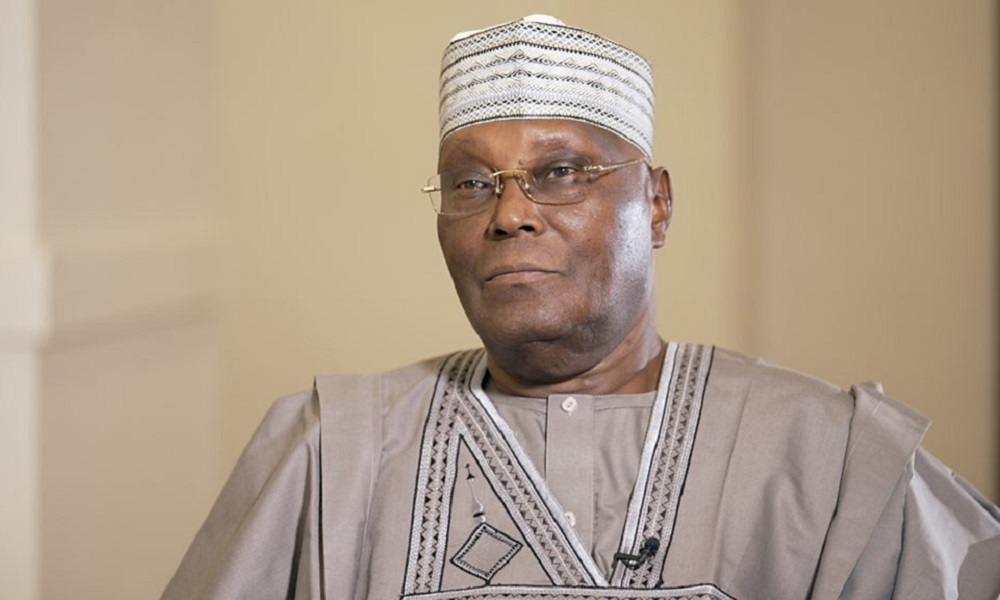
Former Vice-President and presidential aspirant of the African Democratic Congress, Atiku Abubakar, has won the party’s presidential primary election conducted across the 23 local government areas of Sokoto State.
The result was announced on Monday by the state chief returning officer, Prof. Aminu Abubakar.
“I therefore hereby declare Alhaji Atiku Abubakar as the presidential candidate with the highest number of votes cast in Sokoto,” he said.
The result was announced in the presence of officials of the Independent National Electoral Commission, security personnel, and party stakeholders, including former Sokoto State governor, Aminu Waziri Tambuwal, and the ADC governorship candidate in the state, Mannir Dan Iya, the senatorial candidate for Sokoto South, Faruk Malami Yabo, and the state party chairman, Abdullahi Maigwandu, among others.
According to the results, Atiku polled over 68,823 votes to defeat Muhammad Hayatuddeen, who got 319 votes, and Rotimi Amaechi, who polled 292 votes.

Police arrest four over Hajj fraud in Kebbi

Airline operators reject NCAA debt claim

Ebola outbreak will get worse as cases rise in DRC, Uganda – WHO


-

 Sports24 hours ago
Enugu Rangers Beat Ikorodu City To Clinch Historic 9th NPFL Title
-

 Sports24 hours ago
EPL: Tottenham survive relegation scare as West Ham drop after 14-year stay
-
 Economy24 hours ago
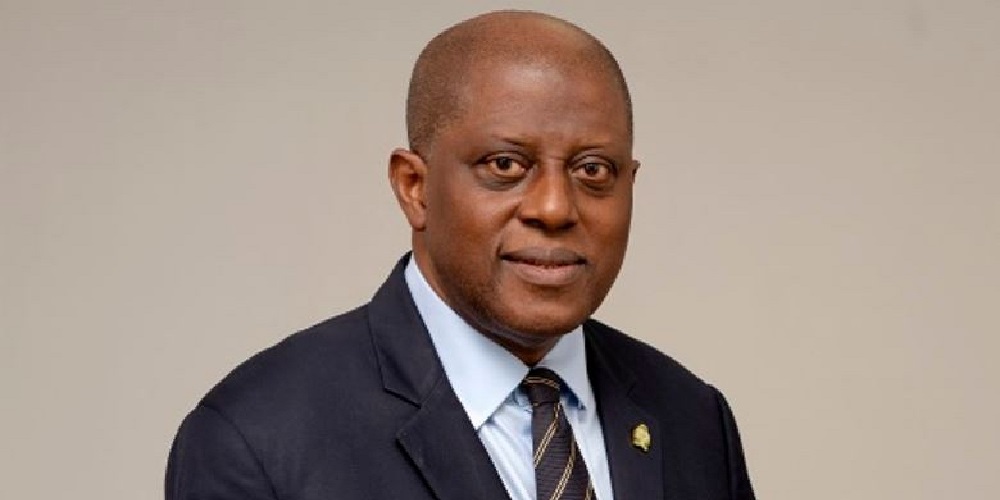
Cardoso rejects calls for CBN to return to intervention programmes
-

 News24 hours ago
Nigeria-Vietnam Relations Growing in Trade and Investment — Amb. Bako
-

 News13 hours ago
Sad: Bandits Kidnap 300-Level Varsity Student In Katsina, Demand N20M Ransom
-

 Economy24 hours ago
Tax reform: FG targets mining revenue leakages, illegal operators
-

 Politics24 hours ago
Okpebholo’s 2.5m Votes Pledge Sparks Laughter After Tinubu’s Modest 131k Edo Primary Show
-
 News17 hours ago
APC sets May 25 deadline for 2027 primary elections results submission
Warning: Undefined variable $user_ID in /home/naijuinz/public_html/wp-content/themes/zox-news/comments.php on line 49
You must be logged in to post a comment Login