

Connect with us

News

Governor Otti Calls for Collective Action in Ongoing Constitution Review

Published

on

ADVERTISEMENT
Zoom Ad
ADVERTISEMENT
Zoom Ad


…say 31 additional states is a burden, warn on LG autonomy viability 
 
By Gloria Ikibah 

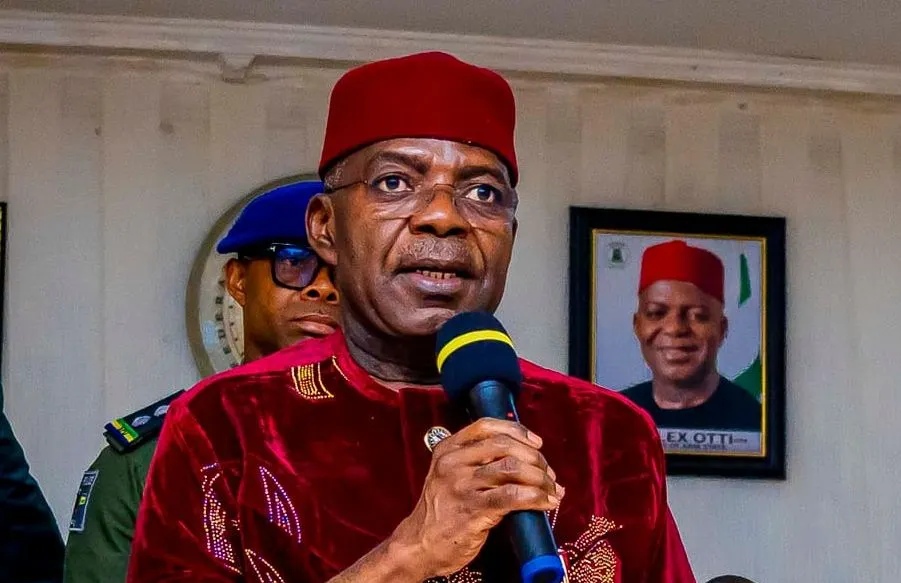
The Governor of Abia State, Dr. Alex Otti, has described the ongoing 2025 Constitution Review as a rare chance for Nigerians to critically examine the system and decide on reforms that can place the nation on the right path.

Speaking at the South-East Zonal Constitution Review for Abia and Imo States, held in Owerri on Saturday, Otti who was represented by his deputy, Ikechukwu Emetu stressed that building a better Nigeria is a shared responsibility.

According to the Governor, no matter our political affiliations or personal beliefs, this country belongs to all everyone and Nigeria cannot outsource the task of nation-building to others; as “it is ours to do.”

Advertisement

While admitting that Nigeria may not yet reflect the dreams of its citizens, Otti maintained that history has shown that no situation is beyond change. He urged Nigerians to shun cynicism, apathy, and distrust, insisting that meaningful transformation can only happen when people believe in the nation’s potential.

He said: “We must begin to see ourselves as a great people with a proud national heritage.
“I would share my thoughts on some of the key agenda for debates and considerations in the 2025 constitutional review process. As many in this auditorium may know, the positions I would be sharing today have since been documented in my writings and public engagements from the last decade so they are not entirely new ideas. 
 
“I have to, however, add that my personal views should not override the legitimate concerns of other stakeholders who also have a right to disagree or present alternative viewpoints. The most important thing is that all of us deserve to have a say in the process. Thankfully, the platform for that broad engagement has been presented to us through these public hearings.
 
“My first interest is the clamour for the creation of additional states. I am aware that proposals for the creation of 31 new states were received by the National Assembly prior to this time. While I respect the rights of those who believe that the creation of new states would address concerns of marginalisation and exclusion of some ethnic and religious groups in the current structure in some parts of the country.
 
“I am more concerned about the additional burden these proposals, if adopted, would add to the lean resources of the nation through the multiplication of administrative costs and further bloating of an oversized bureaucracy. Except we can magically find independent sources of financing the new states outside what currently exists, I do not share the optimism of those promoting the idea of adding new states to the current 36-state structure. 
 
“My recommendation would be the development of an inclusive governance model in the states, one that gives every major clan a say in the allocation of resources, a seat at the decision-making table and the structural leverage to advance their political and economic interests”.
 
Governor Otti urged Nigerians to be more concerned about improving the economic structure of the states, creating jobs for the young people outside the civil service and make the welfare of the common man a priority. 
 
According to him, the current system is too elite driven to be functional and that, it is high time ordinary people are placed at the centre of decision making.
 
On the creation of state police and related matters, Otti argue that the present realities in the land have made it a matter of urgent national priority. 
 
“The current exclusive federal policing system is largely inadequate and has exposed our people to a litany of vulnerabilities over the years. So, I would vote for the creation of State police but with a proviso that standards be clearly defined as it relates to leadership, relationship with federal and other sub-national policing structures, recruitments, accountability and respect for human rights”, he added.
 
The Governor also supported the creation of additional seats for women in the national and state assemblies saying that, his endorsement is total. 
 
He noted that, while it would guarantee the inclusion of women in the political process and giving them a say in shaping the character of the Nigerian governance architecture, Otti however said, just having women in our legislative assemblies would not achieve the desired impact unless a number of fundamental issues are holistically addressed. 
 
“the internal processes within the political parties have to be strengthened to make for the active participation of women in decision making. The ordinary women, not persons related or affiliated to powerful male party leaders, must be at the centre of the process. 
 
“If we are not careful, we may be creating new opening for men with vested interests to further entrench themselves in the system using proxies. If that happens, nothing in the real sense of it would change in the political fortunes of average Nigerian women”, he stated.
 
Speaking on the proposal to alter the provisions of the 1999 Constitution to establish the local government councils as a separate tier of government, he called for caution and a holistic appreciation of the broad implications of the proposal. 
 
“Like I argued with the creation of additional states, we must be mindful of further bloating an already-overfed bureaucracy. I may not be very correct but if I understand this proposal correctly, we may be looking at creating hundreds of new bureaucratic structures for the autonomous administration of the local councils. 
 
“The local government system as we know is statutorily responsible for the provision of primary healthcare; basic, adult and vocational education and similar functions that impact directly on the lives of the population at the grassroots. 
 
“Like I asked at the 18th Community of Practice Meeting of the Honourable Commissioners of Budget and Economic Planning in Umuahia last May, would it be financially prudent to have 774 or more universal basic education commissions and similar number of agencies managing primary health and human services for LGAs in the country? What are the implications for cost of governance, corruption and systemic abuses? 
 
“There may be need to think this through and make a choice between having new layers of administrative structures that further drain public resources through inflated overheads and creating a system that cuts down bureaucratic bottlenecks — guaranteeing that the larger chunk of public resources is channelled into the provision of social services”, Otti asserted.
 
The Governor also supported the proposal to make free and compulsory basic education a fundamental right of all citizens, saying that, it should not be debatable but to be adopted without much ado. 
 
“The proposal aligns perfectly with the 1948 Universal Declaration of Human Rights; the 1989 International Convention on Economic, Social and Cultural Rights; the 1989 Convention on the Rights of the Child; the 1981 African Charter on Human and Peoples’ Rights and the 1990 African Charter on the Rights and Welfare of the Child amongst other international conventions and agreements. 
 
“Beyond just making the right to basic education a fundamental right for our people and enshrining same in the Constitution, I think we need to pay more attention to education financing. Quality education does not come cheap and it is not just enough to ask everyone to go to school. Deliberate efforts must be made to fund education across the entire value chain. 
 
“We need to invest in teacher education with particular emphasis on training and retraining especially in the relevant fields of sciences, technology, engineering and mathematics. Our teachers must be trained and motivated to acquire relevant skills to be able to teach the pupils and students effectively and prepare them for the competition of the new global environment. 
 
“These teachers have to be well remunerated, their welfare prioritised and the environment where they work made conducive for the very important work that they do. So, in addition to making education compulsory and a fundamental right of citizens, we also have to make effective provisions for the statutory funding of the educational system, especially basic education.  
 
“Our target should not be to create a perfect constitution. While perfection would be the ideal thing to aspire to, the truth remains that we will do better by focusing on what is practical within the context of our democratic evolution, economic realities and social dynamics. What I think we should rather seek at this point is to build on the gains that have been made over the past 26 years since the present Constitution came into effect”, he stated.
 
He also acknowledged that, there are too many gaps and ambiguities in the 1999 Constitution that are being exploited by different stakeholder groups to advance interests that are not entirely altruistic in scope. 
 
“Even then, I am also cautious when blaming those who left the scene almost 30 years ago for the problems of today. My view is that we now have sufficient governance experience to determine what is not working and make changes as may be relevant from time to time. 
 
“I am aware that since 2010, the 1999 Constitution has undergone 5 epochs of alterations in response to demands for structural changes by Nigerians. Going through the whole 9 yards of constitution amendment at 5 times over a 15-year period speaks to our evolving desire to change our national experience by periodically tinkering with the Supreme Laws of the land. We must congratulate ourselves for not being afraid to test the system and brave the odds to make some much-needed changes”, otti said.
Continue Reading
Advertisement
Click to comment

Warning: Undefined variable $user_ID in /home/naijuinz/public_html/wp-content/themes/zox-news/comments.php on line 49

You must be logged in to post a comment Login

Leave a Reply

News

Rep OK Chinda’s political network sparks across Rivers

Published

on

By

ADVERTISEMENT
Zoom Ad
ADVERTISEMENT
Zoom Ad

The battle for the political soul of Rivers State gathered fresh momentum on Monday, August 3, 2026, as supporters of the former House of Representatives Minority Leader, Hon. Kingsley Chinda, activated what appears to be an early statewide mobilisation strategy, extending their campaign machinery to all 23 local government areas and ward structures ahead of the 2027 governorship election.

The development signals that while the official electioneering whistle is yet to be blown, political camps are already laying claim to the grassroots in what analysts describe as a familiar contest where influence, structure and strategic alliances often determine who eventually occupies Brick House.

The pro-Chinda support group, Our Will, announced the expansion of its political network across the state, directing its state executive members to immediately establish functional local government and ward executives capable of driving voter mobilisation before formal campaigns commence.

State Chairman of the group, King Okene, said the organisation was determined to transform Chinda’s existing political popularity into what he described as an “unstoppable electoral mandate,” insisting that every ward must become a political fortress for the lawmaker’s governorship aspiration.

Advertisement

According to him, the publication of the electoral timetable has effectively opened a new phase of political calculations, making early grassroots organisation a strategic necessity rather than a luxury.

“We should double our efforts to ensure we meet the targets before electioneering campaigns officially begin. Every local government and ward structure must be fully operational within the first week of August,” he charged members.

In what appeared to be a calculated attempt to frame Chinda as the political heir to a tested governance model, President-General of Our Will, Glory Wobo, declared that the federal lawmaker’s years of public service and close political association with the Minister of the Federal Capital Territory, Nyesom Wike, have adequately prepared him for the state’s highest office.

Wobo argued that leadership is cultivated through mentorship rather than chance, maintaining that Chinda’s political apprenticeship under Wike – combined with his experience as commissioner and long-serving legislator – has equipped him with the administrative depth required to govern Rivers State.

Advertisement

He cited ongoing infrastructure renewal in the Federal Capital Territory as evidence of the leadership tradition from which Chinda emerged, suggesting that effective governance leaves measurable footprints rather than campaign slogans.

According to Wobo, Chinda enjoys goodwill that cuts across political parties, ethnic groups and religious divides, describing the lawmaker as a consensus figure whose appeal extends beyond partisan politics into credibility, accessibility and public service.

The latest mobilisation drive underscores the intensifying political chess game ahead of the 2027 governorship election, where aspirants are increasingly investing in grassroots structures long before formal campaigns begin.

With support groups already deploying ward-by-ward political architecture and competing camps quietly consolidating influence, Rivers State is once again demonstrating that, in Nigerian politics, the contest for power often begins long before the first ballot is printed.

Advertisement
Continue Reading

News

NBC files fresh appeal, justifies N5m fine regime for broadcasters

Published

on

By

ADVERTISEMENT
Zoom Ad
ADVERTISEMENT
Zoom Ad

The National Broadcasting Commission (NBC) has filed an application seeking the permission of the court of appeal to file a fresh appeal against the judgement of the federal high court in Abuja barring it from imposing N5 million fines on erring broadcast stations.

In the application filed at the court of appeal in Abuja by Dapo Akinosun, counsel to the NBC, the commission argued sanity in Nigeria’s broadcasting sector is under threat and that the public interest would be better served if the court grants the application.

In the application, the NBC urged the court to grant it leave to raise and argue a fresh issue on appeal relating to the legal capacity of MRA to institute and maintain the original suit before the lower court.

The commission argued that the defect in the earlier notice of appeal, which resulted in the dismissal of its appeal, arose “solely from an inadvertent misdescription” of its name by its lawyer.

Advertisement

The NBC told the court that the subsisting judgement raises questions on the commission’s statutory powers to regulate broadcasting and enforce compliance with broadcasting standards in Nigeria.

The commission argued that the subsisting judgment is capable of creating uncertainty regarding its regulatory powers if it is allowed to stand.

The NBC also argued that without the pronouncement by the appellate court on the issues raised in the appeal, its regulatory framework would be weakened.

“A weakened regulatory framework may embolden non-compliance with established broadcasting standards, thereby increasing the dissemination of false, misleading and unverified information capable of causing unnecessary public anxiety, panic and social unrest,” the NBC said.

Advertisement

“Absence of effective regulatory oversight may further encourage irresponsible broadcasting practices and the misuse of broadcast and digital media platforms by persons who deliberately publish sensational, inaccurate or inflammatory content to intimidate, harass or unduly influence individuals, institutions and public discourse.”

Continue Reading

News

Senate threatens sanctions as CBN, NUPRC, NDDC, others shun committee

Published

on

By

ADVERTISEMENT
Zoom Ad
ADVERTISEMENT
Zoom Ad

The Senate’s ambitious investigation into the billions of naira in oil and gas revenues suffered a setback yesterday after several key government agencies failed to honour summons before the Senate Public Accounts Committee over issues arising from the Nigeria Extractive Industries Transparency Initiative (NEITI) audit reports.

Affected were the Central Bank of Nigeria (CBN), the Nigerian Upstream Petroleum Regulatory Commission (NUPRC) and the Niger Delta Development Commission (NDDC).

The committee, chaired by Senator Ibrahim Hassan Dankwambo (PDP, Gombe North), reacted angrily to the agencies’ absence, describing it as a blatant disregard for the National Assembly’s constitutional oversight powers and a direct affront to Nigerians who expect transparency and accountability in the management of public resources.

Yesterday’s hearing marked the commencement of a comprehensive legislative investigation into the 2021, 2022 and 2023 NEITI Oil and Gas Industry Audit Reports, a process expected to scrutinise oil sector revenues, remittances to the Federation Account, statutory financial obligations, royalty payments, regulatory compliance and the operational activities of over 60 Ministries, Departments and Agencies (MDAs), regulators, government-owned enterprises, as well as indigenous and multinational oil companies.

Advertisement

Despite formal invitations, public notices published in national newspapers and weeks of advance notice, the invited agencies failed to appear before the committee. Their absence forced the lawmakers to suspend the proceedings after waiting for over an hour.

Visibly displeased, members of the committee accused the agencies of treating the Senate with contempt and undermining legislative efforts to ensure accountability in one of Nigeria’s most strategic economic sectors.

Leading the criticism, Senator Babangida Hussaini described the repeated failure of government agencies to honour Senate invitations as a “recurring decimal,” arguing that such conduct erodes public confidence in democratic institutions and weakens parliamentary oversight.

According to him, the committee derives its investigative powers from the Constitution and the Senate Standing Orders, making compliance with its summons a legal obligation rather than a matter of discretion.

Advertisement

He lamented that lawmakers had cut short their yearly recess and constituency engagements to attend the hearing, only to discover that none of the invited agencies considered it necessary to send either their chief executives or representatives to explain their absence.

Hussaini warned that if the Senate of the Federal Republic of Nigeria could summon heads of agencies and they failed to appear without consequences, it would send the wrong message about accountability in government. He urged the committee to invoke the appropriate constitutional powers to address what he described as a disgrace to the nation.

Similarly, Senator Francis Ndubuezecriticised the agencies for failing to provide any explanation for their absence, noting that no letters were written, no excuses offered and no representatives sent to brief the committee. He argued that such conduct showed a lack of respect for the Senate and its constitutional oversight responsibilities, insisting that the integrity of the National Assembly must be protected.

Following the debate, the committee unanimously resolved to grant the defaulting agencies one final opportunity to appear before it on Thursday, August 6, 2026.

Advertisement

The committee also directed its secretariat to immediately communicate the resolution to all affected organisations and notify them that failure to honour the rescheduled hearing could compel the Senate to invoke its constitutional powers to enforce compliance.

MEANWHILE, the federal government has barred MDAs from awarding contracts, signing agreements, or incurring financial obligations without approved expenditure warrants and cash backing, in a move aimed at strengthening fiscal discipline and improving public financial management.

The directive, contained in a Federal Treasury Circular dated July 31, 2026, and released yesterday, introduces stricter guidelines for implementing the 2026 capital budget as the government seeks to curb the award of unfunded contracts and ensure that spending aligns with available resources.

Signed by the Accountant-General of the Federation, ShamseldeenOgunjimi, the circular was addressed to ministers, permanent secretaries, heads of extra-ministerial departments and agencies, service chiefs, the CBN Governor, the Clerk of the National Assembly, the Chief Registrar of the Supreme Court, heads of diplomatic missions and other federal institutions.

Advertisement

Under the new guidelines, MDAs are prohibited from issuing letters of award, signing contracts, or entering into any financial commitment unless they have first received the appropriate Warrant or Authority to Incur Expenditure (AIE) covering either the full contract value or the portion to be committed.

“In compliance with the provisions of Financial Regulations 318 and 415, respectively, no expenditure shall be incurred except on the authority of a Warrant/AIE (including employee payables),” the circular stated.

Continue Reading

Trending

Copyright © 2024 Naija Blitz News