Connect with us

News

How Woman Died After Doctors Left Scissors Inside Her Stomach During Surgery In Kano Hospital

Published

on

ADVERTISEMENT
Zoom Ad
ADVERTISEMENT
Zoom Ad

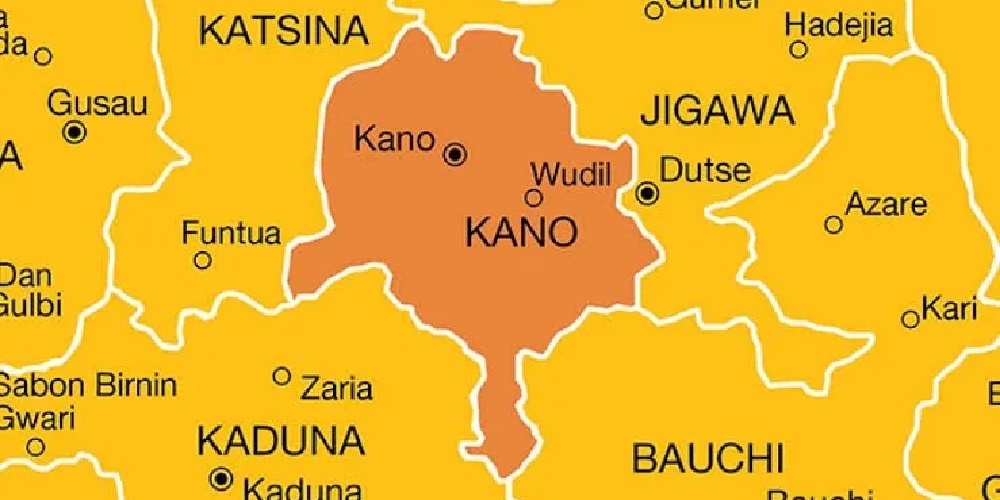
A Nigerian woman, Aishatu Umar, has died four months after surgeons left a pair of scissors inside her stomach during a surgery at the Abubakar Imam Urology Center in Kano State.


The mother of five passed away on Sunday, January 11, 2026 during a corrective surgery to remove the scissors.

Aisha’s brother-in-law, Abubakar Mohammed, who confirmed the incident in a Facebook post on Monday said she had undergone a surgery at the hospital in September 2025.

After the surgery, Aisha suffered excruciating abdominal pain for four months, prompting the family to take her back to the hospital.

Advertisement

Tests and scans revealed that a pair of scissors had been left inside her abdomen.

Unfortunately, Aisha passed away during the operation probably because the scissors was left inside his body for a long period of time.

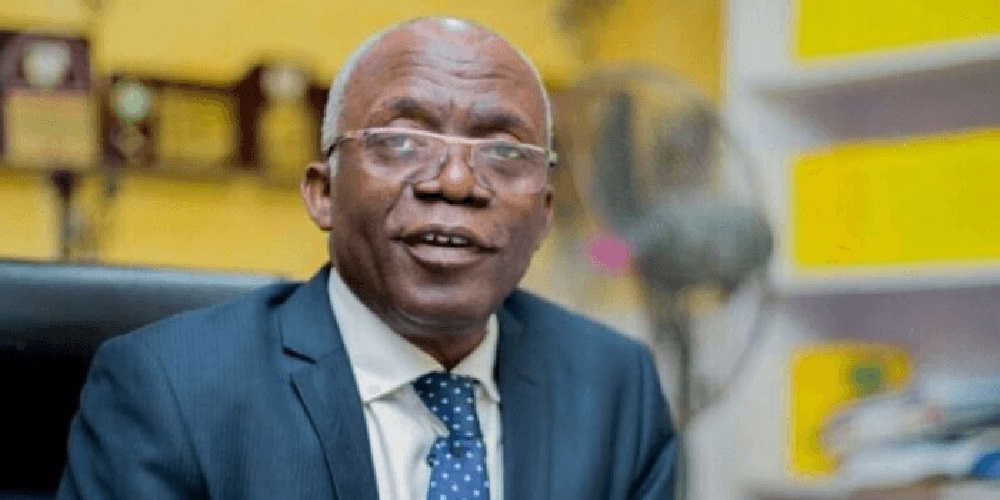
“The woman you see here is Aishatu Umar. She was a sister-in-law to me, She passed away yesterday around 1:00 AM. She is survived by her husband and five children,” he wrote.

“Living in Kano, she fell ill a few months ago and underwent surgery at the Abubakar Imam Urology Center in September.
“Following the surgery, she suffered from severe abdominal pain. Whenever she went back to the hospital, she was only given pain relievers. She suffered this pain for four months.

Advertisement

“Just two days ago, tests and scans were finally conducted, revealing that a pair of scissors had been left inside her body during the September operation.

“Efforts were being made to perform a corrective surgery yesterday, but her time had run out, and she passed away.
“​Is this not pure negligence? Truly, every soul has its appointed time, but how can professional doctors forget scissors inside a patient? This tarnishes the reputation of healthcare workers and health authorities.

“We call on the Kano State Government to investigate and take action. We call on the health regulatory bodies to investigate and take action. We demand justice for Aishatu Umar.”

Advertisement
Continue Reading
Advertisement

News

Repatriated Lady Narrates Husband’s Killing in South Africa, Vows Never to Return

Published

on

ADVERTISEMENT
Zoom Ad
ADVERTISEMENT
Zoom Ad

Emilia Godwin, a Nigerian has narrated a painful account of her experience in South Africa, alleging that her husband was killed there and declaring that she will never return to the country.

Godwin made the remarks shortly after arriving in Nigeria as part of a group of citizens repatriated from South Africa following recent tensions and xenophobic attacks targeting foreign nationals.

Speaking with journalists at the Murtala Muhammed International Airport in Lagos, she expressed relief at finally returning home and described her arrival in Nigeria as the end of a long and difficult chapter of her life.

‘I Am Happy to Be Back Home’

Advertisement

According to Godwin, life in South Africa had become increasingly challenging for many Nigerians, whom she claimed were often subjected to discrimination, intimidation and hostility.

“I am now in my country and I have my mouth to speak,” she said.

She alleged that Nigerians frequently faced harassment in public places and were often treated unfairly because of their nationality.

“They are wicked; they don’t like us. If you enter a taxi, they mock you, pull you and beat you,” she claimed.

Advertisement

Claims of Discrimination Against Nigerians

Godwin further alleged that many foreigners living in South Africa, particularly Nigerians, often felt powerless and unable to speak out against the treatment they experienced.

According to her, fear and insecurity forced many migrants to endure difficult conditions while trying to build better lives abroad.

“We were just like slaves there. We didn’t have a mouth to talk,” she said.

Advertisement

The returnee expressed gratitude to the Nigerian government for facilitating the evacuation process and helping affected citizens return home safely.

‘I Will Never Go Back’

Reflecting on her years in South Africa, Godwin revealed that she first moved to the country in 2014 but began experiencing concerns about her safety and wellbeing a few years later.

She explained that despite wanting to leave earlier, circumstances prevented her from returning to Nigeria until the recent evacuation exercise.

Advertisement

“I will never go back to South Africa,” she said.

She added that even her child, who was born in South Africa, would not be returning to the country.

“Even my child, who was born there, will never return,” she stated.

Emotional Account of Husband’s Death

Advertisement

Godwin also recounted the loss of her husband, alleging that he was killed while they were living in South Africa.

While she did not provide detailed information about the circumstances surrounding his death, she described the incident as one of the most painful experiences of her life.

The grieving woman further made allegations against some individuals in South Africa, claiming that her husband’s death was connected to personal and property-related disputes.

However, her claims have not been independently verified by authorities.

Advertisement

Growing Concerns Over Xenophobic Attacks

Her testimony comes amid renewed concerns over xenophobic violence in South Africa, where foreign nationals have periodically reported attacks, harassment and discrimination.

In recent years, several incidents involving migrants from different African countries have sparked diplomatic concerns and calls for stronger protections for foreign residents.

The latest evacuation exercise was organised following reports of renewed tensions that left many Nigerians fearful for their safety.

Advertisement

For Godwin, returning to Nigeria represents an opportunity to rebuild her life after years marked by loss, uncertainty and hardship.

Despite the trauma she says she endured, she expressed hope that her future and that of her child would be safer and more secure in their home country.

Continue Reading

News

Democracy Day: Nigerians are not smiling as insecurity, economic hardship are escalating—Abba Moro

Published

on

ADVERTISEMENT
Zoom Ad
ADVERTISEMENT
Zoom Ad

Senate Minority Leader, Senator Abba Moro, has expressed bitterney over the state of Nigeria’s democracy, saying democracy not working in the country as growing political, economic and security challenges despite celebrating another Democracy Day on June 12.

The opposition leader revealed this ahead of the commemoration, the Benue South senator said while Nigerians should celebrate the survival of democratic governance, many citizens remain dissatisfied with the direction of the nation’s democracy.

According to him, political parties across the country are battling internal crises, litigations and a lack of ideological identity, a situation he said has weakened democratic development.

“Every year that June 12 comes and Nigerians are still in democracy, we have reason to celebrate. But many Nigerians will not agree that our democracy is on the right track,” Moro said.

Advertisement

The lawmaker attributed frequent defections among politicians to the absence of strong ideological commitments within political parties, noting that many politicians now view parties merely as platforms for contesting elections and acquiring power.

Moro also painted a grim picture of the nation’s economy, saying inflation, unemployment and poverty have continued to worsen, leaving many Nigerians struggling to survive.

“Nigerians are hurting. Inflation is on the rise, unemployment is on the rise, poverty is increasing and insecurity is worsening,” he said.

While acknowledging that the Federal Government has introduced reforms aimed at stabilizing the economy, he stressed that such measures must translate into tangible improvements in the lives of ordinary citizens.

Advertisement

He noted that many Nigerians now find it difficult to afford healthcare, education and other basic necessities, warning that the current situation is unsustainable.

On security, the Minority Leader lamented the persistent attacks on communities in Benue State and other parts of the country, describing the violence as a major threat to national stability.

He criticized what he called the government’s reactive approach to insecurity and urged authorities to adopt more proactive measures to prevent attacks before they occur.

Moro also called on state governments to take greater responsibility for protecting lives and property, arguing that governors have access to resources that should be deployed to strengthen local security arrangements.

Advertisement

“The primary responsibility of government is the protection of lives and property. State governments must take responsibility and be more proactive in addressing insecurity,” he said.

Assessing the performance of the 10th Senate as it approaches its third anniversary, Moro said the upper chamber has recorded notable legislative achievements, including the consideration of hundreds of bills, motions and budget proposals.

According to him, about 844 bills have been introduced in the Senate, with 96 passed and more than 50 already signed into law.

Despite criticisms of the National Assembly, he maintained that the Senate has continued to fulfill its constitutional responsibilities through lawmaking, oversight and representation.

Advertisement

Looking ahead to the 2027 general elections, Moro dismissed concerns about opposition to his re-election bid, expressing confidence that his record of performance would earn him another term in office.

He cited various constituency projects across Benue South, including road construction, bridges, healthcare facilities, water projects, rural electrification schemes and educational interventions.

“I have not finished with my people yet, and my people have not finished with me,” he said.

The senator urged Nigerians to remain hopeful despite the country’s challenges, describing nation-building as a continuous process that requires patience, commitment and collective effort.

Advertisement

“We are not where we are supposed to be, but we must keep hope alive and believe that the efforts being made today will eventually yield results,” Moro stated.

Continue Reading

News

FG declares Friday June 12 public holiday for Democracy Day

Published

on

ADVERTISEMENT
Zoom Ad
ADVERTISEMENT
Zoom Ad

The Federal Government has declared Friday, June 12, 2026, a public holiday to mark 27 years of untruncated democratic rule.

Minister of Interior Dr Olubunmi Tunji-Ojo announced the holiday on Thursday, June 11, in a statement signed by the Permanent Secretary of the Ministry, Magdalene Ajani.

—“Democracy thrives on rule of law and accountability””—

Tunji-Ojo reaffirmed the government’s commitment to preserving democratic ideals, rule of law, transparency, accountability and inclusive governance as Nigeria commemorates June 12.

Advertisement

Advertisement

He described the date as significant in the nation’s history, honouring “the courage, resilience, and sacrifices of Nigerians whose efforts made democratic governance possible.”

“Their legacies continue to inform the values and responsibilities of the Nigerian state,” the minister said.

*Security and civic responsibility stressed*
The minister assured that the Ministry of Interior, in collaboration with security agencies, would take appropriate measures to maintain and strengthen internal security during the holiday.

Advertisement

He noted that a secured and stable environment remains essential for democracy and national development.

Tunji-Ojo urged Nigerians to use the holiday for civic reflection. “As we mark this historic day, every Nigerian is encouraged to remain law-abiding, uphold the institutions that sustain our democracy, and remember that the strength of any democracy lies ultimately in the character of its citizens,” he stated.

—June 12 significance—

June 12 was formally adopted as Democracy Day in 2018 to honour the annulled 1993 presidential election widely believed to have been won by MKO Abiola. This year’s commemoration marks 27 years since the return to civil rule in 1999.

Advertisement

The holiday applies to all public and private institutions nationwide. Banks, government offices and many businesses are expected to close, while essential services will remain operational.

Continue Reading

Trending

Copyright © 2024 Naija Blitz News