Connect with us

News

64% of Nigeria’s Prison Inmates Still Await Trial – CG Correctional Service

Published

on

ADVERTISEMENT
Zoom Ad
ADVERTISEMENT
Zoom Ad

…say 2025 budget paid only salaries, capital projects lag behind

…propose N198.85 billion budget for the 2026 fiscal year

By Gloria Ikibah

Nearly two-thirds of inmates held in correctional facilities across Nigeria are yet to be convicted, a stark figure that once again throws the spotlight on chronic congestion within the country’s prison system.

Advertisement

The Nigeria Correctional Service (NCoS)  revealed that awaiting trial inmates account for 64 per cent of the total custodial population nationwide , a situation that continues to pile pressure on already strained facilities.

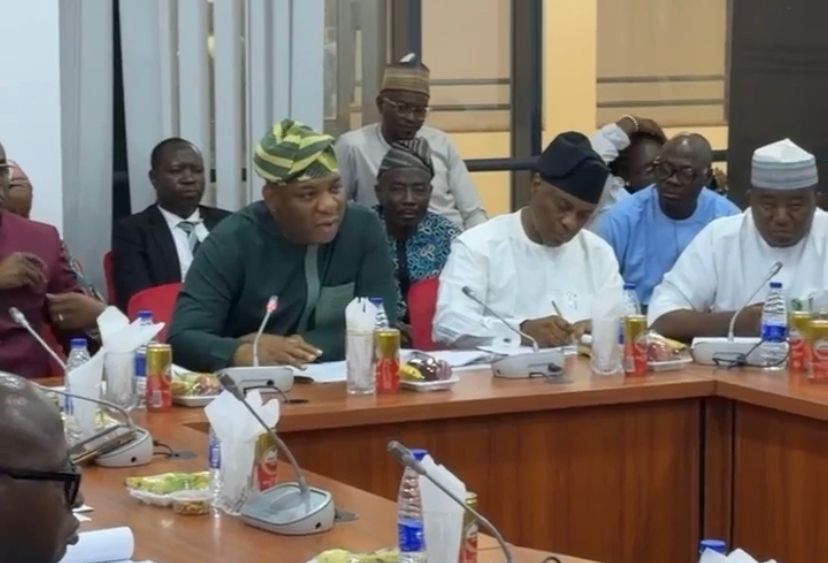
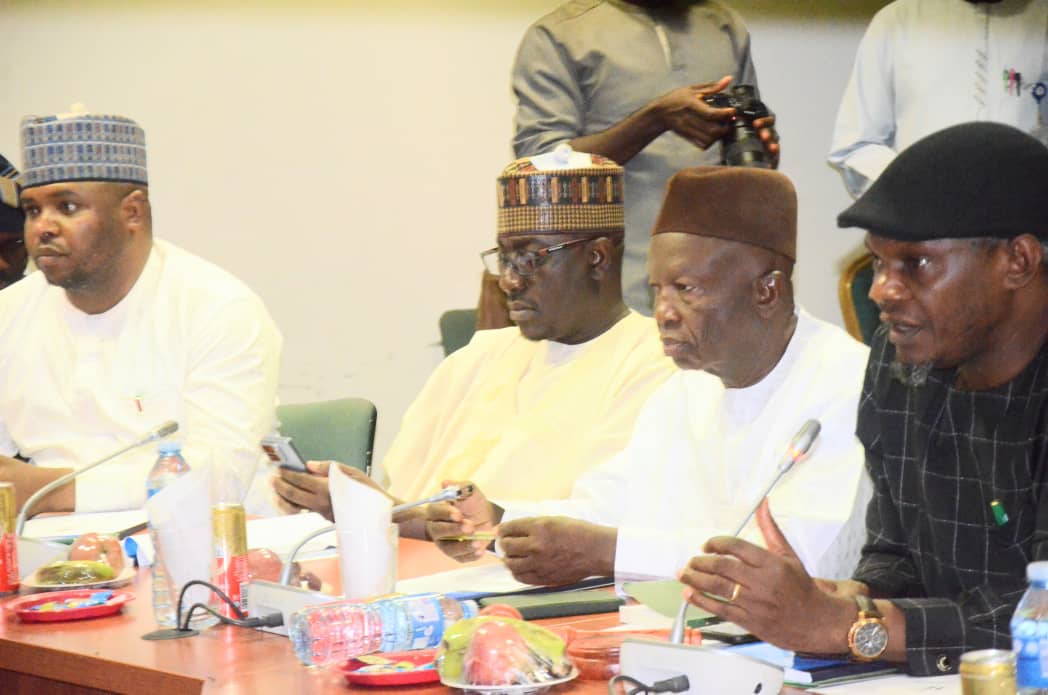
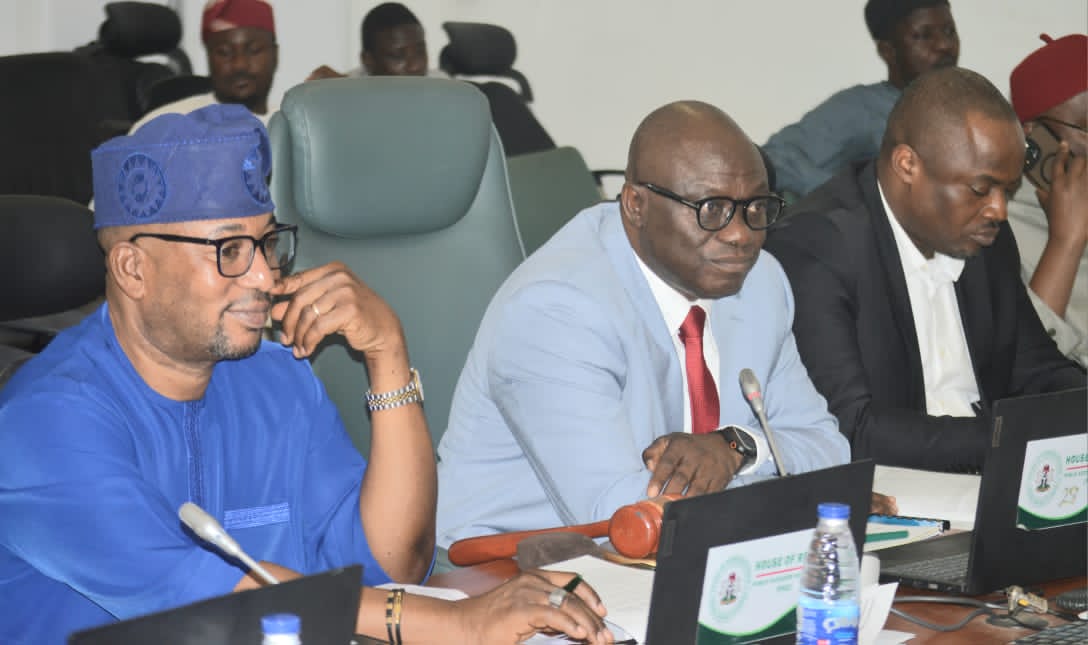
Controller-General of the Service, Sylvester Nwakuche, disclosed the figures on Tuesday while presenting the agency’s 2025 budget performance and 2026 projections before the House of Representatives Committee on Reformatory Institutions in Abuja.

According to Nwakuche, as of 9 February 2026, Nigeria’s total inmate population stood at 80,812. Of that number, 51,955 are awaiting trial, 24,913 are convicted prisoners, while 3,850 fall under other detention categories.

He described the Nigeria Correctional Service as a vital pillar within the criminal justice framework, charged not only with secure custody of legally detained persons but also with overseeing non-custodial measures, rehabilitation initiatives and reintegration efforts.

Advertisement

Nwakuche emphasised that the Service is duty-bound to ensure inmates are properly fed in line with the United Nations Minimum Standard Rules for the Treatment of Offenders.

Reviewing the 2025 financial year, the Controller-General disclosed that the Service received a total appropriation of N184.63 billion, covering personnel, overheads and capital expenditure.

Of the N124.31 billion approved for personnel costs, N112.68 billion, representing 90.6 per cent  was released and fully utilised for salaries, pensions and health insurance contributions under the Integrated Payroll and Personnel Information System (IPPIS).

Recurrent overhead releases stood at 73.7 per cent, with the final tranche for October 2025 only released in December. From the funds received, N27.28 billion, 71.7 per cent was spent on inmate feeding nationwide, while outstanding obligations for food rations reached N10.75 billion.

Advertisement

An additional N6.49 billion went towards operational expenses, including staff training, fuelling vehicles used for court duties, electricity bills, security services and maintenance of facilities.

However, capital funding recorded the weakest performance. Of the N14.50 billion allocated for capital projects, only N3.22 billion, 22.2 per cent  was released and utilised. This left N11.27 billion in unreleased funds tied to projects across the country.

Nwakuche explained that capital expenditure remains crucial for building and rehabilitating custodial centres, procuring operational vehicles, arms and security equipment, installing ICT systems, capturing inmate biometrics and supporting agricultural activities in prison farm centres.

Despite not operating as a revenue-generating body, the Service realised N84.65 million as internally generated revenue in 2025.

Advertisement

The agency currently has a workforce of 33,024 personnel, including uniformed officers, medical staff and civilian employees deployed across its headquarters, zonal formations, state commands and custodial centres nationwide.

Looking ahead, Nwakuche presented a proposed N198.85 billion budget for the 2026 fiscal year, appealing for increased funding to tackle pressing operational and infrastructure gaps.

The proposal covers personnel costs, overheads, inmate feeding, operational expenses and capital expenditure for both custodial and non-custodial services nationwide.
For 2026, N138.30 billion has been earmarked for personnel costs, reflecting a projected staff strength of 37,541 operating under four salary structures.

A further N50.40 billion has been proposed for recurrent overhead expenditure, including feeding and day-to-day operations. Of this sum, N14.83 billion is set aside to feed an estimated inmate population of 91,100 at a daily rate of N1,125 per inmate.

Advertisement

The Controller-General also appealed for the approval of an additional N90.38 billion to significantly boost capital funding, raising total capital allocation to about N100.50 billion to address infrastructure deficits and expand capacity across correctional facilities.

Beyond custodial operations, he requested a dedicated provision of N37.99 billion to strengthen non-custodial measures across all 774 local government areas in the country.

Nwakuche further sought legislative approval to clear outstanding liabilities, including N30.38 billion in promotion arrears covering 2019 to 2024 and N25.16 billion owed to local contractors for services rendered between 2023 and 2025.

He reaffirmed the Service’s commitment to ensuring custodial security while expanding rehabilitation and reintegration programmes, and expressed appreciation to the committee for its continued oversight and institutional backing.

Advertisement

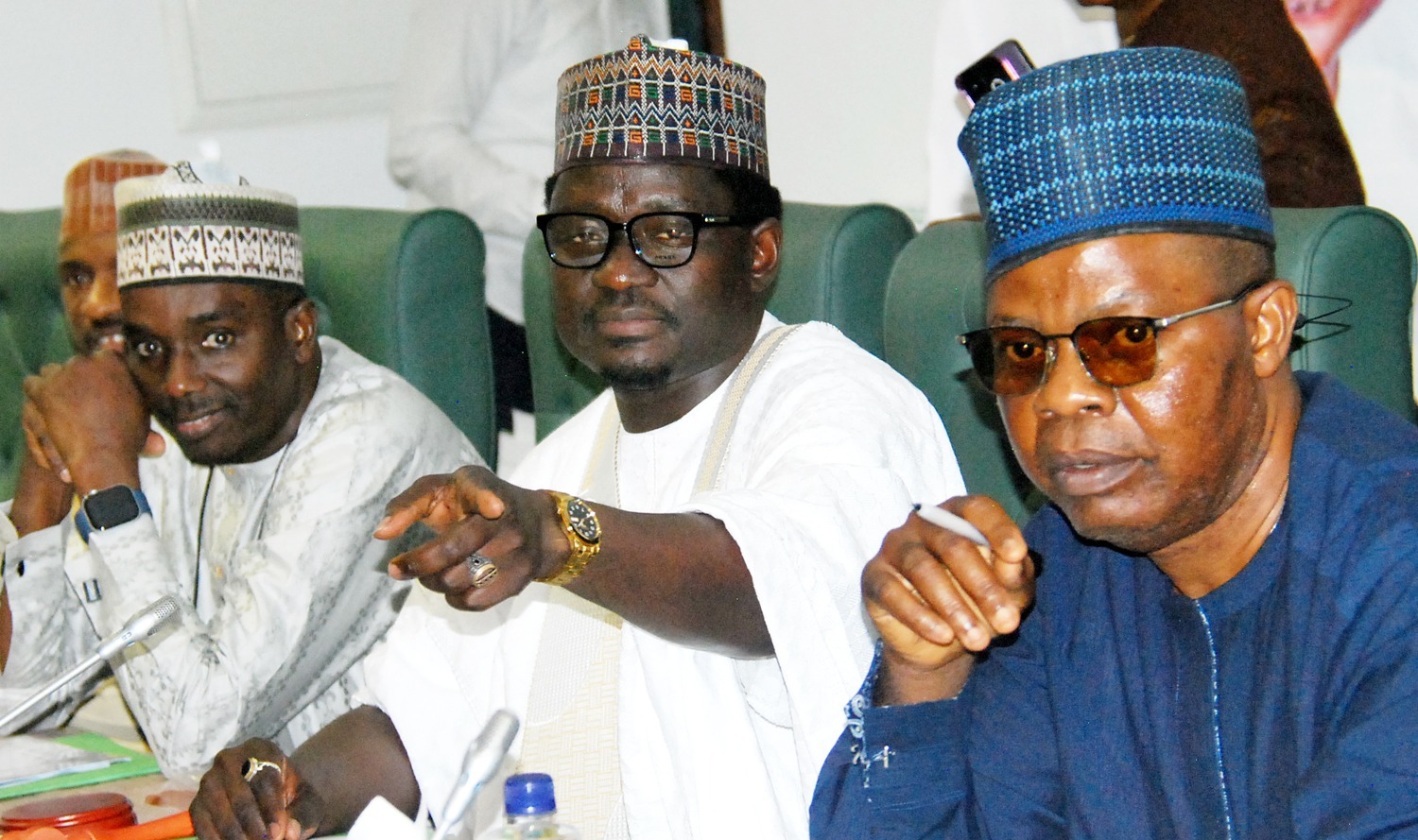
In his opening remarks, Chairman House Committee on Reformatory Institutions, Rep. Chinedu Ogah, pressed for sweeping reforms to Nigeria’s correctional system, warning that the sector can no longer afford to limp along under chronic underfunding and ageing infrastructure.

Ogah described the Nigeria Correctional Service as a cornerstone of national security, yet lamented what he called a persistent lack of adequate budgetary priority despite the weight of its responsibilities.

He pointed out that a significant number of correctional facilities across the country were constructed more than a century ago and have since fallen into serious disrepair — a situation he said has fuelled repeated security breaches and placed immense strain on daily operations.

“Our core duty here today is the budget defence of the 2026 Appropriations as presented by President Bola Ahmed Tinubu,” Ogah said, noting that the committee would not only assess the proposals for the coming year but also critically review previous spending and performance.

Advertisement

The lawmaker, who represents Ezza South/Ikwo Federal Constituency of Ebonyi State, urged the President to give assent to the Correctional Service Trust Fund Bill already passed by the National Assembly. He argued that the legislation would reinforce constitutional provisions empowering states to establish their own correctional facilities, thereby easing the burden currently borne by federal centres.

According to him, improved funding alongside decentralised infrastructure would strengthen rehabilitation efforts, vocational training schemes and agricultural initiatives — helping correctional facilities operate as true reform institutions rather than mere holding centres.

Ogah also drew attention to strides being made in expanding educational access within custodial facilities. He revealed that approximately 10 study centres of the National Open University of Nigeria have been established in correctional centres nationwide.

One such centre, he explained, was set up at the Abakaliki Correctional Centre through collaboration between university authorities and correctional officials, with academic programmes offered free of charge to inmates.

Advertisement

He said access to education has enabled numerous inmates to complete their studies and return to society with a renewed sense of direction and purpose. He appealed to private sector organisations to channel their corporate social responsibility initiatives towards correctional institutions, arguing that such support would help reduce reoffending and bolster national security.

Ogah further called on the National Security Adviser to lend greater backing to the operational needs of the Service. While other law enforcement agencies are responsible for arresting and prosecuting suspects, he stressed, correctional authorities carry the long-term responsibility of custody, rehabilitation and reintegration.

He commended correctional officers across the country for sustaining operations despite difficult conditions and disclosed that members of the National Assembly have personally contributed to oversight efforts and emergency interventions aimed at addressing urgent challenges within the system.

The committee, he added, will thoroughly examine the Service’s 2025 performance before reaching final decisions on the 2026 budget estimates.
Advertisement
Continue Reading
Advertisement

News

Lokoja Court order on NDC: Seriake Dickson vows party will challenge order

Published

on

ADVERTISEMENT
Zoom Ad
ADVERTISEMENT
Zoom Ad


Leader of the National Democratic Party, NDC Senator Henry Seriake Dickson has vowed that NDC will challenge court directive.

Dickson in a statement he e-signed stated that the order lacked legal merit and their team of legal experts have been kept on standby to rubbish the move.

He said : “This morning, I, like several other leaders, officials, candidates of the NDC, and members of the public, was jolted by the order issued by the Federal High Court sitting in Lokoja and presided over by Honourable Justice Isah Dashen.

Advertisement

“All I can say is that the order lacks legal merit and is intended to affect the foundational credibility and efforts of our party. The order is illegal and will not stand. It is against multi-party democracy, anti-democratic in nature, and aimed at narrowing and stifling the democratic space.

” It will be resisted by all of us and by all lovers of democracy in Nigeria.

“We have assembled our team of lawyers, and they are taking appropriate steps to set the order aside and restore normalcy. I call on all members, supporters, and candidates of the NDC to remain calm and continue with their normal political activities.

“This is only the first test of our commitment and resilience, both of which are not in doubt. Even this shall pass, and the NDC and all our candidates shall cruise to victory.

Advertisement

“We are not naive to expect that the tremendous progress we have achieved in the last five months would go without attack, but this particular development came from a very unlikely source.

“The application by an unregistered association, which is not a registered political party and has no exclusive right to any logo under the law, is shocking.

“Moreover, it was not a necessary party to the suit because it had no interest in the subject matter. It did not apply for registration in 2025, it was not one of the 171 associations that applied, nor was it among the 21 associations shortlisted for registration.

“So, we know where this is coming from. It is coming from those who are shocked by the progress the NDC has made within such a short period as a result of our hard work and commitment to deepening multi-party democracy.

Advertisement

“We will not allow this to slow us down or break our spirit. The struggle must continue.

“We will use appropriate judicial channels to correct the judicial anomaly that occurred under the watch of Honourable Justice Dashen. He has clearly erred in law, and we will take steps to correct it.

“All our candidates, supporters, and teeming voters across the country and beyond should hold on firmly and keep the faith. This development shows that our efforts have not gone unnoticed.

“I would also like to refer to my favourite quote on struggles “First they ignore you, then they laugh at you, then they attack you, then you win.”

Advertisement

“We are under attack, as I have repeatedly said we should prepare for challenges such as this. But thereafter, we shall win.

“Even with today’s development, thousands of Nigerians are joining us in solidarity. In fact, thousands of Nigerians across the country registered as NDC members today to show their solidarity, sympathy and support for our party. All things work together for good.

” Men may act with evil intentions, but if it is not the will of God, He turns it around for our good.

“I sincerely thank Nigerians for the confidence they continue to repose in the NDC. Your support, encouragement, and belief in our vision only strengthen our resolve to continue the struggle to deepen multi-party democracy in Nigeria.

Advertisement
Continue Reading

News

OpenAI restricts limited release of new model to US only

Published

on

By

ADVERTISEMENT
Zoom Ad
ADVERTISEMENT
Zoom Ad

OpenAI on Friday launched a US-only preview of its latest powerful AI model series to a limited group of partners at the request of the US government, the company said.

The release comes two weeks after the White House took Silicon Valley by surprise by ordering OpenAI’s rival Anthropic to ban all foreign nationals from accessing its Fable 5 and Mythos 5 models, citing national security concerns.

Anthropic swiftly shut down all access to those models, saying it could not reliably comply with the restriction on foreign nationals.

The latest models from leading AI companies, such as Anthropic’s Mythos series and now OpenAI’s GPT-5.6, have drawn major concerns over their reportedly unprecedented ability to identify software vulnerabilities — weaknesses in code that hackers can exploit.

Advertisement

Under pressure over the novelty of their capabilities, Trump earlier this month signed an executive order setting up a voluntary federal review of national security risks in advanced AI models before their release.

The White House has communicated little about how it will enforce its executive order — in which companies are understood to be participating voluntarily — and what models would fall under its review rules.

The intervention was striking for a White House that has otherwise pushed to loosen AI oversight — even moving to block states from writing their own rules.

The strong action against Anthropic has drawn accusations of government overreach, and OpenAI said it was uncomfortable with the process it was required to follow for its new models.

Advertisement

OpenAI said it briefed the US government on its new models’ capabilities ahead of the launch and, at the government’s request, is beginning with a limited preview for a select group of trusted partners whose identities have been shared with authorities.

The partners are US-based, but OpenAI said overseas employees at those companies or entities would also have access to the new models.

“We don’t believe this kind of government access process should become the long-term default,” OpenAI said in a blog post.

“It keeps the best tools from users, developers, enterprises, cyber defenders, and global partners who need them. We are taking this short-term step because we believe it is the strongest path to broader availability in the coming weeks.”

Advertisement

When Anthropic was initially targeted, some believed the safety-focused company was being unfairly singled out by the Trump administration for political reasons.

In an earlier clash with the White House, Anthropic angered Trump’s team by refusing to allow its technology to be used for mass surveillance and autonomous weapons, leading the Pentagon to cancel its contracts with the company.

That feud is now being litigated in two separate lawsuits.

– Three new models –

Advertisement

OpenAI’s GPT-5.6 series comprises three new models: Sol, the company’s new flagship; Terra, a mid-range model for everyday work; and Luna, a fast, low-cost option.

Once broadly available, Terra would be priced at half the cost of its predecessor GPT-5.5, the company said, as it seeks to lock in customers amid fierce competition from Anthropic and Google.

Both OpenAI and Anthropic have filed confidential IPO documents with US regulators and are targeting public listings at valuations approaching $1 trillion, raising the commercial stakes of the AI arms race between them.

AFP

Advertisement
Continue Reading

News

Edo CJ constitutes special court to try cultists, kidnappers

Published

on

By

ADVERTISEMENT
Zoom Ad
ADVERTISEMENT
Zoom Ad

The Chief Judge of Edo State, Justice Daniel Okungbowa, has set up a special court to try cases relating to cultism and kidnapping in the State.

This was disclosed in a statement by the Chief Registrar of the State High Court, B.O Osawaru, dated June 25, 2026, and titled: ‘Establishment and Composition of a Special Criminal Court for Edo State sitting in Benin City.’

According to Osawaru, the establishment of the Special Court, which is to be known as “Special Criminal Court 1”, would take effect from Wednesday, July 1, 2026.

Osawaru, who noted that the court will be sitting in Benin City, the state capital, said it was “pursuant to the request by His Excellency, the Governor of Edo State, Senator Monday Okpebholo, for the constitution of a Special Court for offences relating to cultism and kidnapping, an additional court to be known as “Special Criminal Court 1” is hereby established with effect from Wednesday, the 1st day of July, 2026, for offences relating to cultism and kidnapping and such other matters as may be assigned to the court by the Honourable Chief Judge of Edo State.”

Advertisement

Recall that Governor Monday Okpebholo had on June 18, 2026, during the parade of arrested suspected kidnappers and others for various criminal activities by the Commissioner of Police, Edo State Command, Monday Agbonika, threatened to set up a special court to try cases relating to cultism and kidnapping.

The Governor, in living up to his threat on June 19, 2026, wrote to the Chief Judge of the state requesting him to set up the special court.

The Governor’s request was contained in a letter dated June 19, 2026 and signed by Umar Musa Ikhilor, the Secretary to the State Government and addressed to the Chief Judge of the state.

The letter with reference number SGA.710/T/40 was also received by the office of the chief judge on the same date, June 19, 2026, at about 3:16pm.

Advertisement

The said letter is titled, ”Request for the constitution of a special court for offences relating to cultism and kidnapping”.

The SSG said the request was necessitated by the governor’s unwavering commitment to tackling and eradicating the menace of cultism and kidnapping in the State, as well as strengthening the administration of criminal justice.

The letter also requested the Chief Judge to nominate three judges or such numbers as he may deem fit, to constitute the Special Court.

Advertisement
Continue Reading

Trending

Copyright © 2024 Naija Blitz News