Connect with us

Foreign

US inflation surges 3.3% as Iran war impact bites

Published

on

ADVERTISEMENT
Zoom Ad
ADVERTISEMENT
Zoom Ad

Inflation in the United States rose sharply in March, government data showed Wednesday, as higher energy prices due to the war in the Middle East hit Americans hard.


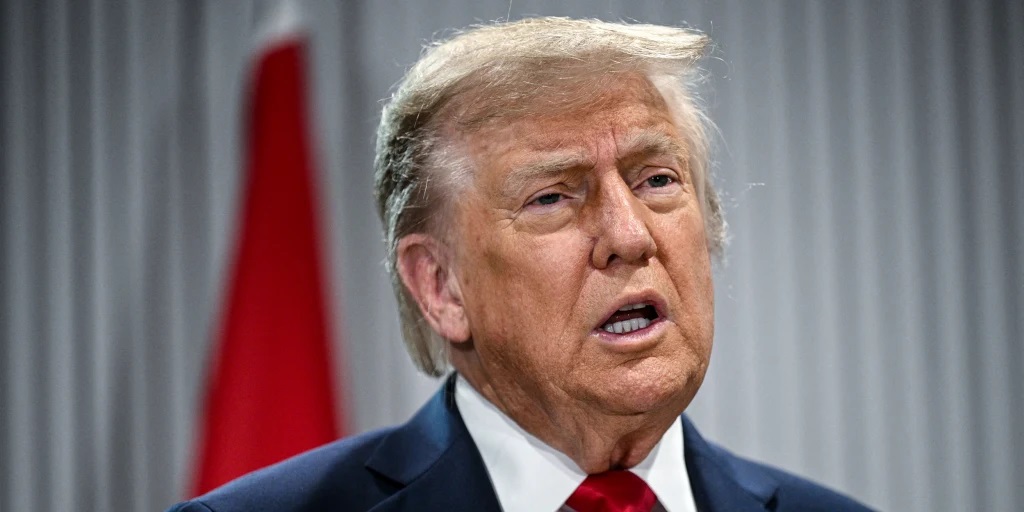
The nationwide sticker shock put pressure on President Donald Trump, who has ordered peace talks with Iran and faces mid-term elections in November.

The rate of inflation rose to 3.3 percent year-on-year in March, the US Bureau of Labor Statistics (BLS). By comparison, this same consumer price index (CPI) rose 2.4 percent year-on-year a month earlier.

Gasoline prices surged by 21.2 percent between February and March — the largest monthly increase since the government began publishing a related index in 1967, the US Bureau of Labor Statistics (BLS) said.

Advertisement

Excluding volatile energy and food prices, the inflation rate rose 2.6 percent compared to 2.5 a month earlier.

Markets had anticipated the surge, according to the consensus published by MarketWatch.

The United States and Israel began bombing Iran on February 28 and Tehran retaliated by blocking traffic in the Strait of Hormuz, a waterway used to carry a fifth of the world’s oil and gas deliveries.

Despite being the world’s top producer of crude oil, the United States also felt the pain, as prices at the gas pump shot up.

Advertisement

A gallon (3.78 liters) of regular gasoline currently costs an average of $4.15 in the United States, compared to approximately $3 just before the war.

– More price pain ahead –
The Trump administration — elected in part on a promise to quash inflation — maintains that the war’s economic disruptions will be temporary.

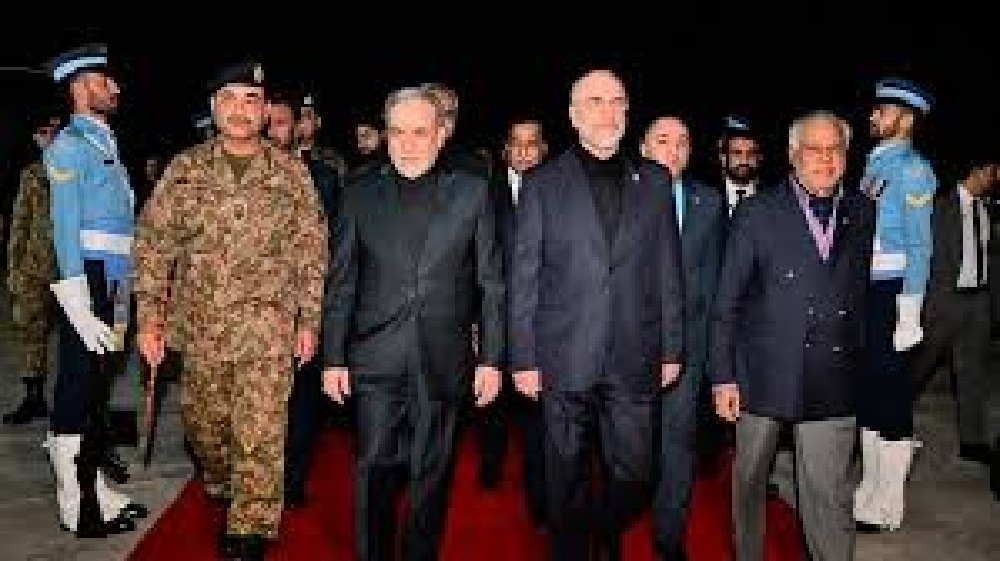
US Vice President JD Vance said Friday he hoped for a “positive” outcome as he departed Washington for US-Iran peace talks being held in Pakistan this weekend.

But experts predicted more economic pain ahead due to the war in Iran, especially for middle and lower-income households in the United States already squeezed by rising energy and airfare prices.

Advertisement

Heather Long, chief economist at Navy Federal Credit Union, said that inflation soared in March to the highest level in almost two years.

“This is only the beginning. Food prices, travel and shipping costs are all going up in April and will exacerbate the pain,” she said.

“March CPI was as expected, so no surprises. But there is a huge increase in fuel prices, boosting inflation” Christopher Low of FHN Financial told AFP.

“And we got the news last night that the ceasefire is not being honored by either side, apparently,” he said. “There’s still very little traffic through the Strait of Hormuz.”

Advertisement

When Trump returned to the White House in January 2025, inflation was falling, compared to a peak in the spring of 2022.

The war in Ukraine, which had started a few months earlier, had driven prices at the pump even higher than they are today.

The CPI index was rising by 2.3 percent year-over-year in April 2025 — coinciding with the US president’s announcement of a sharp increase in tariffs on imported goods.

Inflation started to creep up, though Washington refused to acknowledge this as a consequence of the tariff war.

Advertisement

Price growth slowed again late last year, largely thanks to gasoline prices, relatively moderate at the time.

During the Federal Reserve’s most recent meeting in mid-March, Chairman Jerome Powell explained that the war risked delaying efforts to bring inflation under control in the United States.

The US central bank’s target for inflation is two percent — an objective it has not met in five years due to a succession of shocks to the economy: the Covid-19 pandemic, the war in Ukraine, and tariffs.
Advertisement
Continue Reading
Advertisement

Foreign

Woman swept away as flash floods paralyse New York City

Published

on

By

ADVERTISEMENT
Zoom Ad
ADVERTISEMENT
Zoom Ad

Torrential rainfall has brought parts of New York City to a standstill after flash floods submerged roads, disrupted transport systems, and triggered chaotic scenes across multiple boroughs, including Queens and Brooklyn.

A viral video circulating on social media captured the intensity of the flooding, showing a woman struggling in powerful currents after attempting to escape a stranded bus.

The footage, widely shared online, highlighted the dangerous conditions as emergency responders rushed to affected areas.

Heavy downpours overwhelmed drainage systems on Wednesday, with authorities reporting that some areas received about 5 centimetres of rain within just one hour, turning streets and underpasses into fast-moving streams, leaving vehicles stranded and commuters trapped.

Advertisement

Reports say that in Brooklyn and Queens, the impact was particularly severe as floodwaters rose rapidly, forcing some motorists to abandon their vehicles while others waited for rescue on rooftops and elevated ground.

Transit authorities confirmed major disruptions across the city’s transport network.

Officials from New York Emergency Management issued urgent warnings as conditions worsened, advising residents to avoid floodwaters and move to higher ground where necessary.

Amid the ongoing crisis, authorities also referenced a separate fatal incident in Manhattan earlier in the week involving an open manhole.

Advertisement

The victim, identified as 56-year-old Donika Gocaj, died after accidentally stepping into a 10-foot-deep utility opening near Fifth Avenue.

They added, “Our thoughts remain with her family, and safety remains our top priority.”

Authorities say investigations into both the flooding impact and the manhole incident are ongoing as the city continues to recover from severe weather conditions.

Advertisement
Continue Reading

Foreign

Trump may skip son’s wedding over Iran war – Report

Published

on

By

ADVERTISEMENT
Zoom Ad
ADVERTISEMENT
Zoom Ad

United States President Donald Trump announced on Thursday, May 21, 2026, that he is uncertain whether he will attend his eldest son’s weekend wedding due to pressing geopolitical demands surrounding the war in Iran. The President’s eldest son, 48-year-old Donald Trump Jr., is scheduled to marry Palm Beach socialite Bettina Anderson, 39, over the Memorial Day holiday weekend in the Bahamas.

Despite the deeply personal milestone, the commander-in-chief revealed to reporters in the Oval Office that the worsening international conflict has severely restricted his schedule, complicating his ability to leave Washington during a critical diplomatic juncture.

The timing of the destination nuptials coincides with an intensely scrutinized push by the administration to broker an exit strategy for the highly unpopular war, which has dramatically deflated the President’s domestic approval ratings. Public dissatisfaction has intensified in recent weeks, with voters expressing deep anger over skyrocketing costs of living ahead of November’s high-stakes midterm elections.

The couple had initially explored hosting a grand, high-profile wedding at the White House, but those plans were ultimately scaled back to an intimate destination ceremony on a private island in the Bahamas to avoid political blowback during wartime.

Advertisement

Addressing the media regarding his potential travel plans, the President emphasized the precarious public relations situation he faces while American forces remain heavily engaged in the Middle East stalemate. “He’d like me to go. It’s going to be just a small little private affair and I’m going to try and make it,” Trump told reporters.

“I said, ‘This is not good timing for me. I have a thing called Iran and other things.’ That’s one I can’t win on. If I do attend, I get killed. If I don’t attend, I get killed … by the fake news, of course.”

Continue Reading

Foreign

Xi, Putin signal united front against US in Beijing talks

Published

on

By

ADVERTISEMENT
Zoom Ad
ADVERTISEMENT
Zoom Ad

Chinese leader Xi Jinping and visiting Russian President Vladimir Putin have signalled a united front against Washington during a summit in Beijing, warning against a global return to the “law of the jungle”.

In a joint statement, China and Russia took aim at US President Donald Trump’s plans for a $175bn “Golden Dome” defence system, which would create a new missile field in the Midwest.

The duo also criticised the expiry of the last US-Russia arms control treaty, which fell to the wayside in February when Trump failed to respond to Moscow’s proposal to extend it by a year.

Wednesday’s summit – which came a week after Xi hosted Trump in Beijing – kicked off with fanfare in the Chinese capital, complete with a red carpet and a military band playing both the Chinese and Russian national anthems.

Advertisement

In their opening remarks, the leaders emphasised strengthening ties and cooperation between Russia and China amid an increasingly fractured world order.

“Even against the backdrop of unfavourable external factors, our interaction and economic cooperation demonstrate strong momentum,” Russian media reported Putin telling Xi.

Xi meanwhile lauded the “unyielding relationship” between China and Russia.

“We have been able to continuously deepen our political mutual trust and strategic coordination with a resilience that remains unyielding despite trials and tribulations,” Xi said.

Advertisement

The Chinese leader also addressed the United States-Israeli war on Iran, telling his Russian counterpart that further conflict was “inadvisable” and a ceasefire was necessary.

“A comprehensive ceasefire is of utmost urgency, resuming hostilities is even more inadvisable and maintaining negotiations is particularly important,” Xi said.

A separate joint statement advised that “there is a danger of fragmentation of the international community and a return to the ‘law of the jungle’”.

“Attempts by a number of states to unilaterally manage global affairs, impose their interests on the entire world, and limit the sovereign development of other countries, in the spirit of the colonial era, have failed,” the statement added.

Advertisement

Energy talks

Among the chief topics of discussion was the energy sector, which Putin called the “driving force of economic cooperation” in Russian-Chinese relations.

China asserted itself as a major buyer of Russian oil and trading partner after Western countries largely cut economic ties with Moscow in response to Russia’s full-scale invasion of Ukraine.

Al Jazeera’s Katrina Yu, reporting from Beijing, said that while the two leaders planned to sign some 40 agreements covering everything from the economy and tourism to education, energy security remained Putin’s priority.

Advertisement

“Since the war in Ukraine, any gas sales that were previously heading to Europe, that is all dried up, and Russia is in desperate need of revenue to replace that,” she said.

The talks did not lead to a new consensus on a long-discussed gas pipeline known as Power of Siberia 2, however.

Kremlin spokesperson Dmitry Peskov told Russian media that the two sides had reached a “basic understanding” on the pipeline, including its route, but that there was no “clear timeline” for a buildout.

Xi said that cooperation in energy and resource connectivity should be the “ballast stone” between the two countries, but did not mention the pipeline.

Advertisement

‘Sovereign foreign policy’

Although they received the same red-carpet welcome ceremony, Putin’s visit has so far contrasted sharply with Trump’s trip last week

The Russian president is marking 25 years of the Sino-Russian friendship and has visited China dozens of times, meeting with Xi on more than 40 other occasions.

“So this visit will really be about deepening existing coordination and cooperation,” Al Jazeera’s Yu said.

Advertisement

Putin pledged on Wednesday that Russia and China would pursue an “independent and sovereign” foreign policy programme together to play a “stabilising role on the global stage”.

Xi, for his part, said Beijing and Moscow had deepened “political mutual trust and strategic cooperation” in a world that is “increasingly chaotic” and where “hegemony is overwhelming”.

The comments made it clear that “Beijing and Moscow share a depth of established trust that simply does not exist between China and the US”, Yu said.

At the same time, “Xi is calling for a more multipolar world, where the US has less power and influence”, she added.

Advertisement

Putin is being accompanied by a large delegation of Russian businesspeople and government leaders.

In a video address released before meeting Xi, Putin said Russia and China were prepared to cooperate with each other on the “core interests ‌of ⁠the two countries, including the protection of sovereignty and national unity”.

“We are not aligning against anyone, but working ⁠for the cause of peace and universal prosperity,” Putin said.

Advertisement
Continue Reading

Trending

Copyright © 2024 Naija Blitz News