News
Obika Justifies Party Switches, Insists Track Record Should Outweigh Affiliation
- /home/naijuinz/public_html/wp-content/plugins/mvp-social-buttons/mvp-social-buttons.php on line 27
https://naijablitznews.com/wp-content/uploads/2026/05/IMG-20260512-WA0015-1000x600.jpg&description=Obika Justifies Party Switches, Insists Track Record Should Outweigh Affiliation', 'pinterestShare', 'width=750,height=350'); return false;" title="Pin This Post">
- Share
- Tweet /home/naijuinz/public_html/wp-content/plugins/mvp-social-buttons/mvp-social-buttons.php on line 72
https://naijablitznews.com/wp-content/uploads/2026/05/IMG-20260512-WA0015-1000x600.jpg&description=Obika Justifies Party Switches, Insists Track Record Should Outweigh Affiliation', 'pinterestShare', 'width=750,height=350'); return false;" title="Pin This Post">
By Gloria Ikibah
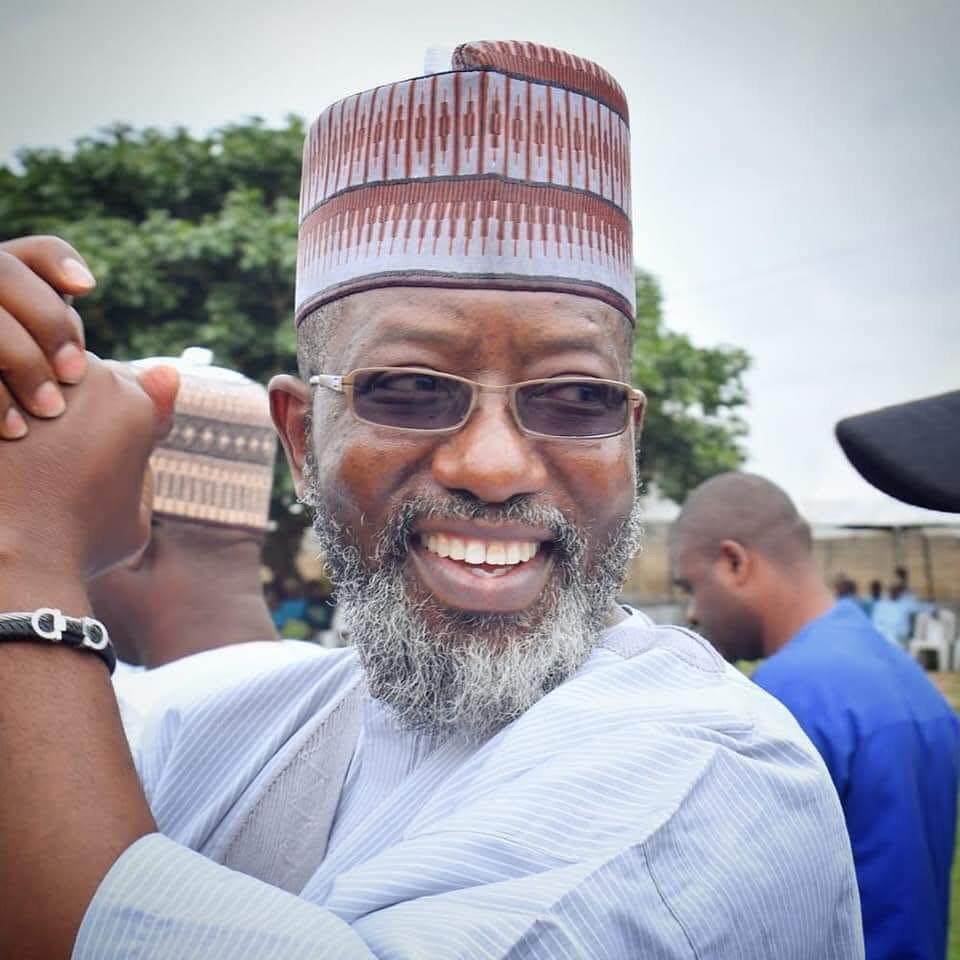
A member of the House of Representatives representing Abuja Municipal Area Council/Bwari Federal Constituency, Joshua Chinedu Obika, has defended his movement between political parties, arguing that shifting alliances reflect changing political conditions rather than a lack of consistency.
His position comes amid criticism over his transition from the Labour Party to the All Progressives Congress, and later to the National Democratic Coalition.

He maintained that voters should focus more on the performance and tangible impact of elected officials than on the platforms under which they contest elections.
At a press conference in Abuja on Tuesday, Rep. Obika pointed to prolonged internal disputes within the Labour Party as a key factor behind his decision, noting that the crisis weakened the party’s structure and created uncertainty for its members. He referenced challenges encountered during area council elections in the Federal Capital Territory, including administrative setbacks involving the Independent National Electoral Commission, as further signs of organisational strain.
According to him, the instability raised concerns about the party’s ability to serve as a reliable platform in future electoral contests, prompting many members and supporters to reconsider their options.
Although he initially resisted leaving the party out of loyalty to Peter Obi, whom he regards as a key political figure, he said his stance shifted once it became evident that Obi had aligned with the coalition built around the NDC.
Even so, he expressed caution about the coalition’s internal dynamics, citing concerns that several influential figures involved have longstanding ties to Atiku Abubakar. He suggested that uncertainties over leadership within the alliance could create divisions among supporters and complicate prospects for candidates running under its banner.
“When we are preaching for a New Nigeria, we cannot use old wine to mix with new wine,” Obika stated.
He also argued that Peter Obi and Rabiu Musa Kwankwaso command some of the most committed grassroots followings in the country, suggesting that closer cooperation between them could advance national cohesion and reform efforts.
The lawmaker explained that his brief move to the All Progressives Congress was influenced by its relative stability at a time when the Labour Party was grappling with internal disputes. He later aligned with the National Democratic Coalition following Obi’s decision to join the platform.
In defending his switches, he maintained that political realignments are a common feature of Nigeria’s democratic landscape, with politicians often changing platforms in response to evolving circumstances while seeking to remain relevant and pursue their political objectives.
“Even Peter Obi has crossed several parties. President Bola Tinubu has also done same. What matters is identifying people who are committed to the betterment of the country,” he said.
Obika also accused political opponents of sponsoring attacks against him in an attempt to damage his reputation ahead of future elections. According to him, the focus of public discourse should instead be on the quality of representation and tangible impact delivered to constituents.
Highlighting his legislative achievements at the National Assembly, the lawmaker listed several bills aimed at addressing long-standing developmental and social challenges in the Federal Capital Territory.
The proposed legislations include bills seeking to establish an Original Inhabitants Resettlement and Compensation Agency, an FCT Scholarship Board, an FCT School of Nursing and Midwifery, and an FCT Emergency Management Agency.
He explained that the proposed compensation agency was designed to address issues surrounding demolitions, resettlement, and compensation for indigenous communities displaced by development projects in the FCT.
Obika further stated that the scholarship board bill seeks to institutionalise transparency and accountability in the management of scholarship funds while reserving 30 percent of scholarship opportunities for original inhabitants of the FCT.
On constituency interventions, the lawmaker said his office had facilitated the construction and renovation of schools, rehabilitation of boreholes in public schools, distribution of educational materials, and scholarship opportunities for students within and outside the constituency.
According to him, over 5,000 school bags and 15,000 books have been distributed to students, while dozens of beneficiaries have been placed on scholarship at the College of Education, Zuba.
He further revealed that his office secured foreign scholarship opportunities for about 50 youths to study medicine, engineering, and other professional courses in Russia through partnerships with international organisations and private collaborators.
The lawmaker also highlighted several empowerment initiatives undertaken by his office, including the distribution of sewing machines, tricycles, block-moulding machines, laundry equipment, and other vocational tools to more than 400 beneficiaries.
Obika added that rural roads across parts of the constituency had been graded to improve accessibility ahead of the rainy season, while a bridge connecting a community in Kagini to a junior secondary school was nearing completion.
He called on politicians across party lines to unite ahead of the 2027 general elections, insisting that Nigerians are more concerned about leadership, development, and improved living conditions than political affiliations.
“The issue is not who crossed from one party to another. The issue should be what impact has been made on the lives of the people,” he said.
News
NUT Condemns Attacks On Schools, Warns Of Possible Strike
The Nigeria Union of Teachers has condemned the recent attacks on schools, teachers and students in parts of the country, describing the incidents as barbaric and inhuman.
In a statement jointly signed by the National President of the union, Audu Amba, and the Secretary General, Clinton Ikpitibo, the union said schools, which should serve as safe spaces for teaching and learning, have become targets of attacks by armed bandits and terrorists.
The union said the development has created fear, panic and emotional trauma among teachers, students, parents and members of affected communities.
The statement followed attacks on Local Authority Primary School, Ahoro-Esinele, Community High School, Ahoro-Esinele, and Baptist Nursery and Primary School, Yawota, all in Oriire Local Government Area of Oyo State on May 15, 2026.
According to the union, the attacks led to the abduction of a school principal, seven teachers and more than 30 pupils and students, while one teacher was shot dead during the incident.
The NUT said it was particularly painful that the slain teacher was wearing his union attire at the time he was killed, describing him as committed to the teaching profession and the advancement of education.
The union also expressed concern over reports that one of the abducted teachers was later beheaded by the attackers.
It further noted that on the same day, more than 40 pupils and students were reportedly abducted by armed bandits from Mussa Primary and Junior Secondary Schools in Askira-Uba Local Government Area of Borno State.
The NUT said it stands in solidarity with the affected schools, the families of the murdered teachers, the abducted principal, teachers, pupils and students.
The union called on security agencies to intensify rescue operations to secure the safe release of all abducted victims without delay.
It also urged the Federal Government and affected state governments to strengthen security around schools and adopt proactive measures to prevent future attacks.
According to the union, the continued attacks on schools pose a major threat to the education sector and the future of children and the country at large.
“Teachers cannot effectively discharge their duties in an atmosphere of fear and insecurity, where they are subjected to inhuman acts of kidnapping, maiming and killing,” the statement said.
The NUT warned that teachers may be forced to withdraw their services if attacks on schools continue unabated.
The union called on governments at all levels to take urgent action to stop attacks on schools and ensure the safety of teachers, learners and host communities.
News
FG begins payment of arrears of BEA scholars abroad
The Federal Government has commenced the payment of approved outstanding 2025 allowances to beneficiaries of the Bilateral Education Agreement (BEA) scholarship abroad.
The government announced this in a statement signed by Boriowo Folasade, Director, Press and Public Relations, Federal Ministry of Education.
“The Federal Ministry of Education wishes to inform the general public, particularly Nigerian scholars under the BEA Scholarship Programme, that the Central Bank of Nigeria (CBN) has successfully remitted the approved funds to Nigerian Embassies and Missions for immediate disbursement to eligible beneficiaries,” the statement said.
The Minister of Education, Dr. Maruf Tunji Alausa, disclosed that the released funds represented 50 per cent of the approved outstanding obligations for 2025, while efforts are ongoing to facilitate the release of the balance in due course.
According to the Minister, the funds have already reached the respective embassy accounts, and the affected embassies are expected to commence immediate payment to eligible scholars.
The government advised beneficiaries to monitor their accounts as payments are expected to begin reflecting accordingly.
Alausa noted that the development reflected the unwavering commitment of President Bola Tinubu to the welfare, academic progress and wellbeing of Nigerian students abroad, in line with the Renewed Hope Agenda of the present administration.
The minister appreciated the patience, understanding and resilience demonstrated by the affected scholars, stressing that the federal government remained resolute in ensuring that no Nigerian student pursuing academic excellence under government scholarship schemes was left unsupported.
He reiterated the commitment of the government to fulfilling all legitimate obligations to Nigerian scholars and sustaining policies and interventions that promote access to quality education, student welfare and national development through strategic human capital advancement.
The minister reassured all stakeholders of the continued dedication of the government to supporting Nigerian students globally and ensuring the effective implementation of all government scholarship programmes.
News
Tinubu orders MDAs to end manual processes
President Bola Ahmed Tinubu has directed all Ministries, Departments and Agencies (MDAs) to fully embrace digitisation, declaring that the era of manual inefficiency in Nigeria’s public service must come to an end.
Tinubu gave the directive on Wednesday at the opening of the International Civil Service Conference 2026 in Abuja, where he said the Federal Government was repositioning the Civil Service to deliver faster, transparent and citizen-focused services.
Represented by the Secretary to the Government of the Federation, George Akume, the President said the public service under his Renewed Hope Agenda was shifting from policy formulation to measurable results.
He disclosed that 38 Ministries and Extra-Ministerial Departments had already transitioned to fully paperless and secure electronic workflow systems, describing the development as a major milestone in governance reform.
“When we spoke of digitalisation in 2025, some may have considered it an ambition for the distant future. Today, with 38 Ministries and Extra-Ministerial Departments operating on a secure, paperless and end-to-end electronic workflow system, we are sending a clear message: Nigeria is building a public service that enables progress,” he said.
Tinubu stressed that bureaucracy must no longer serve as a bottleneck to development but as a driver of efficiency, innovation and inclusive growth.
He also revealed that the ongoing Personnel Audit and Skills Gap Analysis initiated after the previous conference was nearing completion, noting that the exercise would help identify competency gaps and reposition civil servants for modern governance demands.
“We are identifying gaps, strengthening competencies and ensuring that the right people are placed in the right roles, equipped with the digital skills and professional discipline required for 21st-century governance,” he stated.
The President linked the reforms to the Federal Government’s Project BRIDGE initiative — Building Resilient Digital Infrastructure for Growth — which he said would improve connectivity, create jobs and strengthen service delivery nationwide.
He consequently directed all MDAs to sustain and expand digital processes across their operations.
“The era of manual inefficiency must give way to a culture of speed, transparency, data-driven decision-making and citizen-centred service,” Tinubu declared.
The President further urged participants at the conference to ensure that ongoing reforms translate into tangible and lasting outcomes, insisting that Nigerians expect efficient service delivery and accountability from public institutions.
He added that the Civil Service must continue to justify public confidence through improved performance and institutional resilience before officially declaring the conference open.
The Head of the Civil Service of the Federation, Didi Esther Walson-Jack, in her remarks, said reforms under the Federal Civil Service Strategy and Implementation Plan 2021–2025 had significantly transformed operations across the service.
According to her, the reforms have strengthened institutional performance, improved service delivery and introduced innovative digital tools reshaping governance processes.
Walson-Jack cited the introduction of platforms such as Service-Wise GPT as evidence of the Civil Service’s commitment to innovation, efficiency and technology-driven governance.
She added that collaboration among MDAs had played a key role in sustaining the momentum of reforms and assured that the Civil Service would continue evolving into a more agile and professional institution capable of meeting Nigeria’s development needs.
-
News9 hours ago2027 POLL: DR. Olotu Screened, cleared for for U3 PDP Ticket
-
News8 hours agoBREAKING: Gov Fubara, Tonye Cole pull out of Rivers APC governorship primary
-
News16 hours agoBREAKING: NDC clears Peter Obi as sole presidential aspirant
-
News19 hours agoJust in: Standard Chartered dumps 7000 employees into unemployment market after embracing AI
-
Economy17 hours agoSEE Black Market Dollar To Naira Exchange Rate Today 20th May 2026
-
News17 hours agoCivil War: We Approached Soviets For Weapons After US, UK Rejection — Gowon
-
News17 hours agoNDLEA busts Nigerian-Mexican meth cartel, arrests baron, 3 Mexicans, 6 others (Photos)
-
Opinion13 hours agoZAKARI MOHAMMED: SPOTLIGHTING THE CREDENTIALS OF A SEASONED GRASSROOTS POLITICIAN