Foreign
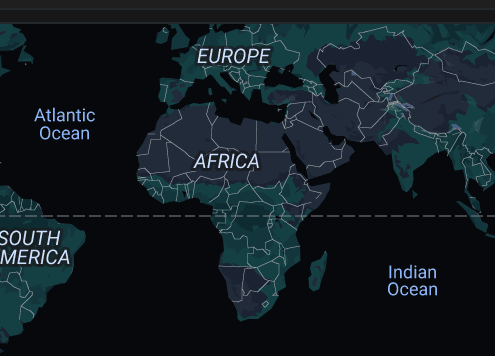
10 African countries with the lowest income earners in 2024
- /home/naijuinz/public_html/wp-content/plugins/mvp-social-buttons/mvp-social-buttons.php on line 27
https://naijablitznews.com/wp-content/uploads/2024/06/Screenshot_20240615-124248.png&description=10 African countries with the lowest income earners in 2024', 'pinterestShare', 'width=750,height=350'); return false;" title="Pin This Post">
- Share
- Tweet /home/naijuinz/public_html/wp-content/plugins/mvp-social-buttons/mvp-social-buttons.php on line 72
https://naijablitznews.com/wp-content/uploads/2024/06/Screenshot_20240615-124248.png&description=10 African countries with the lowest income earners in 2024', 'pinterestShare', 'width=750,height=350'); return false;" title="Pin This Post">
By Kayode Sanni-Arewa

In many African countries, a significant portion of economic activity occurs in the informal sector. This includes small-scale trading, subsistence farming, and other forms of unregistered economic activities. As a result income for the average person can be low due to an inability to maximize the market.
While not entirely representing the income levels of any given country, GNI per capita nonetheless, highlight the symptoms of economic problems, and is typically a great indicator of the income level of an economy.

African economies often face other challenges such as inadequate infrastructure, limited access to education and healthcare, and weak governance, all of which contribute to low levels of cash flow within an economy, and as a result, the GNI per capita is influenced.
Gross National Income (GNI) per capita is a widely used metric for assessing the economic performance of a country. It calculates the average income of a nation’s citizens and is often used to compare living standards across countries.
However, relying heavily on low-income earnings as a measure of GNI per capita may not be completely forthright for African countries. For example, in some African countries, a tiny elite may control a sizable share of the national revenue, while the bulk of the people remains poor.
Nonetheless, the GNI per capita is a key indicator in assessing the health of any economy on the planet.
According to a World Bank report titled World Development Report 2024, there are now 26 low-income, 108 middle-income, and 83 high-income economies in the globe as represented by their GNI per capita.
This report also highlights the GNI per capita in Dollars of the regions be it low, middle, or high income, and below are 10 African countries with the lowest GNI per capita.
10 African countries with the lowest income earners in 2024
RANK COUNTRY GNI PER CAPITA CLASS
1. Burundi $240 Low-Income Economy
2. Somalia $470 Low-Income Economy
3. Central Africa Republic $480 Low-Income Economy
4. Mozambique $500 Low-Income Economy
5. Madagascar $510 Low-Income Economy
6. Sierra Leone $510 Low-Income Economy
7. Democratic Republic of Congo $590 Low-Income Economy
8. Niger $610 Low-Income Economy
9. Malawi $640 Low-Income Economy
10. Liberia $680 Low-Income Economy
Foreign
Russia claims deadly drone strike varsity hostel killed 21 students
Russian authorities have accused Ukraine of carrying out a deadly drone attack on a university complex in Starobelsk, in the Russian-controlled Luhansk region, claiming that 21 students were killed in the strike.
According to a statement circulated by Russian officials, the attack occurred on the night of May 22 and targeted the academic building and dormitory of Lugansk State Pedagogical University.
Russian authorities alleged that 16 unmanned aerial vehicles (UAVs), including four heavy drones, were deployed in three waves during the operation.
Officials described the incident as one of the deadliest attacks on a civilian educational facility in the region since the outbreak of the Russia-Ukraine war, claiming that the victims were students residing in the university dormitory.
“Just a week ago, they were students with dreams, plans and a future. Today, all that remains are photographs, memories and unbearable grief,” the statement said.
The authorities further alleged that the strike was deliberate and targeted civilians rather than military infrastructure.
The claims could not be independently verified, and Ukrainian authorities had not publicly responded to the allegations at the time of filing this report.
Since the start of the conflict, both Russia and Ukraine have repeatedly accused each other of carrying out attacks on civilian infrastructure, allegations that are often difficult to verify independently due to ongoing hostilities and restricted access to affected areas.
The reported incident has renewed concerns among humanitarian organizations about the impact of the war on educational institutions and young people caught in the conflict.
The Russia-Ukraine war, now in its fifth year, has resulted in thousands of civilian casualties, widespread displacement and extensive damage to homes, schools, hospitals and critical infrastructure across both countries.
International observers have consistently called for independent investigations into attacks involving civilian casualties, regardless of the parties involved, to establish the facts and ensure accountability under international humanitarian law.
Foreign
Iran accuses US of violating ceasefire over past 48 hours
Iran’s foreign ministry on Tuesday accused the United States of violating a fragile ceasefire during the past 48 hours in the southern coastal province of Hormozgan, without specifying the incident.
“The US terrorist army, continuing its illegal and unjustified actions since the ceasefire … has, in the past 48 hours, committed a gross violation of the ceasefire in the Hormozgan region,” the ministry said in a statement.
The US Central Command said forces had on Monday attacked missile sites and boats it said were trying to lay mines in the Gulf, while Iran’s Revolutionary Guards said it had fired at US aircraft attempting to enter the country’s airspace.
AFP
Foreign
Iran president orders internet restored after war suspension
Iranian President Masoud Pezeshkian has ordered the restoration of international internet access in Iran, which had been suspended since the United States and Israel launched attacks against the country, local media reported Monday.
“The decree aimed at restoring internet access to its pre-January state was communicated to the Ministry of Communications by the president,” Iranian news agencies Tasnim and Fars reported.
Authorities shut down the internet during large-scale anti-government protests that peaked in early January, then suspended it again on February 28 at the start of the Middle East war.
Since then, the population has only had access to domestic platforms and websites.
AFP
-
News18 hours agoWe’re Working to Secure Return Tickets for Senators Who Lost Primaries — Akpabio
-
Politics18 hours agoAggrieved party sues INEC, seeks withdrawal of NDC registration
-
News18 hours agoInsecurity: CAN declares 3-day national mourning
-
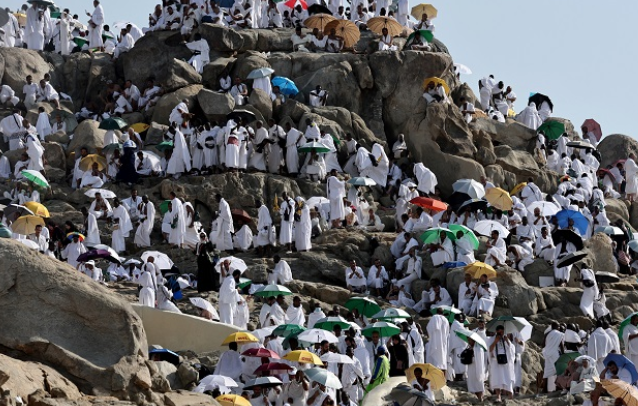
News11 hours agoHajj: Airlift of Nigerian pilgrims back home starts today
-
News18 hours agoOyo abduction: Teachers Stage Protest in Osun
-
Economy11 hours agoSee Black Market Dollar To Naira Exchange Rate Today 3rd June 2026
-
News10 hours agoBandits repelled, 25 rustled cattle recovered in Sokoto
-
Metro18 hours agoAbduction: Teachers Embark On Strike In Ondo

Warning: Undefined variable $user_ID in /home/naijuinz/public_html/wp-content/themes/zox-news/comments.php on line 49
You must be logged in to post a comment Login