
News
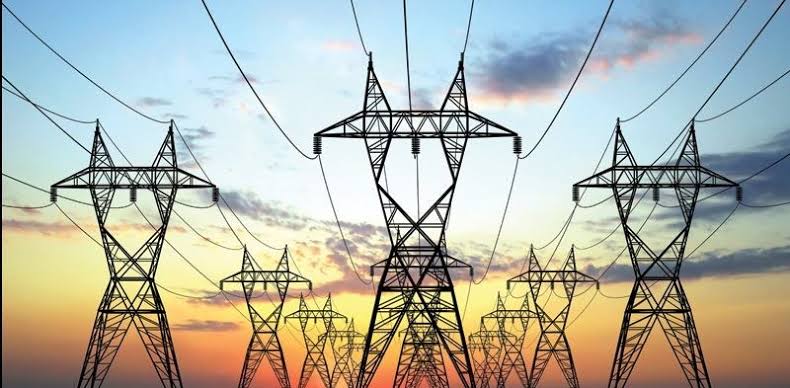
ACF calls for state of emergency on power outage

- /home/naijuinz/public_html/wp-content/plugins/mvp-social-buttons/mvp-social-buttons.php on line 27
https://naijablitznews.com/wp-content/uploads/2024/10/images-2024-10-19T113015.261.jpeg&description=ACF calls for state of emergency on power outage', 'pinterestShare', 'width=750,height=350'); return false;" title="Pin This Post">
- Share
- Tweet /home/naijuinz/public_html/wp-content/plugins/mvp-social-buttons/mvp-social-buttons.php on line 72
https://naijablitznews.com/wp-content/uploads/2024/10/images-2024-10-19T113015.261.jpeg&description=ACF calls for state of emergency on power outage', 'pinterestShare', 'width=750,height=350'); return false;" title="Pin This Post">


By Francesca Hangeior
The Arewa Consultative Forum (ACF) has called for a State of Emergency on power outage, lamenting that over the past week and still counting, most parts of the northern states of Nigeria have been battling with sustained electric power supply outages, leading to near total paralysis in economic and social activities in the region.
The forum stated that the situation has led to growing generalised frustration of the populace.
National Publicity Secretary of the ACF, explained that “the situation appears even more dire and frightening as statements from officials charged with the responsibility for power supply, the Transmission Company of Nigeria (TCN) suggest that the problem is likely to persist interminable due to technical and security challenges.
Not unexpectedly, the problem has been a subject of intense debate and lamentations in the media, neighbourhood gatherings, business premises, etc.”
” The smallest of small businesses (such as telephone recharge points, barbing salons, food processors, drinks sellers, etc.), from which millions eke out a daily living are unable to operate. It has also been the same with medium-scale enterprises (such as rice mills, bread and confectionary bakers), that do not have alternative sources of power or cannot afford associated high fuel costs. “
“Home and office operate without cooling and heating and at night are thrown into the medieval dark ages of the primitive, pre-civilisation era. ACF notes that there has emerged, and growing, palpably evidence that it is to the utter consternation and disappointment of people that the problem appears to attract only deafening silence, suggesting indifference, from those who are constitutionally expected to respond with care and concern.”
“At extremes, not a few insinuate a deliberate strategy, among other tendencies, by the Federal Government to continue to socioeconomically shortchange and cripple the North. Such conspiracy hypotheses or theories abound in part because there has been no reaction from the Federal Government, the Minister for Power, elected officials including state governors, nor even feeble motions from state assemblies, such as to give the impression that the country’s leaders as little as care about the basic security and welfare of the people on whose behalf government presides over the nation. “
“An exception to the muteness has been the brave voices of some members of the National Assembly, brave because muteness has since become entrenched in the behaviour of elected personalities. The problem, rather serendipitously, also exposes the gross inequities in power supply generation and distribution nationwide. While the North generates substantial electricity power, it is ironically allocated the least in supply. It just does not make any sense that Lagos alone has eight (8) sub-stations, while the whole of the northern states combined, harbouring more than half of Nigeria’s total population has only THREE (3) sub-stations at Jos, Kaduna and Kano.”
” The question needs to be posed is if ours an Animal Farm analogy – those who substantially are allocated the least. The situation at hand is a portent national security threat, against which the silence, especially, of public officials amounts to a phenomenal textbook illustration of the abdication of responsibility, as unacceptable as can be.”
” To suggest that the problem has its roots in what had been done or not in the past is merely to make excuses. To lamely offer unintelligent excuses – excuses, not reason – that the problem cannot be immediately addressed due to banditry along power supply lines is to surrender to the terroristic criminals. It is inconceivable that Nigeria’s fairly vast array of security agencies, with their humongous budgetary allocations, cannot dislodge and subdue the rag-tag bandits, reclaim and dominate territory. “
“On this score, it is disappointing that the National Assembly is yet to publicly demand accountability over this unacceptable scenario. It also amounts to unadulterated and untenable obfuscation, that the TCN (and the FGN) cannot marshal the necessary human, technical and other material to address the situation at hand with despatch.
In the event and without equivocation therefore, ACF calls on the FGN and all those concerned to rise to the occasion by declaring a state of emergency on the problem before it snowballs into a crisis. This threat to national security should forthwith be treated with the seriousness it deserves.”
“The problem be addressed with the honest URGENCY it deserves; calls for an immediate review of power supply allocation in the country since all consumers pay for it. It is unacceptable that while the North acts as a candle that supplies light, it is being melted down and plunged into darkness. This ought to and must change with immediate effect in the interest of national stability, fairness and equity, and Calls on elected northern state governors and, members of the National Assembly representing constituencies in the northern states to speak out more vehemently and stridently demanding action on the problem as outlined above.”





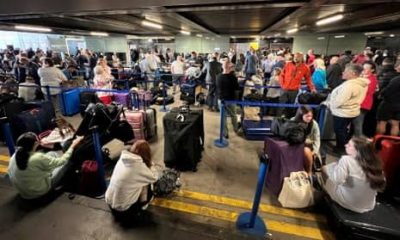



The Federal Government has approved the takeover of admissions into Higher National Diploma (HND) programmes by the Joint Admissions and Matriculation Board (JAMB), in a major reform aimed at sanitising the admission process in polytechnics and other institutions offering HND programmes.
The decision means prospective HND students will, from the current admission session, have their admissions processed through JAMB under a centralised system.
The National Board for Technical Education (NBTE) disclosed this in a circular dated September 9, 2026, signed by its Executive Secretary, Prof. Idris Bugaje, and obtained by LEADERSHIP Weekend.
The directive followed a meeting involving the Minister of Education, Dr Tunji Alausa; JAMB; NBTE; the National Youth Service Corps (NYSC); and officials of the Federal Ministry of Education.
According to the NBTE, the new system is designed to tackle illegal, irregular and compromised admissions, particularly cases that could leave students stranded after completing their programmes.
The board said some students admitted through questionable channels had faced difficulties securing NYSC mobilisation after obtaining their HND certificates.
“All HND admissions in all institutions shall from this session be taken over by JAMB to provide centralised process and avoid illegal and compromised admissions, jeopardising students’ mobilisation for NYSC after HND,” the circular stated.
The Federal Ministry of Education is expected to issue a detailed statement on the new policy next week.
NBTE also directed that comprehensive guidelines for HND admissions be developed immediately and submitted to JAMB to guide the implementation of the new digital admission platform.
The proposed guidelines will cover important issues, including the waiting period required for National Diploma (ND) holders before progressing to HND programmes.
They will also clarify exemptions applicable to certain ND health-related programmes.
Part-time ND admissions capped at 50%
The government also approved a new limit for part-time National Diploma admissions following the decision to bring all part-time ND admissions under JAMB.
Under the new arrangement, institutions will be permitted to admit part-time students up to 50 per cent of their approved full-time admission quota.
“Now that all part-time ND admissions are under the JAMB, the proportion of part-time students is pegged at 50 per cent of the approved full-time quota,” NBTE stated.
The Federal Government further reaffirmed an earlier NBTE directive concerning candidates holding combined National Certificate in Education (NCE) and HND qualifications.
In a separate circular issued on September 7, NBTE directed that candidates with an NCE/HND combination should not be presented for NYSC mobilisation.
The latest reforms are expected to strengthen central oversight of admissions into Nigeria’s technical and polytechnic institutions while reducing irregular admission practices and protecting students from complications after graduation.
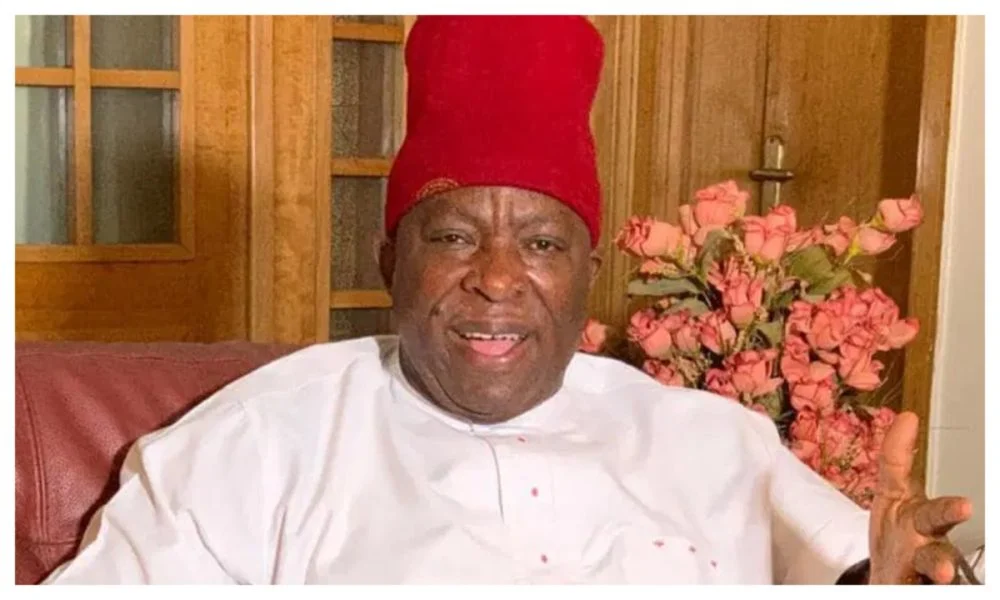
Senator Victor Umeh has expressed confidence that former Kano State governor and Nigeria Democratic Congress (NDC) vice-presidential candidate, Rabi’u Musa Kwankwaso, cannot be defeated in Kano State if the 2027 presidential election is free, fair and credible.
Umeh, who represents Anambra Central Senatorial District, made the assertion on Friday during an interview on Channels Television’s Politics Today, while discussing the NDC’s preparations for the 2027 general elections.
The senator said Kwankwaso’s political influence in Kano remained formidable, insisting that the former governor would retain his stronghold in the state under a transparent electoral process.
«“No matter the noise they make in Kano, nobody can beat Kwankwaso there once the election is credible, transparent, free and fair. I can bet it,” Umeh said.»
He added that he was working closely with Kwankwaso and other leaders of the party as the NDC positions itself for the 2027 elections.
“I’m working with him and other leaders of the party very closely. The party is well more prepared to be an opposition party that will contest this election with very credible candidates,” he said.
Umeh also pointed to the growing public reception for the party’s candidates, citing the recent outing of the NDC’s Rivers State governorship candidate, Dumo Lulu-Briggs, in Port Harcourt.
“Look at what our Rivers State governorship candidate, Dumo Lulu-Briggs, did in Port Harcourt in just his first outing. Port Harcourt was shut down,” he said.
The senator further cited the large crowd that reportedly followed the party’s presidential candidate, Peter Obi, during his recent activities in Port Harcourt, describing the turnout as evidence of growing enthusiasm among voters.
“Those people following them in Port Harcourt last week are Nigerians that will vote. Why were they following our presidential candidate, Peter Obi, like Jesus was crossing, and people were marching around him?
“Something must be motivating and driving the people, the voting population,” Umeh added.
His comments come as political parties and potential presidential contenders intensify mobilisation ahead of the 2027 general elections, with control of key states such as Kano expected to play a major role in the presidential contest.
… says abuse is a menace to society
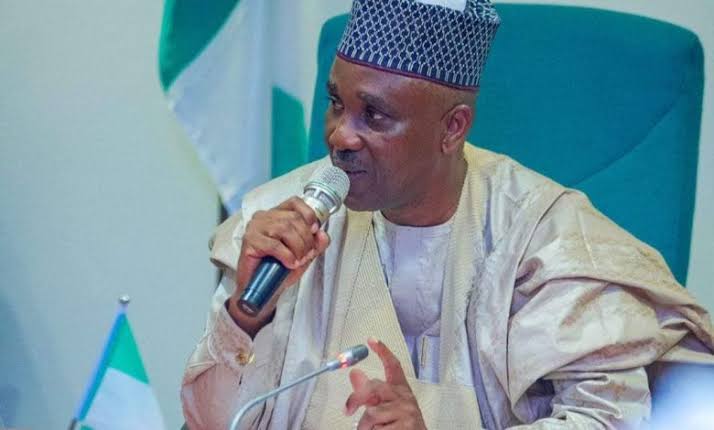
The Speaker of the House of Representatives Rt. Hon. Abbas Tajudeen, Ph.D., GCON, has said Nigeria must punish drug pushers to have a better society, saying the abuse is a menace to society.
“We must punish those who profit from drugs. We must also treat those who have become trapped by them. The dealer needs the law. The dependent person needs care,” he said, adding that, “The government is present. The law is active. The public must also participate.”
Speaker Abbas stated this on Saturday at the close of a three-day sensitisation programme against drug abuse and domestic violence held in Kaduna. The programme, which is part of the Speaker’s constituency outreach, was organised in collaboration with the National Orientation Agency (NOA).
He said, “Parents must watch for sudden changes in conduct. Schools must provide counseling and report warning signs. Pharmacists and medicine vendors must reject the unlawful sale of controlled substances.
“Traditional and religious leaders must reject silence around addiction and abuse. Neighbours must report violence. Market and transport unions must report suspicious movement of drugs. Young people must reject pressure and seek help when needed.
“Victims should seek safety, obtain medical care, preserve evidence, and report abuse. Communities must protect them, not punish them with blame or shame.”
Speaker Abbas recalled the last edition of the programme in February 2025, which heralded a four-month campaign across the North-West. “We promised to take the message beyond conference halls. We promised to engage traditional rulers, religious leaders, teachers, parents, young people, and community organisations,” he said.
He noted that Saturday’s edition of the programme showed that “we have kept that promise.”
The Speaker said NOA has taken the campaign into Kaduna’s streets and communities, while its officers are engaging market leaders, transport workers, youth groups, and traditional institutions “because prevention begins with proper information.”
While commending the Director General of NOA, Lanre Issa Onilu, and his team, Speaker Abbas equally appreciated the National Drug Law Enforcement Agency (NDLEA), Nigeria Police Force (NPF), Nigeria Immigration Service (NIS), Federal Road Safety Corps (FRSC), Nigerian Correctional Service (NCoS), National Youth Service Corps (NYSC), and the state agencies.
He said, “Drugs can impair judgement, increase aggression, and deepen poverty. But drugs never excuse violence. Every person remains responsible for his or her actions. Domestic violence is not discipline or culture. It is abuse. It harms the victim, frightens children, and weakens the community.
“The damage caused by drugs does not stop at the family door. It spreads into our streets, schools, markets, and security system. Drug trafficking gives criminal networks money. The same hidden routes can carry drugs, illegal weapons, criminal funds, and violent offenders. Drugs do not explain every crime, but they are part of Nigeria’s wider security challenge.”
The Speaker stated that “every shipment stopped can deny criminals money for weapons and recruitment,” stressing that “every person rescued from addiction is one less person exposed to violent groups.”
Speaker Abbas explained further that drug control is part of the fight against banditry and kidnapping in the North-West. “Security forces may clear the camps. Communities must help cut the supply lines,” he said, adding that, “Enforcement stops the shipment. Education reduces the demand. Treatment restores the individual. Community vigilance protects the neighbourhood.”
Speaker Abbas commended President Bola Ahmed Tinubu, GCFR, for retaining Brigadier General Mohammed Buba Marwa (rtd.) as Director-General of the NDLEA and supporting enforcement, international cooperation, public education and treatment, including a new 50-bed rehabilitation centre in Maiduguri.
He said, “The National Assembly has consistently played its part. In 2024, the House called for a preventive drug testing programme in secondary schools and directed NOA and NDLEA to expand student awareness.
“The House also moved against the indiscriminate sale of prescription medicines. We called for illegal outlets to close and for stronger joint enforcement by the responsible agencies.
“We have considered bills to strengthen the NDLEA Act. In 2025, the House called for faster investigation and prosecution of femicide, homicide, and related violence. We will continue to fund enforcement and treatment, close gaps in the law, and demand results through oversight.”

FG hands HND admissions to JAMB, moves to end illegal polytechnic admissions

2027: Kwankwaso ‘unbeatable’ in Kano, Victor Umeh declares

Nigeria must punish drug pushers—Speaker Abbas




-

 News10 hours ago
SAD! Teenage twins die after eating bread spiked with ‘otapiapia’
-

 News9 hours ago
Just in: Dangote Refinery jerks up petrol price by N85
-

 Sports7 hours ago
Amusan Finishes 2nd As Russell Wins Inaugural World Athletics Ultimate Championship
-

 News20 hours ago
Employment: Mbah Urges Enugu Youths to Seize Federal Opportunities (Photos)
-

 News7 hours ago
Niger unveils fresh Chief of Staff after botched coup
-
 News3 hours ago
Ex-PDP Chairman Bamanga Tukur is dead
-
 News6 hours ago
Natural Disasters Destroy Up to $800bn Infrastructure Annually, CDRI Warns
-
 Education3 hours ago
FG endorses take over HND admissions by JAMB
Warning: Undefined variable $user_ID in /home/naijuinz/public_html/wp-content/themes/zox-news/comments.php on line 49
You must be logged in to post a comment Login