Connect with us

News

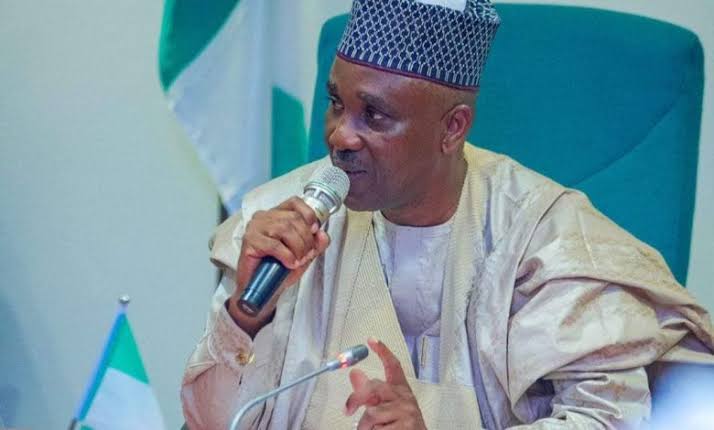
Speaker Abbas Decries Gross Inadequacy In Health Sector Despite Annual Allocations

Published

on

ADVERTISEMENT
Zoom Ad
ADVERTISEMENT
Zoom Ad
By Gloria Ikibah
The Speaker of the House of Representatives, Reps. Tajudeen Abbas, has lamented that the health sector is still grossly inadequate and far below what is invested in other countries, despite the considerable amount is allocated annually by the Federal Government.
The Speaker also said alot more needs to be done if the life expectancy of the average Nigerian is to rise as well as a reduction in infant mortality.
Abbas stated this at a public hearing for four bills organised by the House Committee on Healthcare Services at the National Assembly Complex on Friday.
The Bills are “A Bill for an Act to to Amend the National Residency Training Act 2018”; “A Bill for an Act to Amend the National Insurance Authority Act 2021”; “A Bill to Amend the National Tobacco Control Act”; and “A Bill to Establish the Institute of Healthcare Service Administrators of Nigeria”.
The Speaker who was represented by Rep. Obordor Mitema, member representing Ogbia Federal Constituency of Bayelsa State, said it was for this reason that President Bola Tinubu, recognizing the urgency of this situation, prioritized healthcare as one of the pillars of his Renewed hope Agenda for Nigeria.
According to him, this was to revive the country’s healthcare sector and to ensure it receives the necessary support partnerships with the private sector within and outside Nigeria are being explored and hopefully in the not too distant future we shall see vast improvement.
He said, “Though the Federal Government appropriates a considerable amount yearly to the health sector, the amount is still grossly inadequate and far below what is invested in other countries.
“It is no longer news that despite the committed efforts, the health Sector has sadly over the years faced several challenges associated with outbound medical tourism, emigration of skilled healthcare workers, poor salaries and insufficient budgetary allocation.
“It is also sad to note that even though Nigeria has the highest Gross Domestic Product (GDP) in Africa the progress it has achieved in health has been rather slow and disappointing hence, more effort is needed if we are going to be at par with Western countries.
“Indeed more needs to be done if the life expectancy of the average Nigerian is to rise as well as a reduction in infant mortality.”
Speaker Abbas commended the Acting Chairman of the Committee, Rep. Bassey Akiba and the entire members of the committee for organizing this hearing.
He said it is a reflection of their commitment and support to do their quota towards helping Nigerians achieve not only better health but having access to better healthcare.
“We all know the significance of having a Health Sector that works. Western countries have taken bold steps to make their Health sector first class and second to none and we must do the same.
“The House Committee on Healthcare Services and other Health related Committees of the House of Representatives and indeed the National Assembly are fully committed to doing their part by initiating and amending laws that will always be people friendly with the aim of bringing succor and positive changes towards the Health sector in Nigeria.,” he said.
Rep. Akiba, said the healthcare sector in Nigeria over the past few years has gone through a myriad of challenges.
The challenges, according to him, includes the rising cost of healthcare services, financial challenges for providers, preventable medical errors, high mortality rates in both cases, lack of insurance coverage, the need for an improved mental health system, increased demand for personalized care, and a well-regulated health care system among others.
“As parliamentarians, it is our responsibility to discuss critical legislation that will not only shape the future of our nation’s health but impact possibly other people.
“Public hearings are essential because it is one of the crucial avenues used to sample opinions on any matter of public relevance and importance. Like I mentioned, there are four bills.
“Three of these bills are an amendment bill, three of the bills are an amendment bill, and one is an establishment bill. I wish to assure you all that as legislators and members of the Committee on Health Care Services.
“We are conscious of our constitutional and legislative resources towards the people. We are ready to partner with relevant stakeholders and support any genuine effort required to improve the healthcare system in Nigeria,” he said.
The Nigerian Medical Association (NMA) said, A Bill to Amend the National Residency Training Act should be dropped for more input by relevant stakeholders.
The Association said the Medical Residency Training Act was a bill primarily sponsored by Nigeria Association of Resident Doctors (NARD), an affiliate member.
First Vice President of the NMA, Dr Benjamin Oluwatosin, said It was a surprise to them that the primary constituency on the Bill was never contacted for input.
He urged that the Bill be stepped down to get more input of relevant stakeholders.
“So, in solidarity to our affiliate NARD and the validation of the Medical Residency Training Act we strongly advise that this bill be stepped down until every stakeholder involved and primarily NARD and then NMA is on the table from the very beginning,” he said.
Stakeholders who attended the hearing included representatives of the Nigeria Association of Resident Doctors, Medical and Dental Consultants Association of Nigeria, Committee of Chief Medical Directors among others.


News

Large quantity of opioids intercepted in Taraba as NDLEA nabs 75-year-old in Ebonyi(Photos)

Published

on

ADVERTISEMENT
Zoom Ad
ADVERTISEMENT
Zoom Ad

. Arrests four notorious female dealers in sweeps across Edo, Imo, Kano, Gombe

Large consignments of various opioids and illicit substances concealed in building materials have been intercepted by operatives of the National Drug Law Enforcement Agency (NDLEA) in a relentless nationwide offensive against drug cartels leading to the arrest of a 75-year-old grandpa in Ebonyi, and four notorious female drug dealers in Edo, Imo, Kano, and Gombe states.

A major blow was dealt to opioid trafficking networks in Taraba state on Saturday 6th June 2026 following credible intelligence which led to the interception of a truck conveying building materials from Onitsha, Anambra state to Jalingo. A thorough search of the vehicle by NDLEA operatives at the Nukkai Timber Shade, Jalingo, led to the discovery of a massive drug stash concealed beneath the cargo, while a 22-year-old suspect, Buhari Abdullahi, was promptly arrested.
Recovered from the truck include: 320,840 capsules of tramadol; 600 ampoules of pentazocine injection; 4,500 pills of rohypnol; and 299 bottles of codeine-based cough syrup.

Demonstrating that age is no barrier to the enforcement of the law, NDLEA operatives in Ebonyi State tracked down and arrested a 75-year-old grandpa, Okebe Samuel, at Okposi. The septuagenarian was found in possession of 300 grams of skunk, which he sells in retail sachets to the youth in his community.

In Imo state, NDLEA officers successfully raided a known drug enclave at Umulolo, Orlu. The raid resulted in the arrest of a notorious female dealer, 32-year-old Chioma Okeke, and the recovery of 8 kilograms of skunk.
Meanwhile, in Edo state, an intense sweep of notorious drug hotspots within Benin City by NDLEA operatives on Tuesday, 2nd June 2026, yielded the arrest of four key traffickers, including three females.

At Uyosa, Benin City, two female suspects, Chioma Igba (24) and Precious Ozomah (22), were nabbed with a cocktail of illicit substances including 176 grams of skunk, 65 grams of Loud, and 5 grams of Methamphetamine. Along Agbor road in Benin City, another female suspect, 21-year-old Anita Abraham, was apprehended with 95 grams of Scottish Loud and 329 grams of regular Loud. At Upper Mission, Benin City, a male suspect, Henry Okey (43), was arrested with a diverse cache of psychotropic substances consisting of Loud, Colorado, Swinol, and Methamphetamine.
A swift operation by operatives in Kano State on Thursday, 4th June 2026, led to the arrest of a 19-year-old suspect, Saifullahi Lawan at the Kafi area of Madobi, with 40 blocks of skunk weighing a total of 38 kilograms.

In a related development, operatives in Gombe State on Monday, 1st June intercepted 28-year-old Ugwu Sabastine Ifebuchi near the Dantiti Plaza in the Tumfure area of Gombe. The suspect was caught with 15,000 capsules of tramadol.
The War Against Drug Abuse (WADA) social advocacy activities by NDLEA Commands and formations equally continued across the country in the past week.

Some of them include: WADA sensitization lecture delivered to students and staff of Holiness Foundation Primary School, Saki, Oyo state; Dorras High School, Ibeju Lekki, Lagos; Ado Girls Secondary School, Onitsha, Anambra; and Army Day Secondary School, Kano state; among others.
Reacting to the string of successful operations, Chairman/Chief Executive Officer of NDLEA, Brig. Gen. Mohamed Buba Marwa (Rtd) commended the officers, men and women of the Taraba, Ebonyi, Imo, Edo, Kano, and Gombe commands for their resilience and vigilance. He also praised their counterparts in all the commands across the country for pursuing a fair balance between their drug supply reduction and drug demand reduction efforts. He re-emphasized that the agency remains fully committed to dismantling drug supply chains and will continue to target traffickers regardless of age, gender, or concealment methods.

Continue Reading

News

Real reason why we banned night vigils – MFM

Published

on

ADVERTISEMENT
Zoom Ad
ADVERTISEMENT
Zoom Ad

The Mountain of Fire and Miracles Ministries (MFM) has placed an indefinite ban on overnight vigils and ordered all church programmes to end by 8 p.m. daily, citing rising security concerns nationwide.

The new directive was contained in a circular dated June 5, 2026, sent to Regional Overseers and branch pastors. It takes effect immediately.

According to the memo, all services, meetings, and programmes at every level of the church must now close by 8 p.m. “for the foreseeable future.” Overnight vigils and late-night prayer meetings have been suspended indefinitely.

Where such gatherings are considered necessary, leaders are to restructure them into evening prayer sessions that must still wrap up by 8 p.m. at the latest.

Advertisement

The circular was signed by Temitope A. Olawale, Director of Administration at MFM International Headquarters and Nigeria. He said the decision is a safety measure based on the current state of security in the country.

“The directives are purely precautionary and aimed at safeguarding the lives and well-being of our members in the face of the current security situation in the country,” the statement read.

MFM is known for its marathon prayer sessions and overnight programmes. The new rule marks a major shift for the church as insecurity continues to impact religious gatherings across Nigeria.

Advertisement
Continue Reading

News

CBN Imposes N100M Penalty On Inadequate Processing Of Forex Documents

Published

on

By

ADVERTISEMENT
Zoom Ad
ADVERTISEMENT
Zoom Ad

The Central Bank of Nigeria (CBN) has introduced stricter sanctions for banks that process foreign exchange transactions without proper documentation, imposing penalties that could run into hundreds of millions of naira.

Under the revised foreign exchange regulatory framework, authorised dealer banks found to have completed forex transactions with insufficient supporting documents will pay a N100 million fine. They will also incur an additional N10 million penalty for each affected transaction.

The sanctions are contained in the fourth edition of the Foreign Exchange Manual released by the apex bank. The document serves as the operational guide for participants in Nigeria’s foreign exchange market.

According to the CBN, the updated manual is designed to strengthen regulatory compliance, improve transparency and reinforce confidence in the country’s foreign exchange system.

Advertisement

The regulator classified the offence as the execution of foreign exchange transactions without adequate documentation. It stated that any authorised dealer found culpable would be liable to the prescribed penalties.

The revised guidelines place greater emphasis on documentation requirements for all categories of foreign exchange transactions. These include spot transactions, forward contracts, swap arrangements, imports and export-related dealings.

Banks are now required to obtain, verify and retain all relevant supporting documents before foreign currency can be released to customers. Similar requirements apply to forward and swap transactions, where evidence of the underlying trade or obligation must be available before settlement.

The manual also retains existing documentation requirements for imports. Importers are expected to provide Form M, invoices, certificates of origin, packing lists and shipping documents, among other mandatory records.

Advertisement

In addition, importers must submit Exchange Control Documents within 90 days after negotiating shipping documents through overseas correspondent banks.

Failure to comply with the documentation requirements attracts progressively stiffer sanctions.

A first violation will result in a 90-day suspension from foreign exchange transactions. A second offence carries a 180-day restriction, while a third attracts a one-year suspension.

The CBN warned that a fourth violation could lead to a complete prohibition from participating in foreign exchange transactions.

Advertisement

Banks that fail to report cases of default to the regulator will also face sanctions under the new framework.

The apex bank further tightened reporting obligations for authorised dealers. Institutions that fail to submit required daily or monthly returns will be fined N500,000 for late submission.

Where returns are not rendered at all, the offending institution will pay a minimum penalty of N5 million. An additional N500,000 daily fine will apply until the breach is corrected.

The revised manual also strengthens oversight of banks’ foreign currency exposure levels.

Advertisement

Financial institutions that exceed approved Net Open Position limits will receive a warning for the first offence. A second violation will attract a 10-working-day suspension from the Nigerian Foreign Exchange Market.

A third breach will result in a 90-day suspension from market activities.

The CBN also imposed sanctions on unauthorised reallocation of foreign exchange funds. Any bank found engaging in such practices will pay N10 million for each transaction involved.

Beyond the monetary penalty, affected institutions may be referred to the Bankers’ Committee ethics framework for further disciplinary action.

Advertisement

The central bank said the new measures form part of ongoing efforts to deepen transparency, promote market discipline and establish a more rules-based foreign exchange regime.

According to the regulator, stronger compliance standards and stricter enforcement will help improve market integrity, reduce abuses and enhance investor confidence in Nigeria’s foreign exchange market.

Continue Reading

Trending

Copyright © 2024 Naija Blitz News