Health
FG warns of new COVID-19 variant XEC confirmed in 29 countries
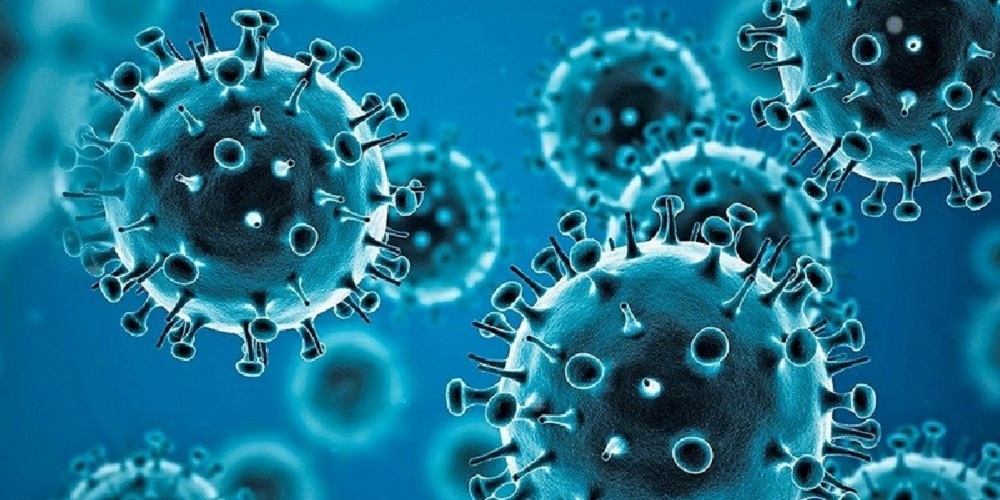
The Federal Government, through the Federal Ministry of Health and Social Welfare, has urged health authorities to activate heightened alert systems in response to the newly detected XEC COVID-19 variant that is rapidly spreading across the globe.

XEC is the latest in a long list of past and current COVID variants being monitored as the COVID-19 virus naturally evolves.
This directive comes after the strain, first identified in Australia, has now been confirmed in 29 countries.

This was contained in a letter dated December 5 but made available to PUNCH Online on Saturday, addressed to the Committee of Chief Medical Directors and Medical Directors, by the ministry’s Permanent Secretary, Head of the Teaching Hospital Division, Dr. O.N. Anuma.
The letter read, “I am directed to inform you of a newly detected XEC COVID-19 variant which has been reported in Australia and has already spread to 29 countries globally.
“You may wish to know that this variant has shown a growth advantage over other circulating strains, raising concerns about its potential impact on public health.”
Anuma emphasised the need for vigilance and immediate action.
“Alert systems should be immediately activated throughout our hospitals for high index of suspicion in patients with COVID-like symptoms,” he stated.
The directive also highlighted the importance of collaboration and timely information-sharing among health institutions and the Federal Ministry of Health and Social Welfare to ensure an effective response.
Medical professionals are also urged to enhance monitoring protocols and share critical data on the XEC variant.
“We request your committee to collaborate with all relevant stakeholders to share critical data regarding this strain and implement enhanced monitoring protocols.
“Timely information sharing among relevant stakeholders including the Federal Ministry of Health will be vital for effective response strategies,” he warned.
In September, PUNCH Healthwise reported that XEC has spread across 27 countries, including France and the United States, infecting more than 600 people.
Findings by PUNCH Healthwise revealed that XEC was identified in Germany in June with more cases of the variant having since emerged in the UK, the US, Denmark and several other countries.
XEC has some new mutations that might help it spread this autumn, although vaccines should still help prevent severe cases, according to scientists.
Health
Lassa Fever Outbreak Infects 15 Healthcare Workers, Kills Two — NCDC Issues Urgent Alert
The Director-General of the Nigeria Centre for Disease Control and Prevention (NCDC) has raised an urgent alert to healthcare workers amid a worrying surge in Lassa fever infections among medical personnel. In a public advisory issued during the peak of the 2025/2026 transmission season, the NCDC confirmed that 15 healthcare workers have tested positive, with two fatalities recorded as of Epidemiological Week 7.
“The safety of healthcare workers remains our top priority,” the DG emphasized. “We urge all personnel to take every precaution to prevent infection and protect lives.”
Healthcare worker infections have been reported across several states, notably in Ondo, Edo, Bauchi, Taraba, Ebonyi, and Benue, with some outbreaks traced to specific local government areas. Investigations revealed significant gaps in infection prevention and control (IPC) practices, including inconsistent use of personal protective equipment (PPE), low awareness of exposure risks, and underestimation of threats in outpatient units and general wards.
“Undiagnosed patients often appear in general wards and outpatient departments,” the NCDC warned. “It is dangerous to assume that only isolation units carry risk.”
The advisory stressed that non-clinical staff, such as cleaners, porters, and administrative workers, are equally vulnerable and must be included in IPC training and safety measures. Alarmingly, surveillance data indicated an average six-day delay between symptom onset and seeking care among infected healthcare workers, often due to stigma or self-medication.
Infections typically occur through contact with contaminated blood, urine, vomit, or other body fluids, performing clinical procedures without adequate PPE, poor hand hygiene, handling contaminated instruments, or delayed isolation of suspected cases. The NCDC reiterated that standard precautions must be applied to all patients at all times, with proper handwashing and use of alcohol-based sanitizers as the first line of defense.
Health facilities are directed to ensure the availability of gloves, masks, respirators, gowns, disinfectants, and proper waste disposal systems, while establishing functional isolation areas and clear referral pathways for suspected cases. Rapid Response Teams have been deployed to high-burden states, alongside the distribution of essential PPE, targeted sensitization campaigns, and issuance of state-specific advisories.
“We commend states like Edo that have successfully controlled outbreaks in their jurisdictions,” the DG noted. “Protecting healthcare workers is central to controlling Lassa fever. Strict IPC practices, early detection, and coordinated state-level action will save lives and prevent further spread.”
Health
Six Die From Lassa Fever In Edo
The Edo State has disclosed that six persons have died from Lassa Fever in the state.
The state Commissioner for Health, Dr Cyril Oshiomhole made the disclosure on Friday while addressing journalists in Benin.
He said the state has recorded 28 confirmed cases of the fever, adding that the recent increase in cases, particularly from Estako West and Esan West Local Government Areas, signals sustained community transmission that requires immediate, coordinated, and escalated response.
According to Oshiomhole, the state goverment has been proactive knowing that Lassa Fever out break has become periodic by donating lassa pack to Irrue Specialist Teaching Hospital.
He noted, “distinguished colleagues, partners in health, members of the press, and the good people of Edo State, today, Friday 13th February 2026, I address you with a deep sense of responsibility regarding the public health situation in our dear State.
“Following a careful epidemiological review and risk assessment by the Edo State Ministry of Health, I hereby formally declare a Lassa Fever Outbreak in Edo State.
“As of today, Edo State has recorded 28 laboratory-confirmed cases of Lassa fever with 6 reported deaths.
“The recent increase in cases, particularly from Estako West and Esan West Local Government Areas, signals sustained community transmission that requires immediate, coordinated, and escalated response.
“The Edo state government has been proactive knowing that lassa fever out break has become periodic by donating lassa packs to ISTH,” he added.
Oshiomhole, in line with national and international public health protocols, announced the activation of All Pillars of the Edo State Public Health Emergency Operations Center (PHEOC) with immediate effect.
He said the response would be fully coordinated under the leadership of the Director of Public Health, ministry of health, who would provide daily situation reports directly to the Commissioner for Health.
Health
Striking health workers insist on salary adjustment
Striking health workers under the Joint Health Sector Unions have insisted that only the adjustment of the Consolidated Health Salary Structure will end their ongoing industrial action, as efforts by the Federal Government to resolve the dispute remain stalled.
The strike, which entered its 82nd day on Wednesday, has paralysed activities in government-owned hospitals across the country, leaving patients stranded and forcing many to seek essential medical services outside public health facilities.
JOHESU, which represents health professionals in pharmacies, laboratories and other support departments, has maintained that the action will continue until the Federal Government implements the report of the Technical Committee on the adjustment of CONHESS, submitted since 2021.
The protracted strike has also triggered a 14-day ultimatum issued by the Nigeria Labour Congress and the Trade Union Congress in solidarity with the health workers.
The ultimatum, which expires on Friday, February 6, 2026, warned that other affiliate unions could join the action if the government fails to resolve what labour describes as the “maltreatment” of health workers.
In a joint statement by the Secretary-General of the TUC, Nuhu Toro, and the acting General Secretary of the NLC, Benson Upah, the labour centres accused the Federal Government of deliberately refusing to implement the salary adjustment despite repeated engagements.
They rejected what they described as “the persistent and deliberate provocative refusal of the Federal Government to implement the report of the Technical Committee on the adjustment of the Consolidated Health Salary Structure.”
According to the unions, the continued delay “is no longer an administrative lapse but a conscious act of injustice, bad faith and institutional disrespect to health workers and organised labour.”
“It is, therefore, unacceptable and a blatant provocation that while the government had no difficulty implementing the adjustment of the Consolidated Medical Salary Structure with effect from January 2, 2014, the same government has wilfully refused to implement the same for CONHESS,” the statement read.
Speaking with our correspondent in Abuja on the state of negotiations, the National President of JOHESU, Kabiru Minjibir, said discussions with the government remain deadlocked.
“Negotiations are still deadlocked, and the strike continues. NLC and TUC’s 14-day ultimatum to the government to resolve the issue or have other affiliate unions join in solidarity expires on Friday,” Minjibir said.
He stressed that the union’s demands remain singular and clear.
“We are on strike because of one single demand, which is CONHESS adjustment, as done for the sister scale, CONMESS, in 2014. So, if the government does the needful, we will surely suspend the strike,” he added.
Asked whether the Federal Government had reached out to the union ahead of the ultimatum deadline, Minjibir said, “We have yet to receive any invitation from the government.”
Efforts to get an official response from the Federal Ministry of Health and Social Welfare were unsuccessful.
When contacted, the Director of Press at the ministry, Alaba Balogun, said he would revert to our correspondent but had yet to do so as of press time.
The strike is coming at a critical time for the country’s public health system, as cases of Lassa fever continue to rise.
Data from the Nigeria Centre for Disease Control show that more than 90 cases and 17 deaths were recorded nationwide in the first three weeks of 2026 alone, raising concerns about the impact of the prolonged shutdown of key services in public hospitals.
-
News16 hours agoSee list of 8 Nigerians that their assets were frozen by US over links with Boko Haram, cybercrime
-
News22 hours ago2027: APC Govs Tip Uzodimma As Next Senate President
-
News21 hours agoWatch how NDLEA operatives uncovered drugs concealed in sack of ‘garri’ and carton+Video
-
News18 hours agoJust in: FG drags Ex-Kaduna gov, El-Rufai to court for allegedly hacking NSA’s phone
-
News14 hours agoEducation Is Nigeria’s Lifeline In A Fiercely Competitive World – Gbajabiamila
-
Opinion22 hours agoFrom stability to shared prosperity: How the NEC conference is rewiring Nigeria’s development compact, By Johnson Momodu
-
News12 hours agoWomen Lay Siege to NASS Over Reserved Seats Bill
-
Sports16 hours agoBREAKING: Premier League to halt matches to allow Muslim players break fast during 2026 Ramadan

You must be logged in to post a comment Login