By Debo Alabi


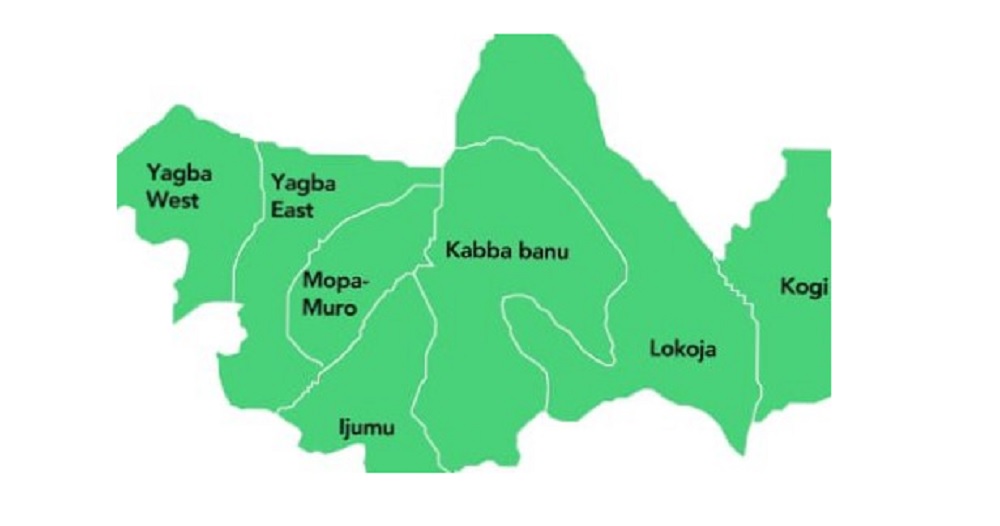
Yagba Federal Constituency in the western Kogi senatorial zone, consists of three local councils, namely Mopamuro, Yagba East and Yagba West. In 1999, at the outset of the Fourth Republic political dispensation in Nigeria, each of the three local government areas fielded aspirants for the seat. The Peoples Democratic Party, (PDP), the dominant political association at the time, guaranteed success for its flagbearers. In the run-up to the 1999 polls, all eyes were on the PDP primaries. Shola Ojo, (Mopamuro); Tolorunjuwon Joseph Faniyi (Yagba East), Engr Sunday Karimi and Mrs Margret Orebiyi, (Yagba West) were the frontrunning aspirants. Orebiyi would later step down for Karimi. Despite the superior strength of Yagba West, which consists of 14 electoral wards, four more than Mopamuro and Yagba East with 10 electoral wards apiece, the PDP ticket was eventually decided in favour of Ojo (Mopamuro).
Ojo’s emegence was more of a consensus in an arrangement superintended by party elders under the leadership of the respected patriarch and one of the founding fathers of PDP in Nigeria, the late Chief Sunday Awoniyi. Aspirants from the two other local government areas were prevailed upon by the elders to await their turns in subsequent electoral cycles. Meanwhile, Yagba West fielded a candidate for the 1999 election in the late legal icon, Chief Tunji Arosanyin who was the flagbearer of the defunct All Peoples Party (APP). Ojo, also an attorney, hitherto domiciled in Kano, the formidable hub of commerce in northern Nigeria, went on to win the general election of that year. 
Ojo served in the “Green Chamber” from 1999 to 2003. At that time, PDP’s internal, mutual understanding based on the rotation principle expressly asserted that each LGA would serve just one term, after which the position would rotate to another. Contestants for the 2003 PDP ticket included Karimi, Faniyi, Mrs Funmi Abiodun, a lawyer; the Port Harcourt based quantity surveyor and expert in the Marine sector, Bode Olorunsola and J.K Odeyemi, an engineer. The primary election was headed for a runoff between Faniyi and Karimi, but, again, the elders in their wisdom settled for a simple majority. Faniyi picked PDP ticket and he went on to defeat his opponent in the reconfigured APP, which had then become the All Nigeria People’s Party, (ANPP), Mrs Justina Abanida. Abanida, a one time Commissioner for Justice and Attorney General. Abanida, a lawyer, hails from Egbe, Yagba West Council.
For Karimi, the waiting game continued even when the seat berthed in Yagba West. Karimi lost PDP’s ticket to a fellow Yagba West opponent, Samuel Bamidele Aro.. Aro, a successful oil marketer, won the 2007 election into the House of Representatives, which took place on April 21, 2007. He defeated Bolaji Oluwafemi of the defunct Action Congress (AC) and served in the lower parliament until 2011.
The extant rotational arrangement forbade Mopamuro and Yagba East from fielding candidates for the 2007 election. In fairness to the past occupants of the seat, performance was not a yardstick for continuity. Based on the extant zoning template of the PDP, the baton was expected to be passed back to Mopamuro in 2011. However, at the conclusion of his first term in 2011, Aro, the incumbent declared his intention for a second term. Backed by the Kogi State governor at the time, Ibrahim Idris and machinery of the ruling party at the state level, Aro defeated his lone challenger for the PDP ticket, Chief Folorunsho Daniyan, (from Mopamuro). However, the outcome of 2011 primary election that threw up Aro did not sit well with the factional PDP who beckoned on Karimi to step forward in another political party.
Karimi’s name was a last-minute inclusion in the portal of the Independent National Electoral Commission (INEC) as the candidate of Action Congress of Nigeria (ACN). In what turned out a historic protest vote, Karimi defeated PDP’s Aro in the general election held on April 9th, 2011. The strength of the PDP had been further decimated in the aftermath of the controversies that trailed its primaries. Daniyan left PDP and flew the flag of the ANPP. He came third in the general election. For the first time, in 2011, Mopamuro, Yagba West and Yagba East all fielded candidates for the House of Representatives.
The 2011 episode effectively marked the fatal end to one term and rotation of the seat in Yagba Federal Constituency.
Highlights
Karimi got the mandate of Yagba people to represent them in 2011 when he did not aspire for it from the start to the race and when it was supposed to be the turn of Mopamuro. He was not even on the list of aspirants jostling for the much-sought ticket of the PDP in that year’s primaries. He also became the first Yagba man to be reelected, thereby setting the precedence for continuity.
As the sitting Rep, Karimi (Yagba West) returned to his old party (PDP) and sought re-election in 2015. He picked the PDP ticket ahead of Kano based business tycoon, Leke Abejide (Yagba East) and successful civil engineer, Dele Obiniyi (Yagba East).
Karimi went on to win the parliamentary election held on March 28, 2015. He defeated Ganiyu Salaudeen of the Accord Party (AP/Yagba East), Kayode Adegbayo (APC/Yagba East), and Joseph Blessing of the Labour Party (LP/Mopamuro). Note again that all three LGAs fielded candidates in 2015.
Subsequently, Karimi’s record was equalled by Leke Abejide (Yagba East), now on his second term. His back-to-back victory in the 2019 and 2023 elections were achieved under the platform of lesser known African Democratic Congress (ADC).
Instructively, to further butress the point that rotation may have become a thing of the past, Abejide’s victories in both elections were far from a walkover, not for him, not for Yagba East. With the exception of Yagba West, the 2019 edition was keenly contested by aspirants from Mopamuro and Yagba East. A total of 15 candidates registered with the Independent National Electoral Commission (INEC) to contest in the 2019 election. ADC candidate, Abejide won the election, defeating APC’s Henry Abimbola (Mopamuro), PDP’s Fabola James (Yagba East), SDP’s Oluwafemi Iselaiye (Yagba East) and 12 other candidates from Mopamuro and Yagba East. The list of candidates and their parties for the 2019 polls are as follows: Adebayo Kenneth (PPC); Oluropo Odofin Augustine (MPN); Jonathan Ayokunle Olushola (ACCORD): Balogun Blessing Olumayowa (APM); Somidire Comfort (ACPN); Atteh Oladimeji (PPN); Yusuf Mary Oluwatoyin (DA); Isah Saidu (LP); Omowaiye Ete A. (UPP); Omole David Bolorundoro (UPC) and Abdurafiu Ismail (PT).
The all-commers scenario was again replayed in 2023 when Abejide (ADC/Yagba East) ran against Folorunsho Olafemi (APC/Mopamuro), Joseph Faniyi (PDP/Yagba East).and Jeremiah Oladokun (APGA/Yagba East). The list incuded Alonge Victor Oluwabusayo (Accord), Adekunle Komolafe (NNPP), Bamigboye Sunday (ADP), Musa Lasisi (Action Alliance), Jethro Olusegun Solomon (SDP) and Obiniyi Bamidele (YPP).
Rotation Can Only Be By Negotiation, Not Entitlement Claim
Ahead of the 2027 election, a notable Yagba political figure who preferred anonymity due to the sensitive nature of the debate on the continuity of rotation representation told our reporter that based on the foregoing, if at all there would be further adherence to rotation, “it can only be by negotiation, not by entitlement claim”.
He said: “The rotational arrangement for the HOR election in Yagbaland has been a straightforward and adaptable practice since inception. This arrangement was designed to give each local government in the federal constituency a fair opportunity. The Yagba federal constituency comprises three local government areas: Yagba West, Yagba East, and Mopamuro. Historically, Mopamuro was the first local government to benefit from this arrangement in 1999 with Hon. Sola Ojo, followed by Yagba East with Hon. T.J. Faniyi in 2003. In 2007, Hon. Sam Aro benefited from the rotation, and in 2011, it was Yagba West’s turn again with Hon. Sunday Karimi, who served two terms. This two-term pattern continued with Hon. Leke Abejide from Yagba East in 2019, who is currently serving his second term. Ideally, after Hon. Leke Abejide’s second term, Mopamuro local government should be the next to benefit from the rotation and to spend their two terms. However, Mopamuro’s inconsistent adherence to the rotation has been a significant constraint.
In the last two elections, Mopamuro fielded candidates against Hon. Leke Abejide, which was unfortunate as their action demonstrated their disregard for the rotation. Mr Tuesday Abimbola and Engr Folorunsho Olafemi contested twice with Leke Abejide. If they had won, it would have also conflicted the entire process. As an experienced political figure in Yagba federal constituency, I cautioned Mopamuro aspirants to respect the rotation and not contest against Yagba East candidates. Unfortunately, my warnings were ignored, and Mopamuro’s actions have put them at a disadvantage. If Mopamuro had respected the rotation and not contested against Yagba East in the last two elections, it would have been incumbent on Yagba East not to run against them. However, since Mopamuro did contest, Yagba East’s potential third term would alter the rotation cycle, making Yagba West eligible to contest after Yagba East.
It will take a proper consultation and a United front from Mopamuro to sustain their alliance with the rotation which they had kicked against”.
As it were, from the viewpoints of public affairs analysts and political pundits, Mopamuro has held the seat one-term of four years since 1999, Yagba West had 3 terms of 12 years and Yagba East two terms of eight years. From the foregoing, Mopamuro’s agitation to have the 2027 HOR seat is not out of order. The point has also been made for the entrenchment of fairness and equity as well as the sustenance of unity within the region. One can not also rule out the fact that, with the exception of 2003 election, Mopamuro has consistently fielded candidates against candidates from Yagba West and Yagba East.
Twice in 2019 and 2023, the ruling APC conceded its tickets to Mopamuro. Both chances were lost more to internal divisions within the local government. Power is not given; it is taken. The bottomline is that 2027 election doesn’t look like one to be determined by entitlement. Rotation is achievable only by negotiation. Rotation is not a law. Mopamuro must work hard for it, speak with one voice, and present a formidable candidate, as a prerequisite for negotiation.
Effective Representation As a Factor
While the idea of rotation may seem appealing, the performance of the sitting member and the capacity to drive meaningful development and growth are key factors in effective representation, which should not be overlooked going into the 2027 election. Rotation may seem like a fair and equitable approach, but the electorate is also aware it can lead to a lack of continuity and consistency in representation. This also can result in a lack of accountability, as representatives may not feel compelled to deliver on their promises. Furthermore, rotation can lead to a focus on short-term gains rather than long-term development. Again, anyone thinking of running against an incumbent must make a careful examination of whether it can be done.
In the modern-day election pattern in Nigeria, incumbents win elections about 85 percent. An entrenched incumbent is even harder to beat than a more recently elected one. Here are some factors to consider before going into the decision of whether a challenge could be successful. The first step is to consider the overall political environment and the general mood of the electorate. Generally, there are two things that should worry incumbents.
One is whether the electorate perceives that things are on the right track. The other is whether the electorate thinks the incumbent care about them. For any sitting representative who receives favourable ratings from his people—based on these two factors—it will require an out-of
-this-world strategy for any successful challenge to happen.
● Debo Alabi, a public affairs analyst and native of Yagba, writes from Lekki, Lagos